
Toddler Halloween Sensory Activities for Play and Speech
 By Speech Blubs Team•Feb 23, 2026•15 min.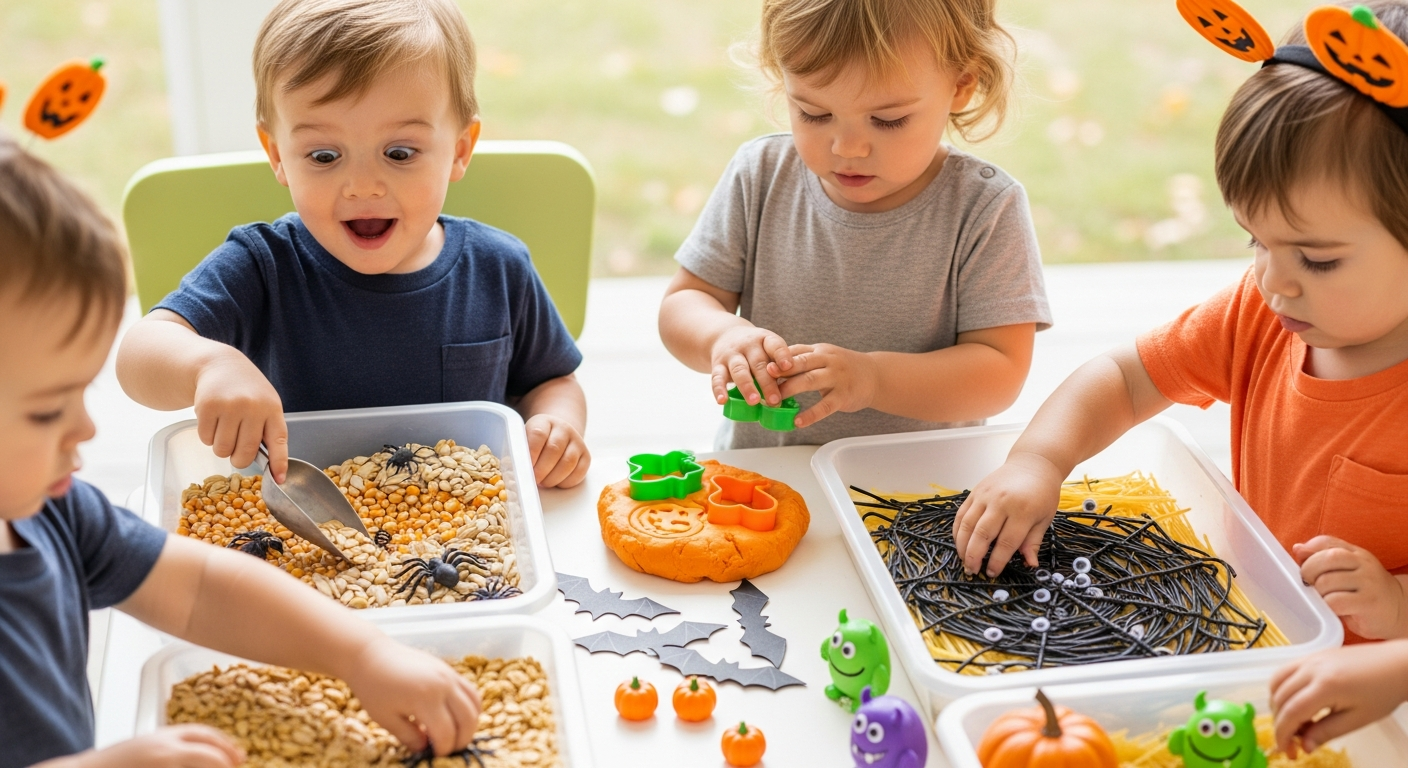
Table of Contents
- Introduction
- The Connection Between Sensory Play and Speech
- 1. The Witches’ Bubbling Potion
- 2. Pumpkin Guts Squish Bag
- 3. Halloween "Spaghetti" Sensory Bin
- 4. Ghostly Shaving Cream Play
- 5. Pumpkin Pie Scented Playdough
- 6. Glow-in-the-Dark Discovery Bottles
- 7. The Sticky Spider Web
- 8. Monster "Stew" in the Water Table
- 9. Frozen "Ghost" Shaving Cream
- 10. The Halloween Alphabet Bin
- Realistic Expectations and the Power of Co-Play
- Why Speech Blubs is the Right Choice for Your Family
- Practical Scenario: The "Late Talker" Who Loves Animals
- Tips for a Successful Sensory Session
- Conclusion
- Frequently Asked Questions
Introduction
Did you know that for a toddler, the simple act of squishing a handful of "pumpkin guts" is actually a high-level brain workout? Sensory play is often described as "brain food" for early childhood development. When your little one feels the slimy seeds of a pumpkin, hears the rustle of dried corn, or smells the spicy scent of cinnamon playdough, they aren't just having fun—they are building the vital neural pathways required for cognitive growth and, most importantly, language.
At Speech Blubs, our mission is to empower children to "speak their minds and hearts." We understand the journey of speech development because our founders lived it. They grew up with speech challenges and created the tool they wished they had: a way to blend scientific principles with the pure joy of play. This Halloween, we want to help you turn the "spooky season" into a season of communication breakthroughs.

In this post, we will explore a variety of toddler halloween sensory activities that you can do at home. We’ll dive into how these activities support speech, how to facilitate them with an empathetic and expert touch, and how our "smart screen time" can act as the perfect supplement to your child’s hands-on learning. By the end of this guide, you’ll have a toolbox of ideas to foster confidence, reduce frustration, and create joyful family moments during October and beyond.
The Connection Between Sensory Play and Speech
Before we dive into the specific activities, it’s important to understand why we focus on the senses. Language development doesn't happen in a vacuum; it’s built on a foundation of sensory experiences.
Building Vocabulary Through Experience
When a child experiences a "sticky" texture or a "cold" sensation, the word becomes meaningful. Instead of just hearing the word "orange," they see the orange pumpkin, feel its smooth skin, and smell its earthy scent. This multi-sensory approach anchors vocabulary in a way that passive listening cannot.
Strengthening Motor Skills
Many sensory activities involve scooping, pouring, and pinching. These fine motor skills are closely linked to the motor skills needed for speech. The coordination required to move a spoon is a precursor to the coordination required to move the tongue and lips to form complex sounds. In the Speech Blubs app, we utilize a "Mouth Gym" section precisely to help children practice these foundational facial movements in a fun, peer-led environment.
Reducing Communication Frustration
For a "late talker," the world can be frustrating. Sensory play provides an outlet for expression that doesn't rely solely on words. As children gain confidence in their ability to manipulate their environment, they often become more willing to attempt new vocalizations. We’ve seen this time and again with families who use our app to supplement their daily play routines; the combination of tactile exploration and peer-video modeling creates a powerful synergy for growth.

1. The Witches’ Bubbling Potion
This activity is a classic for a reason. It combines visual wonder with tactile water play, making it a perfect environment for practicing functional language.
What You Need:
- A large plastic bin or cauldron
- Water and green food coloring
- Baking soda and vinegar (for the "bubbles")
- Plastic spiders, bats, and skeletons
- Ladles, measuring cups, and bowls
How to Play: Fill the bin with green water. Encourage your toddler to "pour" and "stir." To make it "magical," add a few scoops of baking soda and then pour in vinegar. The resulting fizz is an instant hit!
The Speech Connection: While your child is stirring, use target words like "more," "bubbles," "splash," and "pop." If your child is a fan of the "Yummy Time" section in Speech Blubs, you can even pretend you are making a "spooky soup," mirroring the actions they see their peers doing in the app. You can download the app on the Apple App Store to see how our video modeling encourages children to imitate these types of functional play actions.
2. Pumpkin Guts Squish Bag
For some toddlers, the texture of raw pumpkin can be overwhelming. A sensory bag is a "mess-free" way to explore these textures while building visual tracking skills.
What You Need:
- A large Ziploc bag
- The "guts" and seeds from a carved pumpkin
- Strong tape (to seal the bag to a table or window)
How to Play: Scoop the insides of a pumpkin into the bag and seal it tightly, removing as much air as possible. Tape it to a flat surface. Your toddler can squish the seeds and move them around with their fingers.
The Speech Connection: Use descriptive adjectives: "squishy," "cold," "orange," and "fast." If your child is hesitant to touch new things, this is a great way to build their sensory tolerance. If you are unsure where your child stands with their developmental milestones, you can take our 3-minute preliminary screener to get a better understanding of their current communication level and receive a personalized next-steps plan.
3. Halloween "Spaghetti" Sensory Bin
Texture exploration is vital for oral-motor development. Believe it or not, children who are "picky eaters" often benefit from touching different textures with their hands first.
What You Need:
- Cooked and cooled spaghetti
- Black or purple food coloring
- Hidden "treasures" (plastic eyeballs or rings)
How to Play: Color the spaghetti after it has cooled. Place it in a bin and hide the small toys inside. Encourage your child to "dig" and "find."
The Speech Connection: Focus on the "F" sound for "find" or the "S" sound for "spaghetti" and "slimy." In the Speech Blubs app, we use video modeling where children watch other kids making these specific sounds. This "peer-to-peer" learning is based on mirror neurons—the brain's way of learning by watching. You can read more about our scientific methodology and how it helps kids transition from play to speech.
4. Ghostly Shaving Cream Play
This activity is high-impact and low-cost. It provides an intense tactile experience that most toddlers find exhilarating.
What You Need:
- A tray or a cookie sheet
- White shaving cream (use the foaming kind)
- Googly eyes
How to Play: Spray a large mound of shaving cream onto the tray. Add googly eyes to create "ghosts." Let your child "smash" the ghosts and spread the cream.
The Speech Connection: This is perfect for practicing the "G" sound in "ghost" and "gone." When the child smashes the cream, say "Ghost is GONE!" Pausing and waiting for them to attempt the word "gone" is a great way to encourage verbal initiation.
5. Pumpkin Pie Scented Playdough
Don’t forget the sense of smell! Olfactory input is directly linked to the memory centers of the brain, making it a powerful tool for learning.
What You Need:
- 2 cups flour
- 1 cup salt
- 2 tbsp cream of tartar
- 2 tbsp oil
- 1.5 cups boiling water
- Orange food coloring and Pumpkin Pie spice
How to Play: Mix the dry ingredients, add the oil and colored boiling water, and stir until a dough forms. Once cool, let your toddler knead in the spices.
The Speech Connection: Practice words like "smell," "good," "roll," and "cut." For a child who loves animals, you can use the dough to make "pumpkin pigs" or "scary cats," then head over to the "Animal Kingdom" section of Speech Blubs to practice the sounds those animals make. Our users often share real success stories about how this kind of thematic play leads to more frequent "animal noises" and first words.
6. Glow-in-the-Dark Discovery Bottles
For children who might be easily overstimulated by messy play, sensory bottles offer a calming, visual alternative.
What You Need:
- Clear plastic bottles
- Water and clear glue (to slow the movement)
- Halloween sequins, glitter, or small glow-sticks
How to Play: Fill the bottle with a mix of water and glue. Add your Halloween items. Glue the cap shut for safety. Turn off the lights and watch the items glow!
The Speech Connection: This is a great "quiet time" activity. Use it to practice "look," "see," "glow," and "dark." If your child is using Speech Blubs as part of their "smart screen time" routine, this bottle is a perfect transition tool to help them wind down after an engaging session on the tablet.
7. The Sticky Spider Web
Fine motor skills are the focus here. This activity helps with "pincer grasp," which is important for eventual writing and tool use.
What You Need:
- A hula hoop or a doorway
- Painter's tape
- Lightweight cotton balls or "flies" (scraps of black paper)
How to Play: Criss-cross the tape across the hoop or doorway to create a web, with the sticky side facing the child. Have them throw cotton balls at the web or try to pull them off without "getting stuck."
The Speech Connection: Use the word "stuck!" with exaggerated facial expressions. Say "Help! I’m stuck!" and encourage the child to say "help." This mimics the expressive language techniques we use in our "Early Words" section. Ready to see your child's progress? Create your account and start your journey today.
8. Monster "Stew" in the Water Table
Water play is universally loved by toddlers and provides an excellent medium for social communication and turn-taking.
What You Need:
- Water table or large bin
- Plastic "monster parts" (eyes, horns, teeth)
- Spoons and ladles
- Soap for "bubbles"
How to Play: Create a "Monster Cafe." Ask your child to make you a bowl of "Eye Soup." Take turns "tasting" the soup and making funny faces.
The Speech Connection: This is an excellent scenario for practicing social "pragmatics"—the rules of conversation. Practice "Your turn," "My turn," "Thank you," and "Yucky!" If your toddler loves the "Mouth Gym" in our app, you can practice "blowing" bubbles in the water to strengthen their lip muscles, which is a key physical component of clear speech.
9. Frozen "Ghost" Shaving Cream
Adding a temperature element to sensory play can "wake up" the nervous system and increase a child's alertness and focus.
What You Need:
- Muffin tin
- Shaving cream
- Freezer
How to Play: Squirt shaving cream into a muffin tin and freeze it for a few hours. When you take them out, they are cold, firm "ghosts" that slowly melt back into soft foam.
The Speech Connection: Contrast "cold" and "warm." Use the word "melt" as the ghost disappears. This helps with concept development—understanding that things can change state.
10. The Halloween Alphabet Bin
For older toddlers or those starting to recognize letters, a themed literacy bin bridges the gap between sensory play and academic readiness.
What You Need:
- Dried black beans (as the "dirt")
- Plastic letters (especially H, P, G, S for Halloween, Pumpkin, Ghost, Spider)
- Small shovels
How to Play: Hide the letters in the beans. Ask the child to "dig up" a specific letter or sound.
The Speech Connection: Focus on the sound the letter makes, not just its name. "Find the /p/ for pumpkin!" This phonetic awareness is a cornerstone of early reading. If you choose our Yearly Plan, you also get access to the Reading Blubs app, which is specifically designed to transition children from speaking to reading through fun, interactive stories.
Realistic Expectations and the Power of Co-Play
While these activities are designed to be fun and educational, it’s important to remember that every child develops at their own pace. We don't expect your child to be giving public speeches after one afternoon of playing with pumpkin seeds. Instead, we focus on the small, joyful wins: a new sound attempted, a look of shared wonder, or a reduction in the frustration they feel when trying to communicate.
Our approach at Speech Blubs is rooted in the idea of "smart screen time." We provide a screen-free alternative to passive viewing (like cartoons) by creating a powerful tool for family connection. The app is most effective when used with a parent. Watch the videos together, imitate the "peers" in the app, and then take those skills into the real world with these sensory activities.
Why Speech Blubs is the Right Choice for Your Family
We know there are many resources out there, but Speech Blubs is unique. We blend the "joy of play" with "scientific methodology." Our video modeling is a world-class tool that has helped millions of children find their voices.
Transparent Pricing for Every Family
We want to be a partner in your child's development, which is why we are transparent about our pricing. We offer two main ways to join our community:
- Monthly Plan: $14.99 per month. This is a great way to try the app and see how your child responds to the video modeling.
- Yearly Plan (Best Value): $59.99 per year. This breaks down to just $4.99 per month, saving you 66% compared to the monthly rate.
The Yearly Plan is our most popular choice for a reason. It’s not just about the cost savings; it includes exclusive, high-value features that support your child's entire learning journey:
- 7-Day Free Trial: Try everything before you commit.
- Reading Blubs App Included: A seamless transition from speech to reading.
- Early Access: Be the first to try our new updates and features.
- 24-Hour Support: Our team is here to help you whenever you need us.
We encourage you to download the app on Google Play or the App Store and select the Yearly plan to ensure you have the full suite of tools to support your child.
Practical Scenario: The "Late Talker" Who Loves Animals
Imagine a 3-year-old named Leo. Leo is a "late talker" who often gets frustrated when he can't tell his mom what he wants. However, Leo loves cats and dogs.
His mom decides to set up a "Halloween Animal Bin" with orange-colored rice and plastic animals. As Leo plays, his mom opens the "Animal Kingdom" section of Speech Blubs. Leo watches a child his age make a "Meow" sound. He sees the child’s mouth move and hears the sound clearly. Then, he looks down at the plastic cat in his rice bin and, for the first time, tries to say "Mmm-eow."
This is the "Speech Blubs Moment." It’s the bridge between the digital world and the physical world. It’s not about a screen replacing a parent; it’s about a "smart" tool giving the parent and the child a shared language to start the conversation.
Tips for a Successful Sensory Session
To make the most of your toddler halloween sensory activities, keep these tips in mind:
- Follow Their Lead: If your child wants to spend 20 minutes just pouring water and ignores the "potion" ingredients, that’s okay! They are still learning.
- Narrate Everything: Be a "sportscaster" for your child. Describe what they are doing in real-time. "You are pouring the water! It’s so green!"
- Embrace the Mess: Sensory play is messy by design. Put down a tarp or head outside. If you are stressed about the mess, your child will sense it.
- Limit Distractions: Turn off the TV and put away your own phone. This is a time for connection.
- Use the App as a Warm-Up: Spend 5-10 minutes on Speech Blubs before the activity to "prime" their brain for imitation and sound-making.
Conclusion
Halloween is a time of magic, and there is nothing more magical than hearing your child’s voice. By integrating these toddler halloween sensory activities into your October routine, you are providing your child with the building blocks they need to communicate effectively. Whether it’s through the tactile squish of a pumpkin or the engaging video modeling in our app, every moment of play is a step toward confidence.
At Speech Blubs, we are honored to be a part of your family’s journey. Our mission is to help every child speak their mind and heart, and we believe that with the right tools and a lot of love, every child can thrive.
Ready to unlock your child's potential? Start your 7-day free trial today by selecting the Yearly plan. It’s the most effective and joyful way to support your child’s communication goals. Download Speech Blubs on the App Store or Google Play to begin.
Frequently Asked Questions
1. Why is sensory play so important for speech development?
Sensory play helps build neural pathways and strengthens the fine motor skills necessary for speech. It also provides a concrete way for toddlers to learn new vocabulary by associating words with physical sensations like "sticky," "cold," or "bumpy."
2. Are these Halloween activities safe for 1-year-olds?
Most can be adapted! For 1-year-olds, focus on "taste-safe" bins (like using cooked plain spaghetti or oatmeal instead of water beads) and always provide 100% adult supervision to prevent choking on small toy parts like plastic spiders.
3. How does Speech Blubs help a child who is a "sensory seeker"?
Children who seek sensory input often respond well to the high-energy, visually engaging peer-led videos in Speech Blubs. The app provides "smart screen time" that encourages them to move their mouths and use their voices, which can be a great way to channel their energy into productive communication.
4. Can I use these activities if my child is already in professional speech therapy?
Absolutely! We always frame Speech Blubs and these activities as a powerful supplement to professional therapy. They are designed to create joyful family learning moments that reinforce the hard work your child is doing with their therapist.
About the author