
Toddler Handprint Christmas Crafts: Creating Memories and Language Milestones
 By Speech Blubs Team•Feb 20, 2026•12 min.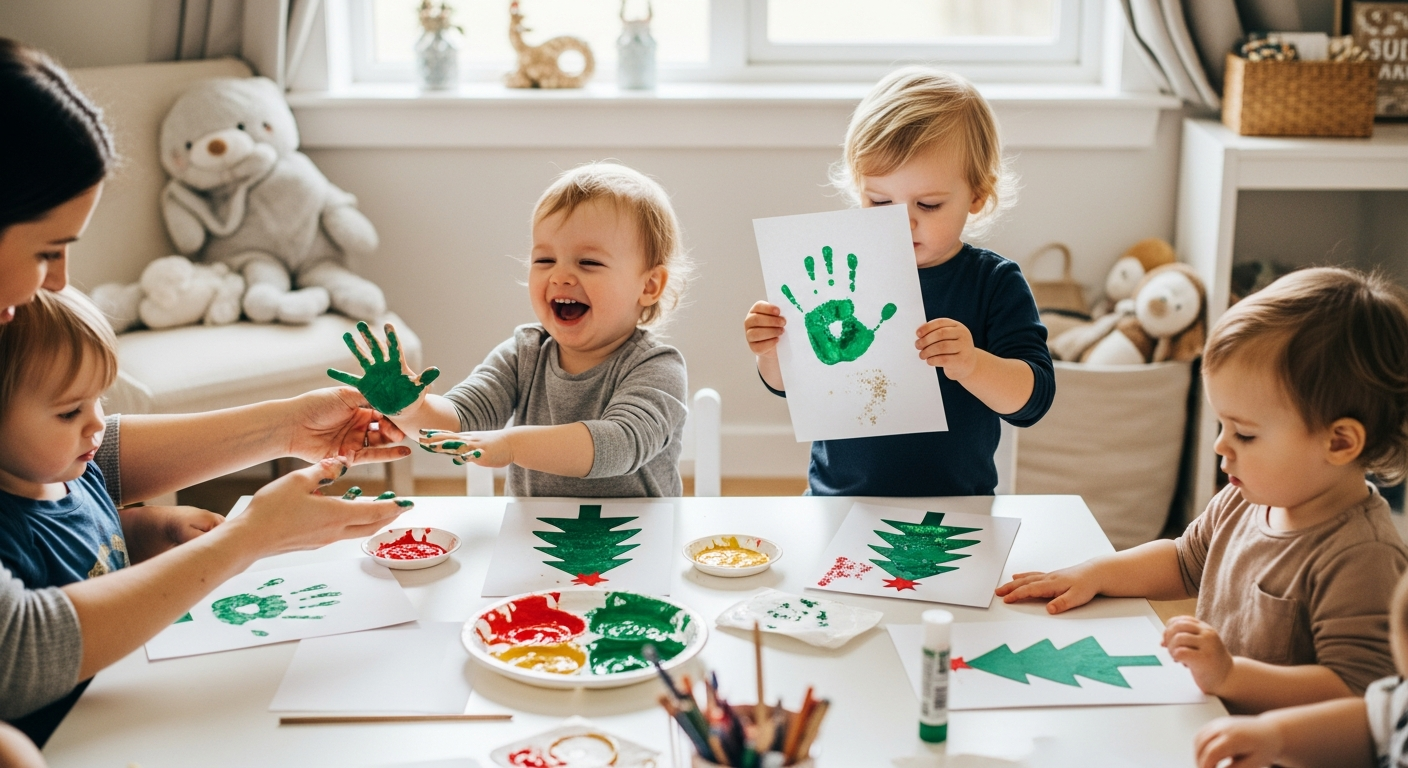
Table of Contents
- Introduction
- Why Handprint Crafts Matter for Development
- 10 Festive Toddler Handprint Christmas Crafts
- Integrating "Smart Screen Time" with Crafting
- Choosing the Right Tools for Your Child
- Practical Tips for Stress-Free Crafting
- The Science of Play and Imitation
- Creating a Language-Rich Holiday Environment
- Conclusion
- Frequently Asked Questions
Introduction
Do you ever look at your toddler’s tiny hands and wish you could freeze time? One moment they are reaching for their first block, and the next, they are trying to narrate their own little world. At Speech Blubs, we know that these early years are a whirlwind of growth, especially when it comes to communication. Our mission is to empower children to "speak their minds and hearts," and often, the best way to do that is through the magic of play. Christmas provides the perfect backdrop for this development, offering a sensory-rich environment where "smart screen time" and hands-on activities collide.
This blog post is your comprehensive guide to toddler handprint christmas crafts. We will explore ten creative, easy-to-do projects that serve as beautiful keepsakes and powerful tools for language development. We’ll also discuss how these tactile activities complement the Speech Blubs methodology, which uses video modeling to help children learn from their peers. By the end of this article, you’ll have a festive roadmap for holiday fun that builds confidence, reduces frustration, and creates joyful family learning moments.

Why Handprint Crafts Matter for Development
Before we dive into the paint and glitter, it is important to understand why these specific crafts are so beneficial for your little one. For a toddler, a handprint isn’t just a shape; it’s a sensory experience.
Fine Motor Skills and Sensory Integration
When a child dips their hand into cool, squishy paint, they are engaging in sensory play. This helps their brain process different textures and temperatures. Pressing that hand firmly onto paper or salt dough requires coordination and muscle control—the same foundational fine motor skills needed later for holding a pencil or gesturing during speech.
Language and Vocabulary Building
Crafting is a "language-rich" activity. As you work together, you are naturally using descriptive words: "sticky," "cold," "red," "sparkly," and "smooth." For a parent whose 3-year-old "late talker" loves animals, the "Animal Kingdom" section of our app offers a fun, motivating way to practice "moo" and "baa" sounds, which can then be mirrored during craft time. If you’re making a reindeer craft, you can practice the "R" sound or make "snorting" animal noises together.
Emotional Connection and Confidence
At Speech Blubs, we believe in the power of family connection. Our company was born from the personal experiences of our founders, who all grew up with speech problems and created the tool they wished they had. When you sit down to create a handprint ornament, you are telling your child that their work is valued. This builds the confidence they need to try new words and sounds.
10 Festive Toddler Handprint Christmas Crafts
Here are ten of our favorite ways to turn those tiny hands into holiday treasures.
1. The Classic Handprint Reindeer
This is a staple for a reason. By turning a brown handprint upside down, the fingers become antlers and the palm becomes the face.
- How to do it: Paint your toddler’s hand brown and press it onto white cardstock. Once dry, let them glue on a red pom-pom for a nose and some googly eyes.
- Speech Tip: Practice the "R" sound for Rudolph. Use Speech Blubs to watch other children make animal sounds to get your toddler excited about their "reindeer" creation.
2. The Handprint Christmas Tree
This craft is excellent for practicing colors and counting.

- How to do it: Use green paint to make several handprints in a triangle shape (one at the top, two in the middle, three at the bottom).
- Speech Tip: Count the "branches" (fingers) out loud. Ask your child, "What color is the tree?" to encourage color identification.
3. Salt Dough Handprint Ornaments
These are the "gold standard" of keepsakes because they last for years.
- How to do it: Mix 1 cup of flour, 1/2 cup of salt, and 1/2 cup of water. Knead into a dough, roll it out, and have your toddler press their hand into it. Bake at a low temperature until hard, then paint.
- Speech Tip: Describe the texture of the dough. Is it "squishy"? Is it "hard" after it bakes? These opposites are great foundational vocabulary words.
4. Handprint Santa Claus
Transform a palm and fingers into the Big Man himself.
- How to do it: Paint the palm and thumb red (the hat and face) and the four fingers white (the beard).
- Speech Tip: Practice the "Ho Ho Ho!" sound. This is a great way to work on breath control and vocalization in a silly, low-pressure way.
5. "The Grinch" Handprint
For fans of the classic holiday story, a green handprint makes a perfect Grinch face.
- How to do it: Use bright green paint. Turn the handprint upside down so the fingers are the Grinch’s "hair." Paint a small red Santa hat on top.
- Speech Tip: Talk about emotions. Is the Grinch "sad" or "happy"? This helps children develop the vocabulary to "speak their minds and hearts."
6. Handprint Snowmen Family
This is a wonderful way to involve the whole family and talk about relationships.
- How to do it: Paint your child's palm and fingers white and press them onto blue paper. Each finger becomes a separate snowman.
- Speech Tip: Name the snowmen after family members: "This is Mommy, this is Daddy, and this is you!"
7. Mistletoes (Footprint Craft)
While technically not a handprint, "mistletoes" are too cute to leave out.
- How to do it: Paint the bottom of your toddler’s feet green and press them side-by-side on paper with the heels touching. Add red "berries" at the top.
- Speech Tip: Focus on body parts. Point to "feet," "toes," and "heels" to reinforce labels.
8. Handprint Holiday Wreath
This is a great group project if you have multiple children or a playgroup.
- How to do it: Cut out the center of a paper plate. Have the children make green handprints all around the rim.
- Speech Tip: Use the word "around" to describe the shape. Spatial concepts are a key part of early language development.
9. Handprint Angel
A beautiful, ethereal craft that looks lovely on a mantel.
- How to do it: Use gold or silver paint for the "wings" (two handprints side by side) and a circle for the head.
- Speech Tip: Practice "soft" sounds and whispering. Shhh... the angel is quiet.
10. Handprint Keepsake Cards for Grandparents
There is nothing a grandparent loves more than a personalized card.
- How to do it: Fold a piece of cardstock and put any of the above designs on the front.
- Speech Tip: Help your child "write" a message by having them dictate what they want to say. This connects the spoken word to written symbols.
Integrating "Smart Screen Time" with Crafting
We often hear from parents who are worried about screen time. At Speech Blubs, we advocate for a screen-free alternative to passive viewing (like mindless cartoons). Our app is designed to be an active, engaging tool that encourages children to move, speak, and interact.
Our unique approach of teaching complex communication skills through our video modeling methodology is rooted in science. Children learn best by watching and imitating their peers. If you are unsure if your child could benefit from this approach, take our quick 3-minute preliminary screener to get a simple assessment and a free 7-day trial. It involves 9 simple questions and provides a clear next-steps plan.
When you use Speech Blubs alongside toddler handprint christmas crafts, you are creating a multi-sensory learning environment. For example:
- Watch: Open the app and watch a peer make a festive sound or say a holiday word.
- Imitate: Encourage your child to repeat the sound.
- Create: Transition to the craft table to "anchor" that word in a physical activity.
Our method is backed by science, placing us in the top tier of speech apps worldwide with a high MARS scale rating. We focus on fostering a love for communication rather than just "drilling" words.
Choosing the Right Tools for Your Child
When it comes to speech and language support, we know that one size does not fit all. That’s why we offer different ways to access our resources. Whether you are looking for a quick boost or a long-term developmental partner, we have a plan for you.
Transparency in Pricing
To build trust with our community, we want to be clear about our pricing:
- Monthly Plan: $14.99 per month. This is a great way to "test the waters."
- Yearly Plan: $59.99 per year. This is our most popular and effective option.
Why the Yearly Plan is the Best Choice: The Yearly plan breaks down to just $4.99/month, which is a 66% savings over the monthly rate. More importantly, the Yearly plan is the only one that includes:
- A 7-day free trial to explore all features risk-free.
- The Reading Blubs app, which helps transition speech skills into early literacy.
- Early access to new updates and a 24-hour support response time.
The Monthly plan does not include these exclusive, high-value features. We encourage families to create an account and begin your 7-day free trial today to see the difference for themselves.
Practical Tips for Stress-Free Crafting
We know that "toddler" and "crafts" can sometimes lead to "mess." Here is how to keep the experience joyful:
"The goal isn't a perfect ornament; the goal is a happy child who feels heard and understood."
- Prepare the Space: Lay down an old tablecloth or newspaper. Having a "yes" space where they can be messy reduces parental stress.
- Keep it Short: Toddlers have short attention spans. If they only want to do one handprint today, that’s okay!
- Model the Behavior: If they are hesitant to touch the paint, you do it first. This is exactly how our app works—showing them "how it’s done" through peer imitation.
- Focus on the Process: If the reindeer has three eyes or the Christmas tree is blue, celebrate it. This builds the foundational skills of self-expression.
The Science of Play and Imitation
Why does video modeling work so well for speech? It’s all about mirror neurons. When a child sees another child (their peer) performing an action or making a sound, the neurons in their own brain fire as if they were doing it themselves. This makes learning feel natural and fun, rather than like a chore.
You can see what other parents are saying about their child's success with this method. Many parents of children with autism, Down syndrome, or general speech delays have found that the joyful, peer-led nature of Speech Blubs reduces the frustration that often comes with traditional therapy.
While we are a powerful tool, it’s important to set realistic expectations. Speech Blubs is a supplement to your child's overall development plan and professional therapy when applicable. We don't promise public speaking in a month; we promise a tool that fosters a genuine love for communication.
Creating a Language-Rich Holiday Environment
Beyond toddler handprint christmas crafts, you can use the holiday season to boost language in other ways:
- Singing: Holiday songs are full of repetition and rhythm, which are excellent for speech.
- Reading: Use the Reading Blubs app (included in our Yearly plan) to explore stories together.
- Narrating: "I am putting the star on the tree. It is yellow and bright."
By combining these daily interactions with "smart screen time" from Speech Blubs, you are providing a comprehensive support system for your child’s growing brain. You can download Speech Blubs on the App Store or Google Play to begin this journey today.
Conclusion
The holiday season is about more than just decorations and gifts; it’s about the connections we build with those we love most. Toddler handprint christmas crafts offer a unique opportunity to slow down, get messy, and focus on your child’s incredible developmental journey. These crafts provide the tactile, sensory input that toddlers crave, while also serving as a springboard for language and vocabulary.
At Speech Blubs, we are honored to be a part of your family’s story. Whether you are navigating a speech delay or simply want to give your child a head start in communication, our app provides an immediate, effective, and joyful solution. Remember, the Yearly plan is the clear best choice, offering the full suite of features including Reading Blubs and a 7-day free trial for only $59.99 per year.
Ready to see your child "speak their mind and heart"? Download Speech Blubs on the App Store or Google Play to begin. Make this Christmas a season of breakthroughs, one handprint and one word at a time.
Frequently Asked Questions
What are the best toddler handprint Christmas crafts for late talkers?
The best crafts for late talkers are those that involve high-interest subjects, like animals or familiar family members. The "Handprint Reindeer" or "Snowmen Family" are excellent choices because they allow you to use animal sounds and names of loved ones, which are often a child's first words. Using these alongside Speech Blubs' "Animal Kingdom" section can provide double the reinforcement.
How can I make Christmas crafts educational for my toddler?
You can make crafts educational by narrating every step. Focus on "action words" (push, pull, paint, dry) and "descriptive words" (colors, sizes, textures). Ask open-ended questions like "Where should we put the nose?" to encourage choice-making and vocalization.
Is the Speech Blubs Yearly plan worth it for holiday learning?
Yes, the Yearly plan is the best value. It includes the Reading Blubs app, which is perfect for holiday storytime, and offers a 7-day free trial so you can explore all the festive content. At just $59.99 for the whole year ($4.99/month), it is a cost-effective way to support your child’s development throughout the holidays and beyond.
Can handprint crafts really help with my child's speech?
While a craft on its own isn't a "cure" for a speech delay, it is a powerful tool for engagement. Language development is built on shared attention and social interaction. When you and your child focus on a craft together, you are creating the perfect environment for "incidental learning," where children pick up new words and sounds in a natural, low-stress context.
About the author