
Top Kids Party Games Ideas for Speech & Fun
 By Speech Blubs Team•Jan 28, 2026•21 min.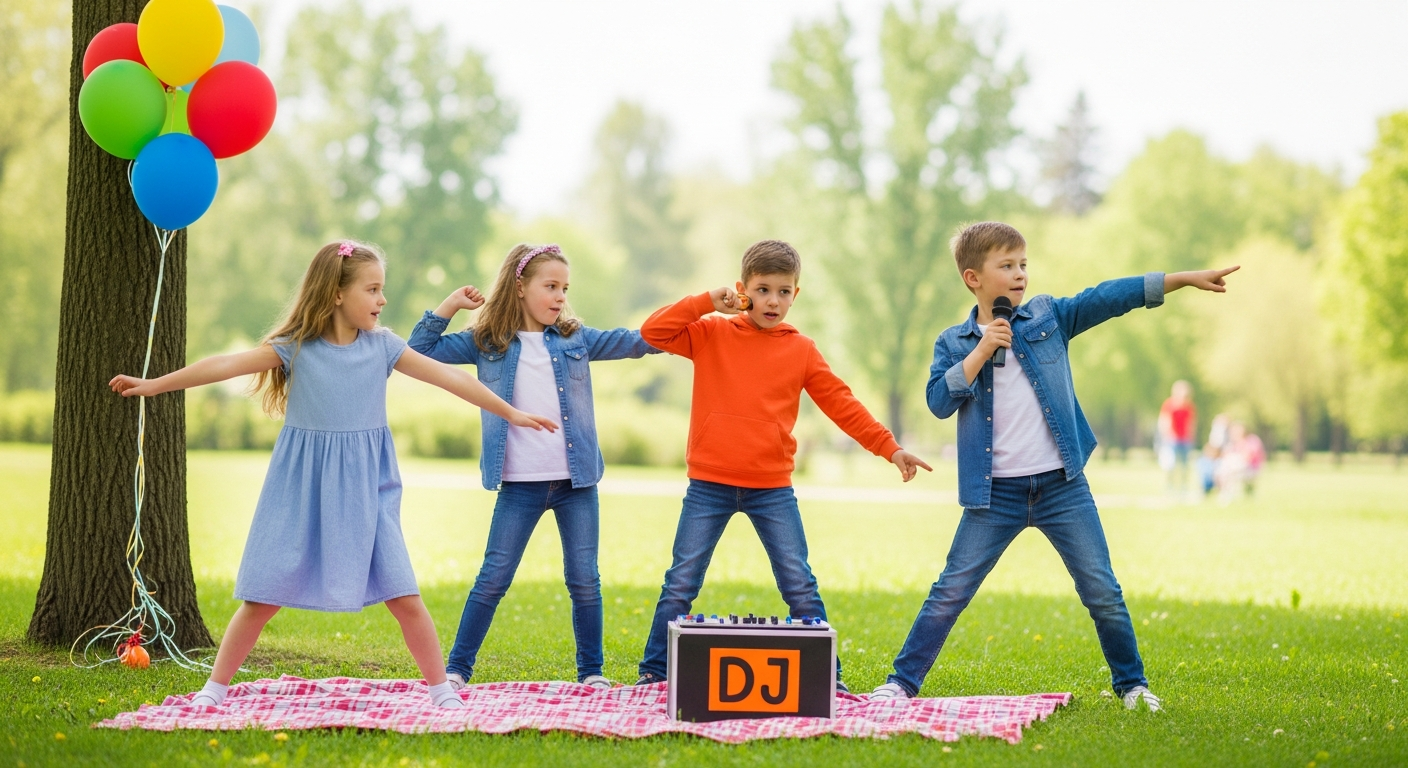
Table of Contents
- Why Party Games Are More Than Just Fun
- Planning the Perfect Party: Key Considerations
- Engaging Kids Party Games Ideas for Every Age
- Incorporating Speech & Language Development Naturally
- The Speech Blubs Difference: Playful Learning for Communication
- Making the Most of Your Child's Communication Journey
- Invest in Their Voice: Speech Blubs Pricing & Value
- Conclusion
- Frequently Asked Questions
The doorbell rings, the cake is ready, and a flurry of excited children bursts through the door – a children’s party is a whirlwind of joy, energy, and sometimes, a little chaos! As parents, we want these celebrations to be memorable, filled with laughter and positive experiences. But what if these fun-filled gatherings could also be secret catalysts for your child’s communication development? What if every game played subtly nurtured their ability to express themselves, understand others, and build confidence in their voice?
This blog post isn't just about listing fun party activities; it's about unlocking the incredible potential of play to foster communication skills in every child. We’ll dive into a treasure trove of engaging kids party games ideas suitable for various ages, showing you how each one can be a stepping stone towards better speech and language. From boisterous outdoor adventures to calmer indoor challenges, we'll explore how simple games can encourage turn-taking, expand vocabulary, improve listening skills, and boost self-expression. We believe that empowering children to speak their minds and hearts begins with joyful, interactive experiences, and we're here to show you how to weave that magic into your next party.

Why Party Games Are More Than Just Fun
At first glance, party games might seem like mere entertainment—a way to burn off sugar-fueled energy and keep little ones occupied. However, beneath the surface of giggles and friendly competition lies a rich landscape of developmental opportunities. These aren't just diversions; they are powerful tools for social, emotional, cognitive, and, critically, language development.
When children engage in structured play like party games, they're learning to navigate social situations, understand rules, and cooperate with peers. These interactions naturally demand communication. They have to listen to instructions, ask questions, explain their turns, and negotiate outcomes. This active participation builds crucial social-emotional skills like empathy, patience, and conflict resolution, all of which are deeply intertwined with effective communication.
Moreover, party games build confidence. For a shy child, the shared experience of a game can lower the pressure to speak individually, allowing them to participate and express themselves within a group dynamic. When they succeed in a game, or even just make an attempt, they feel a sense of accomplishment that spills over into other areas of their lives, including their willingness to use their voice. This kind of positive reinforcement is vital for children who might be hesitant to communicate due to speech challenges or shyness.
At Speech Blubs, our mission is to empower children to "speak their minds and hearts," and we understand that every playful interaction contributes to this journey. Our founders themselves grew up with speech problems and created the tool they wished they had—a joyful, effective solution blending scientific principles with play. We see party games as a fantastic real-world extension of this philosophy, providing spontaneous, enriching moments for communication practice. Just as our app provides a "smart screen time" alternative to passive viewing, encouraging active engagement through our unique video modeling methodology, party games offer a screen-free way to practice and refine complex communication skills in a dynamic, social setting.

Planning the Perfect Party: Key Considerations
Before you dive into a list of exciting games, a little planning can go a long way in ensuring your party is a hit and maximizes its developmental benefits. Thinking through a few key elements will help you select games that are not only fun but also perfectly suited for your specific group of little partygoers.
Age-Appropriate Games
Matching games to the developmental stage of the children attending is paramount. What thrills a toddler might bore an older child, and what challenges an older child might frustrate a younger one.
- Toddlers (1-3 years): For the littlest guests, focus on sensory experiences, simple actions, and single-word naming. Games should have minimal rules and quick turns to maintain their short attention spans. Think about activities that encourage imitation, pointing, and making simple sounds.
- Preschoolers (3-5 years): This age group thrives on imagination and early social play. Games can have simple, repeatable rules, emphasize turn-taking, and encourage descriptive language. They're ready for more interactive games where they can start expressing preferences and understanding basic concepts like "fast" or "slow."
- Early School Age (5-8 years): Children in this age range are developing more complex reasoning and enjoy games with clearer objectives, teamwork, and opportunities for storytelling or problem-solving. They can follow multi-step instructions and enjoy contributing ideas.
- Older Kids (8+ years): This group appreciates strategy, creativity, and more nuanced social interaction. Games that involve critical thinking, verbalizing plans, or elaborate charades will keep them engaged and challenged.
Party Theme Integration
A great way to make games even more exciting is to tie them into your party's theme. If you have a pirate party, turn a scavenger hunt into a "treasure map" search. For a superhero theme, games can become "hero training challenges." Integrating games into the theme not only enhances the overall party experience but can also spark imaginative language use as children get into character. For instance, a child with an interest in animals, much like those who love exploring the "Animal Kingdom" section in Speech Blubs, would be thrilled by games that incorporate animal sounds and movements into a jungle adventure theme.
Space and Group Size
Consider your party environment. Are you indoors or outdoors? Do you have a large backyard or a cozy living room?
- Indoor Options: For smaller spaces, opt for games that require less running around, like "Musical Freeze Dance" or "Pictionary." Focus on tabletop activities or those that can be played sitting down.
- Outdoor Options: Larger outdoor spaces are perfect for active games like relay races, obstacle courses, or "Red Light, Green Light."
- Adapting for Group Size: Many games can be adapted. For a small group, you might play individually or in pairs. For a large group, divide children into teams to ensure everyone gets a turn and feels involved.
Safety First!
No matter how fun the games, safety should always be your top priority. Ensure the play area is clear of hazards, especially for active games. Supervise children closely, set clear boundaries, and explain rules gently. Always have a first-aid kit on hand for any minor bumps or scrapes. Creating a safe and welcoming environment allows children to relax, engage, and communicate freely.
Engaging Kids Party Games Ideas for Every Age
Now for the fun part! Here’s a collection of kids party games ideas, categorized by age, designed to bring joy and subtly boost communication skills. Remember, the goal isn't perfection, but participation and playful learning.
Games for Toddlers & Preschoolers (Ages 1-5)
These games are perfect for young children, focusing on simple actions, repetition, and early word recognition.
- Bubble Pop & Catch:
- How to Play: Simply blow bubbles and encourage children to pop them or try to "catch" them.
- Communication Focus: Encourages simple exclamations ("Pop!"), action words ("catch," "blow"), and basic counting ("one, two, three bubbles!"). Great for joint attention and following a simple instruction.
- Animal Charades (Simplified):
- How to Play: Call out an animal, and encourage children to make the animal's sound and movement (e.g., "Moo like a cow!" or "Hop like a bunny!").
- Communication Focus: Imitation of sounds and actions is a foundational speech skill. It’s a wonderful way to practice target sounds in a low-pressure, fun context, much like our "Animal Kingdom" section in Speech Blubs encourages children to learn by watching and imitating their peers' pronunciations and actions. This video modeling approach makes learning natural and engaging.
- Musical Freeze Dance:
- How to Play: Play music and have the children dance. When the music stops, everyone "freezes" in place.
- Communication Focus: Listening skills, following instructions ("freeze," "dance"), and encouraging body language for expression. You can add variations like "freeze like an animal" or "freeze in a happy pose."
- Color Scavenger Hunt:
- How to Play: Give each child (or small group) a color and ask them to find objects of that color within a designated area.
- Communication Focus: Naming colors, identifying objects, and using descriptive language ("I found a red ball!" or "This blue block is big!").
- Follow the Leader (with sounds):
- How to Play: One child leads, performing actions and making sounds, and everyone else imitates. Switch leaders frequently.
- Communication Focus: Encourages imitation of actions and sounds, turn-taking, and active listening. It's a fantastic way for children to practice mirroring what they see and hear, a core principle behind our effective video modeling methodology at Speech Blubs.
Games for Early School Age (Ages 5-8)
At this stage, children are ready for more rules, teamwork, and opportunities to use more complex language.
- Simon Says:
- How to Play: The designated "Simon" gives commands starting with "Simon says..." (e.g., "Simon says touch your nose"). Children only follow commands that begin with "Simon says."
- Communication Focus: Excellent for listening comprehension, understanding multi-step directions, and self-regulation. Children must listen carefully to distinguish between commands, a key skill for classroom success and daily communication.
- Picture Bingo (DIY):
- How to Play: Create bingo cards with pictures of familiar objects. Call out the object names, and children mark them on their cards.
- Communication Focus: Vocabulary expansion, object identification, and matching skills. You can encourage children to say the word when they mark it, or describe the object.
- Hot Potato with a Twist:
- How to Play: Children sit in a circle, passing a "hot potato" (a soft ball or beanbag) while music plays. When the music stops, the child holding the potato must say a word related to a specific category (e.g., "animal," "food," "thing you find in a house").
- Communication Focus: Quick recall, categorization skills, and expanding vocabulary within themes. This also encourages quick thinking under mild pressure, helping children to verbalize their thoughts efficiently.
- Story Starters:
- How to Play: Start a story with one sentence (e.g., "Once upon a time, a little bear found a shiny key..."). Each child adds one sentence to continue the story.
- Communication Focus: Encourages narrative building, imagination, sequencing events, and using descriptive language. This collaborative game fosters creativity and helps children practice structuring their thoughts into coherent spoken sentences. For parents whose children struggle with narrative skills, this is a fun, gentle way to build those foundational abilities.
- Obstacle Course Challenge:
- How to Play: Set up a simple obstacle course using household items (pillows to climb over, chairs to crawl under, tape lines to walk on). Children navigate the course, either individually or in teams.
- Communication Focus: Following multi-step directions, using action words ("jump," "crawl," "balance"), spatial awareness, and verbalizing their movements ("I'm crawling under the chair!"). It’s fantastic for pairing motor skills with language.
Games for Older Kids (Ages 8+)
These games introduce more complex rules, strategy, and opportunities for advanced language use and social interaction.
- Minute to Win It Challenges:
- How to Play: Set up a series of quick, fun challenges that kids have one minute to complete (e.g., stack 5 cups into a pyramid, move marbles with a spoon, balance a cookie on their forehead).
- Communication Focus: Encourages clear instructions (when explaining challenges), descriptive language (when teammates are coaching), problem-solving discussions, and expressing frustration or excitement. It’s also great for understanding sequence and time.
- DIY Escape Room Puzzles:
- How to Play: Create a simple "escape room" by hiding clues around a room that lead to a prize. Clues can be riddles, simple math problems, or coded messages.
- Communication Focus: Promotes teamwork, verbalizing solutions, collaborative problem-solving, asking clarifying questions, and explaining reasoning. This game fosters rich conversational exchange and strategic language use.
- "Who Am I?" (Celebrity/Character Guessing Game):
- How to Play: Write names of celebrities, characters, or animals on sticky notes. Each child gets one stuck to their forehead. They ask yes/no questions to guess who they are.
- Communication Focus: Develops critical thinking, asking targeted questions, logical deduction, and precise vocabulary to describe attributes. It’s an excellent game for improving question formation and descriptive language.
- Charades (Advanced):
- How to Play: Teams act out phrases, book titles, movie names, or complex actions without speaking, while their teammates guess.
- Communication Focus: Enhances non-verbal communication, understanding abstract concepts, interpreting gestures, and using a wide range of vocabulary to make educated guesses. For children learning to express themselves, this is a fun way to connect words with actions and concepts.
- Pictionary/Drawing Games:
- How to Play: Players draw words or phrases, and their teammates guess what they are drawing within a time limit.
- Communication Focus: Encourages the ability to explain concepts, expand vocabulary (as drawers try to illustrate challenging words), and interpret visual cues. It's a creative way to link visual understanding with verbal expression.
Incorporating Speech & Language Development Naturally
The beauty of these games lies not just in their inherent fun, but in the subtle ways you can guide them to become powerful tools for communication development. As a parent or caregiver, your involvement is key to maximizing these benefits.
- Asking Open-Ended Questions: Instead of "Did you like that game?" try "What was your favorite part of that game, and why?" or "What do you think will happen next?" These questions encourage more than a yes/no answer, prompting children to articulate thoughts and feelings, expanding their narrative skills.
- Modeling Language: Be a good language role model. Use clear, descriptive words yourself. If a child says, "Ball," you might respond, "Yes, that's a big, red, bouncy ball!" This gentle expansion helps build their vocabulary and shows them how to add detail.
- Encouraging Turn-Taking: This is fundamental for conversation. Explicitly say, "My turn, then your turn." Use visual cues or timers if needed. Many children, especially those with speech delays, can struggle with the give-and-take of conversation. Games provide a structured, low-stress environment to practice this vital skill.
- Praising Effort, Not Just Outcome: Focus on how they played, not just whether they won. "I love how you tried to make that animal sound!" or "You did a great job explaining your turn!" This builds confidence and encourages continued participation, even if a child makes a "mistake" or struggles with a word. It reinforces the idea that communication is about trying and connecting.
- Using Visual Cues: Pair words with gestures, pictures, or objects whenever possible. If you're playing a color game, hold up the actual colored object. This multi-sensory approach can significantly aid comprehension and expression, especially for children who are visual learners.
The Speech Blubs Difference: Playful Learning for Communication
While party games offer wonderful opportunities for spontaneous communication practice, sometimes children need more structured, consistent support to develop their speech and language skills. This is where Speech Blubs comes in, offering a unique blend of scientific methodology and playful learning that complements everyday interactions.
Our story is deeply personal. Our company was born from the personal experiences of our founders, who all grew up with speech problems and created the tool they wished they had. We are committed to providing an immediate, effective, and joyful solution for the 1 in 4 children who need speech support, blending scientific principles with play into one-of-a-kind "smart screen time" experiences. We know that screen time can be a concern for many parents, which is why we offer a screen-free alternative to passive viewing (like cartoons). Speech Blubs is an active, engaging tool that transforms screen time into a powerful opportunity for growth and family connection.
Our unique approach to teaching complex communication skills is centered around our "video modeling" methodology. Children learn by watching and imitating their peers—real kids, not animated characters or adults. This taps into the brain's mirror neuron system, making imitation a natural and effective way to learn new sounds, words, and phrases. This scientifically backed method has earned us a top-tier rating on the MARS scale, a testament to our commitment to evidence-based practices. You can explore more about our method backed by science on our research page.
Consider these real-world scenarios that highlight how Speech Blubs activities mirror and enhance the communication benefits of party games:
- For the animal lover: If your child loves animal-themed party games like "Animal Charades" and struggles with specific consonant sounds like 'm' or 'b', the "Animal Kingdom" section within Speech Blubs offers a fun, motivating way to practice "moo" and "baa" sounds. By watching other children make these sounds, your child gets clear, engaging models to imitate, reinforcing the sounds they practiced playfully at the party.
- For the shy late talker: A child who might be a "late talker" and struggles to initiate conversation at a party, even during a game like "Musical Freeze Dance" where they mostly follow instructions, can find their voice with Speech Blubs. The app provides a safe, encouraging environment where they can practice simple words and phrases at their own pace. The interactive lessons build their confidence in a controlled setting, which can then help them feel more comfortable participating verbally in social situations.
- For building descriptive language: If your child has difficulty with descriptive language during party games like "Picture Bingo" or "Story Starters," Speech Blubs offers targeted vocabulary and concept activities. Our diverse range of sections—from "When I Grow Up" to "Amazing Animals"—helps children expand their vocabulary and learn to use adjectives, verbs, and phrases more effectively, empowering them to tell richer stories and descriptions both in and out of the app.
- For developing narrative skills: Games like "Story Starters" encourage sequencing and narrative building. Speech Blubs supports this by offering activities that guide children through telling stories, describing events, and answering "who," "what," and "where" questions, laying the groundwork for more complex conversational turns.
Our app is designed not just as a tool, but as a family experience. It’s a powerful tool for family connection, where parents and children can learn and grow together, turning everyday screen time into joyful learning moments.
Making the Most of Your Child's Communication Journey
The path to strong communication skills is ongoing, and it's a journey best traveled with support and consistency.
- Parental Involvement: Just as your presence and encouragement elevate a party game, your active participation with Speech Blubs can significantly enhance your child's learning. Co-play is key. Sit with your child, participate in the activities, celebrate their successes, and echo their sounds. This not only strengthens their learning but also deepens your bond.
- Consistency is Key: Regular, short bursts of practice are more effective than infrequent, long sessions. Whether it's playing a simple game together for 10 minutes or engaging with Speech Blubs daily, consistency builds momentum and reinforces learning.
- Knowing When to Seek Professional Help: It's natural for parents to wonder if their child's communication development is on track. While games and apps like ours provide excellent support, sometimes a child may benefit from professional speech therapy. If you have concerns, early intervention is always best. To help you get a clearer picture, we offer a quick 3-minute preliminary screener. This simple, 9-question assessment provides an immediate overview and suggests next steps, including if professional help might be beneficial, and grants you a free 7-day trial of Speech Blubs. It's a great starting point for any parent seeking validation or guidance.
Invest in Their Voice: Speech Blubs Pricing & Value
At Speech Blubs, we are dedicated to providing an accessible and effective solution for every family. We offer transparent pricing options designed to fit your needs, with clear benefits for each.
Our Monthly Plan is available for $14.99 per month. This option provides flexibility, allowing you to subscribe for as long as you need.
However, for the best value and to unlock the full potential of our platform, we highly recommend our Yearly Plan at just $59.99 per year. This breaks down to an incredible $4.99 per month, which means you save 66% compared to the monthly subscription! The Yearly Plan isn't just about significant savings; it's about gaining access to a comprehensive suite of features designed to maximize your child's progress.
With the Yearly Plan, you receive:
- A 7-day free trial: Experience everything Speech Blubs has to offer before committing.
- The extra Reading Blubs app: Enhance literacy skills alongside speech development with this valuable bonus app.
- Early access to new updates: Be the first to enjoy new features and content.
- 24-hour support response time: Get prompt assistance whenever you need it.
The Monthly Plan, on the other hand, does not include these additional benefits, making the Yearly Plan the clear choice for families looking for long-term value and comprehensive support.
We encourage you to choose the Yearly plan to get the free trial and the full suite of features that will truly empower your child's communication journey. It's an investment in their voice that delivers incredible returns in confidence and connection.
Conclusion
From the joyous chaos of a birthday celebration to the everyday moments of play, party games offer a fantastic, natural pathway to foster communication skills in children. We’ve explored a variety of kids party games ideas that not only guarantee smiles and laughter but also cleverly encourage listening, turn-taking, vocabulary expansion, and confident self-expression. By approaching party planning with an eye towards these developmental opportunities, you can transform any gathering into a rich learning experience for every child.
At Speech Blubs, we share this passion for playful, impactful learning. Our mission is to empower children to "speak their minds and hearts" by blending scientific principles with engaging, interactive experiences. We believe every child deserves the chance to communicate effectively, and we're committed to providing the tools and support to make that a reality. Just as these games provide a screen-free avenue for development, our app offers "smart screen time" that actively engages children and transforms learning into a joyful adventure. We hear countless stories from parents about their child's blossoming communication, and you can see what other parents are saying about their child's success with Speech Blubs on our testimonials page.
Ready to empower your child's voice and turn screen time into smart time? Don't let another moment pass without giving your child the gift of confident communication. Start your 7-day free trial and experience the full benefits of our award-winning app today! To get the best value and unlock all exclusive features, remember to select the Yearly plan. You can download Speech Blubs on the App Store or Google Play and begin your journey toward unlocking your child's full communication potential.
Frequently Asked Questions
How do party games specifically help with speech development?
Party games inherently require communication. Children learn to listen to instructions, follow multi-step directions, take turns speaking, ask questions, and use descriptive language to explain actions or ideas. This active participation strengthens vocabulary, comprehension, and conversational skills in a fun, low-pressure environment.
What if my child is shy or reluctant to participate in party games?
It's perfectly normal for some children to be shy. Encourage participation without forcing it. Start with simple, less intimidating games (like "Musical Freeze Dance" where they don't have to speak) and offer gentle praise for any effort. You can also pair them with a supportive friend or adult. Remember, even observing and listening contributes to their learning.
Is Speech Blubs a replacement for professional speech therapy?
No, Speech Blubs is a powerful supplemental tool designed to support and enhance a child's communication development. It provides structured, engaging practice that complements professional therapy and everyday interactions. If you have concerns about your child's speech development, we always recommend consulting with a certified speech-language pathologist. Our preliminary screener can offer guidance on next steps.
What's the best way to get started with Speech Blubs and maximize its benefits?
For the best value and access to all features, we recommend starting with our Yearly Plan. This includes a 7-day free trial, the bonus Reading Blubs app, and priority support. Consistency is key, so aim for regular, short sessions where you actively participate alongside your child, celebrating their progress. You can download our app directly from the Apple App Store or Google Play Store.
About the author