
Unforgettable Fun Summer Camp Games for Kids
 By Speech Blubs Team•Jan 19, 2026•21 min.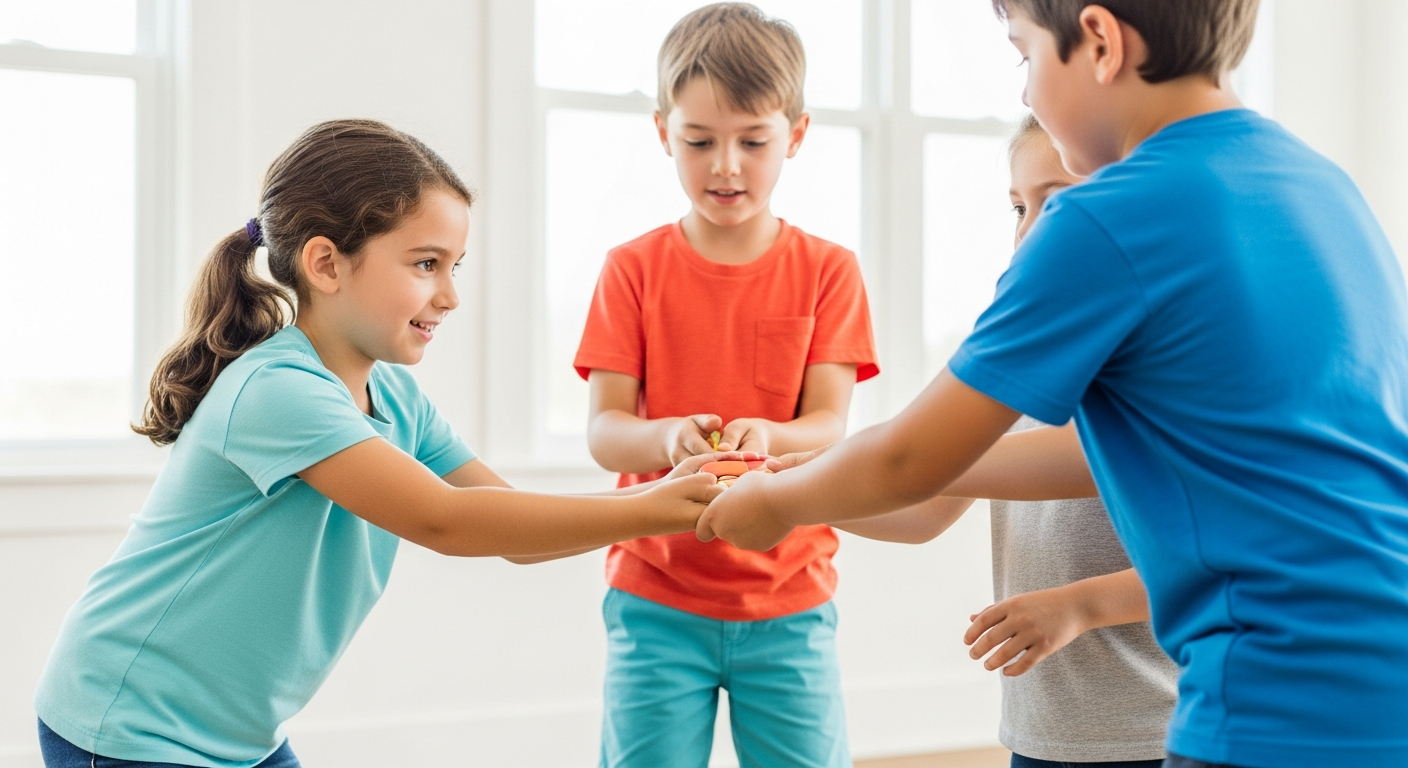
Table of Contents
- Introduction
- The Magic of Summer Camp Games: More Than Just Fun
- Active Outdoor Adventures: Unleash Their Energy!
- Water Fun: Beat the Heat with Splashes!
- Team Building & Strategy Games: Growing Together
- Creative & Imaginative Play: Nurturing Young Minds
- The Speech Blubs Difference: Empowering Communication Through Play
- Getting Started with Speech Blubs: Your Child's Communication Journey
- Conclusion
- FAQ
Introduction
The sun is shining, the days are long, and the air is filled with the joyful sounds of children at play. Summer camp conjures images of laughter, friendship, and endless energy, but for parents and caregivers, it's also a precious opportunity for growth and development. Beyond just keeping kids entertained, the right summer activities can be powerful catalysts for learning, social skill-building, and communication mastery.
This blog post is your ultimate guide to a treasure trove of engaging and fun summer camp games for kids. We'll explore activities that not only guarantee smiles and build lasting memories but also subtly nurture crucial social, physical, and communication skills. From high-energy outdoor adventures to creative team-building challenges and imaginative quiet play, these games are designed to empower children in countless ways. As you'll discover, many of these classic pastimes naturally complement our mission at Speech Blubs: to empower children to "speak their minds and hearts" by fostering foundational communication abilities through joyful, engaging experiences. Get ready to transform this summer into an unforgettable season of fun, growth, and connection!

The Magic of Summer Camp Games: More Than Just Fun
Summer camp games offer a unique blend of fun and learning, providing a holistic approach to child development. These activities go far beyond mere entertainment; they are rich environments where children naturally develop a wide array of skills essential for navigating the world around them.
- Physical Prowess: From running and jumping to dodging and balancing, active games enhance gross motor skills, coordination, and overall physical fitness. This active engagement is vital for healthy growth and provides an excellent outlet for boundless summer energy.
- Cognitive Development: Many games require strategic thinking, problem-solving, and quick decision-making. Children learn to anticipate moves, plan ahead, and adapt to changing circumstances, sharpening their cognitive abilities in a playful context.
- Emotional Intelligence: Games often involve winning and losing, taking turns, and managing frustration. These experiences help children develop emotional regulation, resilience, and sportsmanship. Learning to celebrate successes and gracefully accept defeats are invaluable life lessons.
- Social Interaction and Communication: Perhaps one of the most significant benefits of group games is their capacity to foster social skills. Children learn to cooperate, negotiate, share, and resolve conflicts. They practice listening, expressing their ideas, and understanding non-verbal cues. This is where the magic truly happens, laying the groundwork for strong communication. At Speech Blubs, we believe deeply in the power of interaction and connection, which is why our mission is centered on giving every child the tools to voice their thoughts and feelings. Our work is dedicated to providing an immediate, effective, and joyful solution for the 1 in 4 children who need speech support, blending scientific principles with play.
Balancing Play with "Smart Screen Time"
In today's world, balancing active play with screen time is a constant discussion. While traditional games promote physical activity and direct social interaction, we understand that digital tools also have a significant role. The key is "smart screen time." Unlike passive viewing of cartoons or mindless scrolling, Speech Blubs offers an engaging, interactive experience that is a screen-free alternative to passive viewing and a powerful tool for family connection. Our app guides children through activities that actively encourage speech development, mimicry, and communication in a structured, playful way.

Our unique approach uses "video modeling," where children learn by watching and imitating their peers. This technique is backed by science and harnesses the natural power of mirror neurons, making learning speech both effective and joyful. It's screen time designed to enhance communication, not replace it, and complements the invaluable skills children gain from the active, social games we're about to explore. To learn more about the science behind our effective method, you can visit our research page.
Active Outdoor Adventures: Unleash Their Energy!
Summer is the perfect time to get outside and move! These games tap into kids' natural energy, encouraging physical activity while fostering teamwork and strategic thinking.
Classic Chasers and Tag Games
These staples of outdoor play are fantastic for developing agility, speed, and spatial awareness.
- Capture the Flag:
- How to Play: Divide into two teams, each with a flag hidden in their territory. The goal is to capture the opposing team's flag and bring it back to your zone without getting tagged. Tagged players go to "jail" and can be freed by a teammate.
- Benefits: This thrilling game combines strategy, speed, and stealth. It's excellent for teamwork, quick decision-making, and physical endurance. Campers learn to communicate non-verbally through signals and collaborate on defense and offense.
- Green Light, Red Light:
- How to Play: One player stands with their back to the others, calling "Green Light" (players move) and "Red Light" (players freeze). Anyone caught moving on "Red Light" is out or sent back to the start. The goal is to be the first to reach the caller.
- Benefits: A fantastic game for improving listening skills, impulse control, and quick reflexes. It teaches children to pay close attention to verbal cues and manage their body movements.
- Flashlight Tag:
- How to Play: A nighttime favorite! One person is "it" with a flashlight. Others hide. The "it" player counts to a designated number, then uses the flashlight to find and "tag" hiders with the beam. Tagged players go to a central "jail" or are out.
- Benefits: Adds an element of mystery and adventure. It develops stealth, quick thinking, and spatial awareness in low-light conditions. It also encourages quiet communication among hiders.
- Freeze Tag:
- How to Play: One or more players are "it" and chase others. If tagged, a player must "freeze" in place. Other non-tagged players can "unfreeze" them by touching them. The game ends when everyone is frozen or "it" gives up.
- Benefits: Promotes speed, agility, and quick decision-making. It fosters cooperation among non-tagged players and resilience in those who are frozen.
Relay Races and Obstacle Courses
These activities emphasize coordination, problem-solving, and cheering on teammates.
- Obstacle Course Adventure:
- How to Play: Set up a series of physical challenges using natural elements or camp gear (crawl under benches, weave through cones, balance on a log, jump through hoops). Campers navigate the course individually or in teams, aiming for the fastest time.
- Benefits: Demands physical agility, strategic thinking, and perseverance. It’s highly adaptable and fantastic for developing gross motor skills, planning, and encouraging peers.
- Relatable Scenario: For a child developing sequencing skills, verbally narrating the steps of an obstacle course ("First, I crawl, then I jump, then I balance!") provides excellent language practice. Similarly, in Speech Blubs, our interactive activities guide children through structured sequences that reinforce narrative abilities and build confidence in verbalizing their actions. To explore activities that build narrative skills and more, download Speech Blubs on the App Store or Google Play today!
- Rubber Chicken Relay:
- How to Play: Teams compete to pass a rubber chicken using only their necks and underarms. The first team to get the chicken from one end to the other wins.
- Benefits: Hilarious and incredibly fun, this game emphasizes coordination, cooperation, and good-natured silliness. It's a fantastic icebreaker that guarantees laughter and reduces inhibitions.
- Wheelbarrow Races:
- How to Play: Campers pair up. One person (the "wheelbarrow") walks on their hands while their partner holds their ankles. Teams race to a finish line.
- Benefits: Builds upper body strength, core stability, and coordination. It's a great exercise in trust and teamwork, as partners must work in sync.
- Jump!:
- How to Play: Participants stand along a starting line. On "Jump!" they all jump as far as they can. Mark where they land. Repeat several times, with variations like one-footed jumps. The person who gets the farthest total distance wins.
- Benefits: A simple yet effective game for developing gross motor skills, leg strength, and understanding measurement in a fun, competitive context.
Water Fun: Beat the Heat with Splashes!
When temperatures rise, water games are a surefire way to cool down and ramp up the fun. Remember to always prioritize safety and hydration during these activities!
Get Ready to Get Soaked
- Water Balloon Toss:
- How to Play: Campers pair up and toss a water balloon back and forth. After each successful catch, both partners take a step back, increasing the distance. The last pair with an intact balloon wins.
- Benefits: Tests coordination, careful handling, and communication. It builds anticipation and encourages gentle throws, promoting fine motor control and concentration.
- Water Balloon Dodgeball:
- How to Play: A wet twist on the classic game! Teams throw water balloons at opponents, trying to "tag" them without getting soaked themselves.
- Benefits: Combines agility, aim, and teamwork. It's a high-energy game perfect for hot days, encouraging quick movements and strategic dodges.
- Water Balloon Fights:
- How to Play: The ultimate classic! Simply provide buckets of water balloons and let campers engage in a free-for-all splash fest, individually or in teams.
- Benefits: Pure, unadulterated fun and an excellent way to cool off. It fosters joyful social interaction and provides a fantastic release of energy.
- Safety Note: Always remind campers to aim for the body, not the face, and ensure the play area is clear of slippery hazards.
Team Building & Strategy Games: Growing Together
These games emphasize cooperation, communication, and problem-solving, making them perfect for fostering camaraderie and essential life skills.
Collaborative Challenges
- Tug of War:
- How to Play: Two equally matched teams pull opposite ends of a long rope. The objective is to pull the opposing team past a central marker.
- Benefits: A classic test of strength, teamwork, and determination. It clearly demonstrates the power of unified effort and encourages synchronized pulling and cheering.
- Human Knot:
- How to Play: Campers stand in a circle, reach across, and grab hands with two different people, forming a tangled "knot." The goal is to untangle the knot without letting go of anyone's hands.
- Benefits: A fantastic team-building game that absolutely requires efficient communication, cooperation, and problem-solving. Children must verbalize directions, negotiate movements, and work together closely.
- Relatable Scenario: Children working to untangle the Human Knot are constantly verbalizing, negotiating, and directing each other – "move your arm this way," "step over here." This natural interaction is a real-world example of the collaborative communication we foster in Speech Blubs. Our app provides clear visual and auditory cues, combined with interactive feedback, that help children practice expressing themselves and understanding instructions. For more activities that encourage verbal planning and social communication, explore the Speech Blubs app on Google Play or App Store.
- Sardines:
- How to Play: A reverse hide-and-seek. One person hides, and everyone else seeks. When a seeker finds the hider, they quietly join them in the hiding spot. The game continues until everyone is packed together like sardines.
- Benefits: Fosters stealth, quiet cooperation, and camaraderie. It's a fun way to practice problem-solving in finding good hiding spots and blending in.
- Ultimate Frisbee:
- How to Play: A dynamic team sport combining elements of soccer, football, and basketball, played with a frisbee. Teams score by passing the frisbee to a teammate in the opposing end zone. Players cannot run with the frisbee.
- Benefits: Promotes teamwork, strategy, physical fitness, and sportsmanship. It often emphasizes self-officiation, teaching players integrity and fair play.
Games of Chance and Reflexes
These activities keep kids on their toes, encouraging quick thinking and attentive listening.
- Four Corners:
- How to Play: One player (the "it") closes their eyes in the center of a room or marked area. Other players quietly choose one of four designated "corners." The "it" player calls out a corner number, and anyone in that corner is out. Last player remaining wins.
- Benefits: A game of chance and suspense that encourages quick decisions and attentive listening. It's simple to set up and great for varying energy levels.
- Heads Up:
- How to Play: Players stand in a circle, looking at the ground. On the count of three, everyone looks up at another player in the circle. If two players are looking directly into each other's eyes, they are "out." Continue until only one or two players remain.
- Benefits: Promotes quick observation, decision-making, and a bit of social psychology. It's an engaging icebreaker that quickly gets everyone interacting.
- Countdown Pressure:
- How to Play: Choose a category (e.g., "Five things you'd find in a kitchen"). One player has 10 seconds to name five items. The group counts down out loud.
- Benefits: Boosts vocabulary, quick recall, and mental agility under pressure. It's highly adaptable by changing the categories' difficulty.
- Don’t Laugh…or Smile:
- How to Play: One person is "it" and tries to make the other players laugh or smile without touching them. Anyone who laughs or smiles joins "it" in trying to make others laugh, until only one person remains stoic.
- Benefits: A hilarious game that challenges impulse control, observation skills, and a sense of humor. It's a simple icebreaker that guarantees giggles.
- Simon Says:
- How to Play: One person is "Simon" and gives commands. Players must only follow commands that begin with "Simon says." If a player follows a command that doesn't include "Simon says," they are out.
- Benefits: This timeless classic is fantastic for enhancing listening skills, attention span, and impulse control. It reinforces the importance of following instructions carefully.
- Speech Blubs Connection: This game is a prime example of practicing receptive language – understanding and following instructions. Our app leverages video modeling methodology to present clear, imitable actions and words, making it easier for children to grasp and replicate, much like learning through "Simon Says." The scientific basis of our approach, earning us a top MARS scale rating, ensures that the skills learned translate effectively into real-world communication.
Creative & Imaginative Play: Nurturing Young Minds
Not all summer camp games need to be high-energy. Creative and imaginative activities are vital for developing fine motor skills, self-expression, and storytelling abilities.
Arts, Crafts & Storytelling
- Crafting Friendship Bracelets:
- How to Play: Provide colorful embroidery threads and teach various knotting techniques. Campers create bracelets for themselves or to exchange with friends.
- Benefits: Excellent for fine motor skill development, creativity, and patience. It's also a wonderful way to foster social bonding and create tangible tokens of friendship.
- Making Bird Feeders:
- How to Play: Using simple materials like pinecones, peanut butter (or sun butter for allergies), and birdseed, campers create feeders to hang around camp or take home.
- Benefits: Combines creativity with nature connection. It teaches children about local wildlife and provides a hands-on activity that develops fine motor skills.
- Tie-Dying:
- How to Play: Campers use rubber bands to create patterns on white t-shirts (or other fabric items), then apply fabric dyes to create vibrant, unique designs.
- Benefits: Encourages artistic expression, experimentation with color, and understanding simple chemical processes. Campers get a fun, wearable souvenir.
- Campfire Storytelling:
- How to Play: Gather around a (safe) campfire or a pretend one. Campers take turns telling spooky, funny, or adventurous stories, either individually or by adding a sentence to a group narrative.
- Benefits: Ignites imagination, verbal expression, and active listening. It fosters social bonding and confidence in public speaking in a relaxed setting.
- Relatable Scenario: For a child learning to structure a narrative, telling a campfire story is invaluable. They practice sequencing events, developing characters, and engaging an audience. If a child needs a little help getting started or expanding their vocabulary, Speech Blubs provides clear visual cues and engaging themes that encourage storytelling and expressive language. Take our quick 3-minute preliminary screener to get a simple assessment and a free 7-day trial, and see how Speech Blubs can support your child's language development journey.
Role-Playing & Interactive Challenges
- Invisible Obstacle Course:
- How to Play: Teams create an imaginary obstacle course, verbalizing each element (e.g., "Now we crawl under the giant marshmallow!"). They physically act out navigating these invisible obstacles, helping each other.
- Benefits: A powerful game for imagination, collaborative storytelling, and verbal description. It encourages children to be descriptive and physically engage with their narrative.
- Camp Newspaper Creation:
- How to Play: Campers take on roles as reporters, editors, photographers, and illustrators to document camp life. They interview counselors, write about games, draw cartoons, and publish a small newspaper.
- Benefits: Enhances literacy, writing skills, interviewing techniques, and collaboration. It provides a tangible outcome and fosters a sense of shared accomplishment.
- Life-Sized Board Games:
- How to Play: Draw a giant board game grid on the ground. Campers become the game pieces, moving across the board according to dice rolls or challenges. Adapt classics like Tic-Tac-Toe, Chess, or even human Connect Four.
- Benefits: Combines strategy with physical movement and turn-taking. It's a creative way to engage children in familiar games on a grander, more active scale.
- Life Skills Challenges:
- How to Play: Present campers with practical, hands-on challenges like building a simple shelter, tying knots, packing a backpack efficiently, or basic first aid scenarios.
- Benefits: Encourages problem-solving, independence, and the development of practical life skills. It helps children transition into adulthood with confidence and competence.
- Follow the Leader:
- How to Play: One camper is the leader and performs a series of movements (e.g., hopping, spinning, marching), which everyone else must perfectly imitate. The leader changes periodically.
- Benefits: Develops observation skills, motor imitation, and coordination. It's a simple yet effective game for physical engagement and attention.
- Speech Blubs Connection: This game is a fantastic real-world example of the power of imitation, which is at the heart of our video modeling approach. Just as children learn by watching and copying the leader, in Speech Blubs, they learn to "speak their minds and hearts" by observing and mirroring their peers, building confidence one sound and word at a time. The playful and supportive environment helps reduce frustration and fosters a love for communication.
- What’s Your Name?:
- How to Play: Divide into two teams. One team gets name tags with food names. The other team must try to find their group members by describing the food without saying the name directly or asking questions.
- Benefits: Enhances descriptive language, problem-solving, and deduction skills. It's a fun way to practice communication and teamwork under a unique constraint.
The Speech Blubs Difference: Empowering Communication Through Play
At Speech Blubs, we understand that every child's communication journey is unique. Our company was born from the personal experiences of our founders, who all grew up with speech problems and created the tool they wished they had. We are committed to providing an immediate, effective, and joyful solution for the 1 in 4 children who need speech support, empowering them to "speak their minds and hearts."
We believe that learning should be fun and engaging. Our approach seamlessly blends scientific principles with play, transforming screen time into "smart screen time." This isn't passive viewing; it's an active, interactive experience that serves as a powerful tool for family connection, complementing the valuable social skills learned through summer camp games.
Our unique video modeling methodology is at the core of our success. Children learn by watching and imitating their peers, a natural and highly effective way to develop speech and language skills. This approach fosters confidence, reduces frustration, and creates joyful learning moments for the whole family. We focus on benefits like fostering a love for communication, building confidence, reducing frustration, developing key foundational skills, and creating joyful family learning moments. We understand that our app is a powerful supplement to a child's overall development plan and, when applicable, professional therapy. Don't just take our word for it; see what other parents are saying about their child's success with Speech Blubs in their heartfelt testimonials.
Getting Started with Speech Blubs: Your Child's Communication Journey
Unsure if your child could benefit from speech support? We've made it easy to get started. Take our quick 3-minute preliminary screener to get a simple assessment and a personalized next-steps plan. It's a valuable first step in understanding your child's needs.
When you're ready to dive in, we offer flexible subscription plans to fit your family:
- Monthly Plan: For $14.99 per month, you get access to our core speech therapy app.
- Yearly Plan: The Best Value! For just $59.99 per year, you save 66% compared to the monthly plan, breaking down to an incredible $4.99 per month.
The Yearly plan isn't just cheaper; it's packed with exclusive, high-value features designed to give your child the most comprehensive support:
- 7-Day Free Trial: Try the full app experience before committing.
- The Extra Reading Blubs App: Enhance literacy skills alongside speech development.
- Early Access to New Updates: Be among the first to experience our latest features.
- 24-Hour Support Response Time: Get your questions answered quickly and efficiently.
The Monthly plan does not include these valuable benefits. For the ultimate value and full suite of features that will empower your child's communication journey, we highly recommend choosing the Yearly plan.
Ready to empower your child's voice and turn screen time into smart, developmental play? Download Speech Blubs on the App Store or Google Play today and start your 7-day free trial by selecting the Yearly plan! If you prefer to sign up via our website, you can create your account here.
Conclusion
Summer offers a golden opportunity for children to learn, grow, and connect through play. The fun summer camp games we've explored—from energetic outdoor adventures to collaborative team-building challenges and creative imaginative play—are much more than just entertainment. They are powerful tools for developing crucial physical, cognitive, social, and, most importantly, communication skills. By providing diverse opportunities for interaction, problem-solving, and expression, these activities lay a strong foundation for children to navigate their world confidently.
At Speech Blubs, we are passionate about supporting every child's journey to "speak their minds and hearts." We believe in blending the joy of play with scientifically-backed methods to offer a unique, effective, and joyful solution for families. Whether through the active engagement of a game like "Simon Says" or the guided practice within our app, the goal remains the same: to foster a love for communication, build confidence, reduce frustration, and create countless joyful learning moments.
Don't let this summer pass by without embracing these incredible opportunities for growth. Empower your child with unforgettable experiences, both on and off the screen. Get started today: Download Speech Blubs on the App Store or Google Play to unlock your 7-day free trial with the Yearly plan, granting access to our full suite of features and the Reading Blubs app. Let's make this summer a season of remarkable progress and joyful communication!
FAQ
Q1: What age group are these summer camp games best for? A1: The games listed are adaptable for a wide range of ages, generally from 5 to 12 years old. Many classics like "Green Light, Red Light" and "Duck, Duck, Goose" are perfect for younger children, while "Capture the Flag," "Ultimate Frisbee," and complex obstacle courses can engage older kids and even teens. Variations are often suggested to adjust difficulty for different age groups.
Q2: How can I adapt these games for smaller groups or rainy days? A2: For smaller groups, focus on games that don't require large teams, such as "Sardines," "Human Knot," or "Simon Says." Many outdoor games can be modified for indoor play: an "Invisible Obstacle Course" or "Life-Sized Board Games" can be set up in a gym or large room. "Camp Newspaper Creation" and "Crafting Friendship Bracelets" are also excellent rainy-day options, offering creative engagement indoors.
Q3: How do these games specifically help with communication skills? A3: Summer camp games naturally foster numerous communication skills. They encourage active listening ("Simon Says"), turn-taking (board games, relays), negotiation and verbal planning ("Human Knot," "Capture the Flag"), expressive language (campfire storytelling, "Invisible Obstacle Course"), and understanding non-verbal cues (observing teammates). This interactive environment provides real-world practice for children to "speak their minds and hearts" and connect with others.
Q4: How can Speech Blubs supplement summer fun and communication development? A4: Speech Blubs offers a complementary "smart screen time" experience that supports the communication skills honed through physical play. Our app uses engaging video modeling where children imitate peers, which is highly effective for speech and language development. It provides structured, playful activities that build vocabulary, articulation, and narrative skills, enhancing confidence in communication. It's a powerful tool for family connection and a great way to reinforce language learning in a joyful, interactive setting, especially during summer downtime or as a bridge to continued development.
About the author