
Unforgettable Kids' Party Games: Sparking Joy and Communication
 By Speech Blubs Team•Jan 28, 2026•20 min.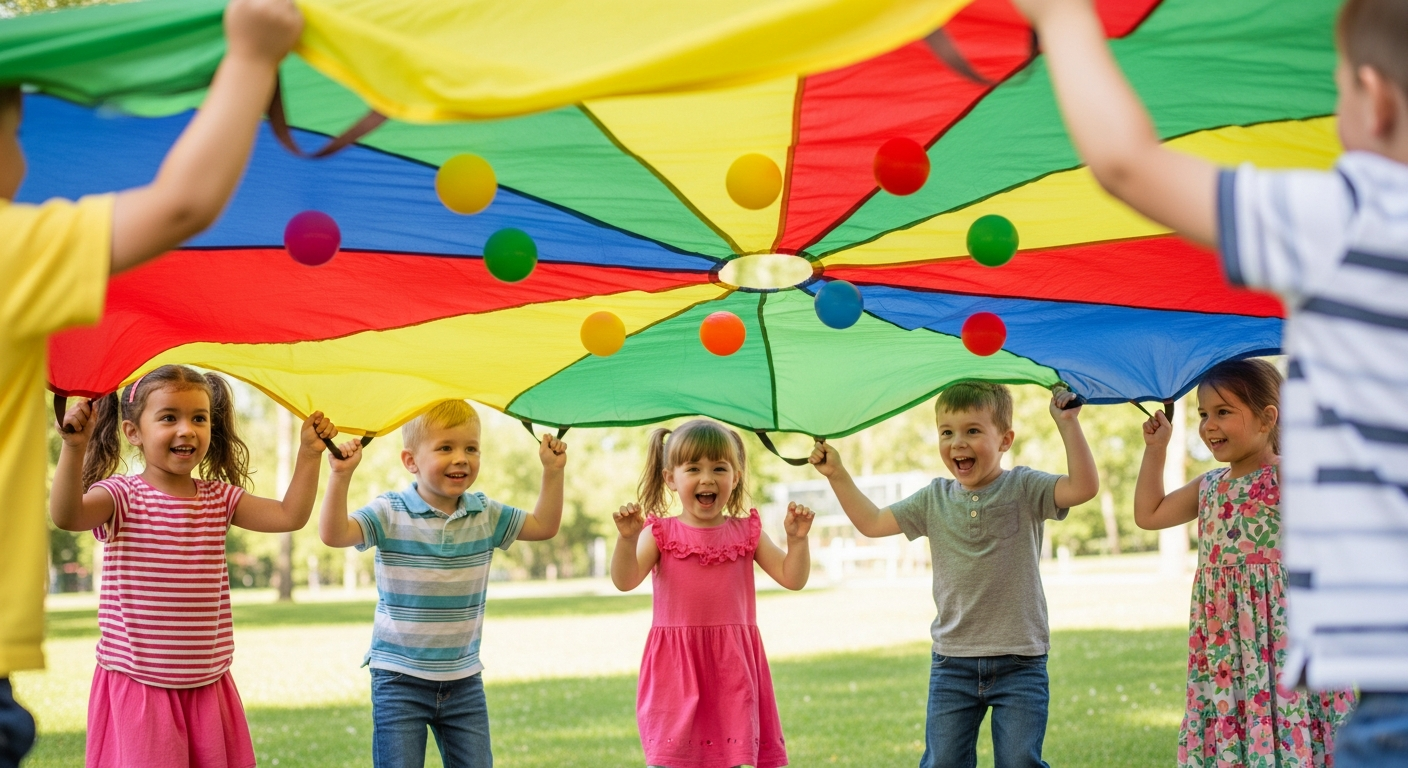
Table of Contents
- Introduction
- Why Party Games Matter for Development
- Planning the Perfect Party: Key Considerations
- Indoor Party Games for Every Age
- Outdoor Party Games for High-Energy Fun
- Integrating Speech Blubs into Party Prep & Beyond
- Speech Blubs: Your Partner in Communication
- Conclusion
- FAQ
Has your child ever left a birthday party absolutely beaming, bubbling over with stories about "Red Light, Green Light" or an epic scavenger hunt? More than just fun, these moments are powerful catalysts for growth, offering a rich playground where young minds develop crucial communication and social skills. It's easy to get caught up in the details of party planning – the cake, the decorations, the guest list – but often, the most cherished memories come from the shared laughter and playful interactions that party games provide.
In this comprehensive guide, we'll dive into a treasure trove of kids' party game ideas, perfect for any age and setting. We'll explore how these seemingly simple activities can become vibrant learning experiences, fostering everything from turn-taking and listening to expressive language and problem-solving. We'll show you how to choose games that not only entertain but also naturally encourage your child to speak their minds and hearts, building confidence one joyful interaction at a time. Get ready to transform your next celebration into an engaging, developmental adventure for every little guest, all while discovering how tools like Speech Blubs can seamlessly support your child's communication journey both during and after the festivities.

Introduction
Picture this: a room full of eager faces, a flurry of excited chatter, and the anticipation of fun about to unfold. Children’s parties are vibrant explosions of energy, imagination, and connection. While balloons and cake certainly play their part, it's often the games that truly make a party unforgettable, leaving indelible memories of laughter and triumph. But what if these playful activities could offer more than just fleeting entertainment? What if they could also be powerful engines for your child's developmental growth, especially in the realm of communication?
At Speech Blubs, we believe that every interaction is an opportunity for learning, and party games are no exception. Our mission, born from the personal experiences of our founders who faced their own speech challenges, is to empower children to speak their minds and hearts. We understand the crucial role that playful engagement plays in building foundational speech and language skills. This post isn't just about listing fun games; it's about understanding why they matter and how you can maximize their developmental benefits, turning a simple birthday bash into a robust learning experience. We'll guide you through age-appropriate choices, creative adaptations, and practical tips to ensure your next party is a hit, both for its entertainment value and its contribution to your child’s blossoming communication abilities.
Why Party Games Matter for Development
Party games are far more than just time-fillers; they are dynamic, immersive learning environments. Think about the rich tapestry of skills a child weaves together while playing a game:
- Communication Skills: From understanding instructions ("Simon says...") to expressing desires ("My turn!"), asking questions ("Where do we hide?"), and narrating actions ("I'm chasing you!"), games are a constant practice ground for verbal and non-verbal communication. They teach children to listen actively, articulate thoughts, and respond appropriately.
- Social-Emotional Growth: Games teach vital lessons in turn-taking, sharing, cooperation, negotiation, and empathy. They help children learn how to win gracefully, lose with resilience, and navigate the complex dynamics of group play. This builds confidence and reduces frustration in social settings.
- Cognitive Development: Many games involve problem-solving, strategic thinking, memory recall, and following multi-step directions. A scavenger hunt, for instance, hones observation skills and logical deduction, while "Red Light, Green Light" builds impulse control.
- Motor Skills: From fine motor control in "Face the Cookie" to gross motor movements in "Sack Race" or "Tug-of-War," games provide essential physical activity that contributes to overall development.
- Emotional Regulation: The excitement of a party, combined with the rules and outcomes of games, offers opportunities for children to practice managing big emotions like excitement, anticipation, and disappointment.
At Speech Blubs, we recognize that communication is a holistic skill. It's not just about forming words, but about understanding social cues, expressing emotions, and confidently engaging with the world. Our unique video modeling methodology, where children learn by watching and imitating their peers, mirrors the natural learning process that happens during group play. Just as children learn from watching friends play a game, they learn speech patterns and vocabulary from the kids in our app.

Planning the Perfect Party: Key Considerations
Before diving into specific game ideas, let's lay the groundwork for a successful party. Thoughtful planning ensures smooth transitions and maximizes engagement for all your little guests.
Age-Appropriateness
This is paramount. A game that enthralls a seven-year-old might overwhelm a two-year-old. Tailor your choices to the developmental stage of the majority of your guests.
- Infants (under 1): Focus on sensory experiences and parent-child interaction rather than structured games. Think soft textures, gentle sounds, and mirror play.
- Toddlers (1-3 years old): Simple, non-competitive games with clear, repetitive actions are best. Avoid elimination and focus on participation. "Musical Statues" with no "outs" is perfect.
- Preschoolers (3-5 years old): They love imaginative play, simple rules, and games that involve movement and a bit of challenge. They're ready for basic turn-taking.
- Early School-Agers (5-8 years old): Introduce games with more complex rules, team dynamics, and strategy. Friendly competition can be a motivator, but sportsmanship should be emphasized.
- Older Kids (8+ years old): They enjoy more intricate challenges, cooperative tasks, and games that require problem-solving or skill.
Location: Indoor vs. Outdoor
Your space dictates your game options.
- Indoor Parties: Best for smaller groups, quieter games, and activities requiring minimal movement. Think "Charades," "Simon Says," or adapted "Minute to Win It" challenges. Ensure clear pathways and remove fragile items.
- Outdoor Parties: Ideal for active, boisterous games like "Capture the Flag," "Sack Races," or water-based fun. Designate clear boundaries and ensure safe play areas.
Group Size
- Small Groups (2-5 children): Games like "I Spy," "Follow the Leader," or a small "Scavenger Hunt" work well, allowing for more individual attention and interaction.
- Medium Groups (6-12 children): Many classic games like "Red Light, Green Light" or "Musical Chairs" are perfect. Team games can also be introduced effectively.
- Large Groups (12+ children): Opt for games that can accommodate many players simultaneously, like "Parachute," "Spider Web," or large-scale "NERF Wars" where individual elimination doesn't leave many out of play for long.
Theme Integration
If you have a party theme (e.g., superheroes, jungle, outer space), weave it into your games. A "Nature Scavenger Hunt" becomes a "Jungle Expedition," or "Ring Toss" becomes "Alien Target Practice." This enhances engagement and immersion.
Safety First
Always prioritize safety. Clear play areas, supervise all activities, especially water games, and have a first-aid kit on hand. Be mindful of potential choking hazards for younger children.
Indoor Party Games for Every Age
Indoor spaces can be transformed into fantastic play zones with a little creativity. These games are perfect for smaller groups, inclement weather, or when you need a less boisterous activity.
For the Little Ones (1-3 years old): Gentle & Engaging
For toddlers, the emphasis is on sensory exploration, simple imitation, and joyful participation. These games help build early vocabulary and listening skills.
Sensory Play Stations
Set up different zones with engaging materials.
- Pool Painting (Modified): Instead of a full pool, use a large, shallow tray. Secure white paper to the bottom. Dip large, easy-to-grasp plastic balls in child-safe tempera paint and let toddlers roll them around in the tray, creating abstract art. Narrate their actions: "Look, you're rolling the blue ball! It makes a swirly line!" This introduces color names and action verbs.
- Pop the Bubbles: A simple bubble machine provides endless fascination. Let the kids run around gleefully, popping bubbles. Encourage words like "pop," "up," "more," and "big" or "small" bubbles. This helps with early word production and following simple commands. Check out our list of the best bubble guns and bubble machines for inspiration!
- Break the Ice: Freeze small, child-safe toys inside large ice cubes or plastic containers. Provide little hammers, spoons, or spray bottles of warm water for toddlers to "excavate" the treasures. Describe the sensations: "The ice is cold and slippery! You're tapping the ice." This encourages descriptive language.
Classic Circle Games (Modified)
These games focus on group participation without the pressure of "winning" or "losing."
- Musical Statues: Play some upbeat music and have the children dance. When the music stops, everyone freezes like a statue. If anyone wiggles, it’s just for fun! No one is "out." Encourage descriptive words for their poses: "You look like a tall tree!"
- Musical Bumps: Similar to statues, but when the music stops, everyone sits down as quickly as possible. Again, no one is out, it's just about the fun of sitting down fast.
- "Simon Says" (or "Your Name Says"): A grown-up gives instructions, but children only follow if prefaced with "Simon Says." For toddlers, replace "Simon" with your own name to avoid confusion ("Mommy Says..."). If they follow an instruction without the preface, it’s a silly mistake, not an "out." This is fantastic for receptive language (understanding instructions) and impulse control.
- The Hokey Pokey: A classic action song where children follow the lyrics with actions. "You put your left hand in, you put your left hand out..." This encourages body part identification, following multi-step directions, and imitation.
Simple Role-Playing
- Shop (Modified): Hide "coins" (tinfoil molded discs or poker chips) around the room. Children find them and bring them to a "shop" (a small table with individually wrapped snacks or tiny party favors). They "buy" an item by handing over a coin. This encourages requesting, naming objects, and using simple social phrases like "Thank you" and "Please."
For Active Preschoolers (3-5 years old): Imaginative & Interactive
Preschoolers are ready for games that spark their imagination, involve more complex instructions, and introduce basic social rules like turn-taking.
Scavenger Hunts
- Sweet Scavenger Hunt: Hide small, individually wrapped treats or toys around the party area. Give each child a small bag to collect their treasures. For language, ask "What did you find?" "Is it under the chair or behind the curtain?" This promotes descriptive language and prepositions.
- Nature Scavenger Hunt (Indoor version): Provide a list (with pictures for non-readers) of common household objects (e.g., "something red," "something soft," "a book," "a spoon"). Children find and collect them. Encourage them to describe their finds and tell you where they found them.
Movement Games
- Follow the Leader: The birthday child (or an adult) starts as the leader, and everyone else mimics their movements and silly gestures as they move around. This encourages observation, imitation, and body awareness.
- Keep It Up (Balloon Game): Using balloons or very light balls, challenge the children to keep them in the air as long as possible without touching the ground. This encourages cooperation and introduces action words like "hit," "tap," "up," and "don't touch."
Imitation & Guessing
- Charades (Simple): Write simple words or phrases on slips of paper (animals, simple actions like "eating," "sleeping," "jumping"). Children pull one out and act it out without sound. The first one to guess gets to go next. This builds non-verbal communication, understanding of concepts, and vocabulary.
Minute to Win It Inspired
These can be adapted for preschoolers with a focus on trying, not necessarily "winning" in a strict sense.
- Defying Gravity: Give each child two or three balloons. The goal is to keep them in the air for a set time (e.g., 30 seconds) by hitting them gently. This encourages focus and coordination.
- Face the Cookie (Modified): Use a soft, small cracker or a piece of fruit leather. Children place it on their forehead and try to move it to their mouth using only facial muscles. It’s hilarious and a great way to talk about body parts and facial expressions.
Outdoor Party Games for High-Energy Fun
When the weather permits, outdoor parties offer ample space for energetic, boisterous games that encourage gross motor skills and teamwork.
For Early School-Agers (5-8 years old): Teamwork & Strategy
At this age, children enjoy games with more defined rules, an element of competition, and opportunities for group collaboration.
Classic Active Games
- Red Light, Green Light: One person is the "stoplight," facing away from the "traffic" (other players). The stoplight calls "Green Light!" and players move. When the stoplight turns and calls "Red Light!", players must freeze. Anyone caught moving goes back to the start. This builds impulse control, listening skills, and gross motor coordination.
- Capture the Flag (Simplified): Divide kids into two teams, each with a "flag" (a bandana or piece of fabric). The goal is to steal the other team's flag. Set clear boundaries and simple tagging rules (e.g., tagged players freeze until unfrozen by a teammate). This promotes teamwork, strategy, and negotiation.
- Steal the Bacon: Divide into two teams. Assign each player a number. Place an object ("bacon") in the middle. Call a number, and the corresponding player from each team tries to grab the bacon and return to their side without being tagged. This enhances quick thinking, listening, and agility.
- Tug-of-War: A classic test of strength and teamwork. Two teams pull on a rope, trying to pull the other team past a center line. This is excellent for cooperation and encouragement.
- Sardines: A fun twist on hide-and-seek. One person hides, and everyone else looks. When someone finds the hider, they join them in the hiding spot. The group gets "squeezed like sardines" until the last person finds the group. This encourages problem-solving and quiet cooperation.
- Monkey in the Middle: One or more players are the "monkey" in the middle of a group. The outer players toss a ball to each other, trying to keep it from the monkey(s). If the monkey catches it, the thrower becomes the new monkey. Great for coordination, throwing/catching, and spatial awareness.
Water Games (Perfect for Summer Parties!)
Always supervise water activities closely.
- Water Balloon Toss (Gentle): Teams of two stand a short distance apart and gently toss a water balloon back and forth, taking a step back after each successful catch. The goal is to see how far apart they can get without breaking the balloon. This teaches careful handling and anticipation.
- Sprinkler Tag: Turn on a sprinkler and let the kids run through. Make it a game: "Can you cross without getting wet?" "Did the water splash you?" This encourages action words and descriptive language.
- Slip and Slide: A backyard staple for hot days. Lay out a plastic tarp, secure it, and add a hose or sprinkler. Kids love sliding! Narrate: "You're sliding fast!" "The water is cool!"
Target Practice & Races
- Cornhole: Toss beanbags into the hole of a target board. This is great for hand-eye coordination and counting points.
- Horse (Modified): All you need is a basketball and hoop (or a soft ball and a bucket). One player makes a shot, and the next player tries to duplicate it. If they miss, they get a letter from H-O-R-S-E. This builds aiming skills and encourages persistence.
- Ring Toss: Set up plastic cones or bottles and have children toss rings to land on them. Assign points for each target. This improves aiming and number recognition.
- Egg and Spoon Races: Children balance an egg (boiled for less mess!) on a spoon and race to a finish line. If the egg drops, they go back to the start. This enhances balance and careful movement.
- Sack Race: Decorate burlap sacks. Children hop in the sacks down a marked path to a finish line. This is fantastic for gross motor skills and coordination, and it’s always good for a laugh.
- Obstacle Course: Create your own with household items like pool noodles, cardboard boxes, pillows, or even ropes. Kids crawl, jump, climb, and weave through the course. This encourages following a sequence of instructions and using prepositions ("under," "over," "through").
Collaborative Building
- Build-Your-Own Boat Races: Provide craft materials like pool noodles (cut into sections), skewers, and tape. Kids design and build small boats. Then, they race them in a kiddie pool or a makeshift stream. This fosters creativity, problem-solving, and encourages children to explain their designs.
Integrating Speech Blubs into Party Prep & Beyond
Party games naturally foster the very skills Speech Blubs aims to develop. They create a "screen-free alternative" to passive viewing, encouraging active engagement and interaction. While the party is happening, you can implicitly leverage these opportunities.
When children are engaged in a game, they are often replicating actions and sounds. This is exactly what we do at Speech Blubs with our video modeling methodology. Children learn by watching real children their age on screen, imitating sounds, words, and phrases. The natural, spontaneous way kids learn from their peers in games—like copying a friend's dance move or sound effect—is scientifically supported as a powerful learning tool, which is why our app boasts a high MARS scale rating.
Making Every Party Game a Language Opportunity
As parents and caregivers, you are your child’s most important communication partner. During party games, you can subtly enhance language development:
- Narrate Actions: "You're running so fast!" "He's hiding behind the tree!"
- Ask Open-Ended Questions: Instead of "Did you like it?", try "What was your favorite part?" or "How did you feel when you caught the flag?"
- Encourage Turn-Taking & Sharing: Explicitly state, "My turn, then your turn," or "Let's share the beanbags."
- Describe Sensory Details: "The bubble is shiny and wet!" "The grass is tickly on your feet."
- Model New Words: Introduce vocabulary related to the game, like "strategy," "opponent," "cooperate," or "balance."
- Praise Effort, Not Just Outcome: "I love how you kept trying!" "You worked really well with your team!"
Speech Blubs: Your Partner in Communication
We understand that every child's communication journey is unique. Some children are natural chatterboxes, while others need a little extra encouragement and support to find their voice. That's why we created Speech Blubs. Our company was born from the personal experiences of our founders, who all grew up with speech problems and created the tool they wished they had. We are committed to providing an immediate, effective, and joyful solution for the 1 in 4 children who need speech support.
Our approach blends scientific principles with play into one-of-a-kind "smart screen time" experiences. Unlike passive viewing like cartoons, Speech Blubs provides an active, engaging alternative that truly supports language development. It’s also a powerful tool for family connection, as parents often engage in co-play with their children using the app.
For example, for a parent whose 3-year-old "late talker" loves animals, the "Animal Kingdom" section of Speech Blubs offers a fun, motivating way to practice "moo" and "baa" sounds, just like they would mimic animal sounds in a party game. The app allows children to explore complex communication skills in a structured yet playful environment, complementing the spontaneous learning they get from real-world interactions. You can read what other parents are saying about their child's success with Speech Blubs on our testimonials page.
Ready to Empower Your Child’s Voice?
Choosing the right tools for your child's development is a big decision, and we believe in transparency and value. We offer two main subscription plans for Speech Blubs:
- Monthly Plan: This plan is available for just $14.99 per month.
- Yearly Plan: Our most popular and recommended option, priced at $59.99 per year. This breaks down to an incredible value of just $4.99 per month, allowing you to save 66% compared to the monthly plan!
The Yearly Plan isn't just about saving money; it’s about unlocking the full potential of Speech Blubs and our extended family of learning tools. With the Yearly Plan, you'll receive:
- A 7-day free trial to explore all features.
- The extra Reading Blubs app, further supporting literacy development.
- Early access to new updates and a 24-hour support response time, ensuring you always have the best experience.
The Monthly Plan, while flexible, does not include these valuable extra benefits. We encourage you to choose the Yearly plan to get the free trial and the full suite of features that will support your child's journey to confident communication.
Unsure if Speech Blubs is the right fit for your child? Take our quick 3-minute preliminary screener to get a simple assessment and a personalized next-steps plan, which also includes access to your 7-day free trial.
Conclusion
From the simplest games like "Pop the Bubbles" for toddlers to the strategic thrills of "Capture the Flag" for older children, party games are truly developmental powerhouses. They offer far more than just fun; they are essential crucibles where communication, social skills, and cognitive abilities are forged through joyful interaction. By thoughtfully selecting and facilitating these activities, parents and caregivers can create memorable celebrations that also lay crucial groundwork for confident, expressive children.
Remember to narrate, question, praise, and model new words during play, turning every bounce of a balloon or step in a sack race into a moment of learning. And when the party wraps up, the journey of empowering your child's voice continues.
Ready to provide your child with an immediate, effective, and joyful solution for speech and language development? Download Speech Blubs on the App Store or get it on Google Play today! We recommend choosing the Yearly plan for just $59.99/year (saving you 66%!) to unlock your 7-day free trial, the bonus Reading Blubs app, and exclusive early access to new features. Don't miss out on creating more joyful learning moments every day! Create your account and begin your 7-day free trial today.
FAQ
Q1: How do I choose the best party games for different age groups?
A1: The key is age-appropriateness. For toddlers (1-3), focus on simple, non-competitive sensory and imitation games like "Pop the Bubbles" or modified "Musical Statues." Preschoolers (3-5) enjoy imaginative play, basic rules, and movement, such as "Charades" or simple "Scavenger Hunts." Early school-agers (5-8) are ready for games with more rules, teamwork, and friendly competition like "Red Light, Green Light" or "Tug-of-War." Always prioritize participation over elimination for younger kids.
Q2: What's the best way to encourage communication during party games?
A2: Be an active participant and narrator! Describe actions ("You're jumping high!"), ask open-ended questions ("What do you think will happen next?"), model new vocabulary ("This game requires strategy!"), and encourage turn-taking ("My turn, then your turn"). Praise effort and participation, not just winning. This creates a rich language environment that naturally supports speech development.
Q3: How can Speech Blubs complement the fun and learning from party games?
A3: Speech Blubs extends the interactive, imitative learning of party games into a structured "smart screen time" experience. Our video modeling methodology allows children to learn by watching and imitating their peers, much like they learn social cues and actions from friends during play. It offers a joyful, effective way to practice speech, vocabulary, and communication skills daily, reinforcing the foundations built through real-world interactions and play.
Q4: What are the benefits of choosing the Speech Blubs Yearly Plan over the Monthly Plan?
A4: The Yearly Plan offers significantly better value at $59.99/year (just $4.99/month, saving 66%). It includes a 7-day free trial, the additional Reading Blubs app, early access to new updates, and 24-hour support response time. The Monthly Plan ($14.99/month) does not include these valuable extra features. We highly recommend the Yearly Plan to give your child the full suite of our developmental tools.
About the author