
Unlock Learning: Fun Tracing Activities for Kids
 By Speech Blubs Team•Jan 13, 2026•20 min.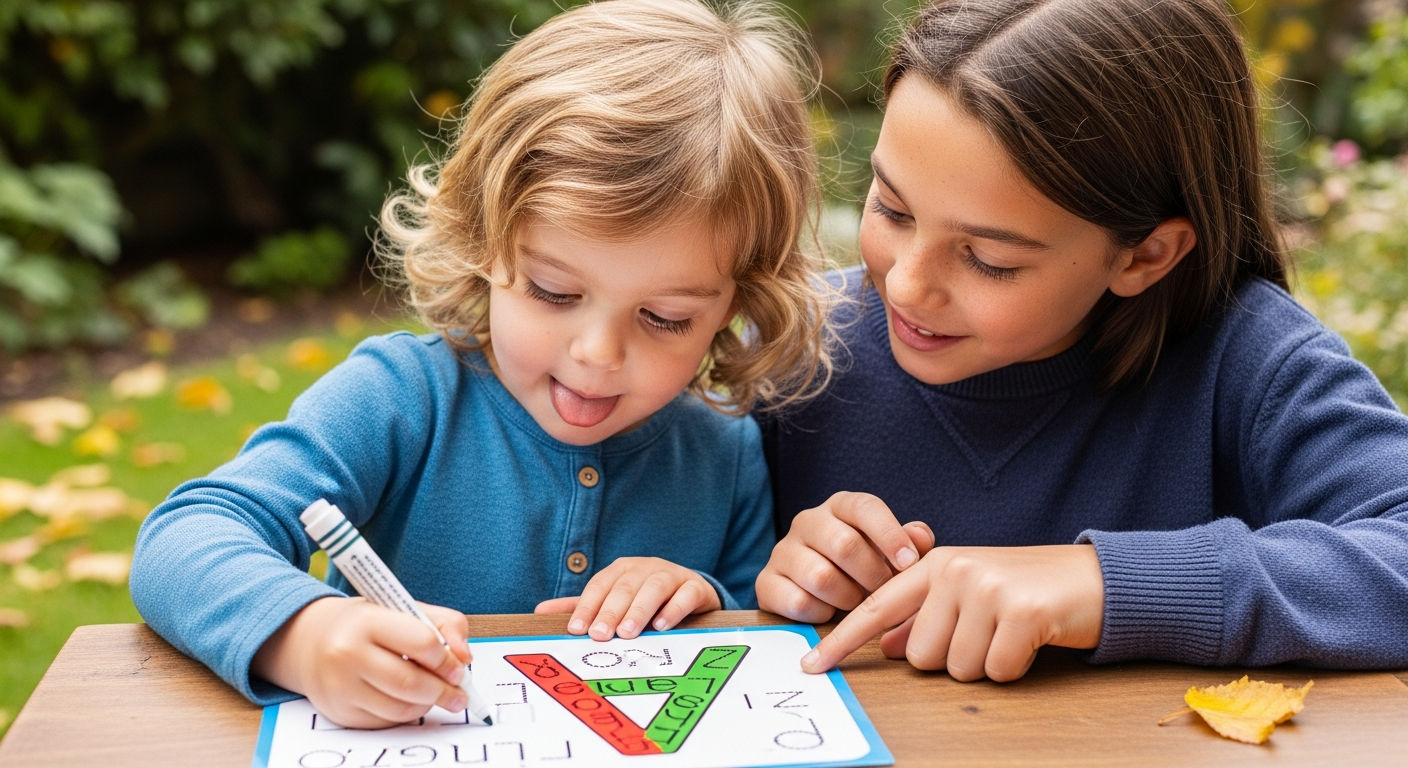
Table of Contents
- The Power of Tracing: More Than Just Lines
- Key Developmental Benefits of Fun Tracing Activities
- Setting the Stage for Successful Tracing
- A World of Fun Tracing Activities for Kids
- Integrating Play and Purpose: How Speech Blubs Supports Foundational Skills
- When to Consider More Support: How Speech Blubs Can Help
- Conclusion
- FAQ
Have you ever watched a toddler try to pick up a tiny crumb, or painstakingly color within the lines of a simple drawing? These seemingly small actions are actually giant leaps in their developmental journey. They’re building the foundational skills crucial for everything from buttoning their shirt to confidently expressing their ideas. This post will dive deep into the world of fun tracing activities for kids, exploring how these engaging exercises do much more than just prepare them for handwriting. We'll uncover the rich benefits, from boosting fine motor skills and cognitive abilities to enhancing early literacy and even supporting speech development. By understanding the profound impact of playful tracing, parents and caregivers can transform simple lines and shapes into powerful tools for their child's holistic growth, making learning a joyful and empowering experience.
The Power of Tracing: More Than Just Lines
Tracing is often seen as a basic pre-writing task, a simple exercise to get little hands ready for forming letters and numbers. However, this seemingly straightforward activity is a cornerstone for countless developmental milestones, acting as a crucial bridge between abstract thought and concrete action. It’s an entry point into the world of visual perception, fine motor control, and cognitive processing that extends far beyond the page.

Beyond just preparing for handwriting, tracing helps children develop precision, control, and an understanding of spatial relationships. When a child carefully follows a line, they are refining their visual-motor integration – the ability to coordinate what their eyes see with what their hands do. This skill is vital not just for writing, but for everyday tasks like cutting with scissors, pouring water into a glass, or even catching a ball.
The benefits of tracing also subtly extend to communication skills. The muscle control developed through the intricate movements of fingers, wrist, and arm while tracing translates into better overall muscle dexterity. This can, in turn, contribute to the intricate muscle control required for the mouth and tongue to produce clear and articulate speech sounds. Furthermore, the concentration and sustained attention demanded by tracing activities are precursors to effective listening and language processing, helping children focus on spoken words and understand instructions. When a child gains confidence in their ability to control their movements and achieve a task, it builds a general sense of self-efficacy that empowers them to try new things, including expressing themselves verbally.
Key Developmental Benefits of Fun Tracing Activities
Engaging in fun tracing activities offers a multifaceted approach to nurturing a child’s growth. These activities are designed to be enjoyable, yet they systematically target a range of critical developmental areas.
Fine Motor Skill Development
Tracing is a powerhouse for developing fine motor skills, which involve the coordination of small muscles, typically in the hands and fingers, with the eyes.
- Pencil Grasp: Regular tracing helps children practice and refine their pencil grasp, gradually moving towards a functional tripod grip (holding the pencil with the thumb, index, and middle finger). This is fundamental for comfortable and efficient writing.
- Hand Strength and Dexterity: The act of guiding a writing tool along a line strengthens the intrinsic muscles within the hand. This improved dexterity is not just for writing; it’s essential for manipulating small objects, tying shoelaces, buttoning shirts, and using utensils.
- Preparation for Everyday Tasks: From zipping up a coat to cutting shapes with scissors, many daily activities rely on the same fine motor skills honed through tracing. For a child struggling with holding a crayon firmly, simple, thick-line tracing activities can build the necessary hand strength. This is much like how the interactive tapping and swiping in Speech Blubs engages finger muscles in a fun, pressure-free way, strengthening those same small muscles needed for fine motor control.
Hand-Eye Coordination
This is the ability of the brain to coordinate vision with the movements of the hands. Tracing activities require children to visually track a line or shape and then guide their hand to follow that path. This repeated practice sharpens their ability to:

- Track Movements: Crucial for reading, sports, and navigating their environment safely.
- Align Hand with Visual Input: Essential for tasks like threading beads, catching a ball, or even eating independently.
Visual Perception
Visual perception involves the ability to interpret and organize visual information. Tracing plays a significant role in developing several aspects of visual perception:
- Shape Recognition: Children learn to identify and differentiate between various shapes, which is a precursor to recognizing letters and numbers.
- Spatial Awareness: By tracing within lines or connecting dots, they develop an understanding of spatial relationships – where objects are in relation to one another and to themselves.
- Discrimination: Tracing helps children notice subtle differences between similar shapes or letters, an essential skill for reading and identifying objects.
Pre-Writing Skills
Tracing activities are the direct predecessors to independent writing. They help children master the foundational strokes that make up letters and numbers:
- Mastering Basic Strokes: Children practice vertical lines, horizontal lines, curves, and slants, which are the building blocks of all uppercase and lowercase letters.
- Developing Muscle Memory: Repeated tracing builds muscle memory, allowing children to eventually form letters and words more automatically and with less conscious effort.
Cognitive Benefits
Beyond the physical aspects, tracing activities significantly boost cognitive development:
- Concentration and Attention Span: Focusing on staying within the lines or following a specific path requires sustained attention, helping children improve their ability to concentrate for longer periods.
- Problem-Solving: Deciding how to approach a curve or a sharp corner, and correcting mistakes, engages problem-solving skills.
- Following Instructions: Whether it’s tracing a specific sequence of shapes or following multi-step directions for a themed tracing page, these activities reinforce the ability to understand and execute instructions.
Bilateral Integration
This refers to the ability to use both sides of the body together in a coordinated and effective way.
- When tracing, children typically use one hand to hold the paper steady while the other hand traces. This seemingly simple action is vital for developing bilateral integration, which is important for crossing the midline (imaginary line down the center of the body) and coordinating various body movements.
Sensory Integration
Tracing can also be a sensory experience, especially when using different materials.
- Tactile Feedback: The feel of different tracing tools (chunky crayon vs. thin pencil) and surfaces (smooth paper vs. textured sandpaper letters) provides varied tactile input.
- Proprioceptive Input: The pressure applied while tracing gives children a sense of their body’s position and movement, contributing to their proprioceptive awareness.
Setting the Stage for Successful Tracing
Creating the right environment and providing appropriate tools can significantly enhance your child’s tracing experience, making it more enjoyable and effective.
Creating an Inviting Environment
- Quiet and Dedicated Space: Choose a calm area free from distractions. This doesn't have to be a formal classroom; a clean kitchen table or a small desk can work perfectly.
- Comfortable Seating: Ensure your child is seated comfortably with their feet flat on the floor (or supported on a step stool). Their elbows should be able to rest comfortably on the table. Proper posture helps with stability and reduces fatigue.
- Make it Fun, Not a Chore: Frame tracing as a playful activity rather than a strict academic task. Use enthusiastic language and celebrate their efforts, not just perfect outcomes.
Choosing the Right Tools
- Writing Utensils:
- Beginners (2-3 years): Start with thick crayons, chunky markers, or even finger paints. These offer a larger grip and less resistance, making it easier for developing hands.
- Intermediate (3-4 years): Progress to thinner crayons, regular markers, or chalk.
- Advanced (4+ years): Introduce pencils as fine motor control improves. Ensure they are sharpened to a good point.
- Paper Types:
- Large Sheets: For very young children, larger paper gives them more room to explore without feeling confined.
- Thick Lines: Start with tracing pages that have thick, clear lines.
- Textured Paper: Sometimes, slightly textured paper can provide extra sensory feedback.
- Tracing Paper: Excellent for overlaying images and practicing without fear of "ruining" the original.
- Erasers: Provide a good eraser so children can confidently correct their mistakes, fostering a growth mindset.
Proper Posture and Grip
Encourage good habits from the start without being overly critical, as learning is a process.
- Feet Flat, Back Straight: This stable base allows for better arm and hand control.
- Tripod Grasp: Gently guide your child to hold the pencil with their thumb and index finger, resting on the middle finger. If they are not ready for this, don't force it; keep offering various tools.
- Relaxed Shoulders and Arms: Tension can lead to fatigue and poor control. Remind them to keep their shoulders down and arms relaxed.
A World of Fun Tracing Activities for Kids
The beauty of tracing is its versatility. There's a vast array of activities to keep children engaged, catering to different interests and developmental stages.
Classic Tracing Worksheets (and how to make them engaging)
Worksheets don't have to be boring. With a little creativity, they can be a fantastic foundation.
- Alphabet Tracing:
- Introduce letters by connecting them to familiar objects. Printable Alphabet Tracing Pictures for Beginners, where each letter corresponds to a picture, can make learning the alphabet fun and intuitive. Focus on both uppercase and lowercase letters. Encourage "rainbow writing" where children trace the same letter multiple times using different colors.
- Speech Blubs Connection: Just as tracing helps children learn letter shapes, Speech Blubs uses visual modeling to teach mouth shapes and sounds. Our Animal Kingdom section, for example, allows children to see and imitate peers making animal sounds, connecting the visual with the auditory in a powerful learning loop, directly supporting articulation development.
- Number Tracing: Practice basic counting and number recognition by tracing numbers along with corresponding quantities of objects.
- Shape Tracing: Start with basic shapes like circles, squares, and triangles, then move to more complex ones like stars or hearts. You can also have children trace around cookie cutters or stencils.
- Line Tracing:
- Begin with simple straight lines, then progress to wavy, zigzag, and curved lines. Themed worksheets, such as fire safety or outer space, can make line tracing an exciting adventure. For a child who enjoys stories about space, 'outer-space themed tracing worksheets' where they trace lines for astronauts can make the activity feel like an exciting mission, mirroring how our Speech Blubs app turns speech practice into engaging adventures.
- Connect-the-dot activities also fall into this category, forming lines and simple pictures.
- Picture Tracing:
- Find worksheets with engaging pictures of animals, nature scenes, or seasonal themes. "Fun Animal and Nature Tracing Worksheets for Preschoolers" are readily available and can be colored in after tracing.
- Seasonal tracing packets featuring pumpkins, Christmas trees, or Halloween cuties can add a festive touch.
- Tip: Print out simple line art of your child's favorite characters and let them trace over it with tracing paper.
Sensory Tracing Activities
Engaging multiple senses can make tracing more exciting and memorable.
- Flour/Sand Tracing:
- Spread a thin layer of flour, salt, or sand on a tray or cookie sheet. Children can use their fingers, a stick, or a paintbrush to trace letters, shapes, or lines. This offers wonderful tactile feedback. This aligns with ideas like the "Flour-Tracing Art Activity to Do At Home With Your Children" which makes learning playful and hands-on.
- Shaving Cream/Paint Tracing:
- Spread a thin layer of shaving cream or washable paint on a washable surface (like a table, baking sheet, or large ziplock bag). Children can use their fingers to trace, creating a delightful sensory experience.
- Playdough Tracing Mats:
- Print or create laminated mats with large letters, numbers, or shapes. Children can roll playdough "snakes" and carefully place them along the lines, building the forms with their hands.
- Speech Blubs Connection: The hands-on, multi-sensory engagement of playdough tracing, where children literally build letters, aligns perfectly with our belief at Speech Blubs that learning should be experiential. We transform passive screen time into smart screen time by inviting children to actively participate, just like they do with playdough, stimulating their senses and encouraging active learning.
- Sticker Tracing:
- Draw a line or a simple shape on paper. Children then place small stickers (like dot stickers) along the line, one after another. This develops pincer grasp, precision, and hand-eye coordination. This is a creative twist on "Fun Sticker-Related Activities" that enhances fine motor skills.
Outdoor & Large Motor Tracing
Take the tracing fun outside and incorporate larger movements!
- Shadow Tracing:
- On a sunny day, take toys, natural objects (leaves, sticks), or even have your child pose, and trace their shadows on large paper or the pavement with chalk. The "Outdoor Shadow Tracing Activity" highlights how engaging this can be. It encourages observation and gross motor movement.
- Chalk Tracing:
- On a sidewalk or driveway, draw large letters, numbers, shapes, or even mazes. Have your child trace them with colorful chalk. This allows for whole-body engagement and develops spatial awareness on a larger scale.
- Water Tracing:
- Give your child a paintbrush and a bucket of water. On a sunny wall or dark pavement, they can "paint" and trace lines, shapes, or letters. The disappearing act as the water dries adds an element of magic.
Creative & Interactive Tracing
These activities add unique elements to the tracing experience.
- Light Table Tracing:
- If you have a light table (or even a brightly lit window), use translucent papers, leaves, or plastic shapes. Children can trace these items on paper placed over the light source. "Light Table Tracing Fun for Kids" emphasizes the visual engagement this provides.
- Window Tracing:
- Tape a picture to a sunny window. Place a blank sheet of paper over it and tape that down too. Your child can then easily trace the lines that show through.
- "Funny Instruction Tracking":
- This activity, inspired by observations of children following specific verbal commands for tracing, naturally builds a child's ability to listen carefully and follow multi-step directions. For example, "Trace the red zigzag line, then draw a blue circle at the end."
- Speech Blubs Connection: This activity, focusing on 'funny instruction tracking,' naturally builds a child's ability to follow directions, a skill that is also fostered within the structured, yet playful, activities in the Speech Blubs app. Our interactive videos guide children through speech exercises, encouraging them to listen and respond actively.
- Tracing with Stones/Objects:
- Draw thick lines or shapes on black cardstock with a white or brightly colored pencil. Provide small stones, beans, or beads. Children then carefully place these objects along the drawn lines, enhancing fine motor control and concentration. This is a wonderful adaptation of the "Fine Motor Skills Activity" described in early learning circles.
Personalized Tracing
Nothing is more motivating for a child than seeing their own name.
- Name Tracing:
- "Name Tracing Editable, Name Practice," "Editable Name Writing Practice," and similar resources are invaluable. Creating custom worksheets with your child's first and last name helps them recognize and learn to write the most important word to them. This teaches letter recognition, spelling, and fosters a strong sense of self-identity.
- Tip: Many online resources offer editable templates where you can simply type in your child’s name, and it generates custom tracing sheets.
- Speech Blubs Connection: Just as seeing their own name makes learning personal and engaging, Speech Blubs taps into a child's natural desire to communicate their unique thoughts. Our mission at Speech Blubs is to empower children to speak their minds and hearts, giving them the tools to confidently share their personal world through sound, words, and connection.
Integrating Play and Purpose: How Speech Blubs Supports Foundational Skills
At Speech Blubs, we believe that learning should always be a joyful and empowering experience. Our approach to speech and language development beautifully complements the foundational skills fostered through fun tracing activities.
Video Modeling & Imitation
Our unique video modeling methodology is rooted in scientific principles and directly parallels the concept of tracing through visual imitation. Just as children learn to trace by visually following a line, they learn to speak by watching and imitating their peers in our app. This active observation activates mirror neurons in the brain, making the learning process incredibly effective. Children see other kids making sounds and words, visually imitate the mouth movements, and then practice themselves. This builds strong neurological pathways for speech, much like tracing builds muscle memory for writing.
"Smart Screen Time" and Active Engagement
In a world filled with passive cartoons, Speech Blubs offers a revolutionary form of "smart screen time." Instead of merely watching, children actively participate. They imitate sounds, repeat words, and interact with the screen by tapping on characters, swiping to reveal objects, or recording their own voice. This active engagement is critical for developing attention span, fine motor control (through screen interaction), and cognitive processing – all skills that are also profoundly nurtured through hands-on tracing activities. We were born from the personal experiences of our founders, who all grew up with speech problems and created the tool they wished they had – a screen-free alternative to passive viewing, and a powerful tool for family connection.
- Relatable Scenario: For a parent whose 3-year-old "late talker" loves animals and might find holding a pencil challenging, our "Animal Kingdom" section offers a fun, motivating way to practice 'moo' and 'baa' sounds. They watch other kids, imitate, and interact with the screen, which strengthens their oral motor skills and attention – foundational elements that complement the fine motor and focus required for tracing.
Building Confidence and Reducing Frustration
Both tracing and Speech Blubs provide low-pressure, supportive environments for skill acquisition. Success in tracing, even if imperfect, builds a child's confidence in their fine motor abilities. Similarly, Speech Blubs celebrates every effort, making speech practice a joyful journey rather than a stressful one. We are committed to providing an immediate, effective, and joyful solution for the 1 in 4 children who need speech support. This fosters resilience and a love for trying new things, which can then spill over into other learning activities like tracing. Imagine a child who gets frustrated with imperfect lines while tracing; the gentle encouragement and positive reinforcement within Speech Blubs can help them build resilience and a love for trying new things, which can then spill over into other learning activities like tracing.
Family Connection
Tracing activities are wonderful opportunities for shared moments between children and caregivers. In the same vein, Speech Blubs is designed to be a powerful tool for family connection. Parents can engage alongside their children, cheering them on, practicing together, and turning learning into quality bonding time. This collaborative approach enhances the learning experience and strengthens family ties.
When to Consider More Support: How Speech Blubs Can Help
While fun tracing activities are incredibly beneficial, sometimes parents notice persistent challenges in their child’s development. If you observe consistent difficulties with fine motor skills, an unusual pencil grip, or a lack of interest in pre-writing activities that seems beyond typical variations, it might be beneficial to explore additional support.
Perhaps you're wondering if your child could benefit from a little extra help with communication or pre-writing skills. Our quick 3-minute preliminary screener is designed to offer immediate insights. It involves 9 simple questions and provides an assessment and a personalized plan of next steps, along with a free 7-day trial of our app. This can be a great starting point for parents seeking clarity and direction.
Speech Blubs is a powerful supplement to a child's overall development plan and, when applicable, professional therapy. We empower children to "speak their minds and hearts" by providing a tool that makes learning to communicate joyful, accessible, and deeply engaging. We blend scientific principles with play into one-of-a-kind "smart screen time" experiences that can greatly support a child's foundational learning journey.
Conclusion
Fun tracing activities are indispensable tools in a child's developmental toolkit, laying critical groundwork for fine motor control, cognitive function, and early literacy. They provide a joyful pathway to learning and self-expression, empowering children with the essential skills they need for school and life. From classic worksheets to sensory explorations and personalized name tracing, the opportunities are boundless for engaging your child in these beneficial activities. These diverse experiences, coupled with innovative, research-backed resources like Speech Blubs, foster a love for learning and communication that helps children grow into confident, articulate individuals.
Ready to empower your child's journey with a blend of scientific principles and playful engagement? Take the next step today!
- Download Speech Blubs on the App Store
- Get Speech Blubs on Google Play
- Or create your account on our website to start your free 7-day trial.
For the best value and a comprehensive learning experience, we highly recommend our Yearly plan at just $59.99/year. This breaks down to an incredible $4.99/month, saving you 66% compared to the Monthly plan. With the Yearly plan, you'll also unlock a 7-day free trial, the extra Reading Blubs app, early access to new updates, and 24-hour support response time. The Monthly plan ($14.99/month) does not include these valuable extras. Choose the Yearly plan and unlock the full suite of features for your child's growth and communication journey!
FAQ
What age is best to start tracing activities?
Children can begin simple tracing activities as early as 2-3 years old, starting with large, thick lines and shapes using their fingers or chunky crayons. As their fine motor skills develop, usually around 4-5 years old, they can progress to tracing letters, numbers, and more intricate pictures with pencils. The key is to introduce tracing in a playful, low-pressure way, adapting the complexity to your child's individual readiness and interest.
How do tracing activities help with speech development?
While tracing directly works on fine motor skills for writing, it indirectly supports speech development in several ways. The focus and attention required for tracing improve overall concentration, a crucial skill for listening and language processing. Furthermore, developing hand and finger strength and coordination through tracing contributes to overall muscle control, which can be beneficial for the intricate oral motor movements needed for clear articulation. When tracing activities are paired with verbal prompts ("Trace the big circle," "Follow the bumpy line"), they also enhance a child's ability to follow instructions and understand descriptive language.
What if my child isn't interested in tracing?
It's common for children to have varying interests. If your child isn't keen on traditional tracing worksheets, try making it more engaging and multi-sensory! Explore activities like tracing in sand or flour, drawing with chalk outside, using playdough to form letters on mats, or tracing shadows. You can also personalize activities by tracing their name or favorite characters. Remember to keep it fun and never force it. Short, playful sessions are more effective than long, frustrating ones. Our goal at Speech Blubs is to make learning joyful, and this philosophy applies to all developmental activities.
How does Speech Blubs relate to tracing and early learning?
At Speech Blubs, we complement the foundational skills developed through tracing by offering an engaging, interactive platform that fosters communication. While tracing builds fine motor control and visual perception for writing, our unique video modeling method helps children learn speech by watching and imitating peers. This active engagement develops attention, listening skills, and oral motor coordination. Both tracing and Speech Blubs offer "smart screen time" alternatives to passive viewing, transforming learning into a dynamic, confidence-building experience that helps children grow in their ability to express themselves and speak their minds and hearts.
About the author