
Unlocking Joy Indoors: Fun Inside Games for Kids that Grow Communication Skills
 By Speech Blubs Team•Jan 19, 2026•16 min.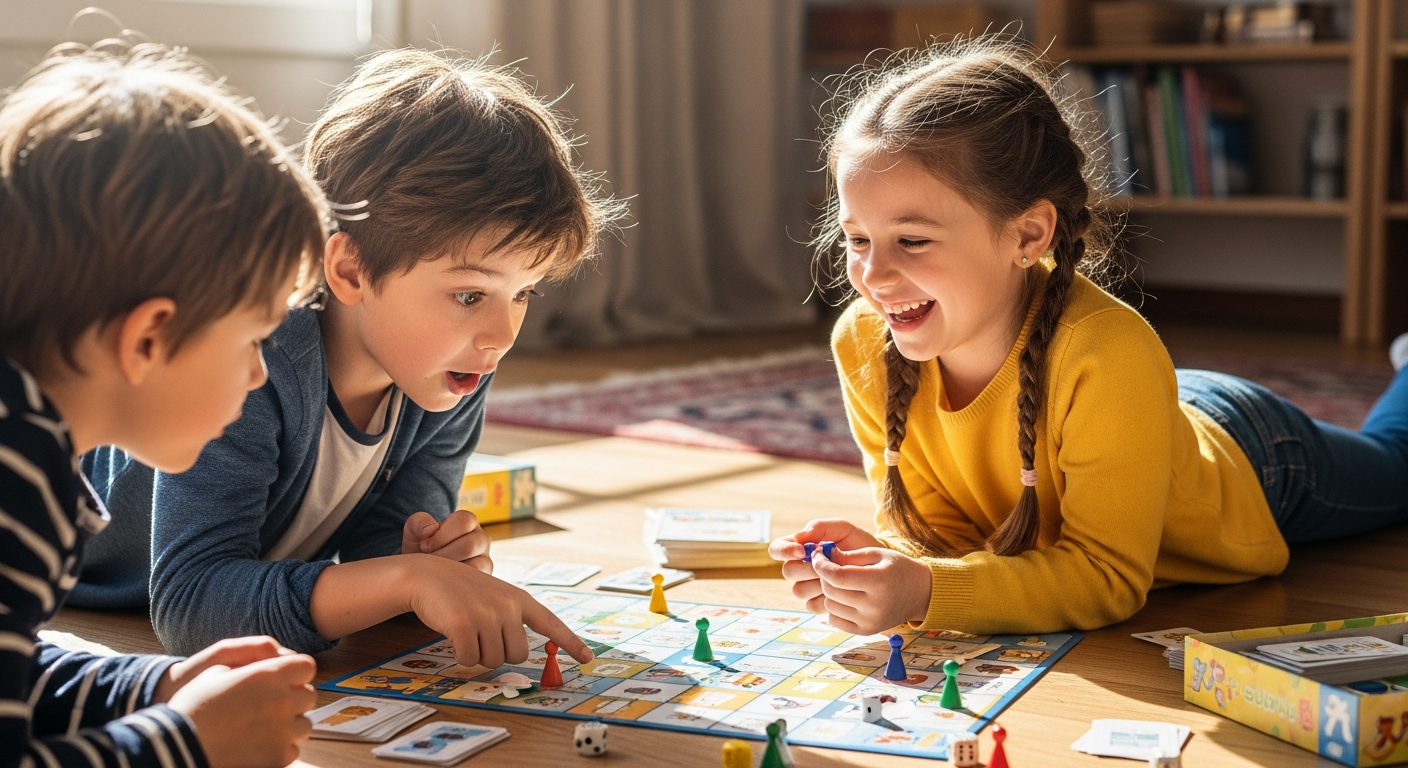
Table of Contents
- The Power of Play: More Than Just Fun
- Screen-Free Fun: Engaging Activities for Every Child
- Integrating "Smart Screen Time" with Speech Blubs
- Making the Most of Speech Blubs: Pricing and Value
- Conclusion: Fostering Communication, Confidence, and Joy
- FAQ
Ever found yourself wondering how to keep the little ones engaged and active when the weather outside isn't cooperating, or when you simply want to minimize passive screen time? We've all been there. The challenge of finding activities that are not only fun but also genuinely enriching can feel like a quest. But what if we told you that your living room could become a vibrant playground, a stage for imaginative tales, and a classroom for essential life skills, all at once?
This blog post is your comprehensive guide to transforming ordinary indoor days into extraordinary adventures. We'll explore a treasure trove of fun inside games for kids that go beyond mere entertainment, focusing on how they can naturally boost communication, cognitive abilities, and social-emotional development. From classic games that spark joy to creative endeavors that build confidence, we'll provide practical, engaging ideas that you can implement with everyday items. We'll also delve into how innovative tools like Speech Blubs complement these activities, turning "smart screen time" into an opportunity for growth. Our main message is clear: indoor play is a powerful pathway to fostering confident communicators and happy, well-rounded children.

The Power of Play: More Than Just Fun
For children, play is not a luxury; it's a fundamental necessity. It's their primary mode of learning, exploring, and making sense of the world around them. When kids are engaged in play, their brains are buzzing with activity, forging new neural connections and strengthening existing ones. This is especially true for indoor games, which often require imagination, problem-solving, and communication in unique ways.
Think about it: during a spontaneous game of "The Floor is Lava," a child isn't just jumping on cushions; they're strategizing, verbally negotiating with siblings, and reacting to changing scenarios. These seemingly simple actions are rich with developmental benefits. They enhance gross motor skills, develop spatial awareness, encourage creative thinking, and most importantly, build crucial communication abilities.
At Speech Blubs, we deeply understand and champion the power of play. Our mission is to empower children to "speak their minds and hearts," and we believe that combining scientific principles with joyful, play-based learning is the most effective path. Our founders, who personally navigated speech challenges in their youth, created Speech Blubs to be the immediate, effective, and joyful solution they wished they had—a tool that blends seamlessly with the natural, playful learning experiences you create at home.
Why Indoor Play is Essential for Development
When children are indoors, their play often takes on different characteristics than outdoor play. It tends to be more imaginative, focused on fine motor skills (depending on the activity), and more language-rich as they describe their actions, roles, and pretend scenarios. This environment is perfect for nurturing a wide range of developmental areas:
- Communication Skills: Indoor games frequently involve dialogue, storytelling, role-playing, and following instructions. Whether it's explaining rules, negotiating turns, or enacting a character, language is at the forefront.
- Cognitive Development: Many indoor games require problem-solving, strategic thinking, memory recall, and concentration. Puzzles, building challenges, and even simple charades can significantly boost these areas.
- Social-Emotional Growth: Playing with others indoors teaches children about sharing, cooperation, empathy, turn-taking, and conflict resolution—all vital social skills.
- Creativity and Imagination: With fewer external distractions, children often dive deeper into imaginative play, using everyday objects as props for elaborate make-believe worlds.
- Fine and Gross Motor Skills: From carefully building a tower of blocks to energetic dance parties, indoor games provide opportunities to refine both fine motor control and engage in active movement.
For instance, a child might be building a fantastical fort (gross motor skills, spatial reasoning), then negotiating with their sibling about who gets to be the "dragon" and who is the "knight" (communication, social negotiation), all while imagining a grand backstory for their adventure (creativity, cognitive flexibility). Each moment is a learning opportunity.

Screen-Free Fun: Engaging Activities for Every Child
Let's dive into a collection of screen-free fun inside games for kids that promise engagement, laughter, and learning. These activities leverage simple household items and encourage active participation from the whole family.
Movement-Based Games for Burning Energy
Even when stuck inside, children have boundless energy! These games are designed to get them moving, improving coordination and strength while having a blast.
- Obstacle Course Adventures: Transform your living room into an adventurous obstacle course! Use pillows as stepping stones, blankets as tunnels to crawl through, and couch cushions for climbing. Drape toilet paper or yarn from wall to wall for "laser" beams to army crawl under or step over. Let your child help design the course – often, the construction is as fun as the navigation! This activity is fantastic for developing gross motor skills, spatial awareness, and following multi-step instructions.
- Animal Walks and Races: Encourage imaginative movement by having kids mimic different animals. Crab walks, bear crawls, frog jumps, or snake slithering across the room are not only hilarious but also build coordination, balance, and strength. Add a competitive element by racing, or encourage creativity by asking them to invent new animal walks (e.g., a squirrel carrying nuts).
- Balloon Volleyball: All you need is a balloon and some open space! The goal is simple: keep the balloon off the ground by hitting it back and forth. You can set up a makeshift "net" with a piece of string or a rolled-up blanket. This game is excellent for hand-eye coordination, reaction time, and cooperative play. For a fun twist, try using paper plates taped to plastic spoons as paddles!
- Musical Freeze Dance: Put on your child's favorite music and dance freely. When the music stops, everyone "freezes" in place. This classic game is fantastic for gross motor skills, listening comprehension, and impulse control. You can add variations, like striking a specific yoga pose when the music stops, or having a "remote control" where you call out different "channels" (e.g., "robot dance," "zoo animal") for your child to mimic.
- Indoor Bowling: Gather empty plastic bottles or cups and arrange them like bowling pins. Use a soft ball to roll and knock them down. This activity is a great way to practice aiming, fine-tuning motor control, and understanding cause and effect. Kids can even help decorate the "pins" for added creative fun.
Imaginative & Creative Play Ideas
These activities encourage children to dive into their imaginations, fostering creativity and storytelling.
- Build a Fort and Play: The ultimate indoor adventure! Use blankets, sheets, pillows, and furniture to construct an epic fort. Once built, it can become a cozy reading nook, a secret hideout, a spaceship, or a dragon's lair. Forts provide a sense of security and a perfect backdrop for imaginative scenarios, encouraging dramatic play and verbal storytelling.
- Put on a Play or Make a Movie: Kids are natural storytellers and performers. Encourage them to create a short play or even a "movie." They can develop characters, write a simple script (or act spontaneously), and make props and costumes from household items. Filming their performance can be a fun way to share their creativity with family and friends and helps build confidence in speaking.
- Action Storytime: Take storytime to the next level by acting out the narrative. If a character is running, encourage your child to run in place. If they are climbing a mountain, they can climb the stairs or clamber over couch cushions. This brings stories to life, enhances comprehension, and provides a physical outlet.
- DIY Sensory Bins: Fill a container with various materials like rice, pasta, water beads, sand, or even shredded paper, and add small toys, scoops, and cups. Sensory bins provide a rich tactile experience that can be incredibly calming and stimulating. They encourage open-ended play, fine motor skill development, and descriptive language as children talk about what they're feeling and doing. For more inspiration, explore our ideas for Sensory Bins for Toddlers: Our Favorite Ideas and Items.
- Cardboard Box Creations: Don't throw away those large cardboard boxes! They are raw material for endless creative projects. A box can become a car, a spaceship, a castle, or a puppet theater. Decorate it together, cut out windows, and let your child's imagination run wild.
Games for Cognitive & Communication Boost
These games are specifically designed to enhance thinking skills, vocabulary, and expressive language.
- Indoor Scavenger Hunt: Create a list of items for your child to find around the house. For younger children, use pictures instead of words. Make it educational by asking them to find "something blue," "something round," or "something that starts with the 'b' sound." This boosts vocabulary, object recognition, and problem-solving skills.
- Pictionary or Charades (Kid-Friendly): For Pictionary, draw an object, animal, or simple action, and have your child guess. For Charades, act it out! These games are fantastic for non-verbal communication, expressive language (when guessing), and cognitive processing. Keep the themes simple and relatable for kids, focusing on actions (sleeping, eating), animals, or common objects.
- "I Spy" with a Twist: This classic game can be tailored to focus on specific language goals. Instead of just colors, try "I spy something that rhymes with 'cat'" or "I spy something that starts with the 'mmm' sound." This strengthens phonetic awareness and vocabulary.
- Building Blocks and Storytelling: Assembling blocks, LEGOs, or Magna-Tiles encourages fine motor skills and spatial reasoning. Take it a step further by having your child tell a story about what they've built. "Tell me about your robot's adventure!" This prompts narrative skills, descriptive language, and imaginative thought. For a child who loves animals, the 'Animal Kingdom' section of our app could inspire them to build a zoo and describe each animal they create!
- Homemade Board Games: All you need is paper, markers, and a die (or a coin for heads/tails). Help your child design their own simple board game, complete with rules and challenges. This encourages creative thinking, logical reasoning, and explicit communication as they explain their game.
Integrating "Smart Screen Time" with Speech Blubs
While screen-free play is invaluable, we also recognize that in today's world, screens are often a part of a child's environment. At Speech Blubs, we believe in "smart screen time"—transforming passive viewing into an active, engaging, and educational experience that supports speech and language development. Our app is a powerful complement to the fun inside games for kids you're already playing, offering a unique, scientifically-backed approach.
How Speech Blubs Enhances Communication Skills
Our app is designed with a core mission: to provide an immediate, effective, and joyful solution for the 1 in 4 children who need speech support. It's built on a unique video modeling methodology, where children learn by watching and imitating their peers. This approach harnesses the natural power of mirror neurons, making learning feel intuitive and fun, much like how children learn from playing with friends in real life.
Imagine a child who is captivated by a game of "Animal Walks." They love pretending to be a lion, but they struggle to say the word "roar." Within Speech Blubs, they can navigate to our "Animal Kingdom" section, where they'll see real children making lion sounds and movements. This visual and auditory imitation not only encourages them to try saying "roar" but also provides positive reinforcement and a sense of shared experience. Our content is a screen-free alternative to passive viewing (like cartoons) because it demands active participation, facial imitation, and vocal practice.
Speech Blubs is more than just an app; it's a tool for family connection. We encourage co-play, where parents and caregivers engage with the child, making the "smart screen time" a shared learning moment. You can sit together, imitate the videos, practice sounds, and celebrate successes, reinforcing the bond and making learning a joyful experience.
Our app is packed with features designed to build foundational speech and language skills:
- Video Modeling: Children watch and imitate real peers, which is proven to be highly effective.
- Facial Recognition Technology: Provides real-time feedback, making learning interactive and fun.
- Interactive Activities: A wide array of exercises covering sounds, words, sentences, and early reading.
- Diverse Content: Engaging themes like animals, vehicles, daily routines, and more keep children interested.
- Evidence-Based Approach: Our methods are backed by research, placing us in the top tier of speech apps worldwide. You can explore our research and scientific methodology to learn more.
For a parent whose 3-year-old 'late talker' loves animals, the 'Animal Kingdom' section offers a fun, motivating way to practice sounds like 'moo' and 'baa,' building confidence in vocalization. Similarly, if a child is struggling with social cues, our interactive story-based activities can help them understand emotions and appropriate responses in a playful context. We provide a structured yet playful environment for skill development, fostering a love for communication and building confidence step-by-step.
Making the Most of Speech Blubs: Pricing and Value
We are committed to providing an accessible and effective solution for families. When considering Speech Blubs, we want to be transparent about our pricing and the incredible value packed into our plans.
Our pricing structure is designed to offer flexibility while strongly encouraging the option that provides the most benefits and savings:
- Monthly Plan: $14.99 per month.
- Yearly Plan: $59.99 per year. This breaks down to just $4.99 per month, offering significant savings.
Why the Yearly Plan is the Best Value
The Yearly Plan is not just cheaper; it's a superior choice that unlocks a complete suite of features and benefits, offering unparalleled value for your family's investment in your child's communication journey:
- Save 66%: The most obvious benefit is the substantial cost savings compared to the monthly plan.
- 7-Day Free Trial: Only the Yearly Plan includes a full 7-day free trial, allowing you to experience the app's full potential without commitment. This is a fantastic opportunity to see firsthand how Speech Blubs can engage your child and support their development.
- Extra Reading Blubs App: This exclusive feature provides access to our companion app, Reading Blubs, designed to further enhance literacy skills—a perfect pairing with speech development.
- Early Access to New Updates: Be among the first to experience new features, activities, and improvements.
- 24-Hour Support Response Time: Get priority access to our dedicated support team, ensuring any questions or concerns are addressed quickly.
The Monthly plan, while flexible, does not include these exclusive, high-value benefits. We strongly encourage you to choose the Yearly plan to get the free trial and the full suite of features that will empower your child to speak their mind and heart.
Ready to get started? Take our quick 3-minute preliminary screener to get a simple assessment and a free 7-day trial of our Yearly plan. It's a great way to understand if your child could benefit from our unique approach. See what other parents are saying about their child's success with Speech Blubs!
Conclusion: Fostering Communication, Confidence, and Joy
From classic scavenger hunts to creative fort building, the world of fun inside games for kids is rich with opportunities to learn, grow, and connect. These activities are not just time-fillers; they are powerful catalysts for developing essential communication skills, boosting cognitive abilities, and nurturing social-emotional intelligence. By embracing screen-free play, you provide your child with invaluable experiences that foster creativity, problem-solving, and the sheer joy of interaction.
Remember, every shared laugh during a game of balloon volleyball, every imaginative story whispered in a blanket fort, and every sound practiced with Speech Blubs is a step towards building a more confident, articulate, and happy child. Our mission at Speech Blubs is to empower children to "speak their minds and hearts," and we are dedicated to blending scientific principles with play into one-of-a-kind "smart screen time" experiences. We are the tool our founders wished they had—a powerful supplement to your child's overall development plan.
Don't let rainy days or indoor restrictions dampen the spirit of play and learning. Instead, embrace these moments as chances to create lasting memories and build foundational skills. We invite you to experience the transformative power of purposeful play.
Ready to embark on this joyful journey with your child? We encourage you to start your 7-day free trial today! Download Speech Blubs on the Apple App Store or Google Play Store to begin. To get the best value and access to all premium features, including the extra Reading Blubs app and early access to updates, be sure to select the Yearly plan during your sign-up. You can also create your account and begin your 7-day free trial today via our website. Let's empower your child to speak their mind and heart!
FAQ
Q1: How can I encourage my child to play indoor games instead of always wanting screen time?
A1: Start by offering engaging alternatives. Actively participate with your child in the beginning to spark their interest and model the fun. Create a dedicated "play space" or "fort building kit" to make these activities more inviting. Introduce novelty by rotating games or adding new elements. Limit passive screen time and integrate "smart screen time" tools like Speech Blubs, which require active engagement and imitation, making screen use more purposeful.
Q2: My child struggles with imaginative play. How can I help them develop this skill through indoor games?
A2: Start with simple prompts and provide open-ended materials. For example, instead of saying "play with this doll," ask "What adventure can this doll go on?" Use cardboard boxes, blankets, and pillows to build a fort, then suggest a simple scenario like "This is our spaceship; where should we go?" Read stories and then act out parts together. Speech Blubs can also help, as our video modeling encourages imitation and can spark ideas for role-playing and storytelling.
Q3: What if my child gets frustrated easily when playing games, especially if they are not winning?
A3: Focus on the process, not just the outcome. Emphasize cooperation over competition, especially for younger children. Choose games where everyone can contribute or where there isn't a clear "winner," like building a collaborative fort or a sensory bin. When playing competitive games, model good sportsmanship and teach strategies for handling disappointment. Celebrate effort and improvement, not just victory. Speech Blubs helps reduce frustration by providing immediate, positive feedback in a supportive learning environment.
Q4: How does Speech Blubs specifically help with communication skills during indoor play?
A4: Speech Blubs acts as a dynamic learning partner. While playing indoor games, children encounter new objects, actions, and social scenarios. Speech Blubs can then reinforce and expand on the vocabulary and sounds related to these experiences. For example, after an "Animal Walk" game, your child can practice animal sounds and names through our interactive video modeling. Our facial recognition technology encourages children to vocalize and imitate, directly translating to clearer speech and stronger expressive language, which they can then apply during imaginative indoor play with family.
About the author