
Valentine's Day Toddler Crafts to Boost Development
 By Speech Blubs Team•Feb 20, 2026•16 min.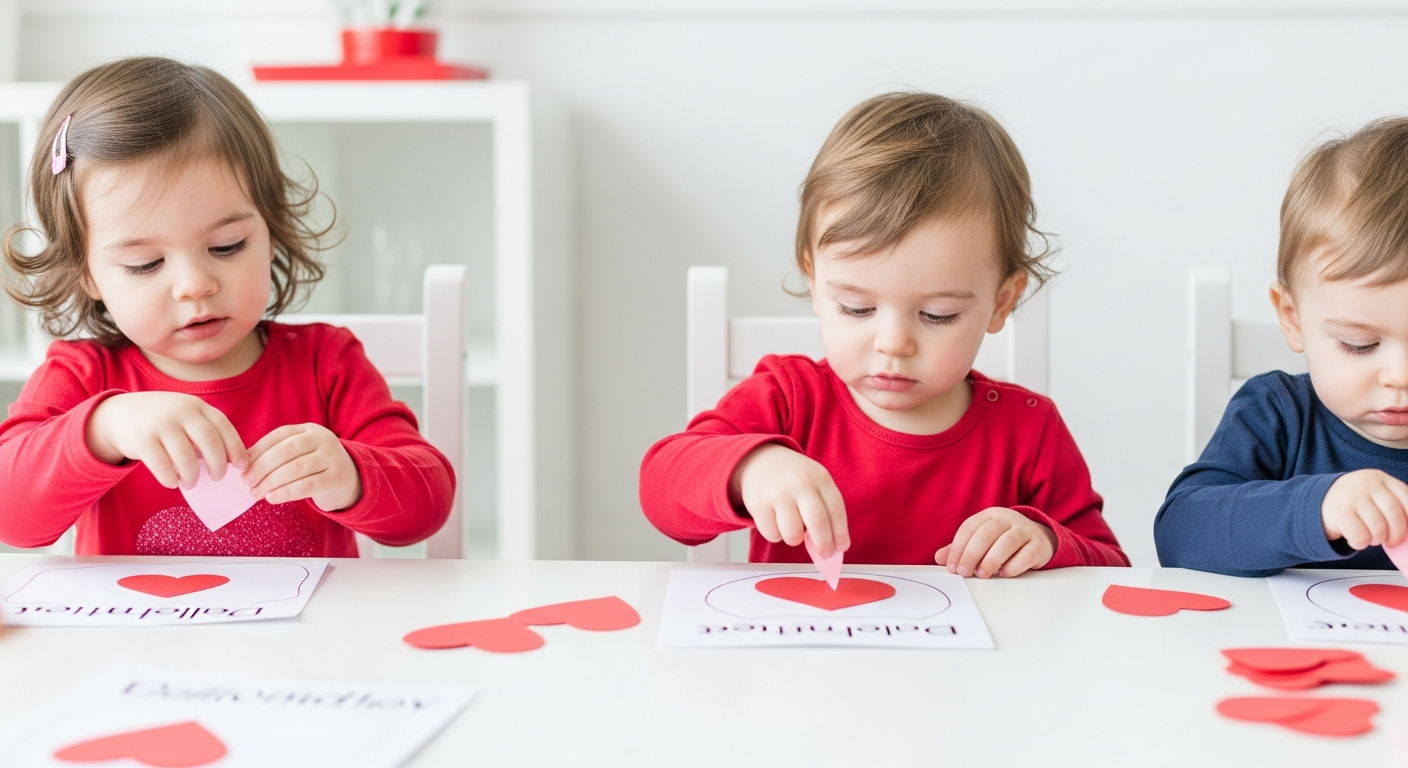
Table of Contents
- Introduction
- The Developmental Benefits of Crafting with Toddlers
- Setting Up Your Crafting Space for Success
- 10 Fun and Educational Valentine's Day Toddler Crafts
- Integrating Speech Blubs into Your Valentine's Tradition
- Fostering a Love for Communication
- How to Adapt Crafts for Different Stages
- Creating Lasting Memories with "Smart Screen Time"
- Summary of the Best Value: Yearly vs. Monthly
- Conclusion
- Frequently Asked Questions
Introduction
Did you know that approximately 1 in 4 children will experience some form of speech or language delay during their early developmental years? This statistic can feel overwhelming for parents, but at Speech Blubs, we believe that every moment—including holiday celebrations—is an opportunity to empower children to speak their minds and hearts. Our founders, who each navigated their own speech challenges as children, created the tool they wished they had: a way to turn screen time into "smart screen time" that fosters genuine connection and skill-building.
As Valentine’s Day approaches, you might be looking for more than just a box of store-bought cards. You’re likely looking for a valentines day craft toddler activity that doesn’t just keep their little hands busy, but also sparks their curiosity and encourages them to use new words. Whether your child is a "late talker" who loves animals or a social butterfly who enjoys mimicking others, crafting is a multi-sensory gateway to language.

In this article, we will explore a variety of engaging, developmentally appropriate Valentine’s Day crafts designed specifically for toddlers. We will also discuss how these activities pair perfectly with the Speech Blubs methodology of video modeling to turn a simple art project into a powerful learning experience. By the end of this post, you'll have a toolkit of ideas to foster a love for communication and build your child's confidence, all while creating joyful family memories. If you're ready to jump-start this journey, you can take our quick 3-minute preliminary screener to get a simple assessment and a free 7-day trial.
The Developmental Benefits of Crafting with Toddlers
When a toddler dips their fingers into red paint or tries to stick a heart sticker onto a piece of cardstock, they aren't just making a mess. They are engaging in a complex set of tasks that support their overall growth. For us at Speech Blubs, the "play-based" approach is central to everything we do. We see crafting as a physical manifestation of the same principles we use in our app: engagement, imitation, and joy.
Fine Motor Skills and Speech
There is a fascinating link between the development of fine motor skills—the small movements of the hands and fingers—and the development of speech. Both require the brain to plan and execute precise movements. When your toddler practices the "pincer grasp" to pick up a small bead or a piece of tissue paper, they are strengthening the same neural pathways used to coordinate the muscles of the tongue, lips, and jaw.
Sensory Integration
Toddlers learn about the world through their senses. A valentines day craft toddler session involving different textures, such as crinkly paper, sticky glue, and smooth silk ribbons, provides rich sensory input. This "sensory play" helps children organize information from their environment, which reduces frustration and makes them more open to communication.
Language Expansion
Crafting is a natural "language lab." It provides a context for using "spatial words" (on, under, inside), "descriptive words" (sticky, red, bright, soft), and "action words" (cut, glue, press, draw). Instead of just drilling vocabulary, you are using these words in a functional, meaningful way. Our approach is backed by extensive research, which shows that children learn best when they are active participants in their environment.

Setting Up Your Crafting Space for Success
Before we dive into the specific crafts, let’s talk about how to make the experience stress-free for both you and your child. Remember, the goal isn't a Pinterest-perfect result; the goal is the process.
- Preparation is Key: Toddlers have short attention spans. Have all your materials (paper, glue, markers, etc.) ready and laid out before you invite them to the table.
- Focus on Adult Co-Play: Crafting shouldn't be a solo activity for a toddler. Sit with them, talk about what they are doing, and mirror their actions. This "parallel play" and "co-regulation" are foundational for social-emotional growth.
- Embrace the Mess: Use washable paints and lay down an old tablecloth. When you aren't worried about the rug, you can focus on the "Speech Sparks"—those moments where your child looks at you and tries to say a new word.
- Use "Smart Screen Time" as a Warm-Up: Before starting a craft, use Speech Blubs to get your child in the mood for learning. For example, if you are making a "Love Bug," open the app and watch the peer models make bug sounds. This utilizes our unique "video modeling" methodology, where children learn by watching and imitating their peers. Download Speech Blubs on the Apple App Store or Google Play Store to begin your journey.
10 Fun and Educational Valentine's Day Toddler Crafts
1. The "Hands Down" Love You Keepsake
This is a classic for a reason. It captures a moment in time while allowing your child to explore the texture of paint.
- Materials: Washable red or pink paint, white cardstock, markers.
- The Activity: Paint your child’s hand and press it firmly onto the paper. Once it dries, write "You're hands down the best!" around it.
- Speech Spark: Use this time to name body parts. "Here is your hand. These are your fingers. One, two, three, four, five!" Encourage them to wiggle their fingers as you say the words.
2. Heart-Shaped Suncatchers
These look beautiful on a window and teach children about light and transparency.
- Materials: Contact paper (sticky back plastic), red and pink tissue paper torn into small squares, a construction paper heart "frame."
- The Activity: Cut the center out of a large construction paper heart. Stick it to a piece of contact paper. Let your toddler press tissue paper squares onto the sticky center. Cover with another piece of contact paper and trim.
- Speech Spark: Focus on "action" words. "Push, push, push the paper!" or "It's sticky! Ooh, sticky fingers!"
3. Valentine’s Day Sensory Love Tub
While not a traditional "craft" that results in a finished product, a sensory bin is an essential valentines day craft toddler experience for building vocabulary.
- Materials: A plastic bin, dyed red rice or pasta, heart-shaped scoops, silk rose petals, and small figurines.
- The Activity: Fill the bin and let your child explore.
- Speech Spark: For a child who loves animals, hide small toy animals in the rice. As they find them, practice animal sounds. If they find a cow, you can say, "The cow is in the red rice! Moo!" You can find more animal sound inspiration in the 'Animal Kingdom' section of our app.
4. The "Love Bug" Name Craft
This activity is fantastic for older toddlers who are starting to recognize the letters in their names.
- Materials: Large paper hearts, markers, googly eyes, pipe cleaners.
- The Activity: Each heart represents a letter of their name. Help them glue the hearts in a row to create the body of a caterpillar or "Love Bug." Add eyes and pipe cleaner antennae to the first heart.
- Speech Spark: Spell out their name slowly. "L... O... V... E." Have them try to repeat the sounds after you. Seeing testimonials from other parents often highlights how these simple naming games can lead to big breakthroughs in confidence.
5. Pipe Cleaner Heart Stamps
This is a low-mess way to "paint" and helps with hand-eye coordination.
- Materials: Pipe cleaners, red paint, paper.
- The Activity: Bend a pipe cleaner into a heart shape, leaving a "handle" for the child to hold. Dip the heart into paint and stamp it all over the paper.
- Speech Spark: Focus on the "H" sound in "Heart." Exaggerate the breathiness of the "H" and encourage your child to watch your mouth as you say it.
6. Coffee Filter "Tie-Dye" Hearts
This science-meets-art project is mesmerizing for little ones.
- Materials: Coffee filters cut into heart shapes, washable markers, a spray bottle with water.
- The Activity: Have your toddler scribble on the coffee filter with red, purple, and pink markers. Then, let them spray the heart with water and watch the colors bleed together.
- Speech Spark: This is a great time to practice "more" and "stop." "Do you want more water? Tell me 'more'!" Wait for a vocalization or a sign before spraying.
7. The "Love Poster" Collage
Collages are perfect for toddlers because there is no "wrong" way to do them.
- Materials: A large piece of poster board, old magazines, glue sticks, stickers.
- The Activity: Cut out pictures of things your child loves (dogs, cars, pizza) and let them glue them onto the board.
- Speech Spark: Ask "Where" questions. "Where is the doggie?" or "Where is the red heart?" This builds receptive language skills.
8. Paper Plate Valentine Bee
"Bee My Valentine" is a cute theme that toddlers enjoy, especially since many are fascinated by bugs.
- Materials: Paper plate, yellow paint or markers, black construction paper strips, heart shapes for wings.
- The Activity: Color the plate yellow. Glue on black strips for stripes. Use heart shapes as the bee's wings.
- Speech Spark: Practice the "B" sound. "B-b-b-bee!" Use the Speech Blubs app's "Insects" section to see other children making the "Bzzzz" sound. This peer-to-peer connection is what makes our method so effective.
9. Monster Valentine Cards
Not all Valentines have to be sweet; some can be "monstrously" fun!
- Materials: Cardstock, googly eyes, yarn "hair," glue.
- The Activity: Create a heart-shaped base and let your toddler add as many eyes and as much hair as they want.
- Speech Spark: Talk about emotions. "Is the monster happy? Or is he silly?" Make faces at each other to match the monster's expression.
10. Alphabet Heart Matching Game
For a more educational twist, try this matching game that reinforces letter recognition.
- Materials: Pairs of paper hearts with matching letters written on them.
- The Activity: Lay the hearts out and help your child find the matches.
- Speech Spark: Emphasize the letter sounds. "This is A. A says 'ah'."
Integrating Speech Blubs into Your Valentine's Tradition
While these crafts are wonderful, we know that many parents look for structured tools to support their child's development. Our mission at Speech Blubs is to provide an immediate, effective, and joyful solution for children who need speech support. We don't just offer games; we offer a scientifically-rooted platform that uses video modeling.
When a child watches another child on a screen performing a speech exercise, their "mirror neurons" fire. This is a biological response that makes them more likely to imitate the behavior they see. It’s why children often pick up habits from their siblings or friends faster than from adults.
Why Choose Our Yearly Plan?
We want to be a long-term partner in your child's growth. While we offer a monthly plan for $14.99, our Yearly Plan is the clear best choice for families committed to making progress. At just $59.99 per year—which breaks down to only $4.99 per month—you save 66% compared to the monthly rate.
More importantly, the Yearly Plan includes exclusive, high-value features that are not available in the monthly option:
- A 7-day free trial: Test everything out before you commit.
- The Reading Blubs app: A powerful tool to transition from speech to literacy.
- Early access to updates: Be the first to try our newest activities.
- Priority Support: 24-hour response time from our dedicated team.
Ready to give your child the gift of communication? Create your account and begin your 7-day free trial today.
Fostering a Love for Communication
As a child development expert, I often remind parents that the most important part of any valentines day craft toddler session is the "joyful family learning moment." When your child feels safe, loved, and engaged, their brain is in the optimal state for learning.
We avoid making over-the-top promises because every child’s journey is unique. We won't tell you that your child will be giving public speeches in a month. Instead, we focus on the real, tangible benefits of our methodology:
- Building Confidence: Success in a small task (like gluing a heart) builds the confidence to try a harder task (like saying a new word).
- Reducing Frustration: When a child has tools to communicate, even if those tools are just basic signs or sounds, their frustration levels drop significantly.
- Developing Foundational Skills: Pre-verbal skills like imitation, turn-taking, and joint attention are the "bricks" that build the "house" of language.
Whether you are using our app as a powerful supplement to professional therapy or as a way to enhance your child’s overall development, we are here to support you. You can learn more about our story and our values by visiting our homepage.
How to Adapt Crafts for Different Stages
Not every toddler is at the same level, and that’s okay! Here is how you can tailor these Valentine’s activities:
For the "Younger Toddler" (12-24 Months)
Focus purely on the sensory experience. Don't worry about the final shape. If they just want to smear paint on a paper plate, let them! Narrate their actions: "I see you using the red paint. Red! Red! Red!"
For the "Late Talker"
Use the "Power of the Pause." If you are making the Pipe Cleaner Heart Stamps, hold the stamp near the paint and wait. Look at your child with an expectant expression. Wait for them to make any sound or gesture before you dip it in. This teaches them that their communication has power.
For the "Social Learner"
Invite a sibling or a friend to join. Use the opportunity to practice "my turn" and "your turn." This social scaffolding is a key part of how children learn to use language in real-world contexts.
Creating Lasting Memories with "Smart Screen Time"
We often hear from parents who are concerned about screen time. We share those concerns! That’s why Speech Blubs is designed to be a "screen-free alternative" to passive viewing. Unlike cartoons, our app requires the child to be an active participant. It encourages them to look away from the screen, make sounds, and interact with the adult sitting next to them.
Think of the app as the "digital coach" for your Valentine’s Day crafting. You might watch a video of a child blowing a kiss in the app, and then you and your toddler can "blow kisses" onto the Valentine’s cards you are making. This bridge between the digital and physical worlds is where the magic happens.
"At Speech Blubs, we don't just want kids to talk; we want them to feel the joy of being understood."
Summary of the Best Value: Yearly vs. Monthly
To ensure you have all the resources needed for your child’s success, here is a quick breakdown of our pricing structure again:
FeatureMonthly Plan ($14.99/mo)Yearly Plan ($59.99/yr - $4.99/mo)
Core Speech Blubs App
Included
Included
7-Day Free Trial
No
Yes
Reading Blubs App
No
Yes
Early Access to Updates
No
Yes
24-Hour Support
No
Yes
Total Savings
0%
Save 66%
We highly encourage families to choose the Yearly plan to get the full suite of features and the best possible start. Download the app on the Apple App Store or Google Play Store to claim your trial.
Conclusion
Valentine's Day is a wonderful time to celebrate the love we have for our children and to encourage their growing communication skills. By choosing a valentines day craft toddler activity that emphasizes sensory play, fine motor development, and language expansion, you are doing so much more than making a card. You are building a foundation for a lifetime of expression.
At Speech Blubs, we are honored to be a part of your family’s journey. Our mission to empower children to "speak their minds and hearts" is at the core of everything we do, from the scientific design of our video modeling to the warm, empathetic support we provide to parents.
Remember, progress is a journey, not a race. Celebrate the small wins—the first time they say "red," the first time they point to a heart, and the laughter shared during a messy art project. We invite you to start your 7-day free trial today by downloading our app or signing up on our website. Make sure to select the Yearly plan to unlock the full potential of Speech Blubs and Reading Blubs, ensuring your child has every tool they need to succeed.
Frequently Asked Questions
1. How do crafts specifically help with speech development?
Crafts help by linking physical actions with vocabulary. When a child performs an action (like "squeezing" glue) while hearing the word, the linguistic concept becomes "anchored" in a physical experience. Furthermore, the fine motor skills developed during crafting share neural pathways with the motor skills required for speech production.
2. My toddler has a very short attention span. Which craft is best?
For toddlers with short attention spans, the Pipe Cleaner Heart Stamps or the Sensory Love Tub are excellent choices. They provide immediate feedback and don't require a long series of steps to see a result. You can also break crafting into 5-minute sessions to keep it fun and pressure-free.
3. What is "video modeling" and why is it used in the Speech Blubs app?
Video modeling is a teaching method where a child learns a behavior or skill by watching a video of someone else performing it. In Speech Blubs, we use peer models (other children) because research shows that children are more motivated to imitate their peers than adults. This triggers "mirror neurons" in the brain, facilitating the learning of new speech sounds and words.
4. Is the Speech Blubs app a replacement for traditional speech therapy?
No, Speech Blubs is designed to be a powerful supplement to a child's overall development plan. While it is an effective tool for many "late talkers" and children needing extra support, it works best alongside professional therapy when applicable. It provides parents with a way to continue the "work" of therapy at home through joyful, play-based "smart screen time."
About the author