
Vibrant India: Easy Kids' Crafts to Spark Creativity & Communication
 By Speech Blubs Team•Jan 13, 2026•22 min.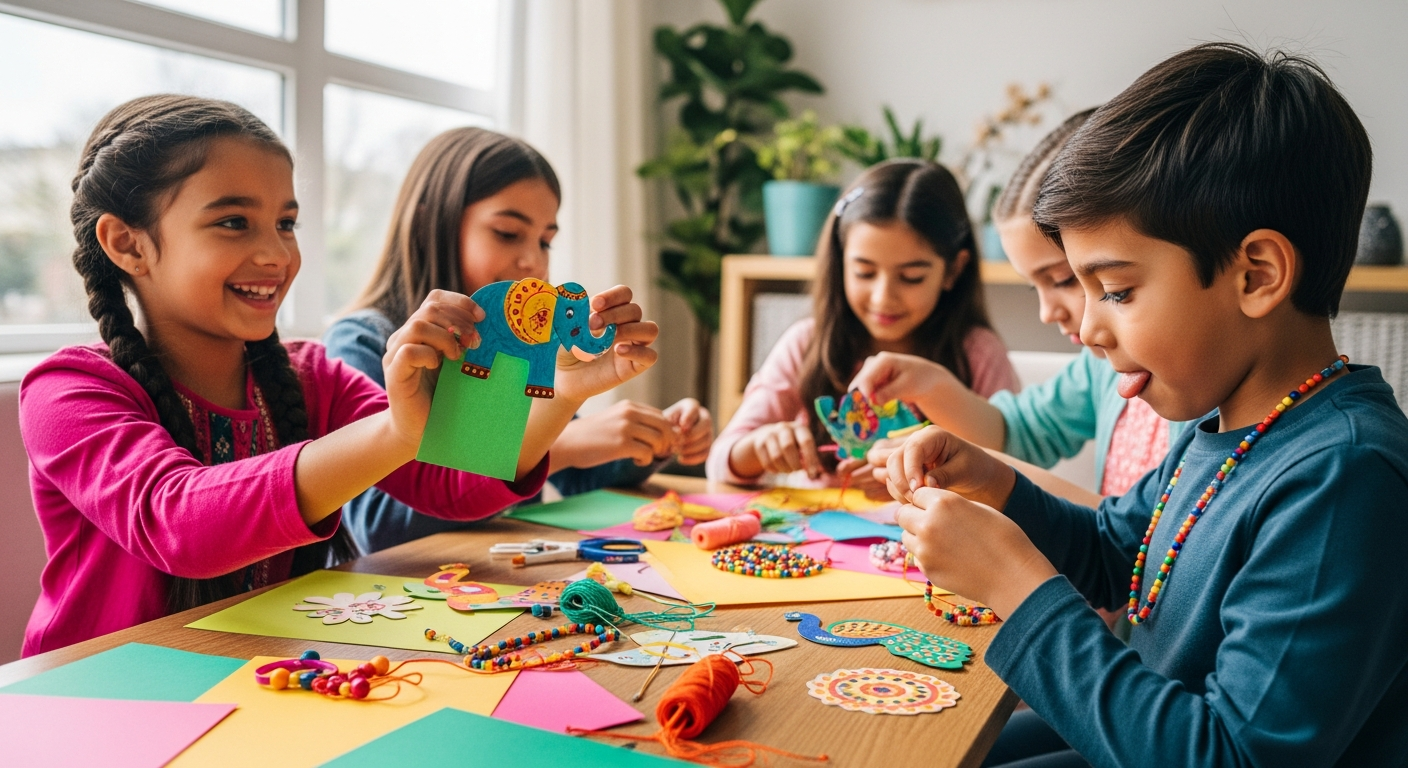
Table of Contents
- Introduction to India's Artistic Legacy for Little Hands
- The Developmental Magic of Indian Crafts for Kids
- Essential Materials to Begin Your Indian Crafting Journey
- Dive Into Creativity: Easy Indian Craft Ideas for Kids
- Making It a Family Affair: Tips for Crafting Together
- Beyond the Craft: Expanding the Learning with Speech Blubs
- Conclusion
- FAQ: Your Questions About Indian Crafts for Kids Answered
Ever watched a child's eyes light up, not at a blinking screen, but at the swirl of colors, the texture of paper, or the joy of creating something with their own hands? In a world brimming with digital distractions, the simple act of crafting offers a profound escape – a gateway to imagination, skill development, and cultural exploration. And when that crafting is steeped in the rich, vibrant heritage of a country like India, the experience becomes even more magical, unfolding a tapestry of stories, traditions, and learning opportunities.
At Speech Blubs, we believe that empowering children to "speak their minds and hearts" isn't just about uttering words; it's about fostering every facet of their development, from cognitive skills to emotional expression and cultural literacy. Our company was born from a deeply personal mission: our founders, all having grown up with speech problems, created the very tool they wished they had – an immediate, effective, and joyful solution for the 1 in 4 children who need speech support. We blend scientific principles with play, transforming screen time into "smart screen time," a powerful alternative to passive viewing. Just as hands-on crafts provide a screen-free space for family connection, Speech Blubs offers a dynamic, interactive experience where children learn complex communication skills, often by watching and imitating their peers through our unique "video modeling" methodology.

This blog post will guide you through an exciting journey into the world of easy Indian crafts for kids. We'll explore traditional art forms, uncover their cultural significance, and provide practical, simple ideas that you can easily recreate at home. These activities are more than just fun; they are powerful tools for developing fine motor skills, sparking creativity, introducing new vocabulary, and building bridges to a global understanding. Get ready to transform your crafting corner into a hub of cultural discovery, fostering joyful family learning moments and laying foundational skills that complement your child’s communication development journey.
Introduction to India's Artistic Legacy for Little Hands
India is a land of breathtaking diversity, a living mosaic of cultures, languages, and traditions, each contributing to an astounding array of artistic expressions. From the intricate patterns of a rangoli gracing a doorstep to the bold figures of Warli art depicting community life, Indian crafts are not merely decorative objects; they are living stories. They encapsulate the history, beliefs, and daily lives of the people who create them, often passed down through generations. When children engage with these crafts, they're not just making something pretty; they're connecting with a vibrant cultural legacy that spans thousands of years.
Imagine the joy of explaining to your child how the patterns they are drawing in a Mandala represent balance and harmony, or how the bright colors in a Madhubani painting tell tales of gods and goddesses. This cultural immersion broadens their understanding of the world, teaching them that art is a universal language, spoken in countless dialects. It cultivates an appreciation for diverse cultures, fosters empathy, and helps them see the beauty in different ways of life. It’s an immersive, multisensory experience that moves beyond textbooks, making learning tangible and exciting.
For us at Speech Blubs, this kind of holistic learning perfectly aligns with our mission. We understand that effective communication is deeply intertwined with a child's understanding of the world around them. Engaging with crafts provides rich opportunities for descriptive language, storytelling, and imaginative play – all critical precursors to developing strong verbal skills. Whether it’s describing the "swirl" of colors on a peacock craft or the "bumpy" texture of a sand painting, these hands-on activities organically introduce new vocabulary and concepts, enhancing the very foundation of speech.

The Developmental Magic of Indian Crafts for Kids
In a world saturated with digital stimulation, finding activities that genuinely engage a child's mind and body can feel like a quest. Easy Indian crafts offer a powerful and joyful antidote, providing a wealth of benefits that extend far beyond simply keeping them occupied. These traditional art forms are a treasure trove for holistic child development, nurturing a wide range of skills while providing endless hours of creative fun.
Cultivating Fine Motor Skills and Coordination
The very act of crafting significantly enhances fine motor skills. Whether it's carefully outlining a Taj Mahal art project, threading beads for a decorative elephant, or cutting intricate paper shapes for a lantern, these activities demand precision and hand-eye coordination. This builds strength and dexterity in tiny fingers, which are crucial for tasks like writing, drawing, self-dressing, and even speech articulation. For instance, holding a paintbrush to create a detailed Madhubani pattern helps refine the same small muscle control needed for clear speech.
Sparking Creativity and Imagination
Indian crafts are an incredible stimulant for creativity and imagination. Many traditional crafts, while having established forms, also invite personal interpretation and embellishment. Children learn to experiment with colors, textures, and patterns, developing their unique artistic voice. They might imagine the story behind a Warli painting or visualize the festive atmosphere of Diwali while decorating a diya (oil lamp). This imaginative play is vital for problem-solving and innovative thinking. These activities encourage children to express what's in their minds and hearts, aligning perfectly with our mission at Speech Blubs.
Building Foundational Communication Skills
Beyond the visual and motor benefits, crafting offers profound opportunities for language development. As children engage with crafts, they naturally describe, question, and narrate. This provides a perfect environment for parents to model new vocabulary and practice descriptive language.
Consider a practical scenario: For a child who struggles with descriptive words, creating a vibrant Madhubani fish craft offers a perfect opportunity. As you paint, you can prompt, "What color is the fish? Is it bright blue or dark blue?" or "Look at the zigzag pattern!" These simple interactions mirror the "video modeling" approach in Speech Blubs, where children learn by observing and then attempting to imitate new sounds and words. Perhaps your little one loves the "Sounds of the Farm" section on Speech Blubs, perfecting "moo" and "baa" with their peer models. Now, as they paint an elephant, you can reinforce "big" or "trunk" words, building on their burgeoning vocabulary in a different context.
Similarly, when a child feels frustrated with complex shapes in a Mandala, similar to how a late talker might feel overwhelmed by new words, breaking down the task into simple steps is key. Speech Blubs uses a similar principle, offering "video modeling" where children imitate peers making specific sounds, breaking down language into manageable, achievable goals. Perhaps your child is working on "s" sounds in our "Silly Sounds" section. While crafting, you can make "s" sounds while "sanding" the lotus flower paper, or "swooshing" the paint, linking sounds to actions and objects.
If you're wondering if your child could benefit from a little extra speech support, we've made it easy to find out. Take our quick 3-minute preliminary screener to get a simple assessment and a free 7-day trial of Speech Blubs.
Fostering Cultural Literacy and Empathy
Engaging with Indian crafts offers invaluable cultural education. Children learn about festivals like Diwali and Holi, the significance of animals like peacocks and elephants, and the storytelling traditions embedded in different art forms. This exposure fosters cultural literacy, opens minds to global perspectives, and builds empathy for people from different backgrounds. It helps them understand and appreciate the world beyond their immediate environment.
Strengthening Family Bonds Through Shared Creativity
Perhaps most importantly, these activities facilitate invaluable family bonding. In a world where screens often create individual silos, hands-on crafting becomes a shared experience, a common project that encourages communication, collaboration, and joyful interaction. Parents and children work together, learn from each other, and create beautiful memories. This aligns perfectly with our vision at Speech Blubs – to provide screen-free educational alternatives that strengthen family connections, while also offering interactive "smart screen time" when it comes to targeted speech development. For more insights from parents like you, explore our testimonials and see the difference Speech Blubs has made.
Essential Materials to Begin Your Indian Crafting Journey
One of the most beautiful aspects of Indian crafts is their often humble origins and reliance on readily available materials. You don't need a specialized art supply store to embark on this adventure. Many traditional crafts utilized natural and repurposed items, a testament to ingenuity and sustainability. Here’s a list of basic supplies that will get you started on most easy Indian crafts for kids:
- Paper: Construction paper, cardstock, plain white paper, newspapers (for protection or papier-mâché). Recycled cardboard from cereal boxes is great for building structures like a Taj Mahal model.
- Paints: Washable tempera or acrylic paints in a variety of vibrant colors. Watercolors are also excellent for delicate work or bleeding tissue paper effects.
- Brushes: Various sizes, from fine tips for details to broader brushes for filling in larger areas. Cotton swabs or even chewed bamboo sticks (as traditionally used in Warli art) can make interesting textures.
- Glue: White craft glue (PVA), glue sticks, or even a hot glue gun (for adult use only, with supervision).
- Scissors: Kid-safe scissors for younger children, regular scissors for older kids and and adults.
- Yarn/Thread: Colorful yarn, embroidery floss, or simple string for hanging decorations, making tassels, or weaving.
- Beads: Assorted beads of different sizes and colors (for jewelry, embellishments on elephant figures, or peacock feathers).
- Natural Elements: Leaves, small sticks, pebbles, sand (for sand painting), rice flour (for traditional Warli art pigment).
- Recycled Items: Old fabric scraps (for textile painting), bottle caps, cardboard rolls.
- Dyeing Supplies: Natural dyes (like turmeric for yellow, beetroot for pink, tea for brown), or simple food coloring.
- Miscellaneous: Pencils, erasers, rulers, stencils, sponges (for stamping).
Gathering these simple supplies is the first step toward unleashing a world of creativity and cultural exploration right in your home. Remember, the focus is on the process and the shared experience, not perfection.
Dive Into Creativity: Easy Indian Craft Ideas for Kids
Now, let's explore some captivating and easy Indian craft ideas that will bring the colors and stories of India to life for your children. Each project offers a unique glimpse into Indian culture and provides ample opportunities for learning and communication.
1. Majestic Taj Mahal Art Project
The Taj Mahal, an iconic symbol of love and architectural brilliance, can be simplified into a stunning art project for kids.
- Materials: White paper, black marker, bleeding tissue paper (various colors), spray bottle with water or sponge, watercolor pencils or paints.
- How-to:
- Draw a simple outline of the Taj Mahal onto white paper with a black marker. Focus on basic shapes: a large central dome, two smaller domes, and minarets on the sides.
- Cut or tear pieces of bleeding tissue paper. Overlap them randomly on the paper around the Taj Mahal outline.
- Lightly mist the tissue paper with water or gently press a damp sponge over it. The colors will bleed onto the paper, creating a vibrant, watercolor-like sky.
- Carefully remove the tissue paper and let the artwork dry.
- Once dry, use watercolor pencils or paints to add details to the Taj Mahal itself, like windows or patterns.
- Learning & Language: Discuss the Taj Mahal's history, the colors used, and descriptive words like "grand," "symmetrical," "domes," and "minarets." This is a fantastic opportunity to use words that describe shape and size, much like how Speech Blubs introduces new vocabulary in fun, engaging themes like "Shapes and Colors."
2. Colorful Indian Textile Painting
Indian textiles are famous for their intricate designs and vibrant colors. Recreate this beauty with a simple painting activity.
- Materials: Fabric scraps (old sheets, pillowcases work well), school glue, washable paints, brushes, glitter (optional).
- How-to:
- Lay a piece of fabric flat.
- Using glue, draw various patterns on the fabric. Think about geometric shapes, paisley designs, or abstract swirls.
- Once the glue is dry (it will become translucent), use paints to fill in the spaces between the glue lines or paint over the glue for a raised effect. Encourage bright, contrasting colors.
- Add glitter for extra sparkle if desired.
- Learning & Language: Talk about patterns, textures ("smooth," "rough"), and colors. Explain how textiles are made and used in India. For a child working on multi-word phrases, you might ask, "What color do you want?" or "Can you draw a big circle?"
3. Mesmerizing Mandala Art
Mandalas are complex symmetrical designs that hold spiritual significance in many cultures, including India. They're also a wonderful way to teach symmetry and pattern recognition.
- Materials: White paper, pencil, compass (optional, for perfect circles), ruler, colored pencils, markers, or crayons.
- How-to:
- Start by drawing a central dot on your paper.
- Draw concentric circles around this dot. You can use a compass or freehand.
- From the center, draw lines radiating outwards, dividing the circles into sections.
- Begin to fill each section with symmetrical patterns – dots, curves, zigzags, petals, leaves. Repeat patterns in each segment.
- Use a variety of colors to make your Mandala vibrant and unique.
- Learning & Language: Discuss symmetry, patterns, shapes (circles, triangles, lines), and colors. Encourage focus and patience. You can link this to spatial awareness and following instructions, which are vital for language processing.
4. Revered Elephant and Tiger Crafts
Elephants are revered, and tigers are India's national animal. Celebrating them through art is a fun way to learn.
- Materials: Elephant or tiger coloring pages (easily printable online), oil pastels, crayons, or paints.
- How-to:
- Print out an outline of an Indian elephant or tiger.
- Encourage children to decorate their animals with bright colors and intricate designs, mimicking the festival decorations seen on real elephants or the distinctive stripes of a tiger.
- With oil pastels, children can experiment with blending colors and creating texture.
- Learning & Language: Introduce facts about these animals, their habitats, and sounds. Use descriptive words: "big," "strong," "striped," "majestic," "roar," "trumpet." This connects to the "Animal Kingdom" section of Speech Blubs, where children learn animal sounds and names through engaging video models.
5. Beautiful Peacock Craft
The peacock, India's national bird, is known for its stunning tail feathers.
- Materials: Blue and green construction paper, googly eyes, glue, scissors, glitter, sequins, feathers (real or paper cut-outs).
- How-to:
- Cut a peacock body shape from blue paper.
- Cut a large fan shape from green paper for the tail.
- Glue the body onto the tail.
- Decorate the tail with smaller paper feathers, sequins, glitter, and googly eyes.
- Learning & Language: Describe the peacock's colors ("iridescent," "vibrant"), its dance, and its sounds. Practice action words like "cut," "glue," "decorate."
6. Traditional Warli Art Bookmarks
Warli art, originating from an indigenous tribe in Maharashtra, uses simple geometric shapes (circles, triangles, squares) to depict daily life and nature. It's incredibly accessible for kids.
- Materials: Dark-colored cardstock (red ochre or black works well), white paint or a white gel pen, thin paintbrush or a chewed bamboo stick/cotton swab.
- How-to:
- Cut cardstock into bookmark shapes.
- Using white paint, draw simple figures: triangles for bodies, circles for heads, lines for limbs. Create scenes of people dancing, farming, or animals.
- Don't aim for perfection; the simplicity is the charm of Warli art.
- Learning & Language: Discuss storytelling through art, basic shapes, and the concept of community. As you draw, narrate the scene you are creating, "Here's a person dancing," or "These are two trees."
7. Madhubani Fish Fridge Magnets
Madhubani art, from Bihar, is characterized by bright colors, intricate geometric patterns, and themes from mythology and nature. Fish are a common motif.
- Materials: Small wooden or cardboard fish cut-outs, acrylic paints, fine-tip brushes, magnet strips, glue.
- How-to:
- Paint the fish cut-out in a bright base color.
- Once dry, use contrasting colors and a fine brush to draw intricate patterns on the fish – lines, dots, spirals, cross-hatching. Fill nearly all the empty space with patterns, which is characteristic of Madhubani art.
- Glue a magnet strip to the back.
- Learning & Language: Explore themes of nature, patterns, and mythological stories. Discuss colors and the feeling of "filling up" space. This helps children articulate observations and fine details.
8. Gond Style Parrot Bookmarks
Gond art, from Madhya Pradesh, uses intricate patterns of dots and lines to build up images, often depicting trees, animals, and natural elements.
- Materials: Cardstock, colored markers or fine-tip paint pens, pencil.
- How-to:
- Draw a simple outline of a parrot on cardstock.
- Using different colors, fill the parrot's body with various patterns made of dots and lines. You can make wavy lines, rows of dots, or crisscross patterns.
- Cut out the parrot bookmark.
- Learning & Language: Focus on pattern creation, repetition, and the beauty of natural elements. "Look at the rows of little dots!" or "Can you make a wavy line with your red marker?"
9. Temporary Henna Tattoos
Henna is a natural dye used to create temporary body art, often for celebrations. This is a fun, non-permanent way to explore Indian design.
- Materials: Henna cone (ensure it's natural, PPD-free henna, and patch test first!), design templates (optional).
- How-to:
- Practice drawing simple patterns on paper first.
- Carefully apply the henna paste to skin, following simple designs like flowers, leaves, or geometric shapes.
- Allow the henna to dry completely and flake off naturally to reveal the stain.
- Learning & Language: Talk about different cultures' uses of body art, patterns, and the process of staining. This can be a great way to talk about sequencing ("first, we draw; then, we wait"). Remember, adult supervision is key, and always ensure the henna is safe and natural.
10. Lotus Flower Sand Painting
The lotus flower is a symbol of purity and beauty in India. Sand painting offers a unique tactile experience.
- Materials: Cardstock with a lotus flower outline (drawn or printed), school glue, colored sand (or sand colored with food coloring), tray.
- How-to:
- Trace the lines of the lotus flower outline with school glue.
- Sprinkle colored sand over the glue. Work in sections, using one color at a time, shaking off excess sand onto the tray before moving to the next color.
- Let dry completely.
- Learning & Language: Describe textures ("gritty," "smooth"), colors, and the symbolism of the lotus. This sensory activity is excellent for engaging multiple senses, which can aid in language retention.
Making It a Family Affair: Tips for Crafting Together
Crafting is a powerful tool for family bonding and shared learning. Here are some tips to make your Indian craft adventures even more enriching:
- Set the Scene: Play some Indian instrumental music, or look at pictures of the region your craft originates from. This immersion deepens the experience.
- Talk, Talk, Talk: Describe what you're doing, the colors you're using, the shapes you're seeing. Ask open-ended questions: "What do you think this part looks like?" "How does this feel?" These conversations are goldmines for language development and parallel the interactive, communicative approach of Speech Blubs.
- Embrace the Process: Focus on the joy of creating, not just the finished product. Messes are part of the fun!
- Display Their Art: Showcase your child's creations. This boosts their confidence and sense of accomplishment, encouraging them to speak about their art and what they made.
- Read Related Stories: Pair your craft with a children's book about India, its culture, or the specific art form you're exploring. For instance, after making a peacock, read a story about Indian birds.
Beyond the Craft: Expanding the Learning with Speech Blubs
While hands-on crafts provide invaluable screen-free learning and bonding opportunities, we also understand the power of "smart screen time" when it's purposefully designed to nurture development. Speech Blubs is built on a foundation of scientific principles, using the engaging power of "video modeling" where children learn by watching and imitating their peers. This technique leverages mirror neurons in the brain, making language acquisition more intuitive and fun. Our commitment to providing a supportive, joyful learning environment for children aligns perfectly with the positive experiences fostered by hands-on crafts.
For children who might need a little extra help finding their voice, Speech Blubs offers a dynamic and personalized approach. Imagine a child who loves crafting a vibrant Indian elephant. They can then transition to the Speech Blubs app and explore our "Animal Kingdom" section, where they'll see their peers making the sounds of various animals, including elephants. This bridges their real-world crafting experience with targeted speech practice, making learning cohesive and reinforcing.
Our method has been recognized for its effectiveness, placing us in the top tier of speech apps worldwide. You can learn more about the research behind our approach and how it empowers children to communicate with confidence.
How Speech Blubs Complements Crafting:
- Vocabulary Expansion: Crafts introduce new objects, colors, and actions. Speech Blubs reinforces these with interactive videos and exercises.
- Sound Imitation: Just as children imitate craft techniques, they can imitate speech sounds and words from our peer models.
- Confidence Building: Both successful crafting and positive speech practice build self-esteem and reduce communication frustration.
- Structured Play: While crafts offer freeform creativity, Speech Blubs provides structured, goal-oriented play for speech development.
- Family Connection: Both activities are designed to be enjoyed with adult co-play and support, strengthening parent-child bonds.
Empowering your child to "speak their minds and hearts" is a journey, not a race. By combining the rich, tactile world of easy Indian crafts with the scientifically-backed, engaging experiences of Speech Blubs, you're providing a powerful, holistic approach to their development.
Conclusion
The world of easy Indian crafts for kids is a vibrant, exciting gateway to cultural discovery, creativity, and crucial developmental growth. From the intricate patterns of a Mandala to the bold strokes of Warli art, these hands-on activities do more than just entertain; they ignite imagination, refine fine motor skills, expand vocabulary, and foster a deep appreciation for global cultures. These are the moments where children learn to express themselves, to tell stories, and to connect with the world in meaningful ways.
At Speech Blubs, we are dedicated to supporting every child on their unique communication journey, empowering them to "speak their minds and hearts." We understand that building confidence in communication is a multifaceted process, nurtured by diverse experiences – from the tactile joy of crafting to the engaging, interactive learning found within our app. Our scientific "video modeling" methodology, where children learn by imitating their peers, provides a joyful and effective solution for the 1 in 4 children who need speech support, blending seamlessly with the screen-free bonding moments that crafting provides.
Ready to embark on an incredible journey of cultural exploration and communication development with your child? We invite you to experience the magic of Speech Blubs. Begin your 7-day free trial today by creating your account on our website, or simply download our app from the Apple App Store or Google Play Store.
For the best value and the most comprehensive experience, we highly recommend our Yearly plan at just $59.99 per year, which breaks down to an incredible $4.99 per month. This plan offers a massive 66% saving compared to our Monthly plan ($14.99 per month) and unlocks a host of exclusive features:
- A full 7-day free trial to explore everything Speech Blubs has to offer.
- The incredible Reading Blubs app included, enhancing early literacy skills.
- Early access to exciting new updates and features.
- 24-hour priority support response time for any questions you may have.
The Monthly plan, while an option, does not include these valuable benefits. Choose the Yearly plan to give your child the full suite of tools for joyful communication and learning. We can't wait to welcome you to our community!
FAQ: Your Questions About Indian Crafts for Kids Answered
Q1: What age group are these easy Indian crafts suitable for?
A1: Most of these crafts can be adapted for a wide range of ages, from preschoolers (with more adult assistance for cutting and intricate details) to early elementary school children (who can work more independently). The key is to simplify instructions and focus on the process rather than perfection for younger kids, while older children can delve into more complex designs and cultural explanations.
Q2: How can these crafts help my child's speech development?
A2: Engaging in crafts naturally creates rich opportunities for language. You can use descriptive words for colors, shapes, and textures; practice action verbs like "cut," "glue," "paint"; encourage storytelling about the craft; and ask open-ended questions that prompt conversation. These interactions build vocabulary, improve sentence structure, and enhance communicative intent, complementing the targeted speech practice found in apps like Speech Blubs.
Q3: Where can I find materials like bleeding tissue paper or natural henna?
A3: Many craft stores carry bleeding tissue paper, which is often labeled as "color diffusing paper" or "art tissue paper." Natural henna cones can be found in Indian grocery stores, specialty beauty supply shops, or online retailers. When purchasing henna, always ensure it is 100% natural and PPD-free for safety, and perform a patch test before full application.
Q4: My child gets frustrated easily. How can I keep them engaged with these crafts?
A4: Patience and positive reinforcement are key. Break down the craft into very small, manageable steps. Focus on one color or one shape at a time. Emphasize that it's okay for things not to be perfect, celebrating effort and creativity over precision. If frustration arises, take a break, or switch to a simpler activity. Remember, the goal is joyful learning and bonding, not a flawless final product. Speech Blubs uses a similar approach with "video modeling" to break down complex speech tasks into achievable steps, reducing frustration and building confidence.
About the author