
Waddle Into Fun: Toddler Penguin Craft Ideas for Speech
 By Speech Blubs Team•Feb 20, 2026•14 min.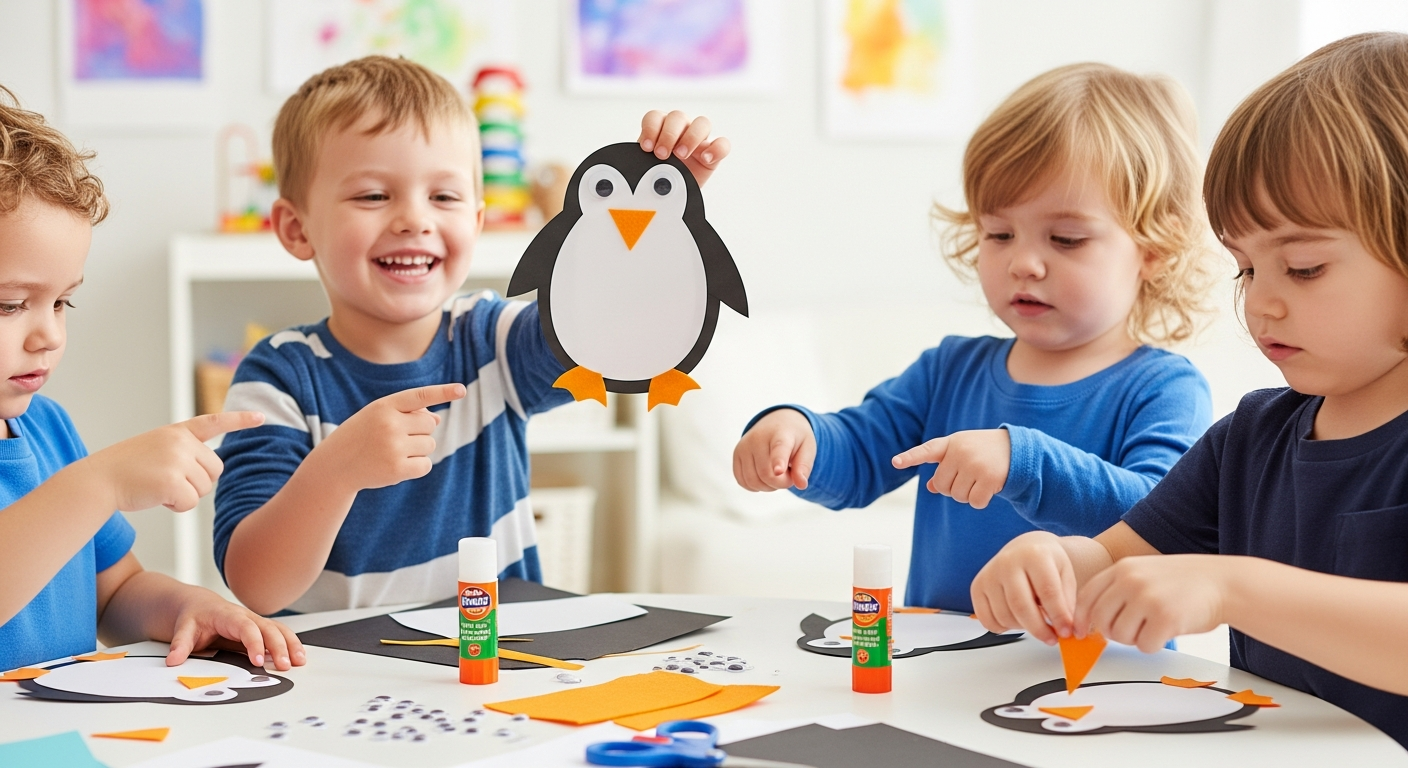
Table of Contents
- Introduction
- The Power of the Toddler Penguin Craft for Early Language
- Craft 1: The Classic Paper Plate Penguin
- Craft 2: The Sensory Cotton Ball Penguin
- Craft 3: Handprint Penguin Keepsakes
- Craft 4: The Paper Bag Penguin Puppet
- How Speech Blubs Enhances Your Craft Time
- Practical Scenarios: Bringing it to Life
- Choosing the Right Plan for Your Family
- Beyond the Craft: Expanding the Penguin Theme
- Summary of Key Takeaways
- Frequently Asked Questions
- Conclusion
Introduction
Have you ever noticed how a toddler’s eyes light up when they see a penguin waddling across a screen or a page in a book? There is something inherently joyful about these flightless birds. Maybe it’s their tuxedo-like feathers, their clumsy yet determined walk, or the way they huddle together for warmth. For a toddler, a penguin isn't just an animal; it’s a character full of personality. But did you know that a simple toddler penguin craft can be a gateway to significant developmental milestones?
At Speech Blubs, our mission is to empower children to speak their minds and hearts. We understand that for 1 in 4 children, the journey to communication isn't always a straight line. Our founders experienced these same struggles firsthand and created the tool they wished they had—a way to blend scientific principles with the pure joy of play. This blog post is designed to take that same philosophy of "smart screen time" and bring it into your living room through hands-on crafting.

We will explore a variety of penguin-themed activities that do more than just create a cute refrigerator decoration. We’ll look at how these crafts build fine motor skills, expand vocabulary, and foster the confidence your child needs to start vocalizing new sounds. From paper plates to sensory cotton balls, we’re going to show you how to turn a rainy afternoon into a productive, speech-boosting adventure. By the end of this article, you’ll have a toolkit of activities and a deeper understanding of how to support your child’s unique communication journey.
The Power of the Toddler Penguin Craft for Early Language
When we sit down to craft with our little ones, we aren't just making a mess with glue and paper. We are creating a "communication temptation." A communication temptation is an environment where a child is naturally motivated to use their words or gestures to interact.
Think about the steps involved in a toddler penguin craft. You have black paper, white paint, googly eyes, and sticky glue. Each of these items is a vocabulary word waiting to be learned. When your child reaches for the "sticky" glue, they are experiencing a sensory concept that they can later label.
Building Foundational Skills Through Play
At Speech Blubs, we advocate for a holistic approach to development. Crafting helps with:
- Bilateral Coordination: Using both hands together (holding the paper with one hand while gluing with the other).
- Fine Motor Strength: Squeezing glue bottles or ripping paper strengthens the small muscles in the hands, which are essential for later skills like writing.
- Joint Attention: This is a crucial precursor to speech. When you and your child both look at the penguin you are building, you are sharing an experience and a focus point.
Our approach is rooted in the idea of "video modeling," where children learn by watching their peers. You can see this in action by downloading Speech Blubs on the App Store or Google Play to begin. Just as children in our app model sounds for your child to imitate, you act as the live model during craft time, demonstrating both the actions and the language associated with them.

Craft 1: The Classic Paper Plate Penguin
The paper plate penguin is a staple for a reason: it’s accessible, inexpensive, and offers a large "canvas" for a toddler’s developing motor skills.
Materials Needed:
- Standard white paper plates
- Black acrylic paint or a large black marker
- Orange and black cardstock
- Googly eyes
- Glue stick
Step-by-Step Instructions:
- The Body: Have your child paint the outer edges of the paper plate black, leaving a large white oval in the middle for the belly. If they aren't ready for paint, they can use a thick black marker.
- The Wings: Cut two oval shapes out of black cardstock. Help your child glue these to the sides of the plate.
- The Face: Glue on the googly eyes and a small orange triangle for the beak.
- The Feet: Cut out two orange "heart" shapes or simple triangles and glue them to the bottom.
Speech Tips for This Craft:
While you work, focus on the "P" sound. "P-p-p-penguin!" "P-p-p-plate!" Repetition is key. If your child is a "late talker," don't pressure them to say the whole word. Celebrate when they make the "P" sound or even just point to the "eye."
For a parent whose 3-year-old loves animals, using the "Animal Kingdom" section of our app alongside this craft can be incredibly motivating. They can watch a peer make penguin sounds and then try to "talk" to their paper plate creation. If you’re unsure where your child stands in their development, you can take our quick 3-minute preliminary screener to get a simple assessment and a free 7-day trial.
Craft 2: The Sensory Cotton Ball Penguin
Tactile learners often need to feel different textures to stay engaged. The cotton ball penguin is perfect for children who seek sensory input.
Materials Needed:
- Black construction paper (cut into a penguin silhouette)
- A bowl of cotton balls
- School glue (liquid works best here)
- Orange paper for the beak
Why This Works for Speech:
This craft is all about descriptors. As your child touches the cotton balls, use words like "soft," "fluffy," "white," and "bumpy."
"Look at the soft cotton! Is it soft? Yes, it’s so soft."
By providing the language for what they are feeling in real-time, you are mapping words to physical sensations. This is a core part of how we design our "smart screen time" experiences—ensuring that every interaction has a meaningful linguistic component.
Making It a Family Moment:
Our tool is designed to be a powerful tool for family connection, not a "babysitter." As your child glues the cotton balls onto the black paper, stay present. If they get glue on their fingers, say "Uh-oh! Sticky!" This simple interaction turns a craft into a shared memory. For more stories on how families use these moments to bond, check out our testimonials from parents who have seen their children thrive.
Craft 3: Handprint Penguin Keepsakes
There is nothing parents love more than a craft that captures how small their child’s hands once were. Handprint penguins are both a memory and a fantastic way to practice body awareness.
Instructions:
- Trace your child’s hand on black cardstock.
- Cut out the handprint (the fingers will be the penguin’s "feathers" or "feet" depending on how you orient it).
- Add a white paper oval for the belly and googly eyes on the palm area.
Learning About the Body:
As you trace, name the parts of the hand. "Here is your thumb. One, two, three, four, five fingers!" This builds foundational vocabulary regarding body parts. In our app, we often use face filters and video modeling to help children recognize facial features and expressions, which is a similar concept to recognizing their own handprint.
Craft 4: The Paper Bag Penguin Puppet
If you want to encourage functional communication and roleplay, the paper bag puppet is your best friend.
Instructions:
- Take a standard white or brown lunch bag.
- Color the bottom flap and the long part of the bag black, leaving a white space on the front.
- Add the face to the bottom flap (which becomes the head).
- When your child puts their hand inside, the "head" moves up and down.
Why Puppets Are Speech Magic:
Puppets allow children to practice "social communication" in a low-pressure way. Sometimes a child who is shy about speaking directly to an adult will happily "talk" to a penguin puppet.
- Have the penguin say "Hello!"
- Have the penguin ask for a "fish" (a cracker).
- Use the puppet to model the sounds found in the Speech Blubs app, which is available on the Google Play Store.
How Speech Blubs Enhances Your Craft Time
We don't believe in screen time for the sake of distraction. We believe in using technology to spark real-world action. When you use Speech Blubs, you aren't just letting your child watch a cartoon. You are engaging them in a scientifically-backed method called video modeling.
The Science of Imitation
Our method is backed by science, placing us in the top tier of speech apps worldwide. We utilize the concept of "mirror neurons." When a child watches another child (not a cartoon character) perform an action or make a sound, the neurons in their brain fire as if they were doing it themselves.
By integrating a toddler penguin craft with our "Winter Wonderland" or "Animal Kingdom" sections, you are providing a multi-sensory learning environment. They see the sound on the screen, they hear the sound, and then they use their hands to create the animal in real life. This "see-hear-do" cycle is incredibly powerful for retention and confidence.
Practical Scenarios: Bringing it to Life
Let's look at how this works in a real home. Imagine a parent, Sarah, whose 2-year-old, Leo, is a "late talker." Leo loves the color orange but rarely uses words to request things.
During their toddler penguin craft session, Sarah holds up the orange paper for the penguin's beak. Instead of just giving it to Leo, she waits. She uses the penguin puppet to say, "Orange? Do you want orange?" Leo points. Sarah says, "Orange! Yes!"
Later that evening, they open Speech Blubs. They navigate to the "Animal Kingdom" section and find the penguin. Leo sees a young boy on the screen making a "brrr" sound because it's cold. Because Leo just spent an hour touching "cold" white paint and "soft" cotton, the concept clicks. He mimics the "brrr" sound. This isn't a miracle; it's the result of consistent, joyful, and smart engagement.
We don't suggest guaranteed outcomes like "your child will be giving public speeches in a month." However, we do know that fostering a love for communication and reducing frustration through these "joyful family learning moments" creates the best possible foundation for growth.
Choosing the Right Plan for Your Family
We want to be transparent about our pricing because we value the trust you place in us. We offer two main paths to help your child find their voice.
- Monthly Plan: For $14.99 per month, you get full access to our library of 1,500+ activities.
- Yearly Plan (Best Value): This is our most popular choice, costing $59.99 per year. This breaks down to just $4.99 per month, saving you 66% compared to the monthly option.
Why the Yearly Plan is the Clear Winner:
The Yearly plan isn't just about saving money; it’s about providing a comprehensive developmental toolkit. When you choose the Yearly plan, you receive:
- A 7-Day Free Trial: Try everything risk-free before you commit.
- The Reading Blubs App: An extra app designed to bridge the gap between speech and literacy.
- Priority Support: 24-hour support response time to answer any questions you have.
- Early Access: Be the first to try new updates and sections.
The Monthly plan does not include the free trial or the Reading Blubs app. To get the full suite of features and the best start for your child, we highly recommend the Yearly plan. Ready to get started? Create your account and begin your 7-day free trial today.
Beyond the Craft: Expanding the Penguin Theme
If your child is truly obsessed with their toddler penguin craft, you can extend the learning into other areas of the day.
Penguin Snack Time
Make "Oreo Penguins" or use black grapes and cheese to create little penguin shapes on a plate.
- Vocabulary focus: "Eat," "Yum," "Sweet," "Crunchy."
- Action focus: "Bite," "Chew."
The "Ice Skating" Sensory Bin
Fill a plastic bin with water and freeze it (or use ice cubes). Add your child's penguin crafts (if they are waterproof) or plastic penguin toys.
- Concept focus: "Cold" vs. "Warm."
- Verb focus: "Slide," "Slip," "Fall," "Swim."
Reading Together
Find books about penguins at your local library. As you read, point to the pictures and relate them back to the craft you made. "Look! That penguin has a white belly just like yours!"
All of these activities reinforce the same language goals we aim for at Speech Blubs. Our app serves as a powerful supplement to these real-world experiences, providing the "smart screen time" that encourages children to put down the device and interact with the world around them.
Summary of Key Takeaways
Crafting with your toddler is about more than just the end product. Whether you are making a paper plate penguin or a handprint keepsake, you are:
- Building Vocabulary: Mapping words to textures, colors, and actions.
- Encouraging Imitation: Using your own actions and the peer models in Speech Blubs to spark vocalization.
- Developing Motor Skills: Strengthening the hands for future writing and self-care tasks.
- Connecting as a Family: Creating joyful moments that reduce communication frustration.
Our founders created Speech Blubs to be a bridge. We want to help the 1 in 4 children who need speech support find their unique voice. By blending the scientific methodology of video modeling with the simple fun of a toddler penguin craft, you are giving your child a powerful head start.
Frequently Asked Questions
1. My toddler won't sit still for a craft. Is this still worth it?
Absolutely! Crafting with a toddler is often about the process, not a 30-minute sit-down session. If your child only wants to glue one cotton ball and then run away, that’s okay. Follow their lead. Use that one moment to say "Sticky!" or "Soft!" Even short bursts of focused interaction are valuable for language development.
2. What if my child doesn't try to say the word "Penguin"?
Don't worry! "Penguin" is a complex word with multiple syllables and a "P" sound. Focus on smaller parts of the word or related sounds. Can they say "P"? Can they say "Go" (for penguin go)? Celebrate every approximation. You can also use the "Animal Kingdom" section in our app to let them hear other children saying the word, which removes the pressure from you.
3. How often should we use the Speech Blubs app alongside these crafts?
We recommend 5–15 minutes of "smart screen time" per day. The goal is for the app to inspire real-world play. You might watch the penguin video in the app for 5 minutes, then spend 15 minutes making the craft. This ensures the screen time remains an active, supplemental tool rather than a passive activity.
4. Is the Yearly plan really worth the extra cost upfront?
We believe it is the best investment for most families. Because the Yearly plan includes the Reading Blubs app and a 7-day free trial, it provides a more comprehensive developmental path. Since speech and reading are closely linked, having both tools available for just $4.99/month (billed annually) offers the most value for your child’s growth.
Conclusion
The journey to helping your child "speak their minds and hearts" is filled with small, waddling steps. A toddler penguin craft might seem like a simple afternoon activity, but it is actually a rich opportunity for language growth, sensory exploration, and emotional bonding. By combining these hands-on projects with the "smart screen time" provided by Speech Blubs, you are creating a world where communication is fun, not frustrating.
We invite you to join our community of parents who are transforming their children's lives through play. Remember, our Yearly plan is the clear best choice, offering the greatest value, exclusive features like Reading Blubs, and that essential 7-day free trial.
Don't wait to start this journey. Download Speech Blubs on the App Store or Google Play today, and choose the Yearly plan to waddle into a world of joyful learning!
About the author