
What is Speech Delay Disorder? A Helpful Parent Guide
 By Speech Blubs Team•Mar 5, 2026•14 min.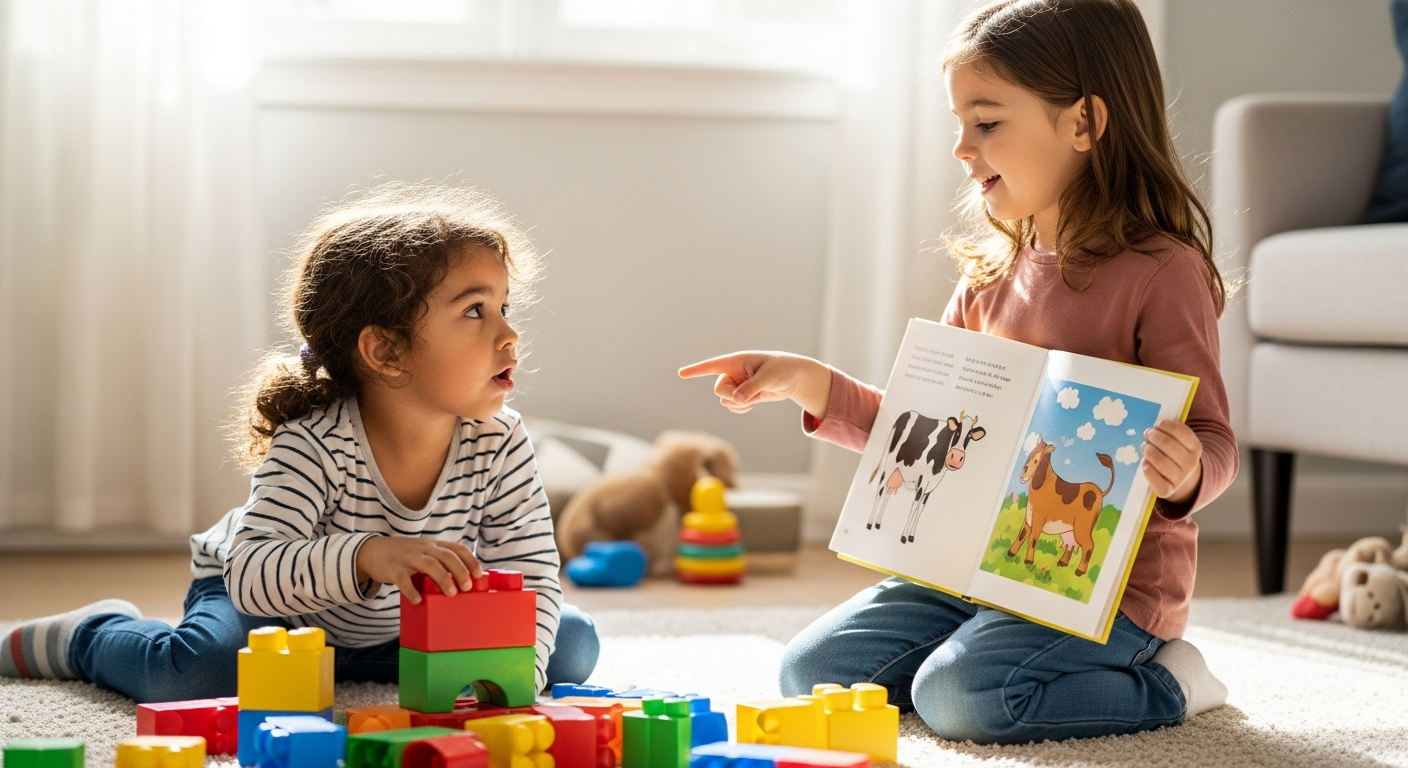
Table of Contents
- Introduction
- Defining the Basics: Speech vs. Language
- Identifying the Signs: Developmental Milestones
- What Causes Speech Delay Disorder?
- Red Flags: When to Call the Doctor
- How Speech Blubs Supports Development
- Supporting Your Child at Home: Beyond the Screen
- Choosing the Right Path: Value and Commitment
- Realistic Expectations: The Journey, Not a Race
- Frequently Asked Questions (FAQ)
- Conclusion
Introduction
Did you know that approximately 1 in 4 children will require some form of speech or language support during their early developmental years? It is a staggering statistic, yet it often catches parents by surprise when they notice their own little one isn't hitting milestones as quickly as the toddler next door. At Speech Blubs, we understand this journey intimately. Our founders all grew up with speech challenges themselves, and they created the very tool they wished they had as children—a way to turn "screen time" into "smart time" that fosters genuine connection.
The purpose of this guide is to provide a clear, empathetic, and comprehensive look at what is speech delay disorder, how it differs from a language delay, and what steps you can take to support your child’s unique voice. We will explore the common causes, the red flags to watch for at different ages, and how a blend of professional guidance and joyful home activities can make a world of difference. Our mission is to empower every child to speak their mind and heart, and that starts with giving you, the parent, the information you need to move forward with confidence.

The core message of this article is simple: while every child develops at their own pace, early identification and proactive, play-based intervention are the most effective ways to reduce frustration and build the foundational communication skills your child needs to thrive.
Defining the Basics: Speech vs. Language
Before we dive into the specifics of a disorder, it is vital to understand the terminology. Many people use "speech" and "language" interchangeably, but in the world of child development, they represent two distinct sets of skills.
What is Speech?
Speech refers to the actual sounds we produce. It involves the physical coordination of the tongue, lips, jaw, and vocal tract to form words. When we talk about speech, we are looking at:
- Articulation: How we make individual speech sounds (like the "s" in "sun" or the "b" in "ball").
- Voice: How we use our vocal folds and breath to produce sound (considering pitch, volume, and quality).
- Fluency: The rhythm or flow of our speech (disruptions here might look like stuttering or cluttering).
What is Language?
Language is much broader. it is the entire system we use to share thoughts and receive information. It can be verbal, non-verbal (gestures), or written.
- Receptive Language: This is what a child understands. Can they follow a direction like "Go get your shoes"? Do they know what an "apple" is when they see a picture of one?
- Expressive Language: This is how a child shares their message. It involves choosing the right words, putting them into sentences, and using gestures to communicate a need.
When asking what is speech delay disorder, it is important to realize that a child might have a delay in speech, a delay in language, or both. For instance, a child with a speech delay might have a huge vocabulary and understand everything you say, but their actual words are so "mushy" or mispronounced that you can't understand them. Conversely, a child with a language delay might pronounce words perfectly but only use two or three words to communicate when their peers are using full sentences.

Identifying the Signs: Developmental Milestones
Knowing what to expect can help you decide if it is time to seek professional advice. While we don't believe in "watching and waiting" when a parent's gut feeling says something is off, understanding typical milestones provides a useful framework.
The First Year (0-12 Months)
At this stage, communication is all about foundation. You are looking for:
- Cooing and Babbling: By 6 months, your baby should be making a variety of sounds.
- Response to Sound: Does your baby turn toward your voice or look when you call their name?
- Gestures: By 12 months, waving "bye-bye" or pointing to a bottle are critical non-verbal milestones.
Toddlerhood (12-24 Months)
This is often when "late talking" becomes more apparent.
- 15 Months: Your child should be trying to say at least one or two words besides "mama" or "dada."
- 18 Months: They should have a handful of words and follow simple directions without needing you to gesture.
- 24 Months: A major milestone here is the "word explosion." Most 2-year-olds should have at least 50 words and be starting to put two words together (e.g., "More milk" or "Doggy run").
The Preschool Years (2-4 Years)
As children grow, their speech should become clearer to people outside the immediate family.
- 3 Years: About 75% of what your child says should be understood by a stranger. They should be using three-word sentences and asking "why" or "what" questions.
- 4 Years: Speech should be almost entirely intelligible. They should be able to tell a simple story about their day.
If you find yourself ticking off fewer of these milestones than expected, it doesn't mean your child won't catch up, but it is an excellent time to get a baseline. You can take our quick 3-minute preliminary screener to get a simple assessment and a free 7-day trial of our tools.
What Causes Speech Delay Disorder?
Understanding the "why" can often take the weight of guilt off a parent's shoulders. Speech delays are rarely caused by anything a parent did or didn't do; rather, they usually stem from physical or neurological factors.
1. Oral-Motor Issues
Many children with speech delays have a physical difficulty coordinating the muscles of the face. This is often called an oral-motor problem. The brain may have trouble sending the correct signals to the lips, tongue, and jaw to produce specific sounds. This can manifest as:
- Apraxia of Speech: The brain struggles to plan the movement of speech muscles.
- Dysarthria: The muscles themselves are weak, leading to slurred or soft speech.
2. Hearing Impairment
A child who cannot hear well cannot learn to speak well. Even temporary hearing loss caused by chronic ear infections can lead to a speech delay. If a child "misses" certain frequencies, they might not hear the "s" or "t" sounds at the ends of words, leading them to drop those sounds when they speak.
3. Autism Spectrum Disorder (ASD)
While not every child with a speech delay has autism, speech and language delays are common early indicators of ASD. In these cases, the delay is often accompanied by challenges in social communication, such as a lack of eye contact or a lack of interest in "joint attention" (sharing an experience with someone else, like pointing at a bird in the sky).
4. Environmental Factors
While less common as a primary cause, a lack of verbal stimulation can impact how quickly a child picks up language. However, in our modern world, the more common concern is "passive" screen time. Watching cartoons without interaction doesn't teach communication. This is why we focus on "smart screen time," where the child is an active participant in the learning process.
Red Flags: When to Call the Doctor
If you notice any of the following, it is worth scheduling an appointment with your pediatrician or a Speech-Language Pathologist (SLP):
- No pointing or gesturing by 12 months.
- Preferring gestures over vocalizing at 18 months.
- Difficulty imitating sounds by 18 months.
- Regression: If your child had words and suddenly stopped using them, this is a sign that needs immediate professional attention.
- Unusual Tone: A voice that sounds very nasal, raspy, or strained.
Early intervention is the "gold standard" for a reason. Research shows that the brain is at its most "plastic"—meaning it is most able to learn and adapt—during the first few years of life. To see how other families have navigated these concerns, you can read testimonials from parents who have seen success.
How Speech Blubs Supports Development
At Speech Blubs, we don't just provide "another app." We provide a scientifically-backed tool designed to supplement therapy and make home practice feel like a game. Our unique approach is rooted in Video Modeling.
The Science of Video Modeling
Children are biologically programmed to learn from other children. When a child sees a peer on a screen making a sound, their "mirror neurons" fire. These are specialized brain cells that help us learn new skills by watching others perform them. Instead of an adult therapist or a cartoon character, Speech Blubs uses "Blubbers"—real kids—who demonstrate sounds and words. This reduces the intimidation factor and increases the child's desire to imitate.
Our method is backed by research, which places us in the top tier of speech applications worldwide. We focus on:
- Building Confidence: By practicing in a low-pressure environment, children feel more comfortable trying new sounds.
- Fostering a Love for Communication: We believe that if a child enjoys the process, they are more likely to keep trying.
- Reducing Frustration: When a child can finally express a need, the "meltdowns" caused by being misunderstood often begin to fade.
Practical Scenario: Making Progress Through Play
Imagine a parent whose 3-year-old "late talker" is obsessed with the zoo but struggles with basic consonant sounds. Using the "Animal Kingdom" section of Speech Blubs, the child sees a peer making a "Moo" sound. The child isn't being "drilled" on the letter M; they are playing a game where they get to be a cow! They see the other child's mouth move, they hear the sound, and they are encouraged to mirror it. This transformation of a clinical task into a joyful family learning moment is the heart of what we do.
Ready to try it for yourself? Download Speech Blubs on the App Store or Google Play to begin your journey.
Supporting Your Child at Home: Beyond the Screen
While tools and therapy are essential, you are your child's first and best teacher. Here are some simple, effective ways to encourage speech and language development throughout your daily routine:
1. Narrate Your Day
Think of yourself as a sports commentator for your life. As you go through your chores, talk about what you are doing. "I am washing the big red apple. Now I am cutting the apple. Crunch, crunch, crunch!" This exposes your child to a high volume of language in a meaningful context.
2. Follow Their Lead
If your child is interested in a toy car, talk about the car. Don't try to force them to look at a book about birds if their heart is with the "Vroom vroom!" meeting them where their interest lies increases their engagement.
3. Read Early and Often
Reading isn't just about the story; it is about the interaction. Point to pictures, ask "What's that?", and let your child turn the pages. Books with repetitive phrases or nursery rhymes are particularly good for children with speech delays because the predictability helps them anticipate the sounds.
4. Create "Communication Temptations"
Sometimes we are too good at anticipating our children's needs. If you always give them their juice before they ask, they have no reason to use their words. Try putting a favorite toy slightly out of reach or giving them a small portion of a snack so they have to ask for "more."
5. Use the Right Tools
In addition to the main Speech Blubs app, we offer the Reading Blubs app (available with our Yearly plan) to help bridge the gap between spoken language and early literacy. Providing a screen-free alternative to passive cartoons ensures that your child’s digital time is productive and educational.
Choosing the Right Path: Value and Commitment
When it comes to your child's development, we believe in transparency and providing the best possible value. We offer two main ways to access our full library of over 1,500 activities and 25+ sections:
- Monthly Plan: $14.99 per month. This is a great "pay-as-you-go" option for families who want to test the waters.
- Yearly Plan: $59.99 per year. This is the clear choice for most families, breaking down to just $4.99 per month—a 66% savings compared to the monthly rate.
The Yearly plan is designed to be a comprehensive support system for your child's development. When you choose the Yearly plan, you receive:
- A 7-day free trial to explore everything with no risk.
- The Reading Blubs app included at no extra cost.
- Early access to all new content updates.
- Priority 24-hour support response time.
The monthly plan does not include the free trial, the extra app, or the priority support. We encourage families to create an account and start their free trial on the Yearly plan to ensure they have every resource available at their fingertips.
Realistic Expectations: The Journey, Not a Race
It is important to remember that progress isn't always linear. Some weeks your child might learn ten new words, and other weeks they might seem to plateau. This is normal. Our goal is not to promise that your child will be giving public speeches in a month; rather, we are here to foster a love for communication and build those key foundational skills.
Speech Blubs is a powerful supplement to your child’s overall development plan. It works beautifully alongside professional speech therapy, giving you a way to carry over the work done in the clinic into your living room. By making practice fun, you reduce the power struggles that often come with "homework" and replace them with joyful family moments.
"The most important thing we can give our children is the confidence to know that their voice matters. Whether they are using a single word or a complex sentence, every step forward is a victory worth celebrating."
Frequently Asked Questions (FAQ)
1. What is the difference between a "late talker" and a child with a speech delay?
A "late talker" is typically a toddler (between 18-30 months) who has a good understanding of language and strong play skills but a limited spoken vocabulary. A speech delay is a broader term that can involve difficulties with the physical production of sounds or more significant challenges in understanding and using language. A professional evaluation is the best way to determine which category your child falls into.
2. Can too much screen time cause a speech delay?
Passive screen time—where a child just watches cartoons without interacting—can certainly limit the time they spend practicing real-world communication. However, "smart screen time" that encourages imitation, vocalization, and interaction (like video modeling) can actually be a helpful tool in a child's development plan.
3. Will my child outgrow a speech delay on their own?
While some "late talkers" do catch up to their peers without intervention, many do not. Waiting too long can lead to frustration for the child and potential challenges with reading and social skills later in school. A "support-and-see" approach is always safer than a "wait-and-see" approach.
4. How long should my child use Speech Blubs each day?
We recommend short, frequent sessions rather than long periods of use. Just 10 to 15 minutes of "active" play with the app, ideally with a parent or caregiver co-playing, is enough to see the benefits of video modeling without overstimulating the child.
Conclusion
Understanding what is speech delay disorder is the first step toward unlocking your child's potential. It can be a path filled with questions and occasional anxiety, but you don't have to walk it alone. From identifying the early red flags to implementing fun, peer-led video modeling at home, there are countless ways to support your child’s journey toward clear and confident communication.
At Speech Blubs, we are committed to providing a joyful, effective, and scientifically-grounded solution for the millions of children who need a little extra help finding their voice. By blending the expertise of speech pathologists with the power of peer imitation, we help turn frustration into connection.
Don't wait to see if they'll "just grow out of it." Take action today to give your child the foundational skills they need for a lifetime of success. Sign up and start your 7-day free trial today. We highly recommend choosing the Yearly plan to unlock the best value, including the Reading Blubs app and our full suite of premium features. Let's work together to help your child speak their mind and heart!
About the author