
Whip Up Joy: Fun Cooking Activities for Kids & Communication Growth
 By Speech Blubs Team•Jan 13, 2026•20 min.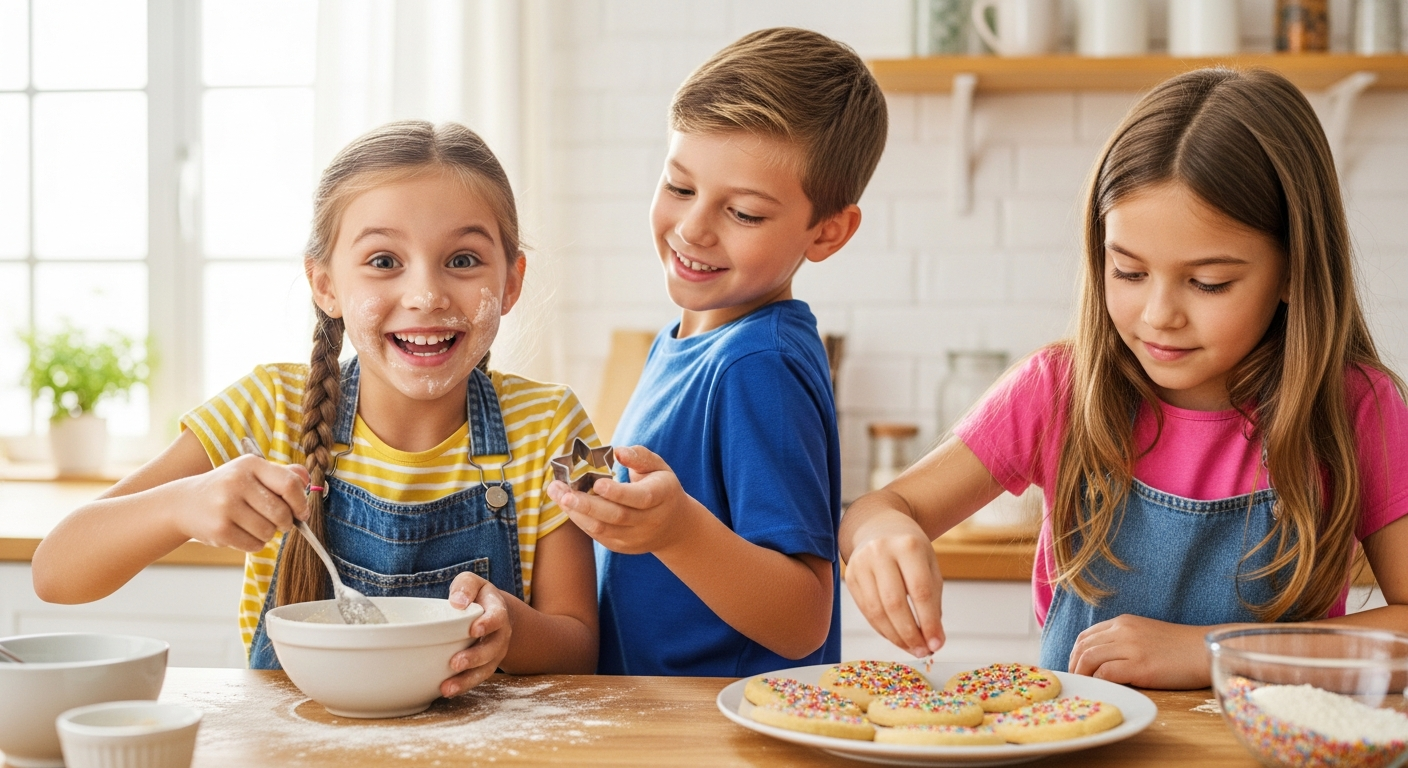
Table of Contents
- The Magic of the Mess: Why Cooking is a Developmental Powerhouse
- Age-Appropriate Kitchen Tasks: Every Child Can Be a Chef!
- Fun Cooking Activities for Kids: Recipes & Ideas to Spark Joy
- Smart Screen Time: How Speech Blubs Complements Kitchen Learning
- Essential Kitchen Safety for Young Hands
- Beyond the Recipe: Deepening Communication and Learning
- Setting Realistic Expectations for Your Little Chefs
- Conclusion: Cooking Up Connections and Communication
- Frequently Asked Questions
Does the thought of cooking with your kids conjure images of flour explosions, sticky messes, and a kitchen chaos you’d rather avoid? You’re not alone. In our busy lives, finding enriching activities that truly engage children without screens can feel like a Herculean task. Yet, nestled within the seemingly simple act of preparing a meal together lies a treasure trove of developmental benefits, not least of which is a powerful boost to communication skills. Far from being just about food, the kitchen can transform into a vibrant classroom, a creativity lab, and a bonding sanctuary where children learn to express themselves, one delicious stir at a time.
This post will dive deep into the world of fun cooking activities for kids, exploring how these hands-on experiences nurture everything from fine motor skills and math concepts to crucial language and social-emotional development. We’ll offer age-appropriate ideas, practical tips for a safe and joyful culinary journey, and reveal how these kitchen adventures beautifully complement the communication support we offer at Speech Blubs. Get ready to swap passive screen time for engaging, interactive learning that empowers your child to "speak their minds and hearts."

The Magic of the Mess: Why Cooking is a Developmental Powerhouse
When children step into the kitchen, they’re not just learning to cook; they're embarking on a multi-sensory journey that ignites learning across numerous developmental domains. This isn’t merely about producing a tasty treat; it’s about the process, the exploration, and the rich opportunities for growth that unfold with every chop, stir, and sprinkle.
A Symphony of Skill Development
Cooking is a masterclass in practical skills, offering a unique blend of learning that often goes unnoticed. It’s an organic way for children to:
- Refine Fine Motor Skills: From tearing lettuce and kneading dough to peeling vegetables and pouring liquids, every action in the kitchen strengthens the small muscles in their hands and fingers, crucial for tasks like writing and self-care. Imagine a toddler carefully sprinkling cheese onto a mini pizza – that’s precise hand-eye coordination in action!
- Boost Early Math Concepts: Counting ingredients, measuring cups and spoons, understanding fractions (half a cup, a quarter teaspoon), and even timing dishes are all embedded math lessons. "How many scoops of flour do we need?" becomes a fun counting game, not a chore.
- Enhance Reading and Comprehension: Following a recipe, especially a visual one, builds critical literacy skills. Children learn to sequence steps, understand instructions, and connect written words to actions. This sequential understanding is fundamental for academic success.
- Cultivate Problem-Solving and Critical Thinking: What happens if we don’t have an ingredient? How do we adjust the recipe? These scenarios encourage creative thinking and adaptability. Children learn that sometimes, it's okay for things not to go exactly as planned, and how to find solutions.
- Foster Patience and Focus: Waiting for dough to rise, for water to boil, or for cookies to bake teaches patience and the importance of seeing a task through to completion. The anticipation of the delicious outcome motivates them to stay focused.
Building Confidence, Independence, and Healthy Habits
Beyond the foundational skills, cooking provides a profound sense of accomplishment. The pride on a child's face when they present a dish they’ve helped create is immeasurable. This directly translates into:

- Increased Self-Esteem: Successfully contributing to a meal, seeing their efforts enjoyed by the family, and receiving praise builds immense confidence. They learn they are capable and valuable contributors.
- Growing Independence: As children master tasks, they become more self-reliant in the kitchen and beyond. This spills over into other areas of their lives, empowering them to take on new challenges.
- Nurturing Healthy Eating Habits: Children are far more likely to try and enjoy foods they’ve helped prepare. Involving them in selecting ingredients, especially colorful fruits and vegetables, demystifies healthy eating and makes it an exciting adventure rather than a struggle.
The Kitchen: A Hub for Communication and Connection
Perhaps most powerfully, cooking together creates a rich, natural environment for communication. It’s an unparalleled opportunity for parents and children to connect, converse, and collaborate.
- Vocabulary Expansion: The kitchen is brimming with new words – names of ingredients (cumin, cilantro, zucchini), action verbs (stir, whisk, chop, pour), descriptive adjectives (sticky, crunchy, sweet, tangy), and positional words (above, below, next to).
- Sequencing and Direction Following: Recipes inherently involve multi-step directions. "First, we wash the apples, then we slice them." This practice is vital for language comprehension and executive function.
- Descriptive Language Practice: Encourage children to talk about what they see, smell, touch, and taste. "What does this dough feel like?" "Can you describe the smell of the baking cookies?" This helps them articulate sensory experiences.
- Social Skills and Turn-Taking: Sharing tasks, asking for help, negotiating roles ("Can I pour the milk next?"), and expressing preferences during a cooking project are all natural ways to practice crucial social communication.
At Speech Blubs, our mission is to empower children to speak their minds and hearts. Our company was born from the personal experiences of our founders, who all grew up with speech problems and created the tool they wished they had. We are committed to providing an immediate, effective, and joyful solution for the 1 in 4 children who need speech support, blending scientific principles with play. Just as cooking sparks communication through hands-on interaction, our app offers one-of-a-kind "smart screen time" experiences that actively engage children in language development.
Age-Appropriate Kitchen Tasks: Every Child Can Be a Chef!
One of the keys to successful cooking with kids is assigning tasks that match their developmental stage. This ensures safety, keeps them engaged, and builds their skills incrementally. Remember, adult supervision is always essential, especially around heat and sharp objects.
Toddlers (1-3 Years Old): The Enthusiastic Helpers
Even the youngest chefs can participate! Focus on sensory experiences and simple, safe actions.
- Washing Produce: Let them rinse fruits and veggies in a colander in the sink. The feel of the water and the produce is a wonderful sensory experience.
- Tearing Lettuce: Perfect for building fine motor skills and hand strength.
- Stirring: Give them a bowl with soft ingredients (like yogurt or pancake batter) and a sturdy spoon. Messes are part of the fun!
- Pressing Buttons (with Supervision): On blenders or food processors, under your direct guidance, they can push the "on" button.
- Handing Ingredients: Ask them to fetch pre-measured items from a nearby basket.
Communication Connection: Naming colors ("red apple"), action words ("wash," "stir"), and simple requests ("more," "please"). "Can you wash the green broccoli?"
Preschoolers (3-5 Years Old): The Budding Bakers
Preschoolers can handle a bit more responsibility and love to see their contributions take shape.
- Measuring Dry Ingredients: Using measuring cups and spoons for flour, sugar, or oats (with you leveling off). This introduces volume concepts.
- Sprinkling: Adding cheese to pizza, sprinkles to cookies, or herbs to a dish.
- Using Cookie Cutters: Shaping dough is a favorite activity that strengthens hand muscles and fosters creativity.
- Spreading: Hummus on a tortilla, butter on bread, frosting on a cupcake.
- Pouring: Liquids from small pitchers into bowls (start with water for practice!).
Communication Connection: Practicing two-to-three word phrases ("I pour milk," "my cookie cutter"), sequencing ("First, sprinkle cheese, then bake it"), and expressing preferences ("I want more sprinkles!"). For children who are developing their speech clarity, practicing specific sounds by naming ingredients or actions is incredibly helpful. Our app offers interactive games that focus on articulation and pronunciation, providing a fun complement to the real-world practice in the kitchen.
Early Elementary (6-8 Years Old): The Junior Chefs
At this age, children can begin to read simple recipes and use basic tools under close supervision.
- Cracking Eggs: A classic kitchen skill, often requiring some practice!
- Kneading Dough: For bread or pizza, this is a great physical activity.
- Peeling Vegetables: With a child-safe peeler, they can tackle carrots or cucumbers.
- Simple Cutting: Using a butter knife or child-safe knife for soft foods like bananas, cooked potatoes, or cheese. Teach the "claw" technique to keep fingers safe.
- Following Picture Recipes: Empower them to take the lead with visual instructions.
Communication Connection: Reading recipes aloud, answering "Wh-" questions ("What comes next?"), explaining steps to you, and comparing ingredients. "The dough feels smooth now, but it was sticky before."
Late Elementary/Pre-Teens (9-12+ Years Old): The Sous Chefs
These older children can handle more complex tasks, use the stove and oven (with supervision), and even begin to plan meals.
- Reading and Interpreting Recipes: Empower them to follow recipes independently.
- Using a Can Opener: A practical life skill.
- Simple Stovetop Cooking (with Supervision): Stirring sauces, sautéing vegetables.
- Menu Planning: Involving them in deciding what to cook for the week.
- Experimenting with Flavors: Encourage them to add their own creative twists to recipes.
Communication Connection: Engaging in more complex discussions about nutrition, meal planning, budgeting ingredients, and problem-solving if a recipe doesn't go as planned. They can narrate the cooking process, explain their choices, and even teach younger siblings.
Fun Cooking Activities for Kids: Recipes & Ideas to Spark Joy
Let’s get to the delicious part! Here are some fantastic, fun cooking activities that will engage your child and provide ample opportunities for learning and communication. Many of these ideas require minimal ingredients and effort, proving that quick cooking activities can be incredibly rewarding.
No-Bake Wonders: Quick & Creative
No-bake recipes are perfect for younger children and for those days when you need a quick activity that yields immediate results.
- No-Bake Energy Bites: A mix of oats, peanut butter (or sunflower butter), honey, and chocolate chips or dried fruit. Kids love rolling these into bite-sized snacks, practicing fine motor skills and measuring.
- Communication Focus: Describing textures ("sticky," "crumbly"), counting balls, discussing favorite ingredients.
- Fruit Yogurt Parfaits: Layers of yogurt, granola, and fresh fruit. Kids can choose their favorite fruits, scoop, and layer.
- Communication Focus: Naming fruits, colors, sequencing layers ("First yogurt, then berries"), expressing preferences.
- Chocolate-Dipped Banana Pops: Slice bananas, insert sticks, dip in melted chocolate, and roll in sprinkles. Freeze for a cool treat.
- Communication Focus: Action words ("dip," "roll," "freeze"), naming colors of sprinkles, describing the cold sensation.
- Pantry Popcorn Mix: Popcorn tossed with pretzels, nuts, dried fruit, or small candies. Kids can choose and toss their favorite snacks.
- Communication Focus: Naming different snack items, expressing preferences, discussing sweet vs. salty.
Creative Crafts: Edible Art Projects
These activities turn food into a canvas for creativity and imagination.
- DIY Personal Pizzas: Provide pre-made dough (or pitas/English muffins), sauce, cheese, and a variety of toppings. Let your child create their own pizza masterpiece.
- Communication Focus: Naming toppings, describing their pizza creation, making choices, understanding "mine" vs. "yours." For a child working on developing descriptive language, discussing the colors, shapes, and textures of toppings can be a vibrant vocabulary builder. Our video modeling methodology at Speech Blubs, where children learn by watching and imitating their peers, complements this beautifully by offering similar visual and auditory cues for word acquisition.
- Decorate-Your-Own Cupcakes/Cookies: Bake plain cupcakes or sugar cookies ahead of time, then set out icing, sprinkles, and edible decorations.
- Communication Focus: Describing colors and shapes, making design choices, expressing creativity, using words like "on top," "next to."
- Snack Boards: Let kids help arrange a variety of snacks (cheese, crackers, fruits, veggies, dips) on a large board. They love deciding what goes where and creating a visually appealing spread.
- Communication Focus: Naming all items on the board, discussing healthy choices, expressing what they're "going to eat," using spatial words ("in the middle," "around").
- Rainbow Cereal Cake: Layer different colored cereals (or even colored frosting) to create a vibrant, edible rainbow cake.
- Communication Focus: Naming colors, sequencing layers, describing the final product, expressing excitement.
Simple Meals: From Prep to Plate
Involve kids in preparing parts of the family meal, making them feel like an integral part of dinner time.
- Pizza Toast: A quick and easy lunch or dinner. Kids can arrange bread, spread sauce, sprinkle cheese, and add pepperoni.
- Communication Focus: Following a simple sequence, using action words ("spread," "sprinkle"), expressing likes and dislikes.
- One-Bowl Muffins (Many Ways!): A versatile recipe where kids can help mix the batter, scoop it into liners, and choose add-ins (berries, chocolate chips).
- Communication Focus: Naming ingredients, counting scoops, discussing choices, describing the smell of baking.
- French Toast Roll-Ups: Kids can help cut crusts, roll bread flat, spread filling (cinnamon sugar, cream cheese), and roll them up before you sauté.
- Communication Focus: Action words ("cut," "roll," "spread"), discussing sweet tastes, sequencing steps.
- Goldfish Chicken Nuggets: Kids can help crush goldfish crackers (great for hand strength!) and shake chicken pieces in a bag with the crushed crackers before baking.
- Communication Focus: Action words ("crush," "shake"), discussing textures ("crunchy"), understanding hygiene ("wash hands").
Science in the Kitchen: Learning Through Experimentation
- Ice Cream in a Bag: Mix milk, sugar, and vanilla in a small zip-top bag. Place it in a larger bag filled with ice and salt. Shake vigorously for several minutes to make instant ice cream.
- Communication Focus: Describing scientific concepts ("cold," "melting"), sequencing steps, expressing amazement, teamwork.
Smart Screen Time: How Speech Blubs Complements Kitchen Learning
In a world filled with screens, it's easy for children to fall into passive viewing habits. At Speech Blubs, we offer a powerful alternative: "smart screen time" designed for active engagement and learning. Our app doesn't replace the invaluable, hands-on experiences of cooking, but rather enhances and reinforces the very communication skills nurtured in the kitchen.
Imagine a child who has just learned to "stir" pancake batter. In Speech Blubs, they might encounter an activity featuring other children performing actions like "stirring," "mixing," or "pouring." This is our unique video modeling methodology in action. Children learn by watching and imitating their peers, engaging mirror neurons in their brains, making learning intuitive and fun. This approach is backed by extensive research and has positioned us in the top tier of speech apps worldwide with high MARS scale ratings.
Here's how Speech Blubs creates synergy with your kitchen adventures:
- Reinforcing Vocabulary: The words learned through cooking – names of foods, action verbs, descriptive terms – can be practiced and solidified through Speech Blubs’ extensive library of activities, like "Word Play" or "Sounds & Words."
- Practicing Multi-Step Directions: Just as a recipe requires following steps, many Speech Blubs games guide children through sequences, strengthening their ability to comprehend and execute multi-part instructions.
- Building Confidence in Communication: The app provides a safe, encouraging space for children to practice speaking, imitating, and expressing themselves, reducing frustration and building the confidence to "speak their minds and hearts." Hearing from other families who have experienced breakthroughs and seen their children's communication blossom through our app can be truly inspiring. You can read some of their stories on our testimonials page.
- A Screen-Free Alternative to Passive Viewing: Unlike cartoons, our app requires active participation, making it a truly engaging and educational form of screen time that supports your child's overall development. It's a powerful tool for family connection, as parents can co-play and support their child's progress.
We provide an immediate, effective, and joyful solution for the 1 in 4 children who need speech support, empowering them with a tool born from personal experience and scientific insight.
Essential Kitchen Safety for Young Hands
Safety in the kitchen is paramount. While we want to encourage exploration and independence, it’s crucial to establish clear rules and supervise closely.
- Handwashing Heroes: Make proper handwashing a fun ritual. Before touching any food, ensure hands are scrubbed with soap and warm water for at least 20 seconds (singing "Happy Birthday" twice usually does the trick!).
- Supervision is Key: Never leave children unattended in the kitchen, especially when heat sources, sharp objects, or active appliances are in use.
- Age-Appropriate Tools: Start with plastic or child-safe knives for younger children, gradually introducing real utensils as they develop skills and maturity. Teach the "claw" grip to keep fingers tucked safely away from blades.
- Heat Awareness: Discuss the dangers of hot stoves, ovens, and liquids. Always turn pot handles inward on the stove to prevent accidental spills. Teach children to use oven mitts when handling hot dishes.
- Food Handling Fundamentals: Emphasize keeping raw meats separate from other foods. Teach them to avoid tasting raw batter or dough (no matter how tempting!), and ensure leftovers are refrigerated promptly.
- Clean As You Go: Encourage cleaning up spills immediately to prevent slips and trips. This also teaches responsibility and organization.
Beyond the Recipe: Deepening Communication and Learning
The learning opportunities in the kitchen extend far beyond the specific tasks of a recipe. By engaging in conversation and fostering curiosity, you can turn every cooking session into a comprehensive language and cognitive workout.
- Expand Vocabulary: Point to ingredients and name them. "This is garlic. Can you say garlic?" Use descriptive words for taste and texture: "This lemon is sour!" "The dough feels sticky."
- Practice Sequencing: Narrate the steps as you go: "First, we add the flour, then we crack the egg." Ask them to recall steps: "What did we do first?" "What comes next?"
- Develop Descriptive Language: Encourage them to describe what they see, smell, and hear. "The cookies smell sweet and warm." "Can you hear the sizzle of the butter?"
- Encourage Problem-Solving: If an ingredient is missing, ask, "What could we use instead?" If something spills, "How can we clean this up?"
- Foster Social Skills: Cooking provides natural moments for turn-taking, asking for help, and expressing needs or ideas. "Can I have the spoon, please?" "I think we need more cheese."
Just as cooking offers these rich opportunities for communication, Speech Blubs provides a focused, engaging platform to build these skills. For example, our "What am I doing?" activities can reinforce action verbs like "stirring" or "chopping" that your child learns in the kitchen. Our interactive "Wh-Questions" sections can help them understand and respond to questions like, "What are we cooking?" or "Where is the flour?" These activities are designed to be fun, powerful supplements to their overall development.
Setting Realistic Expectations for Your Little Chefs
It’s important to remember that cooking with kids is about the journey, not just the destination. There will be messes, there might be spills, and the final product might not always look like it came from a gourmet magazine. That's perfectly okay!
Our goal isn't to create Michelin-star chefs overnight, but to foster a love for communication, build confidence, reduce frustration, develop key foundational skills, and create joyful family learning moments. Embrace the process, celebrate their efforts, and focus on the invaluable time spent together.
Just like in learning to speak, progress takes time, consistency, and patience. At Speech Blubs, we advocate for this same approach. We provide a powerful tool to supplement your child's overall development plan and, when applicable, professional therapy, but we always frame its use with realistic expectations. We focus on celebrating every small step forward, recognizing that each new word, each clear sentence, and each confident interaction is a victory in itself.
Unsure if your child could benefit from a boost in communication skills? Take our quick 3-minute preliminary screener to get a simple assessment and a personalized next-steps plan. It involves just 9 simple questions and can offer valuable insights.
Conclusion: Cooking Up Connections and Communication
Stepping into the kitchen with your child is an invitation to a world of fun, discovery, and unparalleled developmental growth. From the sticky fingers covered in dough to the proud smiles over a self-made snack, these cooking activities are more than just recipes; they are experiences that build essential motor skills, academic foundations, self-confidence, and, crucially, robust communication abilities. The kitchen truly is a place where children can learn to "speak their minds and hearts."
These joyful, hands-on adventures perfectly complement the targeted language development support offered by Speech Blubs. While you're whipping up a storm in the kitchen, fostering natural conversation and skill-building, our app provides a scientifically backed, engaging platform for children to practice and strengthen their speech and language in a fun, interactive way. We are committed to providing an immediate, effective, and joyful solution for children who need speech support, blending scientific principles with play.
Ready to foster a love for language and confident communication in your child? We invite you to experience the transformative power of Speech Blubs.
Join our community of happy families today!
Ready to get started? Download Speech Blubs on the App Store or Get Speech Blubs on Google Play to begin your 7-day free trial.
For the best value and full suite of features, we highly recommend choosing our Yearly plan for just $59.99 per year (breaking down to only $4.99/month). You'll save 66% compared to the Monthly plan ($14.99/month) and unlock exclusive benefits:
- A 7-day free trial
- The extra Reading Blubs app
- Early access to new updates
- 24-hour support response time
The Monthly plan does not include these incredible benefits, so make the smart choice for your child's communication journey. Create your account and unlock your free trial today!
Frequently Asked Questions
Q1: How do I make cooking with my toddler safe?
A1: Safety starts with constant supervision. Involve your toddler in simple tasks like washing produce, stirring ingredients in a bowl, or tearing lettuce. Use age-appropriate tools like plastic knives for soft foods, and ensure hot surfaces or sharp objects are always out of reach. Establish clear rules about not touching the stove or oven, and make handwashing a fun, regular practice.
Q2: What if my child isn't interested in cooking?
A2: Start small and make it fun! Begin with activities that align with their interests, like making "monster" cookies or a "rainbow" fruit salad. Let them choose a recipe, even if it's super simple. Frame it as a game or an experiment rather than a chore. Focus on the tasting and decorating aspects, and gradually introduce more hands-on involvement as their curiosity grows. Remember, it’s about making memories, not perfection.
Q3: How can cooking activities specifically help with speech development?
A3: Cooking offers rich opportunities for speech development. It naturally encourages vocabulary expansion (naming ingredients, actions, tastes), practices following multi-step directions, and develops descriptive language (describing textures, smells, and colors). Children engage in sequencing ("first, then"), problem-solving discussions, and social turn-taking, all of which are vital for robust communication skills.
Q4: How does Speech Blubs fit in with cooking activities?
A4: Speech Blubs beautifully complements the communication skills learned in the kitchen by offering a "smart screen time" experience. Our app reinforces vocabulary and action words your child encounters while cooking through engaging video modeling activities where children imitate their peers. It provides a structured, joyful environment to practice following directions, develop descriptive language, and build overall communication confidence, acting as a powerful supplement to your child's developmental journey.
About the author