
Window Wonders: Easy Stained Glass Craft for Kids
 By Speech Blubs Team•Jan 13, 2026•25 min.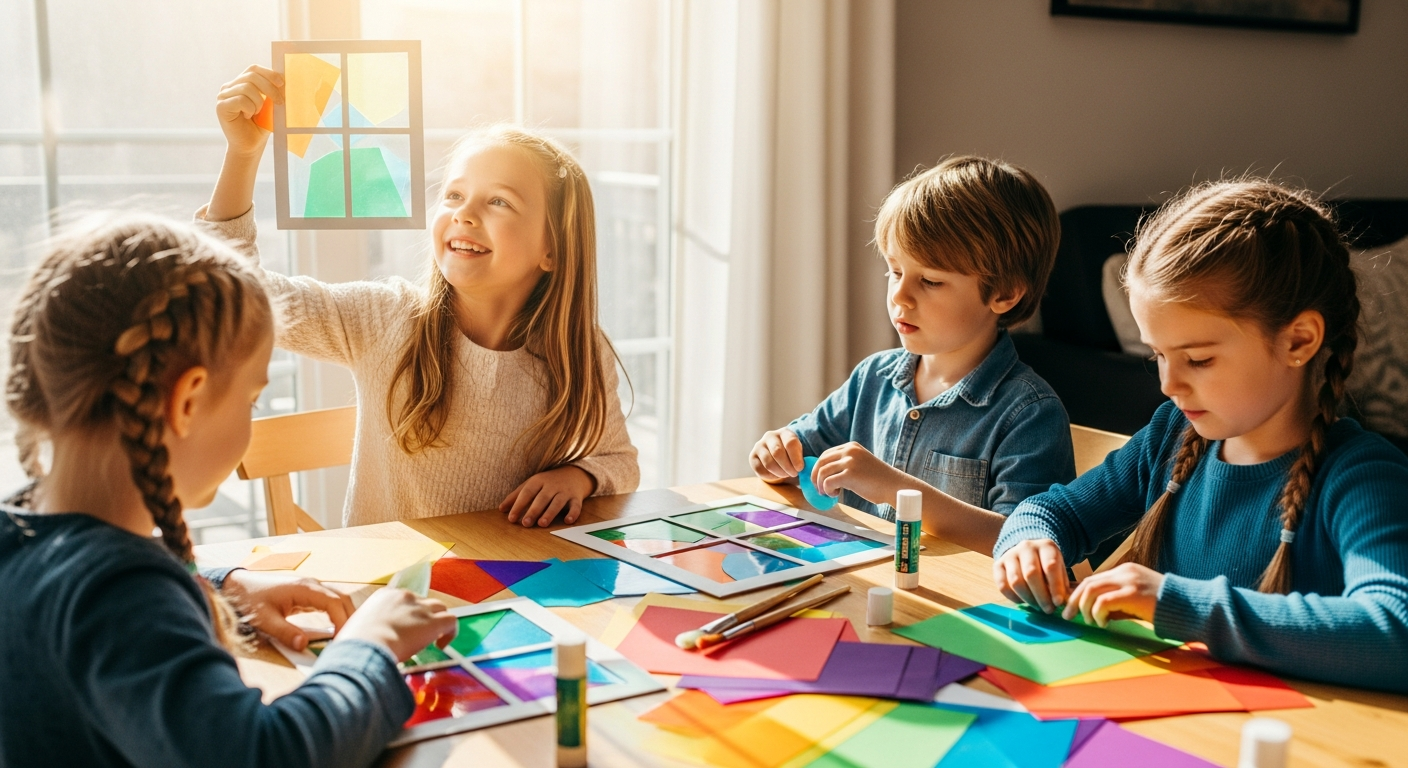
Table of Contents
- Introduction
- Why Stained Glass Crafts Are More Than Just Art
- Essential Supplies for Your Stained Glass Adventure
- Method 1: The Classic Tissue Paper & Contact Paper Technique
- Method 2: Glue and Paint on Glass/Plastic
- Method 3: Oil-Transferred Crayon Art
- Connecting Craft Time to Communication Growth
- Empowering Your Child's Voice with Speech Blubs
- Conclusion
- Frequently Asked Questions
Imagine a world bathed in vibrant, shifting colors, where sunlight transforms everyday windows into dazzling canvases. This isn't just a scene from a fairytale; it's the enchanting reality you can create with your child right at home through the magic of easy stained glass crafts. Few activities capture a child's imagination quite like watching light dance through their own colorful creations. Beyond the sheer joy and beauty, these seemingly simple projects offer a profound avenue for growth, nurturing crucial developmental skills from fine motor coordination to confident communication. This guide will take you on a journey through various accessible stained glass techniques, revealing how artistic play can become a powerful tool for holistic child development. We'll explore how these hands-on activities foster creativity, build confidence, and even lay the groundwork for stronger language skills, providing practical tips and connecting them to resources like Speech Blubs that empower children to "speak their minds and hearts."

Introduction
Have you ever watched a child’s eyes light up, truly light up, at the sight of a rainbow? That intrinsic wonder at color and light is a powerful springboard for learning and development. Engaging in creative activities, especially those that transform something ordinary into something magical, offers children far more than just a way to pass the time. It's an opportunity to build essential skills, express themselves, and connect with the world around them. Creating "stained glass" art is a perfect example of such an activity – it’s visually stunning, highly engaging, and surprisingly easy to adapt for various ages and skill levels. In this post, we'll dive into several simple, kid-friendly stained glass craft techniques, outlining the materials you'll need and providing step-by-step instructions. We'll also explore the myriad developmental benefits woven into each snip, stick, and brushstroke, demonstrating how these crafts can enhance fine motor skills, boost creativity, and most importantly, stimulate language and communication. You’ll learn how to transform simple household items into dazzling window art, fostering a love for creation and communication in your child. Ready to start creating beautiful window art and fostering your child's developmental journey? Discover more fun and learning by exploring the Speech Blubs homepage today!
Why Stained Glass Crafts Are More Than Just Art
At first glance, an easy stained glass craft for kids might seem like just another fun art project. However, beneath the surface of colorful tissue paper and sticky contact sheets lies a rich tapestry of developmental opportunities. These crafts engage multiple senses and skill sets, contributing significantly to a child's overall growth.
Developing Fine Motor Skills
The intricate actions involved in cutting tissue paper, peeling contact paper, and carefully placing small pieces are a fantastic workout for tiny hands and fingers. Children practice their pincer grasp as they pick up small squares, refine their hand-eye coordination as they position them, and strengthen hand muscles through cutting. These fine motor skills are foundational for future tasks like writing, tying shoelaces, and buttoning clothes. The precision required, even in a "no-wrong-way-to-do-it" craft, hones their dexterity and control, setting them up for success in countless areas of life.

Boosting Creativity and Self-Expression
One of the most beautiful aspects of stained glass art is its inherent allowance for unique expression. There’s no single "right" way to combine colors or arrange shapes. Children are free to experiment, mix hues, and create patterns that reflect their imagination. This freedom fosters creative thinking and problem-solving. It empowers them to make choices, develop their aesthetic sense, and see their unique vision come to life. This process builds self-esteem and confidence, as they proudly display a piece of art that is distinctly "theirs." It's a wonderful way for children, especially those who might struggle with verbalizing complex emotions, to visually communicate their inner world.
Fostering Communication and Language
Craft time isn't just quiet time; it's prime communication time! As children engage with stained glass projects, they naturally practice and expand their language skills. Think about the opportunities:
- Vocabulary Building: Naming colors, shapes (square, circle, triangle), materials (paper, glue, scissors), and actions (cut, stick, press, peel).
- Descriptive Language: Encouraging them to describe their choices ("I chose the bright red paper for the flower petal"), explain their process, or talk about what their finished artwork represents. This is particularly valuable for children developing their expressive language.
- Following Directions: Listening to and understanding multi-step instructions ("First, cut the paper; then, stick it here").
- Sequencing: Discussing the order of operations in the craft, which helps develop narrative skills ("First we did this, then that, and finally, this").
- Social Interaction: Collaborating on a project, sharing materials, asking for help, or explaining their art to others.
For a parent whose 3-year-old "late talker" loves animals, but struggles with multi-word phrases, a stained glass craft of an animal can be a powerful language stimulant. As they create a colorful butterfly, you can model and prompt words like "blue wing," "red dot," "sticky paper," and "fly, butterfly!" This kind of focused, hands-on interaction makes language learning concrete and fun. If you're wondering whether your child could benefit from more targeted language support, why not take our quick 3-minute preliminary screener? It involves just 9 simple questions and provides an assessment along with a personalized next-steps plan.
At Speech Blubs, we understand that every interaction is a learning opportunity. Our mission is to empower children to "speak their minds and hearts," and we believe that playful, engaging experiences like these crafts, combined with our scientifically-backed "video modeling" methodology, create the perfect environment for communication growth. We're committed to providing an immediate, effective, and joyful solution for the 1 in 4 children who need speech support, blending scientific principles with play into one-of-a-kind "smart screen time" experiences. Our app provides a screen-free alternative to passive viewing (like cartoons) and a powerful tool for family connection, where children learn by watching and imitating their peers. This active engagement is key to building complex communication skills. Ready to bring more engaging, language-rich activities into your home? Download Speech Blubs on the App Store or Google Play to get started!
Essential Supplies for Your Stained Glass Adventure
One of the best things about making easy stained glass crafts for kids is that the supplies are often inexpensive and readily available. You might even have most of what you need already!
The Core Materials
These are the fundamental items you'll want for most kid-friendly stained glass projects:
- Tissue Paper: This is your primary "color" source. Look for multi-colored packs, or even save tissue paper from gifts. The thinner the paper, the better the light will shine through. Having a variety of colors is key for vibrant results.
- Black Paper or Cardstock: This forms the "leading" lines of your stained glass, giving it structure and defining the shapes. Cardstock is generally more rigid and easier for kids to handle, but construction paper works too.
- Clear Contact Paper: This is the magical adhesive that holds everything together and creates the "glass" effect. Look for glossy clear contact paper in a roll. It's surprisingly versatile for many kids' crafts.
- Scissors: Kid-safe scissors are a must for cutting tissue paper and black outlines.
- Cutting Device (Optional but helpful): For adults who want to create more intricate outlines, an X-acto knife (with extreme caution), a paper cutter, or even a Cricut machine can be very useful for precise cuts in black cardstock.
Optional Enhancements
To add variety, sparkle, or simplify certain steps, consider these additions:
- Craft Glue or Glue Stick: Useful if you want to layer tissue paper to create new colors (e.g., blue over yellow for green) or if using other paper-based methods.
- Glitter Glue: Can add a beautiful shimmer to projects, especially if you're using a glue-and-paint method.
- Food Coloring or Watercolors: Essential for methods that involve painting directly onto glass or plastic to achieve a translucent effect.
- Picture Frame (backless): For glue-and-paint methods, an old picture frame provides a perfect "window" for your stained glass.
- Baby Oil: Used in crayon-based "stained glass" techniques to make crayon colors translucent.
- Craft Tweezers: Can be incredibly helpful for little fingers (or grown-up ones!) when placing very small pieces of tissue paper on intricate designs.
Gathering these supplies can even be a language-rich activity in itself. As you collect materials, talk about them: "We need sticky contact paper," "Let's find the brightest red tissue paper," or "Can you hand me the sharp scissors?" These simple interactions build vocabulary and descriptive language, making the preparation part of the fun and learning!
Method 1: The Classic Tissue Paper & Contact Paper Technique
This is arguably the easiest and most popular method for creating an easy stained glass craft for kids, requiring minimal cleanup and delivering stunning results. It’s perfect for all ages, from toddlers to school-aged children, with variations for complexity.
Step-by-Step Guide
Prep Work: Cutting Out Your Design
- Choose Your Design: Start by deciding on a design. Simple shapes like hearts, stars, flowers, or animals work wonderfully. You can draw these directly onto black cardstock, print out templates, or even use a cutting machine like a Cricut for intricate outlines.
- Cut the Outline: Carefully cut out your chosen design from the black cardstock. This black outline will be the "leading" that gives your stained glass structure. Ensure that all the lines or pieces of your design intersect where possible to create a single, cohesive piece that is easy to handle. If parts are separate (like the individual panes of a window), ensure they can be easily arranged.
- Cut Tissue Paper Squares: This is a fun part for kids! Have them cut or tear tissue paper into small squares, rectangles, or even abstract shapes. Aim for pieces that are about 0.5 to 1 inch in size, but varying sizes add character. Folding multiple sheets of tissue paper together before cutting saves time.
- Cut Contact Paper: Unroll your clear contact paper. You'll need two pieces for each design, or one piece folded in half. If folding, cut a piece at least twice the size of your black outline, plus a few inches on all sides for maneuvering. If using two separate pieces, they should be slightly larger than your design.
The Sticky Foundation: Applying Contact Paper
- Peel and Place: Lay one piece of contact paper (or half of your folded piece) sticky-side up on a clean, flat surface. Carefully peel back the protective liner from one half of the paper.
- Position the Outline: Place your black cardstock outline onto the sticky side of the contact paper. Make sure it's centered and there’s enough sticky surface around the edges for the tissue paper to adhere. For folded contact paper, place the outline on one half, leaving ample space around the edges and ensuring it's positioned correctly so the other half can fold over it.
Coloring Your World: Adding Tissue Paper
- Fill the Spaces: Now for the artistic part! Encourage your child to pick up the colorful tissue paper pieces and stick them onto the contact paper, filling in the open spaces within the black outline.
- Experiment with Color: There's no wrong way to do this! They can stick to one color per section or layer different colors to create new shades and effects. Overlapping pieces are perfectly fine and often add a beautiful depth when light shines through.
- Precision (Optional): For older children or adults who want a more polished look, try to keep the tissue paper within the black lines as much as possible. Small craft tweezers can be handy for placing tiny pieces in intricate designs. Don’t worry too much about perfection; the charm of this craft is its handmade quality!
Sealing the Magic: The Finishing Touch
- Cover with Contact Paper: Once the design is completely filled with tissue paper, carefully peel the backing off the second piece of contact paper (or fold the remaining half of your initial contact paper over the design).
- Seal and Smooth: Lay the second sticky side over your design, aligning it as best as possible. Press down firmly, starting from the center and working outwards, to smooth out any air bubbles and ensure all the tissue paper is sealed between the two layers. This can be tricky; go slowly! If it gets a bit crooked or has a few wrinkles, it only adds to the rustic charm.
- Trim the Edges: Trim any excess contact paper around the perimeter of your design, leaving a small border (about 1/4 inch) to keep everything securely sealed.
Tips for Success & Variations
- Age Adaptation: For very young children, pre-cut the black outline and the tissue paper shapes. Focus on the sensory experience of sticking. For older kids, let them do all the cutting and design choices.
- Creating New Colors: Layering a lighter colored tissue paper (like yellow) under a darker, translucent color (like blue) can create a third color (green!) when held up to the light. This introduces a fun lesson in color theory.
- Sun-catcher Effect: For a sun-catcher look, you can punch a hole in the top of your finished piece, thread a string or ribbon through it, and hang it directly in a window.
- "Confetti" Look: Instead of filling individual sections, just let children apply a random "confetti" of colors all over the contact paper for a vibrant, abstract effect.
- Cricut Designs: If you have access to a Cricut machine and a Cricut Access subscription, you can find or design intricate stained glass patterns that are cut perfectly from black cardstock, offering endless possibilities for detailed projects.
This craft is not only visually rewarding but also provides countless opportunities for conversation. As your child works, ask open-ended questions: "What color will you use next?" "Why did you choose that shape?" "How does it feel to stick the paper?" These simple prompts encourage verbal expression and critical thinking. Need more ways to inspire language through play? Check out what other parents are saying about their child's success with Speech Blubs – their stories might just inspire you!
Method 2: Glue and Paint on Glass/Plastic
For a different texture and a more "glass-like" feel, using glue mixed with paint or food coloring is another fantastic way to create an easy stained glass craft for kids. This method provides a beautiful, translucent finish.
Materials Needed
- Picture Frame (backless): An old frame with the glass removed and cleaned is perfect. You can also use a clear plastic sheet or acrylic pane for a safer, kid-friendly option.
- Clear School Glue: Your basic Elmer's-style white school glue works well.
- Black Acrylic Paint: For coloring the "leading" lines.
- Squeeze Bottle: A small, empty squeeze bottle (like an empty glue bottle or condiment bottle with a fine tip) for the black outline.
- Food Coloring or Watercolors: To color the glue.
- Paint Brushes: Medium-sized brushes for applying the colored glue.
- Printed Artwork/Template: A simple coloring page or line art to place under the glass as a guide.
Simple Steps
- Prepare the "Leading" Glue: In a small container, mix clear school glue with a few drops of black acrylic paint. Stir well until you achieve a consistent, opaque black color. Transfer this mixture to your squeeze bottle.
- Set Up Your Canvas: Place your clean glass or plastic pane over your chosen printed artwork or template. This will serve as your guide for tracing the lines.
- Trace the Outline: Using the squeeze bottle filled with black glue, carefully trace the lines of your artwork directly onto the glass. Encourage slow, steady movements to create clear, defined "leading" lines. Let this black outline dry completely, which can take 2-3 hours, or even overnight, depending on thickness. Adult supervision is key here, especially with real glass.
- Mix Your Colors: While the outline dries, prepare your "paints." In separate small containers, mix clear school glue with various food colorings or liquid watercolors. Start with a few drops of color and add more for a darker, more vibrant hue. Stir gently to avoid too many bubbles.
- Fill with Color: Once the black outline is dry, use separate paint brushes to carefully fill in the sections of your design with the colored glue mixtures. Encourage your child to blend colors within a section if they wish, or keep each section a single, vibrant color. The glue will appear milky white at first but will dry clear and translucent.
- Dry Completely: Allow your masterpiece to dry flat for at least 24-48 hours. The glue layers need ample time to fully cure and become transparent.
- Display: Once completely dry, if using a picture frame, carefully reinsert the glass into the frame (adult help for this step!). Hang your beautiful creation in a window where the sun can shine through!
Safety First
- Real Glass: If using actual glass from a picture frame, adult assistance is absolutely required for handling the glass, removing it from the frame, and re-securing it. Plastic or acrylic panes are a much safer alternative for younger children.
- Hot Glue: If using hot glue to secure the glass back into a frame, this must be done by an adult.
- Supervision: Always supervise children when working with paints and glues to prevent accidental ingestion or mess.
This method offers a tactile experience with different textures and consistencies of paint, enhancing sensory exploration. Discussing the colors as they mix and watching the glue dry clear can be fascinating for children, fostering observation skills and curiosity.
Method 3: Oil-Transferred Crayon Art
This technique uses crayons, a staple in any child's art kit, to create a stained glass effect by making the wax translucent with a little bit of oil. It's a simple, low-mess option that yields surprisingly beautiful results.
Getting Started
- Choose a Coloring Page: Select any coloring page with bold, clear lines, similar to stained glass patterns. Christmas-themed pages, mandalas, or simple animal outlines work wonderfully.
- Color Heavily: Instruct your child to color the page heavily and completely using wax crayons. The more crayon they apply, the more vibrant and "stained glass-like" the final effect will be. Encourage them to fill every white space within the lines.
- Prepare for Transfer: Lay the colored page face down on a piece of newspaper or a protective surface.
The "Stained Glass" Effect
- Apply Oil: Squirt a small amount of baby oil (or any light cooking oil) onto the back of the colored paper.
- Spread Evenly: Using a paper towel or cotton ball, gently and evenly spread the oil across the entire back of the page. Ensure all white spots disappear and the paper looks slightly saturated. The crayon colors on the other side will immediately start to look brighter and more translucent.
- Wipe Excess: Lightly wipe off any excess oil with a clean paper towel. You want the paper to be translucent, not greasy.
- Display: Hang your oil-treated crayon art in a window. The oil causes the crayon wax to become translucent, allowing light to shine through and mimic the luminous quality of stained glass.
This method is fantastic for practicing focused coloring, strengthening hand muscles, and understanding cause and effect as they watch the oil transform their artwork. It’s a great way to recycle old coloring pages into new, beautiful art pieces.
Connecting Craft Time to Communication Growth
Beyond the immediate joy of creation, these easy stained glass crafts for kids are powerful catalysts for language development. They provide concrete, multisensory experiences that naturally invite conversation and learning.
Descriptive Language and Vocabulary Building
When creating art, children are constantly making choices about colors, shapes, and textures. This provides a natural context for introducing and reinforcing descriptive vocabulary. "Which color is sparkling?" "Let's find the tiny square." "This blue is dark, and this one is light." Such guided conversations enrich their lexicon and help them understand the nuances of language. For a child who is expanding their vocabulary, comparing and contrasting the different shades of blue or the various shapes of tissue paper strengthens their ability to use adjectives and nouns effectively.
Following Directions and Sequencing
Every craft project, regardless of its simplicity, involves a series of steps. Following multi-step directions is a critical skill for school readiness and daily life. Parents can break down complex instructions into manageable parts, verbalizing each step clearly: "First, we'll cut the black outline. Next, we'll peel the contact paper. Then, we can add the tissue paper." Encouraging your child to repeat the instructions or explain what comes next reinforces their understanding of sequencing and improves their auditory processing.
Sharing and Social Interaction
Craft time is often a shared experience, whether with a parent, sibling, or friend. This fosters social interaction and the development of pragmatic language skills. Children learn to share materials, take turns, ask for help politely, and express their ideas about their artwork. Presenting their finished piece and describing it to others builds confidence and encourages public speaking, even if it's just to a small family audience. This "show and tell" aspect can be incredibly motivating.
At Speech Blubs, we believe in the power of play-based learning to unlock communication potential. Our app uses "video modeling" – where children learn by watching and imitating their peers – to make complex communication skills accessible and fun. This methodology is scientifically proven to be highly effective, much like a child learning by observing and imitating a parent during a craft. Our research page delves deeper into the science behind our approach, placing us in the top tier of speech apps worldwide. When a child is excited about their "stained glass" butterfly, they can practice saying "butterfly" or describing its colors in Speech Blubs' "Animal Kingdom" or "Colors" sections. The concrete visual of their craft can serve as a powerful real-world anchor for the vocabulary and phrases they learn in the app, making their communication journey cohesive and engaging.
Empowering Your Child's Voice with Speech Blubs
While hands-on crafts like stained glass provide a fantastic foundation for development, sometimes children need an extra boost on their communication journey. That's where Speech Blubs comes in, offering a unique blend of fun and scientifically-backed speech support.
Our Mission and Methodology
At Speech Blubs, our mission is to empower children to "speak their minds and hearts." We understand the challenges parents face because our company was born from the personal experiences of our founders, who all grew up with speech problems and created the tool they wished they had. We are committed to providing an immediate, effective, and joyful solution for the 1 in 4 children who need speech support, blending scientific principles with play into one-of-a-kind "smart screen time" experiences.
We stand out by offering a screen-free alternative to passive viewing (like cartoons) and a powerful tool for family connection. Our unique "video modeling" methodology is central to our approach. Children learn complex communication skills by watching and imitating their peers. This active engagement stimulates mirror neurons in the brain, making learning intuitive and highly effective. Imagine a child, inspired by their colorful stained glass, practicing the sounds for "red" or "blue" by watching and imitating other happy children in the app. This direct, engaging interaction makes learning feel like play, not therapy.
For a child who is excited about their "stained glass" star, they can practice saying "star" or describing its sparkling colors in Speech Blubs' "Shapes" or "Colors" sections. The app's interactive format, featuring hundreds of fun activities, helps children develop a wide range of skills, from articulation and phonological awareness to vocabulary and social communication. We focus on building confidence, reducing frustration, and fostering a love for communication, one joyful interaction at a time.
Making the Most of Speech Blubs: Our Value
We believe in transparency and providing the best value for families. Speech Blubs offers two main subscription plans:
- Monthly Plan: Priced at $14.99 per month. This plan provides access to our core features, allowing families to start their journey at their own pace.
- Yearly Plan: Our most popular and highly recommended option, priced at $59.99 per year. This breaks down to just $4.99 per month, offering incredible savings and a wealth of exclusive features.
The Yearly plan is the clear best choice for families committed to their child's long-term communication development. Not only do you save 66% compared to the monthly plan, but it also includes:
- A 7-day free trial: This allows you to experience the full benefits of Speech Blubs and see its impact firsthand before committing.
- The extra Reading Blubs app: An invaluable bonus to support early literacy skills, complementing the speech and language development.
- Early access to new updates: Be among the first to explore new activities and features.
- 24-hour support response time: Get prompt assistance whenever you need it.
The Monthly plan, while flexible, does not include these fantastic benefits. We encourage you to choose the Yearly plan to unlock the free trial and the complete suite of features designed to maximize your child's communication potential. It's an investment in their voice, their confidence, and their future.
Conclusion
The simple act of creating an easy stained glass craft for kids is far more than just a momentary diversion. It’s a powerful gateway to developing crucial fine motor skills, nurturing boundless creativity, and, most importantly, fostering confident and expressive communication. As children engage with colors, shapes, and textures, they naturally build vocabulary, practice following directions, and learn to articulate their thoughts and feelings. These hands-on activities, steeped in imagination and joy, lay a vital foundation for a lifetime of learning and connection.
And as your child discovers the joy of expression through art, remember that the journey of communication is ongoing. Speech Blubs is here to support every step of that journey, turning screen time into "smart screen time" that builds essential language skills through engaging, peer-modeled interactions. We are dedicated to providing a joyful, effective, and accessible solution that empowers children to "speak their minds and hearts."
Ready to witness the magic of communication unfold in your child? Start your 7-day free trial with Speech Blubs today! To unlock all premium features, including the Reading Blubs app and priority support, for the best value, be sure to select our Yearly plan. You can also download Speech Blubs directly on the App Store or Google Play Store to bring this transformative tool into your home. Let's create, communicate, and grow together!
Frequently Asked Questions
Q1: What age is best for easy stained glass crafts?
A1: These crafts are wonderfully adaptable for a wide range of ages. Toddlers (2-3 years old) can enjoy tearing tissue paper and sticking it onto pre-prepared contact paper outlines, focusing on sensory exploration and basic motor skills with significant adult assistance. Preschoolers (3-5 years old) can practice cutting simple shapes and actively participate in placing colors. School-aged children (6+) can design their own patterns, manage more intricate cutting, and enjoy the creative freedom with less supervision. The key is to simplify or add complexity based on your child's developmental stage.
Q2: What's the easiest stained glass craft method for minimal mess?
A2: The tissue paper and clear contact paper method is generally the easiest and least messy for kids. It primarily involves cutting and sticking, avoiding wet paints or glues that can spread. While there might be tissue paper scraps, cleanup is usually just a quick sweep. The crayon and baby oil method is also relatively low mess, as it uses dry crayons and only a small amount of oil applied carefully. The glue and paint method tends to be the messiest, requiring more protective coverings and cleanup of brushes and containers.
Q3: How can I make my child's stained glass craft last longer?
A3: For tissue paper and contact paper crafts, ensuring the contact paper is smoothed down thoroughly and all edges are sealed will help prevent the tissue paper from peeling or colors fading. For glue-and-paint-on-glass crafts, allow ample drying time (24-48 hours) for the glue to fully cure and become permanent. Once completely dry, displaying them indoors away from direct, harsh sunlight for prolonged periods can help preserve the vibrancy of the colors over time. You can also carefully frame them or laminate them for extra protection.
Q4: My child struggles with communication during craft time. How can Speech Blubs help?
A4: Speech Blubs is designed to make communication fun and accessible, directly complementing hands-on activities like crafts. If your child struggles with verbalizing during craft time, Speech Blubs can provide structured, engaging practice. For example, if they're making a red stained glass heart, you can then open Speech Blubs to the "Colors" section, or find an activity related to "feelings" (like love for a heart). Our video modeling approach, where children imitate peers, can help them practice words like "red," "heart," "happy," or "mine" in a low-pressure, encouraging environment. The app reinforces vocabulary, articulation, and expressive language, helping build the confidence they need to communicate their creative ideas more readily during craft time. Download Speech Blubs today and see how our scientifically-backed play can empower your child's voice.
About the author