
Winter Wonders: Fun Activities for Kids Indoors & Out
 By Speech Blubs Team•Jan 13, 2026•14 min.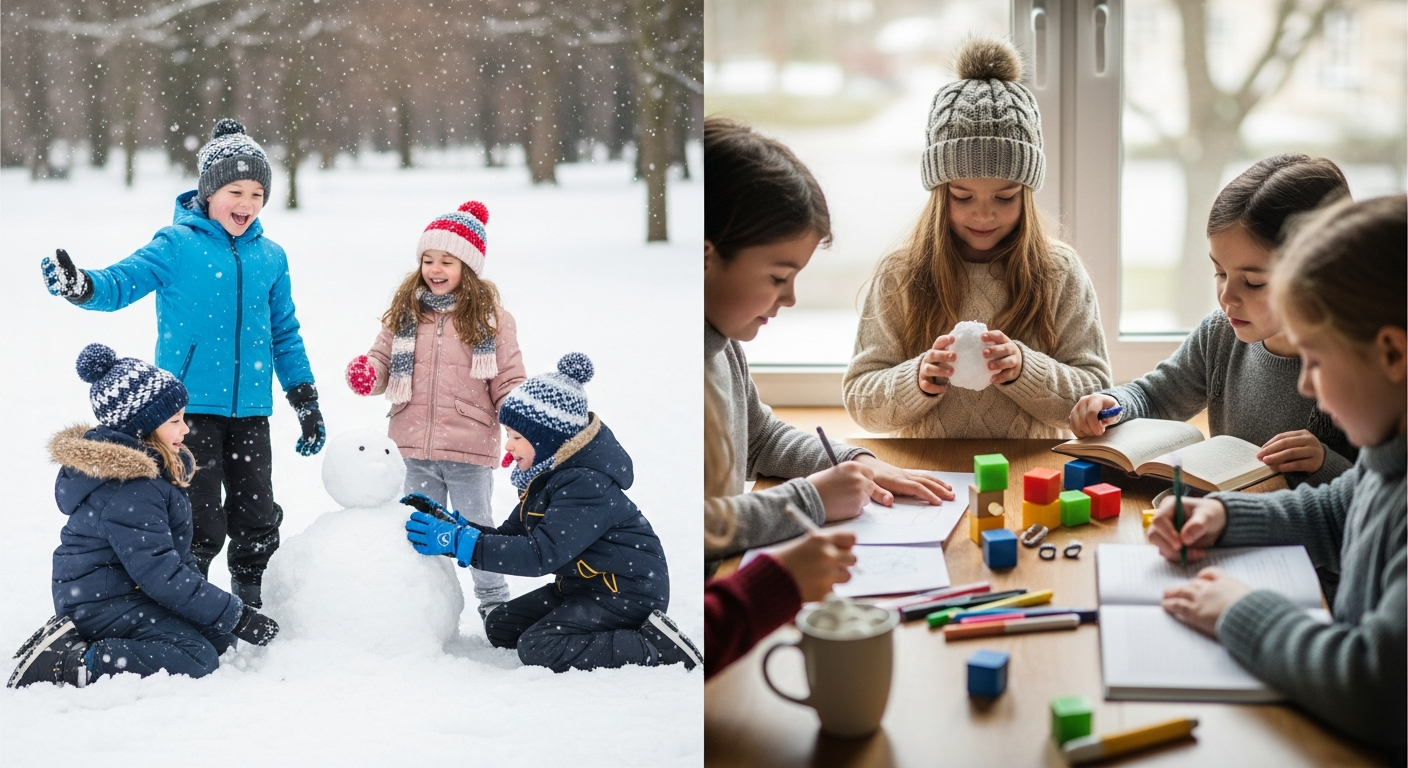
Table of Contents
- Embracing the Great Outdoors: Winter Adventures
- Indoor Wonderland: Cozy & Creative Fun
- Speech Blubs: Your Partner in Winter Communication Fun
- Conclusion: Make This Winter a Season of Connection & Growth
- Frequently Asked Questions
Winter often arrives with a mixed bag of emotions for parents. On one hand, there's the cozy charm of festive lights, warm drinks, and the promise of magical snowfalls. On the other, there's the looming question: How will I keep my energetic little ones engaged and learning when the weather keeps us cooped up indoors? The shorter days and colder temperatures can lead to a chorus of "I'm bored!" and a yearning for fresh, creative ideas that go beyond endless screen time.
This season doesn't have to be a battle against cabin fever. Instead, it can be a unique opportunity to foster creativity, strengthen family bonds, and boost your child's developmental skills, especially their communication abilities. We believe that every moment, even a chilly winter afternoon, holds potential for growth and connection. In this comprehensive guide, we'll dive into a treasure trove of fun winter activities, both indoors and out, designed to inspire joy, learning, and plenty of opportunities for your child to find their voice. Get ready to transform ordinary winter days into extraordinary adventures, all while nurturing vital communication skills that empower children to speak their minds and hearts.

Embracing the Great Outdoors: Winter Adventures
There’s nothing quite like the crisp winter air to invigorate the senses and burn off some energy. Even when the temperatures drop, many fantastic outdoor activities await, offering unique sensory experiences and chances for delightful discovery.
Snow Play: When the White Stuff Falls
If you're lucky enough to experience snowfall, the winter landscape transforms into a natural playground. These activities leverage the magic of snow to spark imagination and encourage communication.
Building Snow Sculptures
More than just a snowman, encourage your child to build a whole snow family, a fantastical creature, or even a miniature fort. This activity is a goldmine for language development. As you sculpt together, describe the textures ("fluffy," "sticky," "icy"), shapes ("round," "tall," "smooth"), and sizes ("tiny," "giant"). Ask your child to direct you, giving instructions like, "Put the big snowball here, then the small one on top!" This practices sequencing and descriptive language. For a child learning new words, imitating these sounds and descriptions during play can be incredibly beneficial.
Snow Painting & Ice Sculptures
Bring spray bottles filled with water mixed with food coloring outside and let your child "paint" the snow. Create vibrant patterns, draw characters, or even write out letters and simple words. Alternatively, freeze colored water in various containers (like ice cube trays, plastic cups, or even balloons) to make colorful ice blocks. Once frozen, pop them out and let your child arrange them into shimmering sculptures. This activity encourages color identification, imaginative storytelling, and the use of action verbs ("spray," "melt," "build").
Sledding & Snow Tubing
A classic winter thrill! Find a safe, gentle hill and let the laughter begin. Sledding isn't just for fun; it's an opportunity to talk about speed ("fast," "slow"), direction ("up," "down," "left," "right"), and safety rules. Sharing a ride on a larger tube can also encourage turn-taking and shared experiences, vital for social communication. For children who are still developing their vocabulary, describing the exhilarating ride can be a motivating way to practice new words.

Snow Forts and Igloos
Team up to build an epic snow fort. This requires planning, cooperation, and plenty of descriptive language. Children can practice negotiation ("I need that snow block!"), problem-solving ("How do we make the roof stable?"), and spatial awareness. The act of shaping and packing snow is also excellent for developing fine and gross motor skills, which are foundational for many communication tasks.
Outdoor Fun: No Snow Required
Even if snow is a rare sight, winter still offers unique opportunities for outdoor exploration.
Winter Nature Scavenger Hunt
Bundle up and head to a local park or even your backyard. Create a list of winter-specific items to find: a bare branch, a fallen leaf, a pinecone, a smooth rock, a feather, or animal tracks. This activity sharpens observation skills and introduces new vocabulary related to nature. Talk about the items you find: their colors, textures, and what animals might use them.
Making and Hanging Bird Feeders
This is a wonderful activity that teaches empathy and observation. Gather pinecones, slather them with peanut butter or lard, roll them in birdseed, and hang them from trees. You can also make feeders from recycled milk cartons or plastic bottles. Afterward, spend time quietly observing the birds that visit. This is a perfect chance to discuss different bird names, colors, and sounds, encouraging focused listening and descriptive language.
Winter Hikes & Stargazing
Explore local trails in their wintery state. The bare trees offer different perspectives, and you might spot animal tracks in the mud or even a frozen waterfall. At night, with earlier sunsets and often clearer skies, bundle up and head outside for some stargazing. Discuss constellations, planets, and the vastness of space. Storytelling about what you see in the stars can spark creativity and narrative skills.
Indoor Wonderland: Cozy & Creative Fun
When the weather truly keeps you inside, a little creativity can turn your home into a hub of learning and laughter. These indoor activities are designed to minimize boredom and maximize developmental growth.
Artistic Expression & Crafts
Art is a fantastic avenue for self-expression, fine motor skill development, and fostering descriptive language.
Collaborative Art Creations
Instead of individual drawings, try a "tag team" art project. Each person adds to a shared drawing, passing it around until a collaborative masterpiece emerges. This encourages cooperation and allows children to describe their additions and interpretations. Another idea is to make homemade clay using simple ingredients like baking soda, cornstarch, and water. Sculpting helps develop fine motor skills essential for writing, and talking about what they're creating ("It's a bumpy dinosaur," "I'm making a long snake") builds vocabulary.
DIY Snow Globes & Winter Wreaths
Crafting a blizzard in a jar is a magical activity. Use mason jars, glitter, water, and small waterproof figurines. Shake it up and watch the "snow" fall. For older children, collecting natural elements (like pinecones, dried berries, or sprigs of evergreen) to make a winter wreath can be a beautiful and tactile experience. Discuss the materials, the process, and the final look. These activities offer opportunities to follow multi-step instructions and use descriptive adjectives.
Paper Snowflakes & Garland
A simple yet satisfying activity. Cutting out paper snowflakes allows for exploration of symmetry and shape, while creating a paper chain garland from construction paper helps with color recognition and sequencing. As you cut and create, chat about the shapes you're making, the patterns, and where you'll hang your decorations.
Active & Sensory Play
Just because you're indoors doesn't mean you can't be active or engage multiple senses.
Indoor "Snowball" Fight
Gather crumpled-up paper (old newspapers, scrap paper, or even cotton balls for a softer version) and have a harmless indoor snowball fight. This is fantastic for gross motor skills, hand-eye coordination, and letting off steam. Set up targets, play in teams, and use language related to throwing, aiming, and dodging.
Sensory Bins with a Winter Theme
A large bin filled with a base material like uncooked rice, dried beans, or even cotton balls (to mimic snow) becomes a world of sensory exploration. Add small winter-themed toys, scoops, cups, and animal figurines. Children can dig, pour, and explore, developing fine motor skills and engaging their senses. This also provides rich opportunities for imaginative play and storytelling as they create narratives around their miniature winter world. For a child developing early language, simply naming the items ("scoop," "bear," "cold," "white") within the bin is a valuable exercise.
Balloon Volleyball & Obstacle Courses
Clear some space and use a balloon for a game of indoor volleyball. It's gentle, energetic, and great for coordination. For an obstacle course, use pillows to crawl over, blankets to tunnel through, chairs to climb under, and tape lines on the floor to follow. Giving and following instructions like "Crawl under the blanket," "Jump over the pillow," and "Walk on the blue line" reinforces prepositions and action verbs, which are crucial for speech development.
Learning & Skill-Building Adventures
Winter is an excellent time to cozy up with activities that foster cognitive growth and introduce new concepts.
Baking & Cooking Together
The kitchen is a fantastic classroom. Choose a simple recipe, like cookies or bread, and let your child help with measuring, mixing, and decorating. This teaches practical life skills, basic math (measuring), and vocabulary related to food, ingredients, and actions ("stir," "pour," "bake"). Discuss the changes you observe: "Look, the dough is getting sticky!" or "The cookies are turning golden brown." For children developing complex communication, describing the process from start to finish ("First, we add the flour, then the sugar...") helps build narrative skills.
Puzzles, Building Blocks & STEM Challenges
Jigsaw puzzles, LEGOs, magnetic tiles, and other building sets are perfect for developing problem-solving skills, spatial reasoning, and fine motor coordination. Challenge your child to build the tallest tower, a new kind of vehicle, or a structure that can withstand a "wind" (a fan). These activities encourage critical thinking and can spark conversations about engineering, design, and cause-and-effect. Simple science experiments, like making a baking soda volcano or growing a crystal garden, also offer hands-on learning and new vocabulary.
Family Reading Marathon & Storytelling
Cuddle up with a stack of books. Take turns reading aloud, or have older children read to younger ones. This promotes literacy, imagination, and a love for stories. Beyond books, encourage family storytelling. Start a story and let each person add a sentence or two, building a collaborative narrative. This is invaluable for developing sequencing, imagination, and expressive language.
Creating a Family Podcast or Time Capsule
With just a smartphone, you can record a "family podcast." Interview each other about favorite winter memories, future hopes, or silly stories. This encourages speaking clearly, listening attentively, and developing narrative structure. Alternatively, create a time capsule: gather small items that represent this winter (photos, a drawing, a note) and seal them in a container to open in the future. This activity sparks conversation about memories, the passage of time, and hopes for the future.
Speech Blubs: Your Partner in Winter Communication Fun
At Speech Blubs, we understand that nurturing a child's communication skills is one of the most important jobs a parent has. Our mission is to empower children to speak their minds and hearts, and we believe learning should always be joyful and engaging. Our founders, all of whom faced speech challenges in their own childhoods, created the tool they wished they had – an immediate, effective, and fun solution for the 1 in 4 children who need speech support.
Amidst these wonderful winter activities, Speech Blubs offers a unique "smart screen time" experience that complements hands-on play beautifully. Instead of passive viewing, our app engages children through a "video modeling" methodology, where they learn by watching and imitating their peers. This technique is backed by science and leverages the power of mirror neurons, making learning natural and highly effective. From naming winter animals to describing snowy scenes, the app provides thousands of activities that reinforce vocabulary, articulation, and early literacy skills.
Imagine your child building a snow fort, then coming inside to find related vocabulary and phrases in our "Things We Do" or "Animal Kingdom" sections. Or perhaps after a baking session, they explore our "Yummy Time" category, reinforcing the names of ingredients and actions. Speech Blubs transforms screen time into an interactive, educational experience that can be a powerful supplement to your child's overall development plan and, when applicable, professional therapy. It’s also a fantastic tool for family connection, as many of our activities encourage parent-child interaction and shared learning.
Unsure if Your Child Could Benefit?
Sometimes, as parents, it's hard to tell if our child's speech development is on track. We've created a simple, accessible tool to help. Take our quick 3-minute preliminary screener to get a general assessment and a personalized next-steps plan. It's a great way to gain peace of mind and understand how Speech Blubs can support your child's unique needs.
We are proud that our methodology is backed by extensive research, consistently placing us in the top tier of speech apps worldwide. But don't just take our word for it; see what other parents are saying about their child's incredible progress and success with Speech Blubs.
Conclusion: Make This Winter a Season of Connection & Growth
Winter offers a unique blend of indoor coziness and outdoor wonder, presenting countless opportunities for family bonding and developmental growth. By embracing these fun winter activities, you can banish boredom, spark creativity, and, most importantly, foster your child's communication skills. Whether you're building a snowman, baking cookies, or diving into a sensory bin, every shared moment is a chance to connect and learn.
Remember, every child's journey is unique, and progress often comes in small, joyful steps. Our goal at Speech Blubs is to provide you with the tools to make that journey engaging and effective. For those moments when you need a "smart screen time" solution that supports speech and language development, our app is ready to help.
Ready to transform your winter days and empower your child's voice? We invite you to experience the magic of Speech Blubs. The best way to get started is by choosing our Yearly plan, which offers incredible value and unlocks all our premium features. For just $59.99 per year, which breaks down to an amazing $4.99 per month, you save a whopping 66% compared to the Monthly plan!
With the Yearly plan, you'll also get a 7-day free trial to explore everything we offer, the bonus Reading Blubs app to support early literacy, early access to new updates, and 24-hour support response time. The Monthly plan, priced at $14.99 per month, does not include these valuable benefits.
Don't let this winter pass by without giving your child the gift of confident communication. Download Speech Blubs on the App Store or Google Play today and start your 7-day free trial by selecting the Yearly plan. Let's make this winter a season of joyful communication and lasting memories!
Frequently Asked Questions
Q1: How can I encourage my child to talk more during winter activities?
A1: Engage in "parallel talk" (narrating what your child is doing: "You're building a tall tower!"), "self-talk" (describing your own actions: "I'm stirring the batter now"), and ask open-ended questions that require more than a "yes" or "no" answer (e.g., "What should we add next?"). Label objects, actions, and feelings as you play. Tools like Speech Blubs can also provide structured practice with vocabulary and sentence building that you can then reinforce during play.
Q2: What if my child is hesitant to try new activities, especially outdoors in the cold?
A2: Start small and make it an inviting experience. Have all gear ready, offer a favorite warm drink afterward, or promise a cozy indoor activity as a reward. For indoor activities, let your child choose, or present two appealing options. Frame it as an adventure or a "secret mission" to spark interest. Remember that consistent, gentle encouragement and making it fun are key.
Q3: How does Speech Blubs integrate with these hands-on winter activities?
A3: Speech Blubs is designed to complement real-world experiences. For example, after building a snow fort, your child can find related vocabulary in the app's "Things We Do" section. After observing birds, they can explore "Animal Kingdom." The app reinforces language learned through play and provides a structured, engaging way to practice articulation and build vocabulary, transforming screen time into "smart screen time" that enhances their overall development.
Q4: Is Speech Blubs suitable for children with different speech and language needs?
A4: Yes, Speech Blubs is designed to support a wide range of developmental stages and needs, from late talkers to children working on specific articulation challenges. Our "video modeling" approach is highly effective because children naturally learn by imitating their peers. The app offers a vast library of themed activities, covering various sounds, words, and early literacy skills, ensuring there's something beneficial for every child. We recommend taking our quick preliminary screener for a personalized assessment and to see how the app can best support your child.
About the author