
Boost Connection: Joint Attention Activities for Speech Therapy
Discover fun, play-based joint attention activities for speech therapy. Learn how to foster connection and language through peer modeling and shared engagement.
 By Speech Blubs Team•Apr 14, 2026•15 min.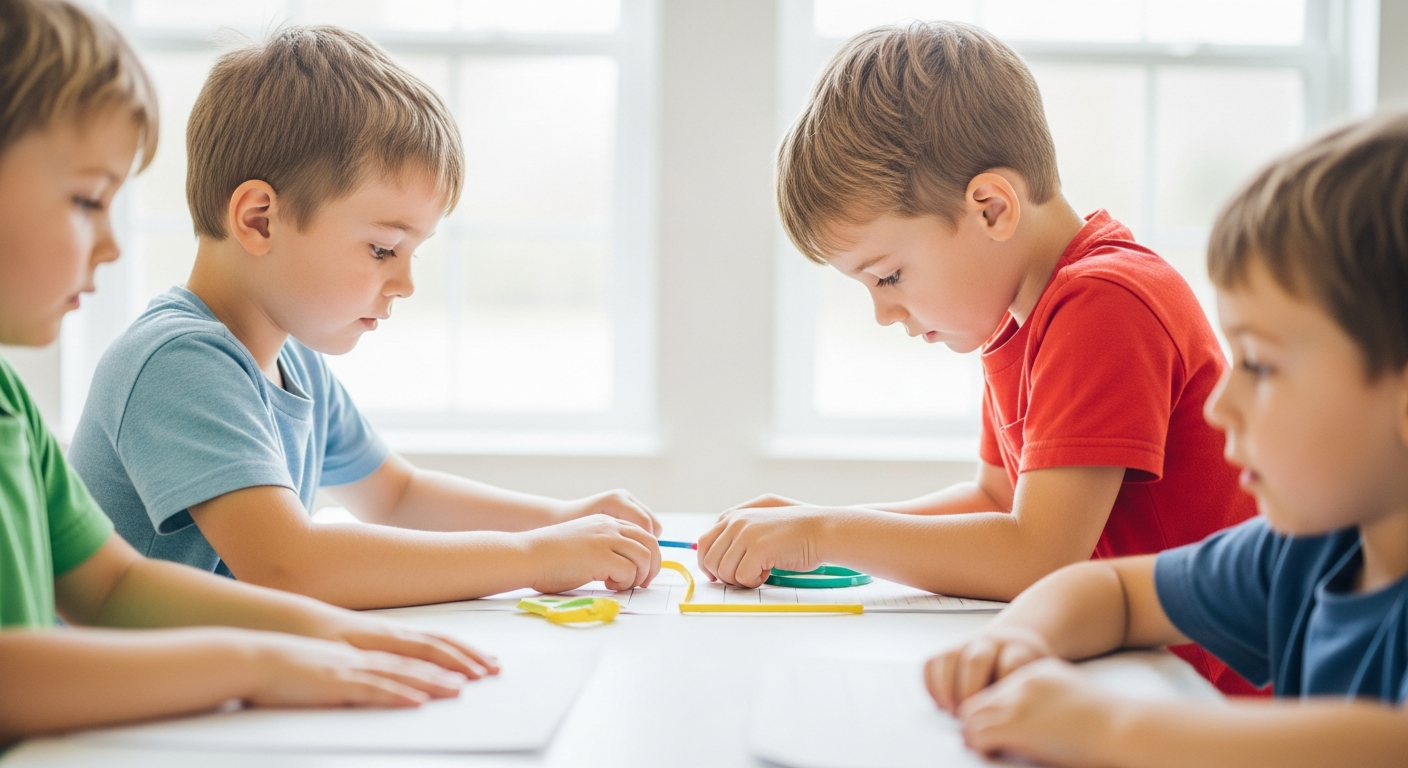
Table of Contents
- Introduction
- Understanding Joint Attention: The Foundation of Communication
- The Science of Connection: Video Modeling and Mirror Neurons
- Phase 1: Meeting the Child Where They Are
- Phase 2: Building Motivation and Proximity
- Phase 3: Targeted Joint Attention Activities for Speech Therapy
- Using Speech Blubs as a "Smart Screen Time" Tool
- Strategies for Different Developmental Levels
- Realistic Expectations and the Power of Joy
- Integrating Therapy into Daily Routines
- Why Peer Imitation Works
- Summary of Key Takeaways
- FAQ
- Conclusion
Introduction
Have you ever pointed at a colorful airplane in the sky, eager to share the excitement with your toddler, only to find them staring intently at a blade of grass or their own shoes? This disconnect can feel isolating for a parent, but it is a very common challenge in early childhood development. That simple act of sharing an experience—looking at the same object and knowing you are both looking at it—is what experts call joint attention. It is the "social glue" that binds communication together, and for the 1 in 4 children who face speech and language delays, it is often the first hurdle to clear.
At Speech Blubs, our mission is to empower children to speak their minds and hearts. We understand these challenges personally because our founders grew up with speech struggles themselves; they created the tool they wished they’d had as kids. We believe that communication isn’t just about the words a child says, but about the connection they build with the people they love. Joint attention is the foundation of that connection.

In this blog post, we will dive deep into the world of joint attention activities for speech therapy. We will explore why this skill is a non-negotiable precursor to language, how to identify where your child is on their developmental journey, and provide a wealth of practical, play-based activities you can do at home. Whether you are working with a speech-language pathologist (SLP) or looking for ways to support your child’s development through "smart screen time," this guide will provide the tools you need to foster joyful family learning moments.
Understanding Joint Attention: The Foundation of Communication
Before we jump into activities, it is crucial to understand what joint attention actually is. At its simplest, joint attention is the shared focus of two individuals on an object or event. It’s a three-way interaction: the child, the adult, and the object of interest.
Think of it as a triangle. If a child is just playing with a toy alone, that’s a straight line between the child and the toy. If the child looks at you, looks at the toy, and then looks back at you to make sure you’re seeing it too, the triangle is complete. This "social referencing" tells us that the child understands that you have a different perspective and wants to share an experience with you.
Why It Matters for Speech
You might wonder, "Why are we focusing on looking at things when I just want my child to talk?" The answer lies in how humans learn language. Children don't learn words in a vacuum; they learn them through shared context. When you and your child are both looking at a dog, and you say, "Look, a big dog!", your child maps the word "dog" to the animal because you are both attending to the same thing. Without joint attention, language is just background noise.
Research shows that joint attention skills are strong predictors of later language development. By focusing on these skills now, you are building the "launchpad" for their first words. If you are unsure where your child stands, taking a quick 3-minute preliminary screener can provide a helpful assessment and a personalized next-steps plan.

The Science of Connection: Video Modeling and Mirror Neurons
At Speech Blubs, our methodology is rooted in the science of how children learn. One of our core features is "video modeling." This isn't passive screen time like watching a cartoon; it is an active, educational experience. Our app features videos of peer models—other children—performing speech sounds and actions.
When a child watches another child (a peer) perform an action, their "mirror neurons" fire. These are special brain cells that activate both when we perform an action and when we observe someone else doing it. This creates a powerful drive for imitation. By watching peers, children feel more confident and motivated to join in. Our scientific research highlights how this peer-to-peer approach is one of the most effective ways to build foundational communication skills like joint attention and imitation.
Phase 1: Meeting the Child Where They Are
The first step in any joint attention therapy is to enter the child’s world. If a child isn't yet looking at what you point to, forcing them to look rarely works. Instead, we use a strategy called "Imitation and Parallel Play."
Copy What the Child Does
If your child is lining up cars, don't try to make them build a tower. Instead, grab a car and line it up right next to them. If they spin a wheel, you spin a wheel. This is called "parallel play."
- The Goal: To show the child that you are a fun partner who "gets" them.
- The Transition: Once they notice you are copying them (they might glance at you or pause), you can start to add a small variation. If they push a car, you push a car and say "Vroom!" This invites them into a shared moment.
Real-World Scenario: The Animal Lover
For a parent whose 3-year-old "late talker" loves animals but rarely makes eye contact during play, the "Animal Kingdom" section of Speech Blubs is a perfect bridge. Instead of asking the child to look at a book, you can sit together and watch a peer model make a "Moo" sound. When the child on the screen performs, you can immediately imitate it in real life, holding a toy cow near your face. This draws the child's attention to your mouth and the toy simultaneously, creating that vital "joint attention triangle."
Phase 2: Building Motivation and Proximity
Joint attention is hard work for some children, especially those on the autism spectrum or with sensory processing differences. To make it worth their while, we use highly motivating reinforcers.
The "Motivation Tub"
Gather a few items your child absolutely loves—perhaps a bubble wand, a light-up toy, or a specific snack.
- Keep them out of reach: Put these items in a clear bin where the child can see them but can't grab them.
- Activate and Wait: Pull out the bubbles, blow one or two, and then stop. Wait for the child to look at you or move toward you.
- Reinforce Proximity: As soon as they move toward you to get more, say, "You want bubbles!" and blow more. You are teaching them that looking at you and the object leads to a fun reward.
Physical Play and Anticipation
Activities like tickling or "Ready, Set, Go!" are fantastic for joint attention.
- The Activity: Start tickling your child, then stop abruptly and wait.
- The Joint Attention Moment: Wait for that split second where they look at your eyes to see why you stopped. That look is joint attention! Immediately resume the tickling.
- The Progress: Over time, you can wait longer or use a verbal cue like "Ready... set..." and wait for them to look at you before saying "GO!"
Phase 3: Targeted Joint Attention Activities for Speech Therapy
Once your child is comfortable playing near you and responding to high-motivation toys, you can start more structured activities. Here are some of our favorites that we recommend to parents using our app.
1. The Magic of Bubbles
Bubbles are a staple in speech therapy for a reason. They are visually stimulating and temporary, which creates a natural "more" moment.
- Therapy Tip: Catch a bubble on the wand and hold it near your eyes. This encourages the child to look at both the bubble and your face, strengthening the connection between the object and the social partner.
- Speech Blubs Integration: We have entire sections dedicated to fun sounds and simple words. Use the "Toy Box" section to watch children play with bubbles, then try to replicate those sounds (like "Pop!") together.
2. People Games (Peekaboo and More)
"People games" are interactions where the fun comes from the person, not a toy.
- Peekaboo: Use a scarf or your hands. The "reveal" is a high-intensity social moment.
- Row, Row, Row Your Boat: Sit on the floor facing each other, holding hands, and rock back and forth. Stop in the middle of the song and wait for eye contact before continuing.
- Why it works: These games remove the distraction of toys and force the focus onto the social interaction.
3. Interactive Book Reading
Don't just read the words; use the pictures to drive joint attention.
- Follow the Point: Point to a dog in the book and say, "Look at the dog!" Wait for your child to shift their gaze from your finger to the picture.
- The "Smart Screen" Alternative: When using the Speech Blubs app, you are essentially engaging in a digital interactive book. Our "Reading Blubs" feature (exclusive to our Yearly Plan) allows you to explore stories together, where the child watches a peer interact with the narrative, encouraging them to point and engage alongside you.
4. Cause-and-Effect Toys
Toys like Jack-in-the-boxes, pop-up toys, or car ramps are excellent.
- The Strategy: Control the "cause." You hold the car at the top of the ramp. Don't let it go until your child looks at you. This makes you the "gatekeeper" of the fun, ensuring they have to engage with you to get what they want.
Using Speech Blubs as a "Smart Screen Time" Tool
We often hear from parents who are worried about screen time. At Speech Blubs, we distinguish between "passive viewing" (like sitting a child in front of cartoons) and "active participation." Our app is designed to be a co-play tool.
When you sit with your child and use Speech Blubs, you are engaging in joint attention. You are both looking at the screen, watching a peer model a sound, and then looking at each other to try and imitate it.
Why Choose the Yearly Plan?
To get the most out of this journey, we highly recommend our Yearly Plan. It is designed to provide long-term support for your child's development.
- Cost-Effective: At $59.99 per year, it breaks down to just $4.99/month, saving you 66% compared to the monthly plan ($14.99/month).
- Exclusive Features: The Yearly plan includes our Reading Blubs app, which is specifically designed to transition joint attention into early literacy skills.
- Trial Period: You get a 7-day free trial to explore all the features before committing.
- Priority Support: You receive 24-hour support response times and early access to all new content updates.
The Monthly plan does not include the free trial, Reading Blubs, or priority support, making the Yearly Plan the clear choice for families serious about progress.
Strategies for Different Developmental Levels
Not every child starts at the same place. It’s important to tailor your joint attention activities for speech therapy to your child's current level.
For the Child Who is "Tuned Out"
If your child seems to be in their own world, focus on "Sensory Social Routines." Use big movements, swings, or blankets.
- Blanket Swing: Two adults hold a blanket and swing the child. Stop and wait for any signal—a kick, a sound, or a look—before swinging again.
- Mirror Play: Sit in front of a mirror together. Make silly faces. The mirror provides a unique way to see both yourself and your child simultaneously, facilitating shared attention.
For the Child Who Responds but Doesn't Initiate
Some children will look when you point (responding to joint attention), but they won't point to show you something (initiating joint attention).
- The "Hidden" Toy: Put a noisy toy inside a box that is hard to open. When it makes a sound, your child will look at the box. They may then look at you for help. This "communicative temptation" encourages them to initiate a shared moment.
- Visual Cues: Use "Eyes Point like Arrows." Explain that our eyes show what we are thinking about. In the Speech Blubs app, use the face filters to make your features more prominent, which naturally draws the child's gaze to your eyes and mouth.
Realistic Expectations and the Power of Joy
It is important to remember that progress isn't always a straight line. We aren't here to promise that your child will be giving public speeches in a month. Instead, our goal is to foster a love for communication and reduce the frustration that comes with being misunderstood.
Every time your child looks at you and smiles during a game of Peekaboo, that is a victory. Every time they follow your point to a bird in the tree, that is a foundational skill being built. These "joyful learning moments" are the bricks that build the house of language.
Our testimonials from parents are filled with stories of these small, beautiful breakthroughs. One parent shared that after weeks of using the app together, their child finally pointed to a cow in a real field and looked back at them with a grin—a perfect moment of joint attention.
Integrating Therapy into Daily Routines
You don't need a special "therapy room" to work on these skills. Some of the best joint attention activities for speech therapy happen during daily routines.
Mealtime
- Choice Making: Hold up two different snacks. Wait for your child to look at the one they want, then look at you.
- Silly Moments: "Accidentally" drop a spoon or put a napkin on your head. Wait for your child to notice the "mistake" and share the laugh with you.
Bath Time
- Hidden Toys: Hide toys under the bubbles. "Where did the duck go?" Wait for the child to look at the bubbles with you.
- Splash and Wait: Splash the water, then stop. Wait for eye contact before splashing again.
On the Go
- Point and Name: When walking, point to everything. "Look, a red car!" "Look, a big tree!" Even if they don't look every time, you are modeling the behavior of sharing interest.
Why Peer Imitation Works
At the heart of Speech Blubs is the concept of peer imitation. Children are naturally more interested in other children than they are in adults or cartoons. This is why our "smart screen time" is so effective.
When a child sees a peer on a screen wearing a fun hat or making a "Baaa" sound, it feels attainable. It feels like play. This reduces the pressure and anxiety that some children feel during formal therapy sessions. By using the Google Play Store or Apple App Store to download Speech Blubs, you are giving your child a "playmate" who models the very skills you are trying to teach.
Summary of Key Takeaways
Key Takeaway: Joint attention is the precursor to all language. It is a three-way connection between a child, an adult, and an object.
Key Takeaway: Use highly motivating toys and "people games" like Peekaboo to encourage eye contact and shared focus.
Key Takeaway: Peer imitation and video modeling are scientifically proven methods to boost engagement and confidence in late talkers.
Key Takeaway: Speech Blubs is a "smart screen time" tool designed for co-play, helping parents and children connect through interactive learning.
FAQ
1. What if my child refuses to look at me during activities?
Don't force eye contact. Instead, focus on "joint engagement" with an object. If they are looking at a toy, you look at the toy too. Gradually bring the toy closer to your face so that when they look at the toy, they naturally see your eyes. The goal is shared interest, not just staring at faces.
2. Can joint attention be taught to older children?
Absolutely. While joint attention typically develops in the first two years, children with developmental delays or autism can learn these skills at any age. The activities might change—perhaps using a video game or a complex building set instead of bubbles—but the core principle of shared focus remains the same.
3. How long should we practice these activities each day?
Consistency is more important than duration. Five to ten minutes of focused, high-quality "smart screen time" or interactive play several times a day is much more effective than a single hour-long session. Look for natural opportunities throughout your day.
4. Is screen time bad for joint attention?
Passive screen time (watching TV alone) can hinder joint attention because there is no social partner. However, "smart screen time" like Speech Blubs is designed to be interactive and used with a caregiver, which actually promotes joint attention by giving you a shared focus and a reason to communicate.
Conclusion
Building joint attention is a journey of a thousand small moments. It’s about the look shared over a popped bubble, the giggle during a game of Peekaboo, and the quiet pride when your child points to a dog in a book. These aren't just "therapy goals"; they are the building blocks of your relationship with your child.
At Speech Blubs, we are honored to be a part of that journey. We believe in providing an immediate, effective, and joyful solution for families. Our unique approach, blending scientific principles with the power of play, helps children find their voice in a way that feels like fun, not work.
Are you ready to start building those connections? Create your account and begin your 7-day free trial today. Remember to choose the Yearly Plan for the best value—at just $4.99/month, you’ll get the full suite of features, including the Reading Blubs app and priority support, ensuring your child has every tool they need to speak their mind and heart. Download Speech Blubs on the App Store or Google Play and turn screen time into connection time.
About the author