
Boosting Language With Word Classes Speech Therapy
Unlock your child's communication potential with word classes speech therapy. Learn how categorizing words builds vocabulary, improves literacy, and reduces
 By Speech Blubs Team•Apr 14, 2026•14 min.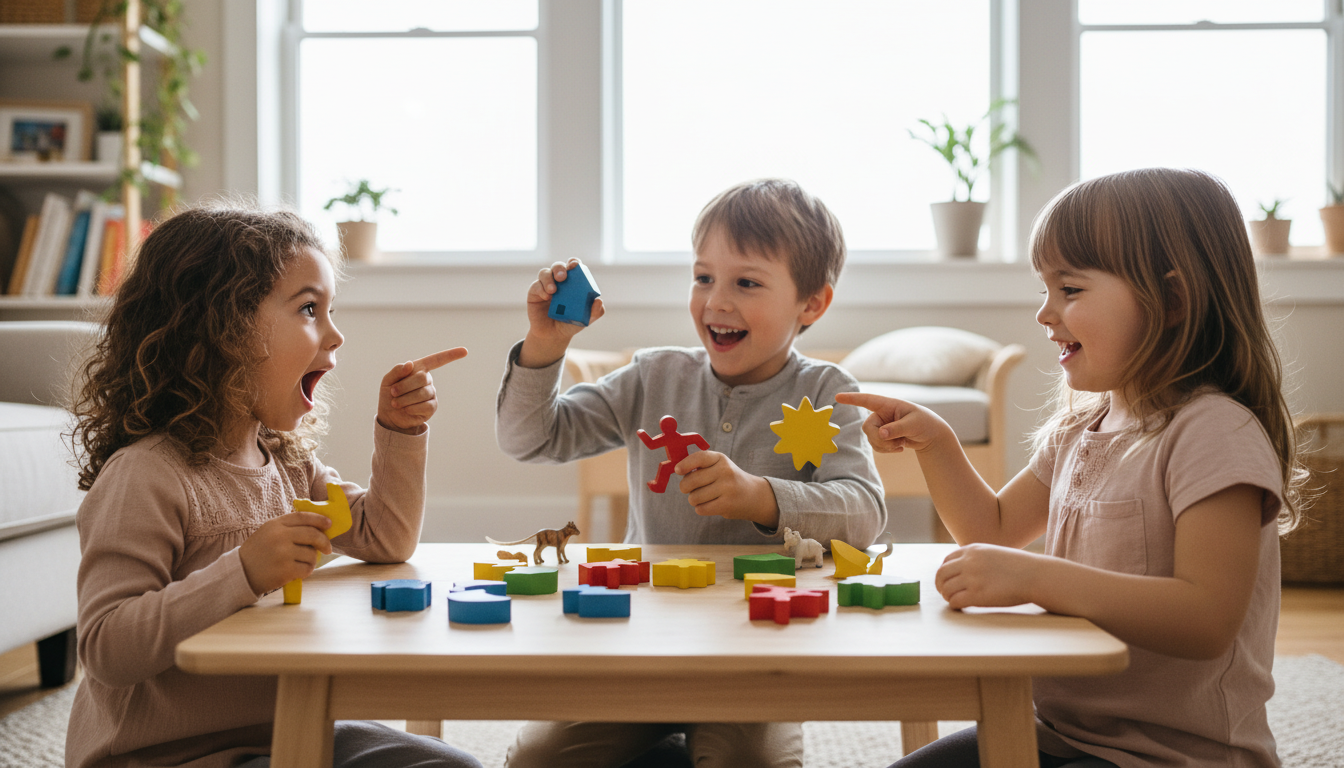
Table of Contents
- Introduction
- What Are Word Classes in Speech Therapy?
- Why This Skill Matters for Your Child
- Identifying Challenges: The CELF-5 and Beyond
- Practical Word Class Categories to Practice
- Smart Screen Time: The Speech Blubs Approach
- Activity Ideas to Teach Word Classes at Home
- Setting Realistic Expectations and Goals
- Choosing the Right Support for Your Family
- Advanced Strategies: Context Clues and Morphemes
- The Power of Peer Modeling
- Conclusion
- FAQ
Introduction
Have you ever noticed how your child might know the name of every single dinosaur but struggles to tell you that a "T-Rex" and a "triceratops" are both types of animals? Or perhaps they can find their shoes and their hat, but they don’t yet realize that both belong in the "clothing" group. These connections might seem simple to us as adults, but for a developing brain, they represent a massive leap in cognitive organization. This ability to group, categorize, and associate words is what we call word classes speech therapy, and it is a fundamental pillar of communication.
At Speech Blubs, we believe every child deserves the chance to speak their minds and hearts. Our founders started this journey because they grew up with speech challenges themselves. They created the very tool they wished they had—a joyful, play-based experience that turns screen time into "smart screen time." We know that roughly 1 in 4 children will face a speech or language delay at some point, and our mission is to provide an immediate, effective solution that supports families in navigating these hurdles.

In this post, we are going to dive deep into the world of word classes. We will explore why categorizing words is so important for long-term literacy, how you can identify if your child needs support in this area, and practical strategies you can use at home today. Whether you are looking to support a "late talker" or help an older child refine their vocabulary for school, understanding word classes is the key to expanding their world. By the end of this article, you’ll see how building these semantic networks creates a roadmap for your child to express themselves with confidence and clarity.
What Are Word Classes in Speech Therapy?
In the context of speech and language development, word classes refer to how we categorize and relate words based on their meanings and functions. Think of your child’s brain like a giant library. If all the books are thrown on the floor in a random pile, finding the one you want is nearly impossible. However, if the books are organized by genre, author, and topic, you can find what you need in seconds. Word classes are the "shelving system" for a child’s vocabulary.
When we talk about word classes in speech therapy, we usually focus on two main types of relationships:
1. Taxonomic Relationships (Categories)
These are words that belong to the same group because they share similar characteristics. For example, a "lion" and a "bear" are both animals. Taxonomic organization can be hierarchical. You have broad categories (animals), sub-categories (mammals), and specific items (dogs, cats, elephants).
2. Thematic Relationships (Associations)
These are words that go together because they are part of the same event or environment, even if they aren't the same "type" of thing. For example, "rain" and "umbrella" are thematically related. They aren't in the same category (one is weather, one is an object), but they are linked by a common experience. Other examples include "beach" and "sand" or "doctor" and "medicine."
By mastering both taxonomic and thematic relationships, children build what experts call a "semantic network." The stronger this network is, the easier it is for a child to retrieve the words they need during a conversation.

Why This Skill Matters for Your Child
You might wonder, "If my child already knows the word for 'apple,' why does it matter if they know it's a 'fruit'?" The answer lies in how our brains process language. When a child understands word classes, they aren't just memorizing a list; they are learning how to think.
Reducing Frustration
Many children experience "word-finding" difficulties. They know what they want to say, but they can't quite "grab" the word from their mental library. If they have a strong understanding of word classes, their brain can navigate to the right "shelf" much faster. Instead of getting frustrated and giving up, they can find the word or even use a related word to describe what they mean.
Building Foundations for Literacy
As children enter school, their vocabulary requirements shift from "Tier 1" (everyday language like go, eat, big) to "Tier 2" (academic language like compare, analyze, sequence). Understanding how words relate to one another is essential for reading comprehension. If a child reads a sentence about a "pomegranate" and knows it belongs to the "fruit" class, they can infer its meaning even if they’ve never seen one before.
Promoting Cognitive Flexibility
Learning word classes teaches children that one object can belong to multiple groups. A "golden retriever" is a "dog," an "animal," a "pet," and a "living thing." This cognitive flexibility is a precursor to higher-level thinking and problem-solving.
Identifying Challenges: The CELF-5 and Beyond
In professional settings, speech-language pathologists (SLPs) often use assessments like the CELF-5 (Clinical Evaluation of Language Fundamentals) to determine a child's language abilities. A specific subtest within this assessment focuses entirely on "Word Classes."
If a child scores low in this area, it usually indicates they are struggling to see the relationships between words. They might be able to label objects individually but fail to see why a "hand" and a "foot" belong together while a "hand" and a "tree" do not.
If you aren't sure where your child stands, we offer a quick 3-minute preliminary screener. It consists of 9 simple questions that provide an assessment and a next-steps plan to help you understand your child’s current communication level. It’s a great way to gain peace of mind and see if your child could benefit from more structured support.
Practical Word Class Categories to Practice
To help you get started at home, here is a list of common word classes that we frequently target in our sessions. You can use these lists to create sorting games or simple "which one doesn't belong?" challenges.
Everyday Categories
- Animals: Dog, cat, cow, lion, elephant, giraffe, octopus, bird.
- Clothing: T-shirt, shoes, socks, hat, scarf, dress, pants.
- Foods: Apple, pizza, bread, egg, carrot, chicken, pancake.
- Furniture: Chair, bed, table, couch, bookshelf, desk.
- Body Parts: Head, nose, eyes, arm, leg, hand, foot.
Thematic Associations (Words that go together)
- School: Teacher, desk, book, backpack, pencil.
- Kitchen: Fork, plate, pot, stove, refrigerator.
- Bathroom: Toothbrush, towel, soap, bathtub.
- Weather: Sun, rain, snow, clouds, wind.
- Jobs: Doctor, firefighter, astronaut, chef, pilot.
Abstract and Academic Classes
- Emotions: Happy, sad, angry, surprised, scared.
- Shapes: Circle, square, triangle, star, rectangle.
- Colors: Red, blue, green, yellow, purple.
- Positions (Prepositions): In, on, under, behind, next to.
Smart Screen Time: The Speech Blubs Approach
At Speech Blubs, we know that parents are often wary of screen time. However, there is a world of difference between "passive" viewing (like watching a cartoon) and "active" learning. We provide a screen-free alternative to passive consumption by creating an interactive, peer-led environment.
Our unique approach is based on video modeling. Research shows that children are highly motivated to imitate their peers. In the Speech Blubs app, your child doesn't just watch a character; they watch a real child—a "Blubher"—performing a speech exercise. This triggers "mirror neurons" in the brain, making your child more likely to try the sounds and words themselves.
For a parent whose 3-year-old "late talker" loves animals, the "Animal Kingdom" section of the app offers a perfect way to practice word classes. As your child watches other kids make "moo" and "baa" sounds, they aren't just learning sounds; they are associating those sounds with the "animal" category.
Ready to see it in action? You can download Speech Blubs on the App Store or find us on the Google Play Store to begin your journey.
Activity Ideas to Teach Word Classes at Home
You don't need fancy equipment to practice word classes. Some of the best learning happens during your daily routine. Here are a few ways to integrate this into your life:
1. Grocery Store Sort
While you are unpacking groceries, ask your child to help you group items. "Can you put all the fruits in this bowl? Now let’s find all the cold things for the fridge." This teaches them taxonomic classification in a real-world setting.
2. The "Odd One Out" Game
Give your child a group of three items where two belong together and one does not. For example: a spoon, a fork, and a toy car. Ask, "Which one doesn't belong?" Once they identify the car, ask why. This encourages them to express the "class" (e.g., "The spoon and fork are for eating!").
3. Laundry Day Categories
Laundry is a goldmine for word classes speech therapy. You can sort by:
- Who it belongs to: "This is Mommy’s, this is yours."
- Type of clothing: "Let’s find all the socks."
- Color: "Let’s put all the blue clothes together."
4. Semantic Scavenger Hunts
Tell your child, "I’m looking for something that is... red and an animal." See if they can find a ladybug or a red bird in a book or around the house. This forces them to look for multiple "class" attributes at once.
Setting Realistic Expectations and Goals
When working on word classes, it is important to remember that progress is a journey, not a race. We don't want to suggest that your child will be giving public speeches in a month. Instead, our goal is to foster a love for communication and reduce the frustration that comes with language delays.
SMART Goal Examples
If you are working with an SLP, you might see goals written like this:
- "Given 3 pictures, the child will identify the category they belong to in 4 out of 5 opportunities."
- "Given a category (e.g., 'toys'), the child will name 3 items within that category independently."
- "The child will identify two words that go together (e.g., 'milk' and 'cookie') and explain their association."
Focus on these small, joyful wins. Every time your child successfully categorizes an object, they are building a stronger foundation for their future education. You can read more about the research behind our methodology to see how these small steps lead to big results.
Choosing the Right Support for Your Family
We know that every family's budget and needs are different. That’s why we offer flexible plans to ensure every child can access high-quality speech support.
- Monthly Plan: $14.99 per month. This is a great way to test the waters if you're just getting started.
- Yearly Plan: $59.99 per year. This is our best value option, breaking down to just $4.99 per month.
We strongly recommend the Yearly Plan because it offers much more than just a 66% discount. When you choose the yearly option, you get:
- A 7-day free trial to explore all the features risk-free.
- Access to the Reading Blubs app, which helps transition those early word-class skills into reading fluency.
- Early access to new updates and a 24-hour support response time.
The monthly plan does not include these extra features, so for parents looking for a comprehensive tool that grows with their child, the yearly plan is the clear winner. You can create your account and begin your 7-day free trial today.
Advanced Strategies: Context Clues and Morphemes
For older children (K-5), word classes become more complex. Instead of just grouping "dogs" and "cats," they start looking at how word parts (morphemes) and context clues can help them determine a word’s class and meaning.
Using Context Clues
Sometimes, the words surrounding an unknown word tell us everything we need to know.
- Definitions: "The mollusk, a type of shell-covered sea creature, was found on the beach."
- Synonyms: "The child felt agony, or great pain, after falling."
- Antonyms: "While the first room was furnished, the second was completely empty."
Analyzing Word Parts
Breaking down words into prefixes, suffixes, and roots is another powerful way to understand word classes. For example, if a child knows that "-ity" often turns a word into a noun (like purity or activity), they can identify the word's class even if they don't know the specific meaning yet.
The Power of Peer Modeling
One of the most heartwarming parts of our work is seeing children connect with the peers in our app. Our methodology is built on the scientific principle that children learn best from other children. When your child sees another kid having fun while practicing sounds, it removes the "work" feeling from therapy. It becomes a game, a challenge, and a shared experience.
Don't just take our word for it—see what other parents are saying on our testimonials page. You'll find stories from thousands of families who have seen their children’s confidence soar as they learn to "speak their minds and hearts."
Conclusion
Understanding word classes speech therapy is about much more than just learning categories; it is about giving your child the tools to organize their thoughts, express their feelings, and understand the world around them. From simple sorting games with laundry to using advanced context clues in school, these skills form the backbone of effective communication.
At Speech Blubs, we are honored to be a part of your child's journey. We understand the challenges because we’ve lived them. Our mission is to make speech therapy accessible, affordable, and, most importantly, joyful for every child. Whether you are using our app as a supplement to professional therapy or as a way to jumpstart your child's vocabulary at home, we are here to support you.
Ready to give your child the best start possible? Download Speech Blubs on the App Store or Google Play to begin. We highly recommend choosing the Yearly Plan to take advantage of our 7-day free trial, the Reading Blubs app, and a 66% savings compared to the monthly rate. Let's work together to help your child find their voice!
FAQ
1. What are word classes in speech therapy?
Word classes involve the way we group and relate words based on their meanings. This includes taxonomic categories (like "animals" or "clothing") and thematic associations (like "rain" and "umbrella"). Improving a child's understanding of word classes helps them organize their vocabulary for better recall and comprehension.
2. How do I know if my child has trouble with word classes?
A child struggling with word classes might have difficulty grouping similar items together or explaining why two words are related. They may also show signs of "word-finding" difficulty, where they know what they want to say but can't find the specific name for an object. Our 3-minute screener can help identify if your child could benefit from extra support.
3. Can an app really help with speech therapy?
Yes! While an app should not replace professional therapy for children with significant delays, Speech Blubs is a powerful supplement. We use peer-to-peer video modeling, which is a scientifically backed method to encourage imitation and sound production. It provides "smart screen time" that is active and educational rather than passive.
4. Which Speech Blubs plan is right for me?
If you're looking for the best value, the Yearly Plan at $59.99 ($4.99/mo) is the top choice. It includes a 7-day free trial, the Reading Blubs app, and 24-hour support. The Monthly Plan is $14.99 and is better for short-term use, but it doesn't include the trial or the extra app features.
About the author