
Effective Sarcasm Speech Therapy Activities for Kids
Master social pragmatics with fun sarcasm speech therapy activities! Learn how to help your child decode nonverbal cues and boost social confidence today.
 By Speech Blubs Team•Apr 14, 2026•16 min.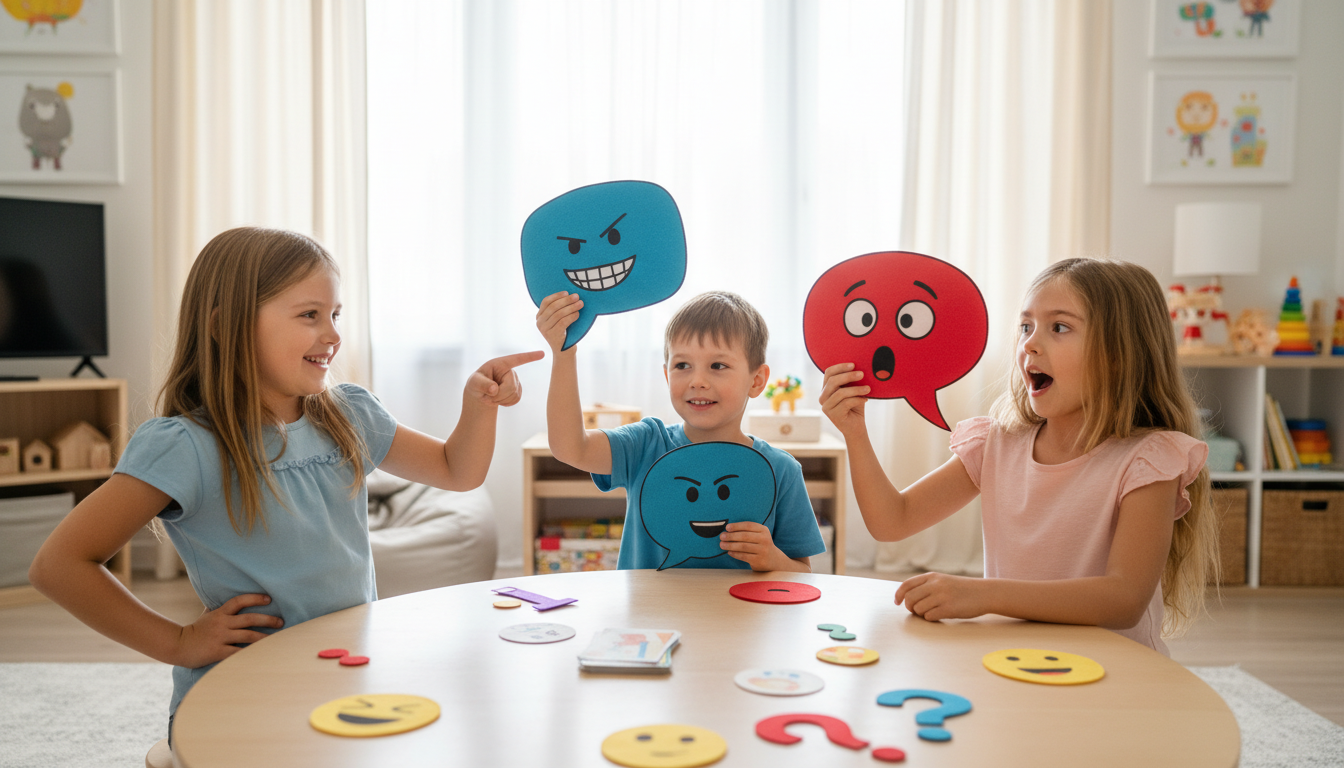
Table of Contents
- Introduction
- Understanding the Complexity of Sarcasm
- Why Social Pragmatics Matter
- Sarcasm Speech Therapy Activities to Try at Home
- Differentiating Between Sincere, Serious, and Sarcastic
- The Role of Video Modeling in Learning Sarcasm
- Sarcasm and Neurodiversity: A Specialized Approach
- Managing Screen Time: Smart vs. Passive
- Practical Advice: Setting Realistic Expectations
- Choosing the Right Plan for Your Family
- Building a "Sarcasm Toolkit" for Social Situations
- Role-Playing with "Speech Buddy" Scenarios
- Conclusion
- FAQ
Introduction
Did you know that approximately 93% of human communication is nonverbal? When we speak, it isn't just the words we choose that convey our meaning; it’s the arch of an eyebrow, the roll of an eye, and the specific lilt in our voice. For many children, especially those navigating speech delays or neurodivergence, this invisible layer of communication can feel like a locked door. Imagine a child who hears their friend say, “Oh, great, more homework!” and genuinely believes their friend is excited about extra math problems. This disconnect can lead to social frustration, missed jokes, and a feeling of being left out of the "inner circle" of peer conversation.
The purpose of this blog post is to dive deep into the world of social pragmatics, specifically focusing on how parents and caregivers can use sarcasm speech therapy activities to help children decode these complex social cues. We will explore the science of why sarcasm is difficult, provide a library of practical activities you can do at home, and explain how digital tools can supplement this learning journey. At Speech Blubs, our mission is to empower every child to speak their minds and hearts, and understanding the nuance of sarcasm is a vital part of that communication toolkit. By the end of this guide, you will have a clear roadmap for turning "hidden meanings" into joyful learning moments that build your child’s social confidence.

Understanding the Complexity of Sarcasm
Sarcasm is a sophisticated form of figurative language where the speaker says the opposite of what they actually mean, usually to highlight an absurdity or share a humorous observation. To a literal thinker, sarcasm sounds like a lie. However, the key difference is intent. A liar wants you to believe the false statement; a sarcastic person expects you to recognize that the statement is false.
For a child to "get" sarcasm, their brain must perform several high-level tasks simultaneously:
- Process the literal meaning of the words.
- Analyze the tone of voice (is it flat, exaggerated, or mocking?).
- Observe facial expressions and body language.
- Evaluate the context (does the statement match the situation?).
- Infer the speaker’s perspective (what does this person usually think about this topic?).
This is why we often see children struggle with these concepts until later in elementary or middle school. However, laying the groundwork early through playful interaction can make a world of difference. At Speech Blubs, we believe in providing a joyful solution for the 1 in 4 children who need speech support. Our approach blends scientific principles with play to create "smart screen time" that moves beyond passive viewing. While cartoons might show sarcasm, they don't always explain it. We focus on active learning.
If you are wondering where your child stands with their pragmatic language development, you can take our quick 3-minute preliminary screener. It involves 9 simple questions and provides an assessment and next-steps plan to help you understand your child's unique needs.
Why Social Pragmatics Matter
Social pragmatics refer to the "unspoken rules" of social language. It’s not just about what you say, but how you say it and whether it’s appropriate for the situation. Sarcasm is one of the trickiest branches of the pragmatics tree. When children fail to recognize sarcasm, they may respond inappropriately, which can lead to social "bumps" with peers.

For example, consider a child named Sam who loves dinosaurs. If a peer says sarcastically, "Wow, Sam, tell us about the T-Rex for the hundredth time, we're so interested," Sam might take it literally and start a long lecture. The resulting laughter or eye-rolls from peers can be confusing and hurtful. By practicing sarcasm speech therapy activities, we help children like Sam "read between the lines."
Our founders at Speech Blubs all grew up with speech problems themselves. They created the tool they wished they had—one that focuses on peer-to-peer learning. This is based on the research-backed methodology of video modeling. When children see other children (their peers) successfully navigating social cues and speech sounds, their "mirror neurons" fire, making it easier for them to imitate and learn.
Sarcasm Speech Therapy Activities to Try at Home
Teaching sarcasm doesn't have to feel like a classroom lesson. In fact, it shouldn't! The best way to learn social nuances is through low-pressure, high-fun activities. Here are several comprehensive activities designed to build these skills.
1. The Sarcasm Spinner Game
This activity helps children experiment with how the same words can change meaning based on tone.
- How to play: Create a simple spinner or use a coin. One side is "Sincere" and the other is "Sarcastic." Write down five common phrases like "Nice shoes," "Great job," or "Thanks a lot."
- The Task: Flip the coin. If it lands on "Sarcastic," the child has to say the phrase in a "mismatched" way (e.g., saying "Nice shoes" while looking at a pair of muddy, old boots with a flat tone). If it's "Sincere," they say it with a bright, happy voice while looking at something they actually like.
- Why it works: It builds "tone awareness." It allows the child to feel the difference in their own vocal cords and hear the difference in yours.
2. The Context Detective
Sarcasm is almost always about a "mismatch" between words and reality.
- The Scenario: Give your child a "case" to solve. "Case #1: It is pouring rain outside. Mom looks out the window and says, 'Oh, what a beautiful day for a picnic!' Is she being serious or sarcastic?"
- The Discussion: Ask the child, "How do you know?" Help them identify the evidence (the rain).
- Speech Blubs Tip: You can find similar scenarios in our app's interactive stories. By seeing these situations play out, children learn to look for the "clues" in the environment. You can download Speech Blubs on the App Store to explore our diverse range of activities that foster these foundational skills.
3. Emoji Decoding
In our digital age, sarcasm is often conveyed through emojis. This is a great bridge for older children or those who are very visual.
- Activity: Show your child a text message (you can write it on a piece of paper) that says "That movie was so funny." Then, show two emojis: a laughing face and an upside-down smiley face.
- The Lesson: Explain that the upside-down smiley face is often a "secret code" for sarcasm. It means "I'm smiling, but everything is actually wrong."
- Real-world application: Practice sending "sarcastic" texts to each other during the day to build that digital literacy.
4. Facial Expression Mirroring
Since a huge part of sarcasm is nonverbal, practicing the "sarcastic face" is essential.
- Activity: Sit in front of a mirror together. Practice the "eye roll," the "half-smile," and the "deadpan stare."
- Connection: This mimics our video modeling approach. In the Speech Blubs app, children watch videos of other kids making faces and sounds. This peer-to-peer connection is powerful. You can get it on Google Play and start practicing these facial cues today.
Differentiating Between Sincere, Serious, and Sarcastic
One of the biggest hurdles in speech therapy is helping a child distinguish between "serious" and "sincere." While they sound similar, they serve different functions in social pragmatics.
- Sincere: "I really like your drawing." (Open, genuine, positive).
- Serious: "We need to leave for the doctor now." (Literal, important, neutral tone).
- Sarcastic: "Wow, you're a regular Picasso, aren't you?" (Said to someone who just scribbled a mess—meaning the opposite).
In your activities, try to provide examples of all three. If you have a child who loves animals, you might use an animal-themed scenario. For instance, if a very slow turtle is moving across the grass, you could say:
- Sincere: "That turtle is moving carefully."
- Serious: "Turtles are reptiles."
- Sarcastic: "Look at that turtle go! He’s a regular race car!"
By contrasting these three, the child begins to categorize the "social intent" of the speaker. This reduces frustration and helps them feel more in control of the conversation. You can see how other parents have navigated these breakthroughs by reading our success stories from parents.
The Role of Video Modeling in Learning Sarcasm
At Speech Blubs, we don't just want children to watch; we want them to do. Our "smart screen time" is designed to be a screen-free alternative to passive viewing once the child puts the phone down and starts interacting with you.
Video modeling works because it provides a clear, repeatable example of a complex behavior. When a child in the app uses a specific tone or facial expression, your child isn't just seeing a character; they are seeing a peer. This builds confidence. They think, "If that kid can do it, I can too!"
This methodology is particularly effective for sarcasm because sarcasm is so dependent on "vocal fry" and "pitch shifts." Hearing a peer's voice helps the child’s brain map those sounds more effectively than hearing an adult’s deeper, more complex voice. Our app is a powerful supplement to professional therapy, providing a joyful way to practice these skills daily.
Ready to see the difference for yourself? You can sign up on our web page to begin your journey.
Sarcasm and Neurodiversity: A Specialized Approach
It is important to acknowledge that for many children on the autism spectrum (ASD), sarcasm can be incredibly difficult to master. Because many autistic children are literal thinkers, the "mismatch" of sarcasm feels like a logic error.
If you are working with a neurodivergent child, focus on "The Rule of the Opposite."
- Rule: If someone says something that is clearly not true, and they aren't trying to trick you, they might be using sarcasm.
- Check the face: Is their face "doing something funny" like rolling eyes?
- Check the situation: Does the word match the world?
Don't push for perfection. The goal isn't for your child to become a stand-up comedian; it's to help them reduce the frustration of being "out of the loop." Frame these activities as "learning the secret codes of friendship." This empathetic approach builds trust and keeps the learning process joyful.
Managing Screen Time: Smart vs. Passive
We often hear from parents who are worried about screen time. We share that concern! That’s why Speech Blubs is built to be different. Passive screen time—like watching endless loops of unboxing videos or loud, fast-paced cartoons—can actually overstimulate a child and decrease their desire to communicate.
"Smart screen time," on the other hand, is an active tool. It’s like a digital "speech buddy."
- It’s interactive: The child must respond and participate.
- It’s educational: Every activity is rooted in speech therapy principles.
- It’s short: We encourage short, focused sessions followed by real-world play.
For example, after using the app to practice "big" and "small" sounds, you might spend ten minutes playing with physical blocks, using those same sounds. This "co-play" model is where the real magic happens. It turns a digital tool into a family connection moment.
Practical Advice: Setting Realistic Expectations
As a parent, it’s natural to want to see immediate results. However, speech and language development—especially complex skills like sarcasm—is a marathon, not a sprint.
- Focus on the foundation: Before a child can understand sarcasm, they need to understand basic emotions. Can they tell the difference between a "happy" voice and an "angry" voice?
- Celebrate small wins: Did your child notice an eye roll today? That’s a huge win! Did they ask, "Are you being funny, Mom?" when you made a sarcastic comment? That’s progress!
- Be a model: Use sarcasm sparingly and explain it when you do. "I just said 'Oh, great' because I'm actually frustrated that it's raining, but I said it in a funny way. That's sarcasm!"
Speech Blubs is here to support this process, providing the variety and engagement needed to keep your child motivated. We don't promise your child will be giving public speeches in a month, but we do promise a tool that fosters a love for communication and builds the foundational skills they need to thrive.
Choosing the Right Plan for Your Family
We want to be transparent about how you can best access our resources. To build a consistent habit, we offer two main paths:
- Monthly Plan: For $14.99 per month, you get full access to our main Speech Blubs app. This is a great way to test the waters.
- Yearly Plan (Best Value): For $59.99 per year, which breaks down to just $4.99 per month.
We strongly recommend the Yearly Plan because it is designed to support long-term development. When you choose the Yearly option, you save 66% compared to the monthly rate, but you also get so much more:
- A 7-day free trial: You can explore everything risk-free.
- Reading Blubs: This is our extra app specifically designed to help with early literacy and reading skills—a perfect companion to speech practice.
- Priority Support: You get 24-hour support response times and early access to new updates and features.
The Monthly plan does not include the free trial, the Reading Blubs app, or the priority support. By choosing the Yearly plan, you're investing in a comprehensive suite of tools to help your child "speak their minds and hearts."
You can start your journey on the Speech Blubs homepage to learn more about our specific features and how they can help your family.
Building a "Sarcasm Toolkit" for Social Situations
When your child is ready to take their skills into the real world, it helps to give them a "script." Sarcasm isn't always "friendly." Sometimes it can be "aggressive" or mean. Teaching your child to tell the difference is a vital safety and social skill.
- Friendly Sarcasm: Usually happens between friends who are laughing. "Oh yeah, you're terrible at soccer," said to a friend who just scored a goal. The intent is to tease playfully.
- Aggressive Sarcasm: Used to put someone down. "Nice job, genius," said when someone makes a mistake.
In your activities, practice identifying the feeling behind the sarcasm. Ask your child, "Does that person feel like they are being a friend right now, or are they being mean?" This builds empathy and helps with self-advocacy. If someone uses aggressive sarcasm with your child, they will be better equipped to recognize it and respond appropriately (or walk away).
Role-Playing with "Speech Buddy" Scenarios
One of the most effective sarcasm speech therapy activities is the "Alternative Ending" role-play.
- Step 1: Act out a short scene. "Person A: I forgot my lunch today. Person B: Wow, you're so organized!"
- Step 2: Stop the scene. Ask the child, "What did Person B really mean?"
- Step 3: Act out an "Alternative Ending" where Person B is sincere. "Person B: Oh no, that's too bad. Do you want half of my sandwich?"
- Step 4: Compare the two. Which one felt better? Why did Person B choose to be sarcastic in the first version? (Maybe they were joking, or maybe they were being grumpy).
This type of active analysis helps "de-mystify" the social world. It takes the guesswork out of communication and replaces it with logic and observation.
Conclusion
Helping your child navigate the "hidden" language of sarcasm is one of the greatest gifts you can give their social development. It moves them from the outside looking in to being an active, confident participant in their peer groups. Whether you are using the Sarcasm Spinner, practicing your "eye rolls" in the mirror, or decoding text messages, remember that the goal is joy and connection.
At Speech Blubs, we are honored to be part of your child’s growth. Our founders’ personal experiences drive everything we do, ensuring that our tool remains an effective, joyful, and scientific solution for families worldwide. By blending these practical activities with our "smart screen time" approach, you are providing your child with a powerful supplement to their overall development.
Ready to start your 7-day free trial? We encourage you to download the app and select our Yearly plan to get the best value, including early access to updates and our companion app, Reading Blubs.
Download Speech Blubs on the App Store or Get it on Google Play today. If you prefer to set up your account on your computer, you can Sign up on our web page. Let’s help your child speak their mind and heart, one joyful word at a time.
FAQ
1. At what age should I start teaching my child about sarcasm? While every child is different, most children begin to grasp the basics of non-literal language between ages 6 and 8. However, you can start building the "foundations" (like recognizing different tones of voice and facial expressions) as early as age 3 or 4. If your child is struggling with basic social cues, our app can help build those prerequisite skills regardless of age.
2. Can sarcasm speech therapy activities really help an autistic child? Yes! While sarcasm is often a major challenge for children on the spectrum, it can be taught as a "social rule" or a "code." By using visual aids, clear logic (The Rule of the Opposite), and repeatable video modeling, you can help an autistic child decode sarcasm so they don't feel confused in social settings.
3. Is Speech Blubs a replacement for a speech-language pathologist (SLP)? No. We view Speech Blubs as a powerful supplement to professional therapy. An SLP provides personalized, clinical diagnosis and treatment. Speech Blubs provides a way to practice those skills at home in a fun, engaging way that keeps the child motivated between sessions. Always consult with your professional therapist about the best activities for your child's specific needs.
4. Why is the Yearly plan better than the Monthly plan? The Yearly plan is designed for families committed to seeing long-term progress. It’s significantly cheaper (saving you 66%), but more importantly, it includes a 7-day free trial and the Reading Blubs app. Reading and speech are closely linked, and having both tools ensures your child is building a complete communication toolkit. Plus, our Yearly members get the fastest support and first access to new features!
About the author