
Engaging P Words for Speech Therapy: A Parent's Guide
Master the /p/ sound with our guide on p words for speech therapy. Discover word lists, playful home activities, and expert tips to boost your child's
 By Speech Blubs Team•Apr 22, 2026•14 min.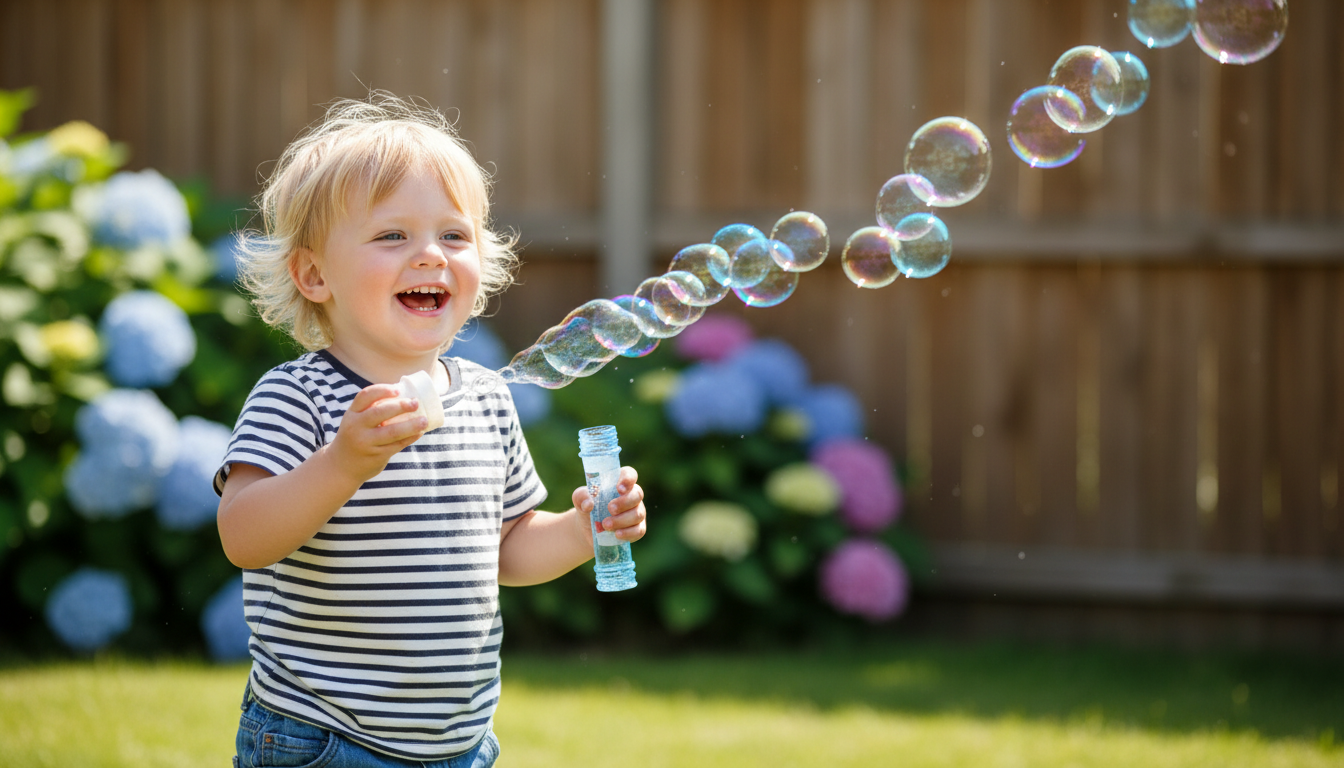
Table of Contents
- Introduction
- Understanding the Mechanics: How We Make the /P/ Sound
- Initial P Words for Speech Therapy: Starting Strong
- Medial P Words for Speech Therapy: The Middle Ground
- Final P Words for Speech Therapy: Closing the Sound
- Advanced Practice: Phrases, Sentences, and Blends
- Why Peer Modeling Works for the /P/ Sound
- Practical Tips for Parents and Caregivers
- Investing in Your Child’s Future: Pricing and Value
- The Importance of Realistic Expectations
- Summary of Key Takeaways
- Frequently Asked Questions (FAQs)
- Conclusion
Introduction
Have you ever noticed the pure, unadulterated joy on a toddler’s face when they finally master the "pop" sound? There is something inherently playful about the /p/ sound. It’s explosive, it’s rhythmic, and for many children, it is one of the very first milestones in their journey toward complex communication. As parents, we eagerly await those first words, but sometimes the path to clear speech needs a little extra sparkle and strategy.
At Speech Blubs, our mission is to empower children to speak their minds and hearts. We understand the nuances of speech development because our founders lived it; they grew up with speech challenges and created the very tool they wished they had as children. We believe that for the 1 in 4 children who need speech support, the solution should be effective, immediate, and, most importantly, joyful.

In this comprehensive guide, we are going to dive deep into the world of p words for speech therapy. We will explore the mechanics of how the /p/ sound is made, provide extensive lists of words categorized by their position (initial, medial, and final), and offer practical, play-based activities you can do at home. Our goal is to help you transform "screen time" into "smart screen time," providing a powerful tool for family connection rather than passive viewing. By the end of this article, you will have a robust toolkit to support your child's articulation journey and build the foundational skills they need for a lifetime of confident communication.
Understanding the Mechanics: How We Make the /P/ Sound
Before we jump into the word lists, it’s helpful to understand what is actually happening in the mouth when we say the /p/ sound. In speech therapy terms, the /p/ sound is known as a voiceless bilabial stop. While that might sound like a mouthful of jargon, it’s actually quite simple to break down for a parent:
- Bilabial: This means "two lips." To make the sound, your child must bring their upper and lower lips together.
- Stop (or Plosive): This refers to the breath. The air from the lungs is briefly blocked by the lips and then released in a sudden "pop" or explosion of air.
- Voiceless: This is the most important part to distinguish /p/ from its cousin, the /b/ sound. When we say /p/, our vocal cords do not vibrate. If you place your hand on your throat and say "pig," you shouldn't feel a buzz until you hit the "ig" part.
Teaching this sound is often one of the most rewarding parts of early speech work because it is highly visual. Your child can watch your mouth, see the lips press together, and even feel the puff of air on the back of their hand. At Speech Blubs, we leverage this visual nature through our unique video modeling methodology. By watching other children (their peers) make these sounds on screen, your child’s mirror neurons are activated, making them more likely to imitate the behavior and "pop" those sounds out themselves.

Initial P Words for Speech Therapy: Starting Strong
Initial /p/ words are words where the "p" sound comes right at the beginning. These are often the easiest for children to learn because the sound isn't hidden behind other consonants.
One-Syllable Initial P Words
These are the building blocks of early speech. They are short, punchy, and often represent objects your child sees every day.
- Pig
- Pan
- Pot
- Pen
- Pie
- Pin
- Pear
- Paw
- Pop
Two-Syllable Initial P Words
As your child gains confidence, you can introduce longer words that require more coordination.
- Pizza
- Pencil
- Panda
- Penguin
- Paper
- Pickle
- Puddle
- Puppet
Three+ Syllable Initial P Words
For older children or those ready for a challenge, these words help refine rhythmic control.
- Pajamas
- Potato
- Pineapple
- Pelican
- Piano
- Pumpkin
Real-World Practice: The Animal Kingdom
For a parent whose 3-year-old "late talker" loves animals, the "Animal Kingdom" section within the Speech Blubs app offers a fun, motivating way to practice /p/ sounds. Instead of a dry flashcard, your child sees a peer mimicking a pig or a panda. You can follow up this session by playing with toy animals at home. Ask your child, "Can the pig go into the pen?" This combines the /p/ sound with functional play, reducing frustration and building the foundational skills needed for sentence structure. Download Speech Blubs on the App Store to explore these animal-themed activities today.
Medial P Words for Speech Therapy: The Middle Ground
The medial position is when the /p/ sound is sandwiched in the middle of a word. This can be trickier because the child has to navigate toward the lip closure and then immediately move to the next sound.
Common Medial P Words
- Apple
- Hippo
- Diaper
- Napkin
- Happy
- Zipper
- Puppy
- Open
- Teapot
Play-Based Activity: The "Happy Hippo" Picnic
Using medial /p/ words in a story or game makes the practice feel like a natural part of the day. Grab a stuffed animal (a hippo or a puppy) and tell your child you are going on a picnic.
- Pack an apple.
- Bring a napkin.
- Make sure the hippo is happy.
- Tell the hippo to "open" his mouth for a snack.
By repeating these words in a low-pressure environment, you are fostering a love for communication. If you aren't sure if your child is hitting their milestones with these middle sounds, you can take our quick 3-minute preliminary screener. It involves 9 simple questions and provides an assessment and a next-steps plan to help you understand your child’s current progress.
Final P Words for Speech Therapy: Closing the Sound
Final /p/ words are those where the sound ends the word. Sometimes children "drop" the ends of their words (a process called final consonant deletion). Practicing these words helps them learn to "close" the word with that distinct pop.
One-Syllable Final P Words
- Cup
- Up
- Stop
- Hop
- Mop
- Soap
- Map
- Top
- Cap
Multi-Syllable Final P Words
- Ketchup
- Makeup
- Asleep
- Envelope
- Buttercup
Real-World Practice: Bath Time and Bubbles
Bath time is a sensory-rich environment perfect for final /p/ practice. You can use soap to make bubbles and encourage your child to say "pop" every time one bursts. When you lift them out of the tub, say "up!" and when you want them to stay still for drying, use the word "stop." This creates joyful family learning moments that don't feel like "therapy" but are incredibly effective.
Our scientific methodology is rooted in the idea that play is the work of childhood. By integrating these sounds into daily routines, you are providing the high-frequency practice necessary for habit formation. To see how other families have integrated these techniques, you can read our parent testimonials.
Advanced Practice: Phrases, Sentences, and Blends
Once your child is comfortable with individual p words for speech therapy, it is time to move to the next level: carrier phrases and blends.
Carrier Phrases
A carrier phrase is a simple sentence structure where you only change one word. This builds confidence because the child knows the "frame" of the sentence and can focus their energy on the target sound.
- "I see a pig."
- "I want the apple."
- "Put it up."
- "Give me the pencil."
The Challenge of Blends (PL and PR)
Words like "play," "please," "present," and "princess" are "blends." They require the child to move from the /p/ sound immediately into another consonant (/l/ or /r/). These are more complex communication skills. If your child struggles here, don't worry! Go back to the basic /p/ sound until they have the strength and coordination to add the second letter.
For children who are ready for these challenges, the "Big Words" section of Speech Blubs provides excellent peer models. You can create your account and begin your 7-day free trial today to access hundreds of exercises designed to bridge the gap between single words and full sentences.
Why Peer Modeling Works for the /P/ Sound
At Speech Blubs, we don't just use cartoons or static images. We use "video modeling." Why? Because children are biologically wired to learn from other children. When your child sees a "Blubber" (one of the kids in our app) wearing a funny digital hat and saying "pizza," it triggers a different response in their brain than if a cartoon character said it.
This approach is a powerful tool for reducing the frustration that often comes with speech delays. When a child sees a peer doing something, it feels achievable. It shifts the dynamic from "doing work" to "playing with friends." This is the core of our "smart screen time" experience—it is active, participatory, and designed for adult co-play. We always encourage you to sit with your child while they use the app, mimicking the sounds together and celebrating every attempt.
Practical Tips for Parents and Caregivers
Supporting a child with speech sounds requires patience and a bit of a "detective" mindset. Here are some of our favorite tips for making /p/ word practice a success:
- Use a Mirror: Since the /p/ sound is so visual, sit in front of a mirror with your child. Show them how your lips "hide" and then "pop" out. Make it a game of "Where did my lips go?"
- The Tissue Test: Hold a thin tissue in front of your mouth and say "paper." Show your child how the air makes the tissue move. Then, let them try. This provides immediate physical feedback that they are producing the "pop" of air correctly.
- Go Slow: Don't rush into sentences. If your child is struggling with the /p/ in "apple," spend time just practicing the "p-p-p" sound in isolation or in simple "pa-pa-pa" syllables.
- Positive Reinforcement: Focus on the effort, not just the result. Instead of saying "No, say it like this," try saying, "I loved how hard you pressed your lips together! Let's try it one more time."
- Consistency Over Intensity: Five minutes of fun practice every day is much better than a grueling hour-long session once a week.
If you're ready to dive in, download Speech Blubs on Google Play and start exploring our "Early Sounds" section. It's the perfect place to find more /p/ word inspiration.
Investing in Your Child’s Future: Pricing and Value
We believe that every child deserves the chance to speak their mind and heart, and we want to make our tools accessible and transparent for every family. We offer two main plans to fit your needs:
- Monthly Plan: $14.99 per month. This is a great way to test the waters if you're looking for a short-term supplement to your child's development.
- Yearly Plan (Best Value): $59.99 per year.
We highly recommend the Yearly Plan because it is designed to support long-term progress. Not only does it break down to just $4.99 per month (a 66% saving compared to the monthly rate), but it also includes several high-value features that are not available on the monthly plan:
- 7-Day Free Trial: You can try the full experience risk-free before committing.
- Reading Blubs App: Access to our companion app that focuses on literacy and phonics—a perfect next step after mastering speech sounds.
- Priority Support: You get a 24-hour response time from our support team to answer any questions you have.
- Early Access: Be the first to try new updates and sections as we constantly expand our library of over 1,500 activities.
Choosing the yearly plan ensures that you have a consistent, comprehensive tool at your fingertips as your child grows and their needs evolve. Ready to get started? Create your account today and choose the yearly option to unlock the full suite of benefits.
The Importance of Realistic Expectations
As a child development expert, I want to remind you that every child’s journey is unique. While p words for speech therapy are a fantastic starting point, speech development is a marathon, not a sprint. Using an app like Speech Blubs is a powerful supplement to your child's overall development plan and can be a wonderful companion to professional therapy sessions.
Don't expect your child to give a public speech in a month. Instead, celebrate the small victories: the first time they press their lips together, the first time they say "up" instead of just reaching, and the moments of laughter you share while playing together. Our goal is to foster a love for communication and build the confidence your child needs to keep trying.
Summary of Key Takeaways
Throughout this guide, we have explored the essential role of /p/ words in early childhood development. Here is a quick recap:
- The /p/ sound is a voiceless bilabial stop that is highly visual and easy for children to imitate.
- Practice should be categorized by initial, medial, and final positions to help the child master the sound in different contexts.
- Video modeling is a scientifically-backed method that uses peer imitation to trigger learning.
- Play-based activities like bubble popping, "Happy Hippo" picnics, and mirror work make practice engaging and reduce frustration.
- The Yearly Plan offers the best value for families, including a 7-day free trial and the Reading Blubs app.
By focusing on these foundational skills, you are helping your child find their voice. Whether they are just starting to babble or are working through a specific articulation delay, the right tools and a supportive environment make all the difference.
Frequently Asked Questions (FAQs)
1. At what age should my child be able to say the /p/ sound correctly?
Most children master the /p/ sound between the ages of 2 and 3. Because it is a "front-of-the-mouth" sound and very visual, it is typically one of the first consonants to emerge. If your child is over 3 and still struggling to close their lips for this sound, it might be a good time to consult a professional or use a screening tool.
2. My child says "b" instead of "p" (e.g., "big" instead of "pig"). What should I do?
This is a very common substitution! It means your child is getting the "lip closure" right but is keeping their "voice box" turned on. Try the "Tissue Test" mentioned earlier. Show them that "p" makes the tissue move with a puff of air, while "b" does not. Encourage them to "whisper" the sound to help turn the voice box off.
3. How often should we practice these words?
Consistency is key. Aim for 5 to 10 minutes of dedicated practice a day. However, the best practice happens naturally. Try to point out /p/ words throughout your day—at the grocery store (pear, apple), at home (pot, pan), or while getting dressed (pajamas, pants).
4. Can an app really help with speech therapy?
Yes, when used correctly! Speech Blubs is designed as "smart screen time," meaning it's an interactive tool intended for adult-child co-play. It uses evidence-based video modeling to encourage imitation. While it is not a replacement for a speech-language pathologist (SLP) in cases of severe delay, it is an excellent supplement that provides the high-frequency practice many children need to make progress.
Conclusion
Empowering your child to "speak their mind and heart" is one of the greatest gifts you can give them. By focusing on p words for speech therapy, you are giving them a vital key to unlock clearer communication. Remember that the journey should be filled with play, encouragement, and connection.
We invite you to join the Speech Blubs family and take the next step in your child's development. Whether you're navigating a slight delay or just want to boost your child's confidence, our community and our tools are here to support you every step of the way.
Ready to start? Download Speech Blubs on the App Store or Google Play to begin your journey. For the best experience, we recommend signing up for our Yearly Plan. You’ll get a 7-day free trial to explore everything we have to offer, plus early access to updates and our Reading Blubs app. Let’s make those "pops" happen together!
About the author