
Fun and Effective Speech Therapy Language Activities for Home
Boost your child's development with fun, expert-backed speech therapy language activities. From toddlers to preschoolers, turn play into learning today!
 By Speech Blubs Team•Apr 22, 2026•13 min.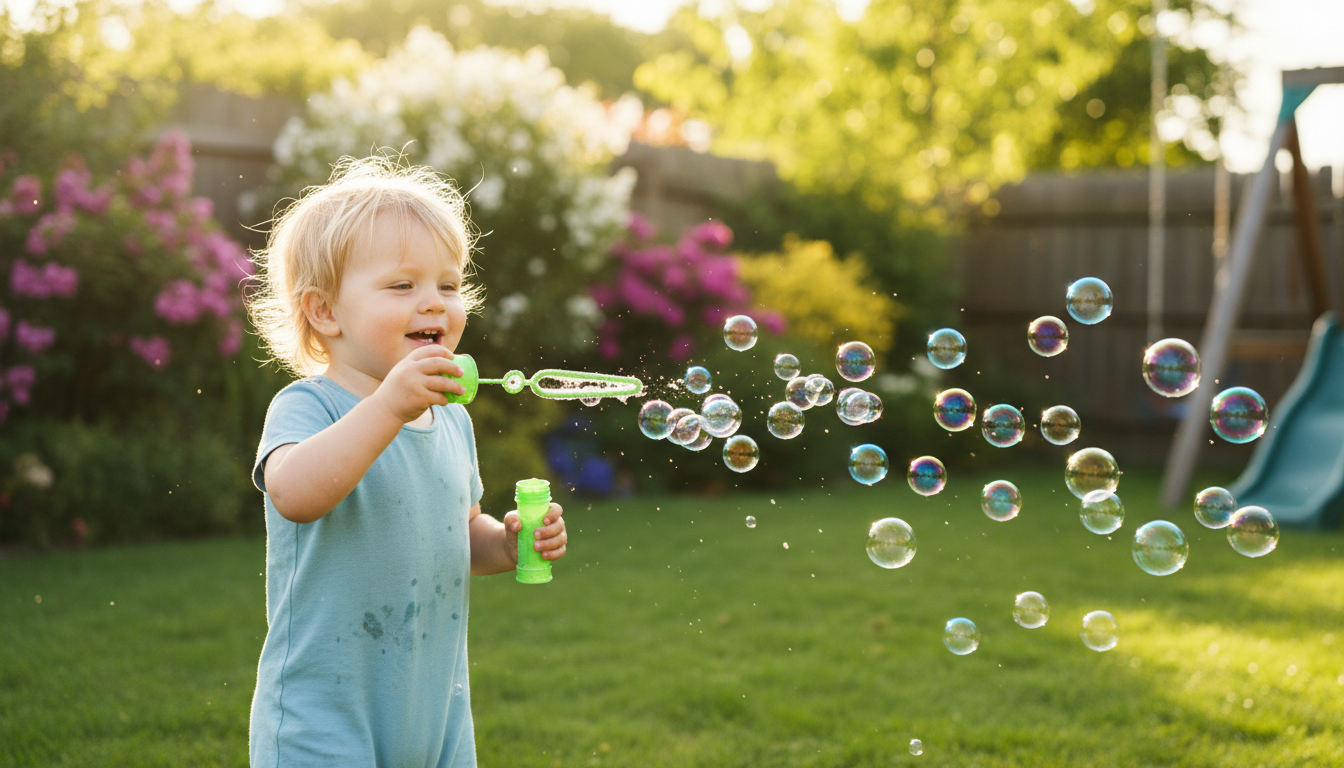
Table of Contents
- Introduction
- The Science of Play: Why Activity-Based Learning Works
- Speech Therapy Language Activities for Toddlers (Birth to 2 Years)
- Language Activities for Preschoolers (2 to 4 Years)
- Advanced Language Activities for Ages 4 to 6
- Motor Skills and Articulation: The Physical Side of Speech
- Integrating Speech Blubs into Your Daily Routine
- Practical Tips for Success
- Creating a Language-Rich Home Environment
- FAQ
- Conclusion
Introduction
Did you know that approximately one in four children will face some form of speech or language challenge during their early development? It is a statistic that can feel overwhelming to a parent, but it also highlights a powerful truth: you are far from alone. At Speech Blubs, we believe that every child deserves the opportunity to speak their mind and heart. Our company was founded by individuals who grew up with speech hurdles themselves; they built the very tool they wished they had as children to transform a journey that can often feel frustrating into one of joy and connection.
The purpose of this guide is to provide you with a comprehensive toolkit of speech therapy language activities that you can use right in your living room, at the park, or during the dinner hour. We will explore how to turn everyday moments into "smart screen time" opportunities, the science behind how children learn through imitation, and specific activities tailored to different age groups. Whether your child is just beginning to babble or is preparing for the social complexities of kindergarten, these strategies are designed to foster confidence and a genuine love for communication.

Our main message is simple: you don't need a clinical setting to make a massive impact on your child's development. By blending scientific principles with the power of play, you can create a language-rich environment that supports your child’s unique path toward expressive and receptive language success.
The Science of Play: Why Activity-Based Learning Works
Before diving into specific exercises, it is essential to understand why we prioritize play. For a child, play is work. It is how they navigate the world, test boundaries, and internalize new concepts. When we integrate speech therapy language activities into play, we are meeting children exactly where they are.
The Magic of Video Modeling
At the core of our methodology is something called "video modeling." This is a scientifically backed approach where children learn by watching their peers perform specific actions or make specific sounds. Think about how your child reacts when they see another child laughing or jumping; they instinctively want to join in.
Our research shows that this peer-to-peer connection activates "mirror neurons" in the brain. When a child watches another child on a screen making a "b" sound, their brain reacts as if they are making the sound themselves. This reduces the pressure and anxiety often associated with "performance" and replaces it with a sense of fun and mimicry. Unlike passive cartoons that children simply watch, our approach encourages them to be active participants in the learning process.
Moving from Passive to Active Screen Time
We often hear from parents who are worried about screen time. We share those concerns. Standard television and many mobile games are passive experiences where a child’s brain "switches off." At Speech Blubs, we provide a "smart screen time" alternative. Our activities are designed to be a bridge between the digital world and the real world, encouraging family connection rather than isolation. By using Speech Blubs on the App Store, you are providing a tool for interaction, where you and your child engage with the content together.

Speech Therapy Language Activities for Toddlers (Birth to 2 Years)
The first two years of life are a whirlwind of neurological growth. During this stage, we focus on the foundations: sound imitation, shared attention, and basic vocabulary.
1. The Echo Game
Babies are natural mimics. When your little one makes a sound—even a simple "ba" or "ma"—look them directly in the eyes and repeat it back to them. This creates a "conversational loop." You are teaching them that when they make a sound, the world responds.
- Practical Scenario: If you are changing a diaper and your baby says "da," say "Da! Yes, Daddy is here!" back to them. This builds the foundational understanding that sounds have meaning and power.
2. Animal Sound Association
Animal sounds are often the easiest for young children to master because they are phonetically simple and highly engaging. In our app’s "Animal Kingdom" section, children watch other kids roar like lions or moo like cows.
- At-Home Twist: For a parent whose 3-year-old "late talker" loves animals, the "Animal Kingdom" section offers a fun, motivating way to practice "moo" and "baa" sounds. After using the app, grab a toy cow and see if your child can repeat the "moo" they just saw their peer perform. This transition from screen to physical toy is crucial for generalization.
3. Narrative Bath Time
Don't just wash your child; narrate the experience. "Now we are washing your toes. Scrub, scrub, scrub! Here comes the water—splash!" This constant stream of clear, simple language helps children associate words with physical sensations and actions.
Language Activities for Preschoolers (2 to 4 Years)
As children move into the preschool years, their world expands. They start to understand categories, follow multi-step directions, and express their own choices.
4. The Power of Choice
One of the simplest speech therapy language activities is offering choices. Instead of saying, "Do you want juice?" ask, "Do you want apple juice or orange juice?" This forces the child to retrieve a specific word rather than just nodding "yes" or "no."
- Why it works: It empowers the child and reduces the frustration that often leads to tantrums. When they have the words to choose, they feel in control.
5. Categorization "Sort-and-Speak"
Understanding how the world is organized is a major linguistic milestone. You can do this with laundry, groceries, or toys.
- The Activity: Take a basket of mixed items—a toy car, an apple, a spoon, a sock. Ask your child, "Which one do we eat?" or "Which one do we wear on our feet?" This helps with word retrieval and semantic mapping. If you're looking for a baseline of where your child stands with these skills, you can take our 3-minute preliminary screener to get a personalized assessment.
6. Interactive Storytelling
Instead of just reading a book cover-to-cover, make it a dialogue. Point to the "big red dog" and ask, "What is the dog doing?" If they say "run," expand on it: "Yes! The dog is running fast!" This "expansion" technique is a cornerstone of speech therapy. You are taking their base level of communication and adding one more "building block" to it.
Advanced Language Activities for Ages 4 to 6
By age four, children are beginning to use language to tell stories, explain complex feelings, and navigate social relationships.
7. The "I Spy" Sound Search
This is a classic game with a speech-focused twist. Instead of spying a color, spy a sound. "I spy something that starts with the 'Sssss' sound." This builds phonological awareness, which is the bedrock of reading.
8. Multi-Step Direction Challenges
Following directions is a critical skill for the classroom. Start with two steps: "Go to the kitchen and bring me a spoon." Once they master that, move to three: "Go to your room, pick up your shoes, and put them in the closet."
- Real-World Application: If your child struggles with these, use visual cues. Pointing toward the kitchen or mimicking the action of picking up shoes can help bridge the gap as they process the verbal instructions.
9. Emotion Charades
Understanding and expressing emotions is a complex language task. Use a mirror—a tool we frequently recommend—to practice "feeling faces." Ask your child, "Show me what your face looks like when you are surprised!" Then, talk about a time they felt that way. This connects vocabulary to internal states, helping them "speak their hearts" as well as their minds.
Motor Skills and Articulation: The Physical Side of Speech
Speech is not just a cognitive process; it is a physical one. It requires the coordinated movement of the lips, tongue, jaw, and breath.
Bubbles and Straws
It might look like simple fun, but blowing bubbles or drinking a thick smoothie through a straw is excellent "oral motor" work. These activities strengthen the muscles needed for clear articulation. If your child has trouble with "p," "b," or "w" sounds, the rounded lip position used for blowing bubbles is the perfect practice.
Mirror Mimicry
Standing in front of a mirror with your child is one of the most effective speech therapy language activities. When children see their own mouth moving alongside yours, they get immediate visual feedback. Try making "silly sounds" or exaggerated vowel shapes (A, E, I, O, U).
- The Speech Blubs Connection: Our app includes a digital "mirror" feature that uses the front-facing camera. This allows the child to see themselves right next to the "expert" peer they are imitating. It turns a standard exercise into a "smart" experience that kids actually ask to do. You can see how much kids love this by reading our testimonials.
Integrating Speech Blubs into Your Daily Routine
We designed Speech Blubs to be a powerful supplement to your child’s overall development plan. While it is an incredible tool for home use, it also works beautifully alongside professional therapy.
Our mission is to provide an immediate, effective, and joyful solution for families. We know that waiting lists for specialists can be long and that the cost of private sessions can be a burden. That is why we offer a high-quality, scientifically-driven alternative that you can start using today.
Choosing the Right Plan for Your Family
We want to be transparent about how to get the most value from our platform. We offer two main paths:
- The Monthly Plan: At $14.99 per month, this is a great way to test the waters.
- The Yearly Plan: This is our most popular option and the clear best choice for families committed to their child's progress. At $59.99 per year, it breaks down to just $4.99 per month—a 66% savings compared to the monthly rate.
More importantly, the Yearly Plan includes exclusive, high-value features that the monthly plan does not:
- A 7-day free trial: Experience the full power of the app risk-free.
- Reading Blubs: Access to our additional app dedicated to early literacy and reading skills.
- Early Access: Be the first to try new updates and sections.
- Priority Support: A 24-hour response time from our dedicated support team.
We encourage you to start your 7-day free trial on our website and select the Yearly plan to ensure you have every resource available to support your child's journey.
Practical Tips for Success
As you implement these speech therapy language activities, keep these three principles in mind:
1. Consistency Over Intensity
Five to ten minutes of focused, joyful interaction every day is far more effective than an hour-long "lesson" once a week. Language learning is about building habits and neural pathways. Make it a part of your "bedtime routine" or "after-breakfast play."
2. Wait for the Response
In our busy lives, we often rush to fill the silence. When you ask your child a question or model a sound, give them at least 5 to 10 seconds to respond. Their little brains are working hard to process your words and formulate a response. Sometimes, that silence is where the most growth happens.
3. Focus on Progress, Not Perfection
Do not expect your child to give public speeches in a month. The goal of these activities is to foster a love for communication, build confidence, and reduce the frustration that comes with being misunderstood. Celebrate the small wins—a new sound, a two-word phrase, or even just a sustained moment of eye contact. Every step forward is a victory.
Creating a Language-Rich Home Environment
Your home is the most important classroom your child will ever have. Beyond specific games, you can create an environment where language thrives by:
- Reducing Background Noise: Turn off the TV or radio when you are playing together. This helps your child focus on the sounds of your voice.
- Getting Down to Their Level: Physically sit on the floor so you are eye-to-eye. This makes communication feel more personal and less intimidating.
- Using Your Hands: Gestures, pointing, and signs are "bridge" communication tools. They don't hinder speech; they support it by giving the child a way to communicate while their verbal skills catch up.
By incorporating these simple adjustments alongside Speech Blubs on Google Play, you are surrounding your child with the support they need to thrive.
FAQ
1. Is Speech Blubs a replacement for a professional speech-language pathologist (SLP)? While we are proud that our app is used and recommended by many SLPs, we view it as a powerful supplement rather than a total replacement. If you have significant concerns about your child's development, we always recommend consulting a professional. Our app is the "daily exercise" that supports the "specialized coaching" an SLP provides.
2. How is Speech Blubs different from watching educational YouTube videos? YouTube is a passive, one-way experience. Speech Blubs is built on the "video modeling" methodology, which requires active participation. Our app uses voice recognition and the device's camera to encourage the child to make sounds and see themselves in action. We are "smart screen time" designed for interaction, not just distraction.
3. What if my child isn't interested in the app at first? Every child is different! We suggest "co-playing." Sit with your child, open the app, and start making the sounds yourself. When they see you having fun and being silly, they will naturally be curious and want to join in. Remember, the app is a tool for family connection.
4. How soon will I see results from these activities? Every child's timeline is unique. Some parents notice a "language explosion" within weeks, while for others, it is a slower, steady build of foundational skills. Our focus is on building confidence and reducing frustration. By making language fun, you are setting the stage for long-term success rather than a quick, temporary fix.
Conclusion
Navigating speech and language delays can feel like a daunting task, but it is also an opportunity to build a deep, lasting bond with your child. By integrating these speech therapy language activities into your daily life, you are doing more than just teaching words; you are giving your child the tools to share their world with you.
From the scientific power of video modeling to the simple joy of blowing bubbles on the porch, every interaction counts. We invite you to join the Speech Blubs family and take the next step in this journey. Our homepage is a great place to start learning more about our story and our commitment to helping children "speak their minds and hearts."
Ready to see the difference for yourself? Download Speech Blubs today and start your 7-day free trial. We highly recommend choosing the Yearly Plan to unlock the best value, including the Reading Blubs app and priority support. Let's make learning to talk the most joyful part of your child's day!
About the author