
Fun Play-Based Speech Therapy Activities for Kids
Discover effective play-based speech therapy activities to boost your child's communication. Learn how to turn play into learning and start your free trial
 By Speech Blubs Team•Apr 27, 2026•14 min.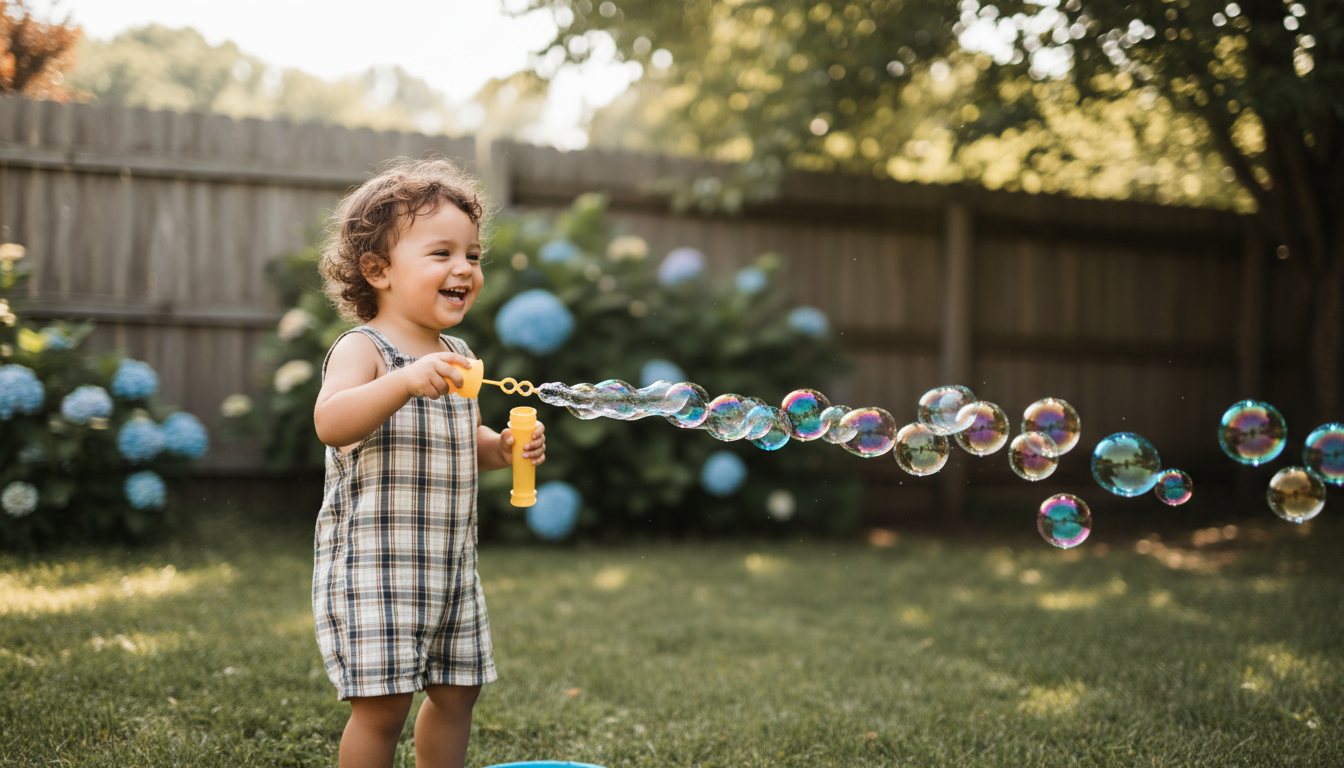
Table of Contents
- Introduction
- What is Play-Based Speech Therapy?
- The Science of Play and Video Modeling
- Engaging Play-Based Speech Therapy Activities to Try at Home
- Connecting Play to the Speech Blubs App
- Why Choosing the Right Plan Matters
- Adapting Activities for Different Ages
- The Role of Family Connection
- Practical Tips for Success
- Making the Most of Screen Time
- Summary of Key Takeaways
- Conclusion
- FAQ
Introduction
Did you know that for a child, play is actually their most important "work"? It is how they discover the world, test out new ideas, and most importantly, learn how to communicate. Many parents feel a sense of pressure when they notice their little one is struggling to find their words, imagining that "therapy" must mean sitting at a desk with flashcards and repetitive drills. However, the most effective way to help a child find their voice is actually through joy, laughter, and movement.
In this post, we are going to explore the world of play-based speech therapy activities. We will dive into why this approach is so powerful, the science behind how children learn to speak, and practical, everyday activities you can start using today. We’ll also share how we at Speech Blubs use these same principles to create "smart screen time" that empowers children to speak their minds and hearts. Our goal is to help you turn everyday moments into opportunities for connection and growth, moving away from frustration and toward joyful learning.

The core message here is simple: when children are engaged in play, their brains are primed for learning. By prioritizing play-based speech therapy activities, we can foster a deep love for communication and build the foundational skills every child needs to thrive.
What is Play-Based Speech Therapy?
Play-based speech therapy is an approach where communication goals are woven naturally into play routines. Instead of forcing a child to sit and repeat words (which often leads to resistance and frustration), we follow the child’s lead. If they want to play with dinosaurs, we play with dinosaurs! But while we play, we strategically model sounds, introduce new vocabulary, and create "communication temptations" that encourage them to interact.
At Speech Blubs, we believe that communication should never feel like a chore. Our company was founded by individuals who grew up with speech problems themselves. They created the tool they wished they had—one that blends scientific principles with genuine fun. This is why our main homepage emphasizes "speaking from the heart." We aren't just teaching kids to make sounds; we are giving them the tools to express who they are.
The Power of Following the Child's Lead
When we let a child choose the activity, their engagement levels skyrocket. High engagement leads to better retention. In a play-based setting, the therapist or parent becomes a playmate rather than an instructor. This reduces the "performance anxiety" many children feel when they know they are being asked to do something difficult, like pronouncing a tricky "r" or "s" sound.
Realistic Expectations for Progress
It is important to remember that speech development is a journey, not a race. While play-based speech therapy activities are incredibly effective, they are not magic wands. We don't promise that your child will be giving public speeches in a month. Instead, we focus on the beautiful, incremental progress: the first time they point and say "moo" at a cow, the reduction in "meltdowns" because they can finally ask for a snack, and the confidence they gain when they realize they can make themselves understood. These are the victories that matter.

The Science of Play and Video Modeling
You might wonder how "just playing" can actually change a child's brain. The answer lies in something called mirror neurons. These are special cells in the brain that fire both when we perform an action and when we observe someone else performing that same action. This is why children are such natural mimics.
Our unique approach at Speech Blubs is built on the scientific methodology of video modeling. Instead of watching an adult or a cartoon character, children in our app watch videos of other children performing speech exercises. When a child sees a peer making a "pop" sound with their lips, their mirror neurons fire, making it much easier for them to imitate that sound themselves. This "kid-to-kid" connection is at the heart of what makes our tool a powerful supplement to professional therapy.
Key Takeaway: Peer imitation is one of the strongest drivers of early childhood development. By watching other kids, children feel empowered and motivated to try new sounds in a low-pressure environment.
Engaging Play-Based Speech Therapy Activities to Try at Home
Ready to put these ideas into practice? Here are several categories of play-based speech therapy activities that you can easily integrate into your daily routine.
1. Pretend Play: The Kitchen and the Farm
Pretend play is a goldmine for language development. It allows children to practice social roles and use "scripts" for conversation.
- The Play Kitchen: For a parent whose toddler is a "late talker," the play kitchen is a perfect starting point. You can practice "action" words like stir, pour, hot, eat, and yummy.
- The Farm Set: Use animal figures to practice "proto-words" (early sounds). Instead of focusing on the word "cow," focus on the "moo." This builds the motor planning skills needed for more complex speech later.
If you aren't sure where your child currently stands in their development, you can take our quick 3-minute preliminary screener. It involves just 9 simple questions and will provide you with an assessment and a next-steps plan tailored to your child's needs.
2. Movement-Based Play: The Obstacle Course
Some children learn best when their whole body is moving. Physical activity can actually help "unlock" speech for kids who find sitting still difficult.
- Follow the Leader: Create a simple obstacle course using pillows and chairs. Use "spatial" words like under, over, through, and between.
- Ready, Set, Go!: This is a classic "communication temptation." Hold your child at the top of a slide or before they zoom a toy car. Say "Ready... Set..." and then wait. Wait for them to make a sound, a gesture, or say "Go!" before you let them move. This silence is powerful—it gives them the space to realize they need to communicate to get the result they want.
3. Sensory Play: Bubbles and Kinetic Sand
Sensory activities are highly motivating because they feel good!
- Bubbles: Bubbles are fantastic for working on "lip rounding" (needed for sounds like "w," "p," and "b"). You can model the words pop, blow, more, and up.
- Sensory Bins: Fill a bin with rice or beans and hide small toy objects inside. As your child finds them, name the object and describe its texture (e.g., "smooth rock," "bumpy truck").
4. Interactive Book Reading
Reading doesn't have to be a passive activity. Instead of just reading the words on the page, use the pictures to spark a "conversation." Ask "Wh-" questions: Where is the dog hiding? What is the boy doing? Why is the girl sad? If your child isn't talking yet, simply point and label, then wait for them to point too.
Connecting Play to the Speech Blubs App
We know that modern parents are busy. Sometimes you need a few minutes to cook dinner or take a phone call, and you want to ensure that if your child is using a screen, it’s actually helping them. This is where we come in. We offer a "smart screen time" experience that is a far cry from the passive viewing of cartoons.
Practical Scenarios with Speech Blubs
- The Animal Lover: Imagine a 3-year-old who is obsessed with dogs and cats but hasn't started using many words yet. In the "Animal Kingdom" section of our app, they can watch real children making animal sounds. After the app session, you can bring out their toy animals and "generalize" the learning by making those same sounds together.
- The Busy Morning: While you are getting dressed, your child can engage with the "Early Sounds" section. Because our app requires active participation—copying faces, making sounds, and interacting with the screen—it keeps their brain "turned on" and focused on communication.
Our methodology is designed to be a bridge between the digital world and real-world interaction. We always encourage adult co-play, where you sit with your child and cheer them on as they mimic the "Blubs" on the screen. To see how other families have found success, feel free to read our parent testimonials.
Why Choosing the Right Plan Matters
We want to be transparent about our pricing because we value the trust of the families we serve. We offer two main ways to access our full library of over 1,500 activities.
- Monthly Plan: This is $14.99 per month. It’s a great way to test the waters if you aren't ready for a longer commitment.
- Yearly Plan: This is our most popular and highest-value option. At $59.99 per year, it breaks down to just $4.99 per month.
When you choose the Yearly plan, you aren't just saving 66% compared to the monthly rate. You also get exclusive benefits that aren't included in the monthly subscription:
- A 7-day free trial so you can explore everything risk-free.
- The Reading Blubs app, which helps your child transition from speaking to early literacy skills.
- Early access to all our new updates and features.
- Priority 24-hour support response time from our team.
We strongly recommend the Yearly plan for families who are serious about creating a consistent, joyful learning routine. You can create your account and start your 7-day free trial on our website today to see the difference for yourself.
Adapting Activities for Different Ages
Play-based speech therapy activities should grow with your child. What works for a two-year-old won't necessarily engage a five-year-old.
For Toddlers (Ages 1-3)
At this age, focus on "joint attention"—the ability to look at the same thing together. Keep activities short and high-energy. Use lots of "exclamatory" words like Whee!, Oops!, and Uh-oh!. These are often the first words a child will imitate because they carry so much emotion.
For Preschoolers (Ages 3-5)
Preschoolers are starting to understand more complex social rules. Board games like "Candyland" or "Chutes and Ladders" are perfect for practicing turn-taking and "sentence expansion." Instead of just saying "blue," encourage them to say "I got the blue square."
For School-Age Kids (Ages 5+)
For older kids, play can involve more structured "challenges." Building complex Lego sets or playing "I Spy" helps with descriptive language and following multi-step directions. This is also a great age to introduce "Reading Blubs" to help them see the connection between the sounds they say and the letters on a page.
The Role of Family Connection
At its heart, speech therapy isn't just about "fixing" a delay; it’s about building a bridge of connection between you and your child. Frustration often stems from a breakdown in communication. When a child can't tell you what they want, they might act out. By using play-based speech therapy activities, you are reducing that frustration and replacing it with moments of shared joy.
We see our app as a tool for family connection. We want you to laugh together when the "face filters" in the app turn your child into a lion or a robot. These positive emotions create a "safe space" for a child to take risks with their speech.
Practical Tips for Success
- Be Silly: Don't be afraid to use funny voices or make exaggerated facial expressions. The more animated you are, the more likely your child is to look at your mouth and try to copy you.
- Narrate Your Day: Talk about what you are doing while you do it. "I am washing the big red apple. Now I am cutting the apple. Crunch, crunch, crunch!"
- Reduce Background Noise: Turn off the TV or loud music during dedicated play-based speech therapy activities. It’s much easier for a child to focus on your voice when there aren't competing sounds.
- Use Visuals: If you are asking a question, hold up two choices (e.g., an apple and a banana). This gives them a visual cue to help them find the word.
Making the Most of Screen Time
We often hear from parents who are worried about "screen time." We agree that passive screen time is not ideal for development. That’s why we’ve built Speech Blubs to be the opposite of passive. It is interactive, educational, and based on the same clinical practices used by speech-language pathologists.
When you use the app, try to:
- Limit sessions to 10-15 minutes of "focused" play.
- Sit with your child and repeat the words along with the "Blubs" on the screen.
- Celebrate every effort, even if the sound isn't perfect yet.
Ready to see how our peer-led video modeling can help? You can download Speech Blubs on the Apple App Store or Google Play to begin your journey.
Summary of Key Takeaways
- Play is Essential: It’s the natural way children learn. Play-based therapy is more engaging and effective than traditional drills.
- Follow the Lead: Let your child choose the toys. Use their interests to model language and create opportunities for them to speak.
- Video Modeling Works: Watching other children (as seen in Speech Blubs) activates mirror neurons and encourages imitation.
- Consistency Over Intensity: 10 minutes of playful practice every day is better than an hour once a week.
- Choose the Best Value: The Yearly plan offers the most features, including Reading Blubs and a free trial, for the lowest monthly cost.
Conclusion
Helping your child find their voice is one of the most rewarding journeys you will ever take as a parent. While it can feel overwhelming at times, remember that you are your child's best teacher and their favorite playmate. By incorporating play-based speech therapy activities into your daily life, you are providing them with a foundation of confidence, curiosity, and a love for communication.
At Speech Blubs, we are honored to be a part of that journey with you. We’ve seen firsthand how "smart screen time" can transform a child's frustration into the joy of being understood. We encourage you to take the next step today. Choose the Yearly plan to get the full suite of features, including the extra Reading Blubs app and early updates.
Start your 7-day free trial today! Download Speech Blubs on the Apple App Store or Google Play. If you're on a desktop, you can also sign up on our website. Let’s help your child speak their mind and heart together!
FAQ
1. What is the best age to start play-based speech therapy activities?
It is never too early! You can start using simple play-based techniques like narrating your day and using "exclamatory" sounds with infants. Most structured play-based activities are designed for children aged 1 to 5, but the principles of following a child’s interest and using "smart" interaction can be adapted for older children as well.
2. Can Speech Blubs replace professional speech therapy?
We view Speech Blubs as a powerful supplement to, not a replacement for, professional therapy. If your child has a significant delay, we always recommend consulting with a licensed Speech-Language Pathologist (SLP). Our app is a wonderful tool to use between sessions to keep the momentum going and practice skills in a fun, home-based environment.
3. Why is the Yearly plan better than the Monthly plan?
While the Monthly plan ($14.99) offers flexibility, the Yearly plan ($59.99) provides significantly more value. It saves you 66% over the course of a year, includes a 7-day free trial, gives you the bonus Reading Blubs app, and ensures you get priority support and early access to new content. It’s the best choice for families committed to long-term growth.
4. How long should my child use the app each day?
For play-based learning to be most effective, we recommend short, high-quality sessions. About 10 to 15 minutes of active play within the app is usually plenty for a young child. The goal is to keep them engaged and excited, rather than letting them scroll passively. Always try to sit with them and reinforce the sounds they are learning in the "real world" afterward!
About the author