
Help Your Child Master s and z Words Speech Therapy
Master s and z words speech therapy with fun activities and word lists! Learn how video modeling can help your child fix lisps and build clear communication
 By Speech Blubs Team•Apr 14, 2026•14 min.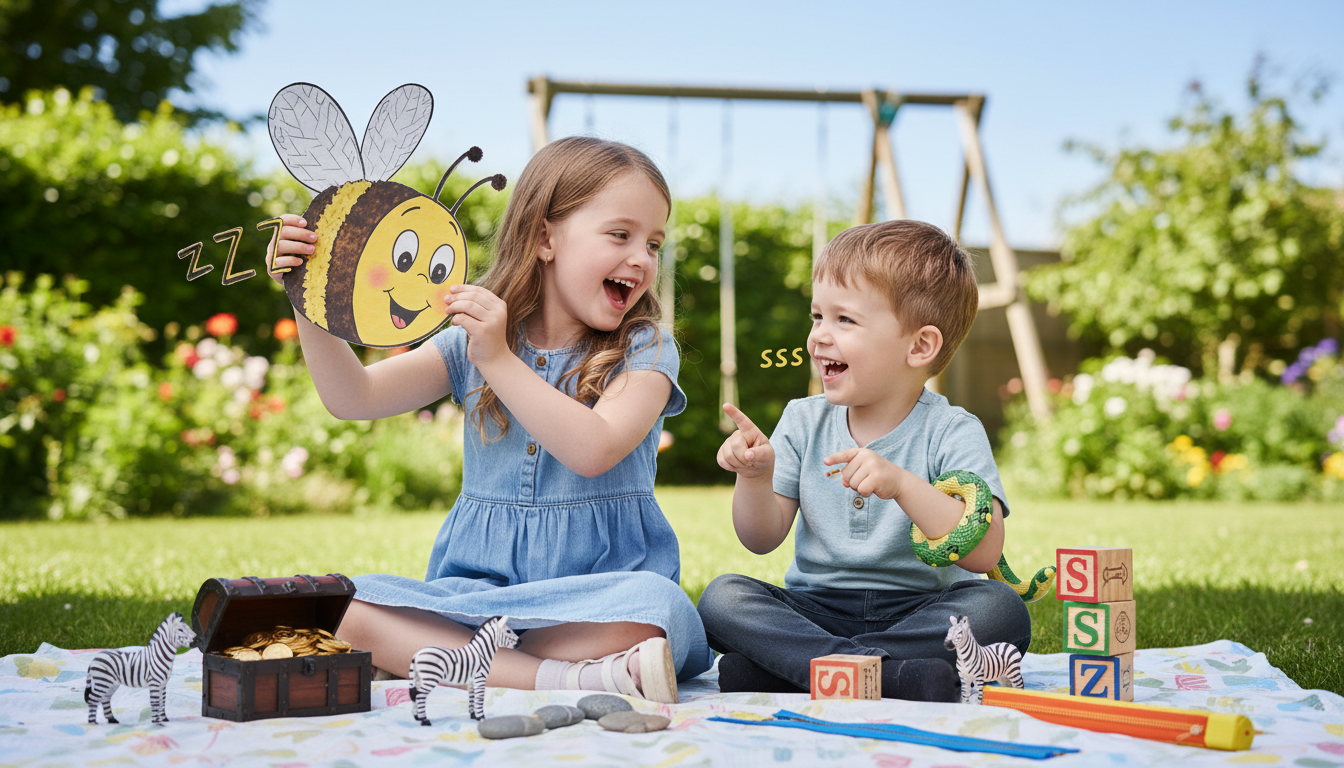
Table of Contents
- Introduction
- The Mechanics of the "Snake" and the "Bee"
- Why are /s/ and /z/ So Tricky?
- Identifying Common Errors: Lisps and Substitutions
- The Speech Blubs Methodology: "Smart Screen Time"
- Practical Activities for Home Practice
- Comprehensive Word Lists for Practice
- The Importance of Family Connection
- Setting Realistic Expectations
- Moving Toward Generalization
- Why Choose the Yearly Plan?
- A Note on Reading and Literacy
- Creative Play Scenarios with Speech Blubs
- Conclusion
- Frequently Asked Questions
Introduction
Have you ever sat down for a family dinner only to have your little one look up and ask for a bowl of "thoup" or tell you they want to go to the "thoo"? While those early speech slips can be incredibly endearing, they also represent one of the most common hurdles in early childhood development. The /s/ and /z/ sounds are foundational to clear communication, yet they are among the trickiest for young children to master. As parents, we often find ourselves wondering: Is this just a phase? Should I be worried about that lisp? How can I help my child at home without making it feel like "work"?
At Speech Blubs, we understand these questions because we’ve been there. Our founders all grew up with speech challenges and created the very tool they wished they had as children. Our mission is to empower children to "speak their minds and hearts," turning the frustration of being misunderstood into the joy of clear expression. In this blog post, we are going to dive deep into the world of s and z words speech therapy. We will explore why these sounds are difficult, how to identify common errors like lisps, and provide you with a comprehensive toolkit of games, word lists, and strategies to support your child’s journey. Our goal is to move beyond passive screen time and create a bridge for family connection and confident communication.

The Mechanics of the "Snake" and the "Bee"
To help your child, it helps to understand exactly what is happening inside the mouth when we make these sounds. Speech therapists often refer to /s/ and /z/ as "fricatives." This means we create the sound by forcing air through a narrow opening between our articulators (the tongue and the roof of the mouth).
The "Snake" Sound (/s/)
The /s/ sound is what we call "unvoiced." This means your vocal cords are quiet. Try it yourself: put your teeth together, pull the corners of your mouth back into a slight smile, and blow a thin stream of air over the tip of your tongue. It sounds like a snake hissing.
The "Bee" Sound (/z/)
The /z/ sound is the "voiced" twin of /s/. The mouth position is exactly the same, but this time, you turn your "voice box" on. If you place your hand on your throat while making a /z/ sound, you should feel a distinct vibration. It sounds like a buzzing bee.
Understanding this relationship is key because many children who struggle with /s/ also struggle with /z/. If they can master the tongue placement for one, they are often halfway to mastering the other!
Why are /s/ and /z/ So Tricky?
If you feel like your child is taking a long time to get these sounds right, you aren't alone. Most children don't fully master /s/ and /z/ until they are between 5 and 8 years old. But why is it so hard?
- Precision Placement: The tongue has to be in just the right spot. If it's too far forward, it peeks through the teeth (the "th" sound). If it's too relaxed, air leaks out the sides, creating a "slushy" sound.
- Airflow Control: These sounds require a steady, thin stream of air. For a toddler who is still learning to coordinate their breathing and muscle movements, this is like trying to balance a marble on a spoon while walking.
- Physical Changes: Think about the "missing front teeth" phase! When children lose their baby teeth, the "wall" that helps contain the air for /s/ and /z/ disappears, often leading to temporary speech changes.
Beyond natural development, certain habits can influence how these sounds form. For instance, prolonged use of certain sippy cups or pacifiers can encourage the tongue to stay in a forward, "thrusting" position. This is why we often suggest a 3-minute preliminary screener to help parents understand where their child currently stands and what the next steps might look like.

Identifying Common Errors: Lisps and Substitutions
When practicing s and z words speech therapy, it’s helpful to know exactly what kind of error your child is making. This helps you choose the right activities to help them correct it.
The Frontal Lisp
This is the most common error. The child’s tongue pushes forward and sticks out between the front teeth.
- What it sounds like: "Soup" becomes "thoup," and "zoo" becomes "thoo."
- The Goal: Teach the tongue to "stay in its house" behind the teeth.
The Lateral Lisp
This one can be a bit more stubborn. Instead of the air going over the tip of the tongue, it escapes over the sides.
- What it sounds like: A "slushy" or "wet" sound. It might sound like there is too much saliva in the mouth.
- The Goal: Redirect the airflow down the center of the tongue.
Stopping
"Stopping" is a phonological process where a child replaces a long, "airflow" sound (like /s/) with a short, "stop" sound (like /t/ or /d/).
- What it sounds like: "Sun" becomes "tun" or "bus" becomes "but."
- The Goal: Help the child understand that some sounds are "long" and some are "short."
The Speech Blubs Methodology: "Smart Screen Time"
At Speech Blubs, we believe that learning should be joyful, not a chore. We’ve moved away from the passive viewing of cartoons and created a "smart screen time" experience. Our secret sauce? Video Modeling.
Our method is backed by science and focuses on mirror neurons. When a child sees another child (a peer) making a sound on the screen, their brain naturally wants to imitate that action. It’s the same way you might yawn when you see someone else yawn!
Our app features thousands of videos of real children practicing sounds. For a parent whose child is working on /s/ sounds, the "Early Sounds" or "Animal Kingdom" sections are perfect. Imagine your child watching a peer make a snake sound or a buzzing bee sound. They aren't just watching; they are being invited to participate in a "one-of-a-kind" interactive experience. This reduces frustration because the "teacher" is another kid, making the process feel like a playdate rather than a therapy session.
You can Download Speech Blubs on the App Store to see this video modeling in action.
Practical Activities for Home Practice
While professional therapy and apps are wonderful tools, the "magic" often happens during everyday moments at home. Here are some fun ways to integrate s and z words speech therapy into your routine:
1. The "Snake vs. Bee" Sort
Gather two containers. Label one with a picture of a snake and the other with a bee. Use a list of words (provided below) or pictures from a magazine. Ask your child to listen: "Does 'Sun' sound like a snake or a bee?" This builds "auditory discrimination"—the ability to hear the difference between the sounds before they try to say them.
2. The Mirror Challenge
Sit with your child in front of a mirror. This is great for correcting a frontal lisp.
- "Can we hide our tongue behind our teeth 'fence'?"
- "Let’s see who can make the longest 'sssss' sound without the tongue peeking out!" Visual feedback is incredibly powerful for children who are still learning where their tongue is in space.
3. "I Spy" S-Blends
Once your child can say the /s/ sound alone, move to "blends" (words where /s/ is combined with another consonant, like st, sp, or sk). Play "I Spy" in the kitchen or living room looking for things like a spoon, a star, or a stool.
4. High-Frequency Focus
Instead of practicing obscure words, focus on words your child actually uses. Words like "please," "yes," "this," and "see" appear in almost every conversation. When you focus on high-frequency words, your child gets "stealth" practice all day long.
Comprehensive Word Lists for Practice
Use these lists for games, flashcards, or just general conversation starters. Remember to start with the sound in the "initial" position (beginning of the word), as this is usually the easiest for kids to grasp.
/s/ Word List
Initial (Beginning)Medial (Middle)Final (End)
Sun
Seesaw
Bus
Soup
Baseball
Glass
Soap
Bicycle
House
Sock
Fossil
Mouse
Six
Pencil
Dress
Salad
Listen
Mess
Seven
Dancer
Goose
/z/ Word List
Initial (Beginning)Medial (Middle)Final (End)
Zoo
Puzzle
Cheese
Zebra
Blizzard
Please
Zero
Lizard
Nose
Zipper
Cousin
Bees
Zap
Daisy
Rose
Zoom
Music
Keys
Zigzag
Present
Peas
Pro Tip: If your child is struggling with /z/, try having them say "sssss" and then "turn on their motor" (voice) without moving their tongue. The /s/ will magically turn into a /z/!
The Importance of Family Connection
One of the core values at Speech Blubs is that we aren't just providing an app; we are providing a tool for family connection. We encourage "co-play." This means sitting with your child while they use the app, mimicking the sounds together, and celebrating the small wins.
When your child finally manages to keep their tongue behind their teeth for the word "sun," celebrate it! That positive reinforcement builds the confidence they need to keep trying. Research shows that children who feel supported and encouraged make faster progress than those who feel pressured. You can learn more about the science behind our approach on our research page.
Setting Realistic Expectations
It’s important to remember that speech development is a marathon, not a sprint. While we’ve seen incredible success stories—which you can read about in our testimonials from other parents—every child’s timeline is unique.
We don't promise that your child will be giving public speeches in a month. Instead, we focus on:
- Fostering a love for communication.
- Reducing the frustration of not being understood.
- Building foundational skills that will help them in school and social settings.
Speech Blubs is designed to be a powerful supplement to your child's overall development plan. If you are already working with a professional speech-language pathologist (SLP), our app is a great way to keep the momentum going between sessions.
Moving Toward Generalization
The hardest part of s and z words speech therapy is often "generalization." This is when a child can say the sound perfectly during a practice session but goes back to their lisp or substitution during normal conversation.
To help with this:
- The "Speech Minutes" Rule: Designate five minutes during dinner where everyone focuses on their "best speech." This makes it a fun family challenge rather than a constant correction.
- Gentle Reminders: Instead of saying "You said that wrong," try "I didn't quite catch that, can you use your 'snake sound' for me?"
- Read Aloud: Choose books with lots of /s/ and /z/ sounds. Dr. Seuss books are often fantastic for this!
Why Choose the Yearly Plan?
We want to be transparent about how you can best access our resources. While we offer different options, we always recommend the Yearly plan for families who are serious about supporting their child's speech journey.
Pricing Options:
- Monthly Plan: $14.99 per month.
- Yearly Plan: $59.99 per year (this breaks down to just $4.99/month—a 66% saving!).
Why the Yearly Plan is the Best Value:
- 7-Day Free Trial: You can try everything out before committing.
- Reading Blubs Included: You get access to our sister app, Reading Blubs, which helps transition speech skills into literacy skills.
- Early Access: Be the first to try our newest updates and features.
- Priority Support: Our team will respond to your questions within 24 hours.
The Monthly plan does not include the free trial or the Reading Blubs app. By choosing the Yearly plan, you are giving your child a comprehensive, long-term tool for success. Ready to give it a try? Create your account and begin your 7-day free trial today.
A Note on Reading and Literacy
Did you know that children who struggle with articulation and phonology are sometimes at a higher risk for reading difficulties later on? This is because reading requires "phonological awareness"—the ability to identify and manipulate the sounds in spoken language.
When we work on s and z words speech therapy, we aren't just helping them talk; we are helping them build the blocks for reading. This is why we created Reading Blubs. By connecting the sound of /s/ to the letter S, we help bridge the gap between speaking and literacy. Our Speech Blubs homepage offers more resources on how speech and reading are interconnected.
Creative Play Scenarios with Speech Blubs
Let’s look at how you can use specific app features to target these sounds in a way that feels like pure play.
- The Animal Kingdom: For a child who loves the zoo, have them practice the "Snake" video. Ask them, "Can you make a hissing sound like the boy in the video?" Then, move to the "Bee" video to practice voicing.
- Early Sounds: This section is perfect for beginners. It focuses on the most basic building blocks of speech.
- Yummy Time: Practice words like "soup," "salad," and "cheese." You can even do this while eating lunch to make the connection to the real world!
By using these relatable scenarios, you are taking the clinical feel out of speech therapy and replacing it with "smart screen time" that actually helps your child grow.
Conclusion
Mastering /s/ and /z/ sounds is a significant milestone in a child's developmental journey. While it can be a process filled with "thoups" and "thoos," it is also an opportunity for you to connect with your child and support their growing confidence. By understanding the mechanics of these sounds, identifying errors early, and using engaging tools like video modeling, you can make speech practice the highlight of your day.
Remember, our mission at Speech Blubs is to help your child speak their mind and heart. We believe in the power of play, the importance of family, and the science of peer-to-peer learning. Whether you are dealing with a frontal lisp or just want to give your child a head start, we are here to support you every step of the way.
Ready to start your journey?
Download Speech Blubs on the Google Play Store or the App Store today. We highly recommend selecting the Yearly Plan to take advantage of our 7-day free trial, the bonus Reading Blubs app, and the best overall value for your family. Let’s turn those "th" sounds into "ssss" sounds together!
Frequently Asked Questions
1. What is a lisp, and should I be worried about it?
A lisp is a functional speech error where the tongue is misplaced during the production of /s/ and /z/ sounds. Most commonly, children have a frontal lisp (tongue between teeth). While many children outgrow this by age 7 or 8, early intervention can help prevent the habit from becoming "ingrained" and can boost a child's confidence in social settings.
2. How can I tell if my child needs speech therapy?
If your child's speech is difficult for strangers to understand, if they are frustrated by their inability to communicate, or if they are significantly behind their peers in sound production, it may be time to seek help. Taking a quick 3-minute screener is a great first step to see if a professional evaluation is recommended.
3. How does video modeling help with speech?
Video modeling works by utilizing "mirror neurons" in the brain. When children watch other children perform a task (like making an /s/ sound), their brains react as if they are doing it themselves. This peer-to-peer connection is often much more motivating and effective than watching an adult or a cartoon character.
4. Is the Yearly plan really better than the Monthly plan?
Yes! The Yearly plan is designed for families looking for a long-term solution. At $59.99/year, it is 66% cheaper than the monthly rate. Most importantly, it includes a 7-day free trial and the Reading Blubs app, which are not available on the monthly plan. It also provides faster support and early access to new content.
About the author