
15 Creative Acorn Toddler Craft Ideas for Autumn
 By Speech Blubs Team•Feb 20, 2026•14 min.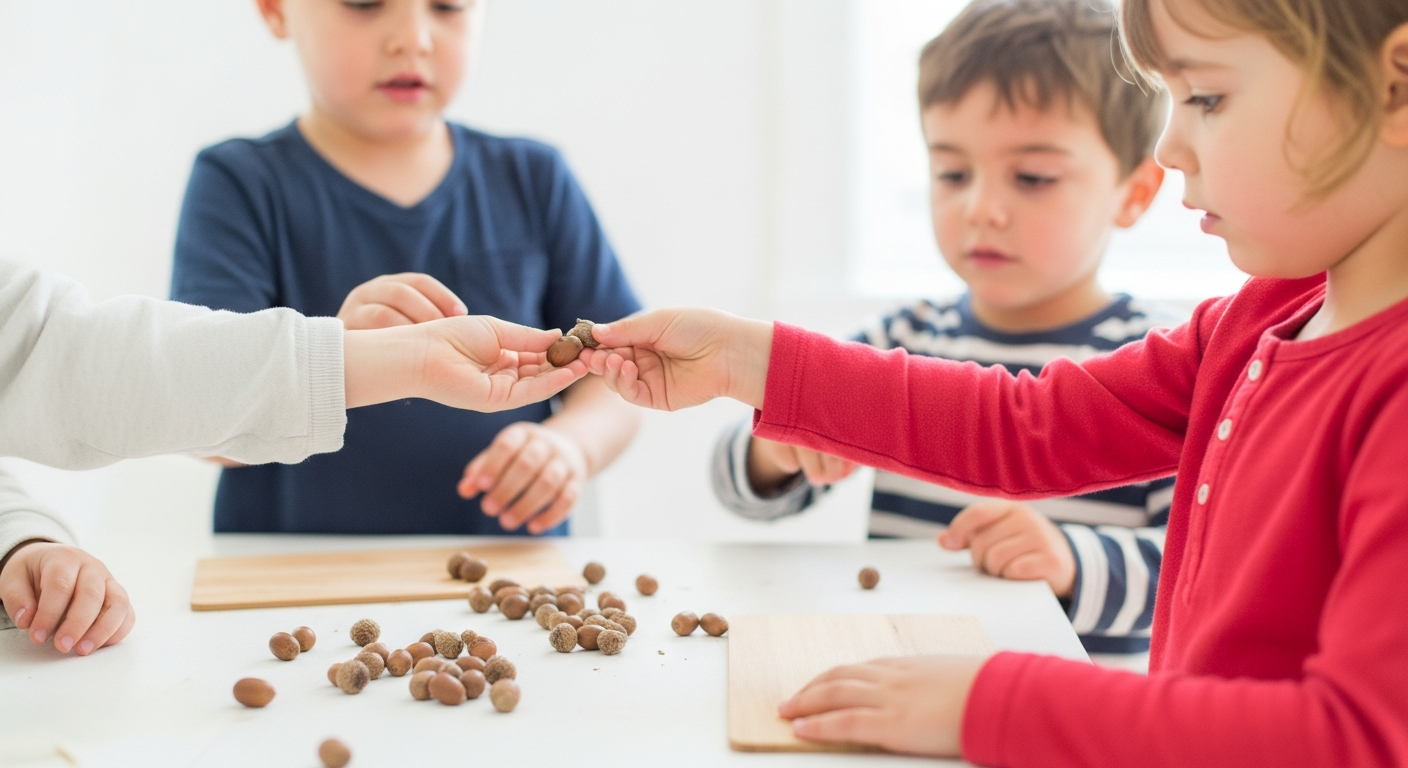
Table of Contents
- Introduction
- The Power of Nature in Child Development
- Why Choose an Acorn Toddler Craft?
- 1. The "Shake-it-Up" Acorn Art
- 2. Tinted Glue Acorn Collages
- 3. Fingerprint Acorn Family
- 4. The Sticky Wall Acorn
- 5. Acorn Lacing Activity
- 6. Painted Acorn Treasures
- 7. Salt Dough Acorn Sculptures
- 8. Acorn Color Sorting
- 9. Paper Plate Acorn Hats
- 10. The "Rolling Acorn" Painting
- 11. Acorn Sponge Stamping
- 12. Tissue Paper Scrunched Acorns
- 13. Acorn Handprint Art
- 14. "Feed the Squirrel" Acorn Box
- 15. The Nature Journal Acorn Page
- How Play-Based Crafting Supports Speech
- Integrating "Smart Screen Time" into Your Routine
- Tips for a Stress-Free Crafting Session
- Conclusion
- Frequently Asked Questions
Introduction
Did you know that the simple act of picking up an acorn can ignite a toddler's brain in ways that expensive toys often can’t? It is true! For a little one, an acorn isn't just a seed; it’s a tiny treasure with a "hat," a smooth belly, and a satisfying "clink" when dropped into a bucket. At Speech Blubs, we believe that these small moments of discovery are the building blocks of communication. When a child points at a squirrel and tries to say "nut," they are beginning a lifelong journey of self-expression.
The purpose of this guide is to provide you with a variety of engaging, easy-to-implement acorn toddler craft ideas that do more than just fill an afternoon. We will explore how these activities build fine motor skills, encourage sensory exploration, and—most importantly—foster the language development your child needs to thrive. Whether your child is a "late talker" or simply a curious explorer, these crafts are designed to create joyful family learning moments. By the end of this post, you will have a full toolkit of autumn activities and a deeper understanding of how to support your child's speech through the power of play.

The Power of Nature in Child Development
Autumn is a sensory playground. The vibrant oranges, the crisp air, and the abundance of natural materials like leaves and acorns provide a rich environment for learning. When we take toddlers outside, we aren't just getting fresh air; we are giving them a "vocabulary of experience."
For a parent whose 3-year-old struggles to find the right words, a nature walk can be a breakthrough. Instead of focusing on "drilling" words, you can focus on the sensory input. "Look, a smooth acorn!" "Listen to the crunch!" These adjectives and verbs come alive in the real world. At Speech Blubs, our mission is to empower children to speak their minds and hearts, and we know that this starts with making communication feel natural and fun. Our founders, who all navigated their own speech challenges as children, created our tools to be the joyful support system they wished they had.
Why Choose an Acorn Toddler Craft?
Acorns are the perfect crafting material for little hands for several reasons:
- Fine Motor Development: Picking up small acorns, dipping them in paint, or gluing "hats" onto paper requires precision. These movements strengthen the small muscles in the hands that will eventually be used for writing and buttoning clothes.
- Sensory Integration: The contrast between the rough cap and the smooth nut provides excellent tactile feedback.
- Language Opportunities: Using an acorn toddler craft allows you to model functional language. Words like "sticky," "top," "bottom," "brown," and "roll" are all easy to demonstrate during these activities.
If you are ever unsure where your child stands in their development, we recommend taking our quick 3-minute preliminary screener. It involves nine simple questions and provides a personalized assessment and next-steps plan to help you support your child's specific needs.
1. The "Shake-it-Up" Acorn Art
This is a favorite for toddlers who have a lot of energy! It combines movement with process art.
- Materials: A plastic bin with a lid, white cardstock, brown and orange washable paint, and several real acorns.
- The Process: Place the paper at the bottom of the bin. Add a few dollops of paint. Drop the acorns in, snap the lid shut, and let your toddler "shake, shake, shake!"
- Speech Connection: This is a perfect time to practice "stop" and "go." Encourage your child to wait for your signal to shake, then shout "Go!" together.
2. Tinted Glue Acorn Collages
Squeezing glue is one of the best ways to build hand strength. Many toddlers find white glue boring, so we like to spice it up.

- Materials: Small glue bottles, brown tempera paint, an acorn-shaped cutout, and bits of tissue paper.
- The Process: Add a few drops of brown paint to the glue bottle and shake it up. Let your child "draw" with the brown glue on their paper acorn. Then, have them press bits of paper onto the sticky lines.
- The Benefit: The tinted glue makes it easier for the child to see where they have applied it, reducing frustration.
3. Fingerprint Acorn Family
Toddlers love getting their hands messy, and fingerprints are a great way to practice "pincer" movements.
- Materials: Non-toxic ink pads or paint (brown and tan), paper.
- The Process: Have your child press their thumb into the tan paint to make the "nut" and then use their index finger to make the "cap" with a darker brown.
- Creative Play: Once dry, draw little faces on the acorns. You can name them "Mama Acorn," "Dada Acorn," and "Baby Acorn" to practice family vocabulary.
4. The Sticky Wall Acorn
For toddlers who aren't ready for liquid glue, contact paper is a magical alternative.
- Materials: Clear contact paper, brown yarn or construction paper scraps.
- The Process: Tape a piece of contact paper (sticky side out) to a wall or window. Draw a large acorn outline on it. Let your toddler press "scales" or "fur" onto the acorn using the materials.
- Speech Tip: Talk about the texture. "It's sticky!" This is a great sensory word for kids to learn early on.
5. Acorn Lacing Activity
This acorn toddler craft is excellent for older toddlers (2.5 to 3 years old) who are developing hand-eye coordination.
- Materials: Cardboard acorn cutout with holes punched around the edges, a thick shoelace or piece of yarn.
- The Process: Show your child how to "sew" the string through the holes.
- Realistic Expectations: Don't worry if they don't go in a perfect line! The goal is the attempt and the concentration. Creating joyful family learning moments is more important than a "Pinterest-perfect" result.
6. Painted Acorn Treasures
If you have a collection of real acorns from your neighborhood, why not give them a makeover?
- Materials: Real acorns, washable paints, small brushes.
- The Process: Let your child paint the smooth part of the acorn while leaving the cap natural.
- Social Proof: Parents often tell us that their children love carrying these "treasures" around for days. You can see similar success stories about how play-based learning helps kids on our testimonials page.
7. Salt Dough Acorn Sculptures
Working with dough is a fantastic way to engage the senses of touch and smell.
- Materials: 1 cup flour, 1/2 cup salt, 1/2 cup water.
- The Process: Mix the ingredients to make a dough. Help your toddler roll small balls. Press a real acorn cap onto the top of the ball. Bake at a low temperature until hard.
- Language Boost: Use words like "roll," "squish," and "push." These action words are foundational for early communication.
8. Acorn Color Sorting
While not strictly a "craft," this activity uses the materials you've made to build cognitive skills.
- Materials: The painted acorns from idea #6 and colored bowls or construction paper.
- The Process: Ask your child to put the red acorn on the red paper.
- Speech Blubs Method: This mirrors how we teach concepts in our app—using visual cues and repetition to build understanding.
9. Paper Plate Acorn Hats
Who doesn't love a wearable craft?
- Materials: A paper plate cut in half, brown paint, a stapler (for adult use), and a piece of elastic.
- The Process: Have your toddler paint the plate brown. Once dry, staple the elastic to the sides to create a "cap."
- Imaginative Play: Encourage your child to pretend to be a squirrel or a falling nut. Movement-based play is a powerful tool for memory and learning.
10. The "Rolling Acorn" Painting
Similar to the shake-it-up bin, this one happens on a larger scale.
- Materials: A large box lid, white paper, and paint.
- The Process: Place the paper in the lid and add paint. Place acorns in the lid and have your toddler tilt the lid back and forth to make the acorns "roll" and leave paint trails.
- Learning Moment: Talk about "fast" and "slow." "The acorn is rolling fast!"
11. Acorn Sponge Stamping
Sponges are easy for small hands to grip and provide a different texture than brushes.
- Materials: Sponges cut into acorn shapes, paint, paper.
- The Process: Dip the sponge into the paint and "stamp" it onto the paper.
- Language Modeling: Say "Push!" every time the child stamps. This reinforces the connection between the action and the word.
12. Tissue Paper Scrunched Acorns
This activity is perfect for working on those "pincer" muscles.
- Materials: Small squares of brown and orange tissue paper, glue, and an acorn outline.
- The Process: Show your child how to crumple or "scrunch" the tissue paper into a ball before gluing it down.
- Developmental Benefit: Crumpling paper takes significant effort for a two-year-old and is great for building the strength needed for future skills.
13. Acorn Handprint Art
This makes a wonderful keepsake for the "baby book."
- Materials: Brown paint, paper.
- The Process: Paint your child's palm and fingers brown. Press it onto the paper. The palm becomes the "nut," and the fingers look like the "cap" or the leaves of an oak tree.
- Connection: This is a high-contact activity that builds trust and bonding, which are the foundations of all communication.
14. "Feed the Squirrel" Acorn Box
Turn your craft into a game!
- Materials: A cardboard box with a squirrel face drawn on it, a "mouth" hole cut out, and your painted acorns.
- The Process: Have your toddler "feed" the squirrel by dropping the acorns into the mouth.
- Language Practice: Model the sound "om nom nom!" Encouraging your child to make silly sounds is a precursor to forming actual words.
15. The Nature Journal Acorn Page
For a "screen-free alternative" to passive viewing, we love creating physical journals of our adventures.
- Materials: A notebook, glue, and flat items found on a walk (leaves, thin acorn caps).
- The Process: Help your child glue their finds into the book.
- Sharing Memories: Look through the book together later. This helps with "decontextualized language"—the ability to talk about things that aren't happening right this second.
How Play-Based Crafting Supports Speech
At Speech Blubs, we don't just advocate for play because it's fun; we advocate for it because it's scientifically effective. Our unique approach involves "video modeling," where children learn by watching and imitating their peers. This is based on the principle of mirror neurons—the brain's way of learning through observation.
When you sit down to do an acorn toddler craft, you are the primary model for your child. They watch your hands, they watch your mouth as you say "sticky," and they imitate your joy. Our app is designed to be a "smart screen time" experience that supplements this real-world interaction. We provide a powerful tool for family connection, where the app acts as a guide for you to play together.
Our methodology is backed by science and has earned us a high rating on the MARS (Mobile App Rating Scale). You can read more about the research behind our method here. We focus on building foundational skills like imitation, sound recognition, and confidence, rather than just forcing "correct" pronunciation.
Integrating "Smart Screen Time" into Your Routine
While physical crafts are essential, we understand that modern parents need digital tools too. The key is choosing tools that are active rather than passive. Instead of letting a child watch a cartoon that requires nothing of them, Speech Blubs asks them to participate.
For example, after you finish your "Animal Kingdom" crafts, you might use the Speech Blubs app to practice the "moo" and "baa" sounds of the animals you just talked about. It's an immediate, effective, and joyful solution for the 1 in 4 children who need speech support.
Choosing the Right Plan for Your Family
To get the most out of Speech Blubs, we recommend our Yearly plan. While we offer a Monthly plan for $14.99 per month, the Yearly plan is the clear best choice for families committed to their child's growth.
The Yearly plan is only $59.99 per year, which breaks down to just $4.99/month. That is a savings of 66%! More importantly, the Yearly plan includes exclusive features that the Monthly plan does not:
- A 7-day free trial: Test the app with your child before committing.
- The Reading Blubs app: A whole extra app designed to help with early literacy.
- Early access: Be the first to try new updates and themes.
- 24-hour support: Get your questions answered quickly by our dedicated team.
Download Speech Blubs on the App Store or get it on Google Play to start your journey today.
Tips for a Stress-Free Crafting Session
We know that crafting with a toddler can sometimes feel more like "managing chaos" than "creating art." Here are a few tips to keep it joyful:
- Focus on the Process, Not the Product: If your child wants to peel the glue off the paper instead of sticking the acorn on it, let them! They are learning about physics and textures.
- Keep it Short: A toddler's attention span is often only 5–10 minutes. It's okay to start a craft and finish it later.
- Use the "One-Word" Rule: If your child isn't talking much yet, use single words during the craft. "Glue." "Push." "Brown." This makes it easier for them to imitate you.
- Co-Play is Key: Stay present. Your engagement is the most motivating factor for your child.
Conclusion
The humble acorn is more than just a symbol of autumn; it’s a gateway to learning. Through these 15 acorn toddler craft ideas, you can build your child’s hand strength, spark their creativity, and create a rich environment for language to grow. Remember, the goal isn't to create a masterpiece for the fridge; it’s to foster a love for communication and build the confidence your child needs to "speak their minds and hearts."
Whether you are navigating a speech delay or just looking for meaningful ways to connect, we are here to support you. Our app is a powerful supplement to professional therapy and a joyful addition to any child’s development plan. By blending scientific principles with the simple magic of play, we help you make every moment count.
Ready to see your child blossom? Create your account and begin your 7-day free trial today. We highly recommend choosing the Yearly plan to unlock the full suite of features, including Reading Blubs and priority support, for the best possible value at just $4.99/month.
Frequently Asked Questions
What are the benefits of nature-based crafts for toddlers?
Nature-based crafts, like an acorn toddler craft, provide multi-sensory experiences that artificial materials cannot match. They help children connect with their environment, learn about seasons, and develop fine motor skills through the handling of varied textures and shapes.
Is it safe for my toddler to play with real acorns?
Yes, but always under adult supervision. Acorns can be a choking hazard for very young children who still put things in their mouths. Always ensure your child is supervised during play, and consider using large paper-cutout acorns if your child is still in the "mouthing" phase.
How can I encourage my child to talk during craft time?
Use the "Wait and See" approach. Perform an action, like putting glue on the paper, and then wait a few seconds before saying the word "Glue." This gives your child a chance to initiate communication. You can also use the "Smart Screen Time" strategies found in Speech Blubs to learn more about modeling techniques.
Why should I choose the Yearly Speech Blubs plan instead of the Monthly one?
The Yearly plan offers the best value, saving you 66% compared to the monthly rate. It also includes a 7-day free trial, the bonus Reading Blubs app for literacy, and faster customer support response times, making it a comprehensive tool for your child's developmental journey.
About the author