
15 Creative Toddler Pinecone Crafts for Nature Play
 By Speech Blubs Team•Feb 20, 2026•16 min.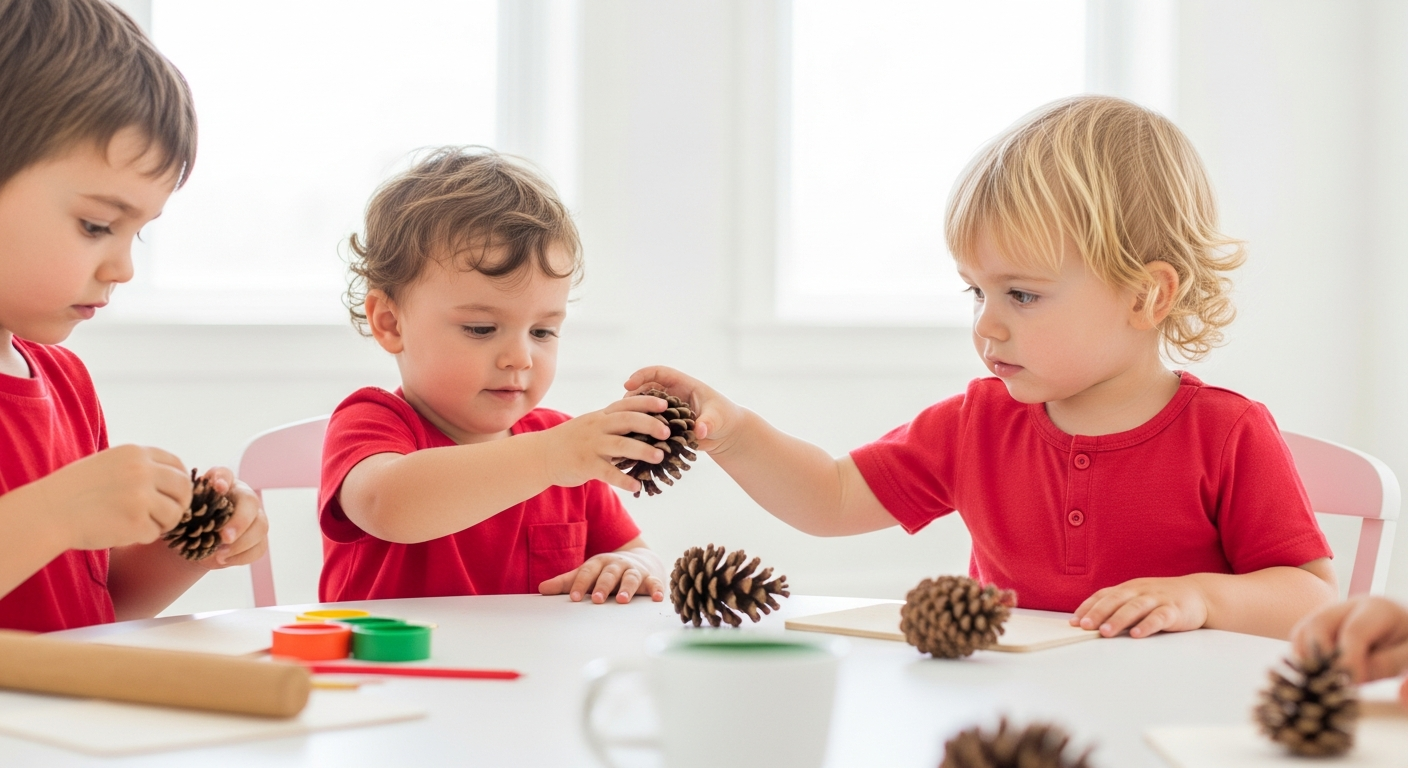
Table of Contents
- Introduction
- The Developmental Magic of Nature-Based Crafting
- Preparing Your Pinecones for Crafting
- Smart Screen Time: Bridging Digital and Physical Play
- 1. The Wise Snowy Owl
- 2. Rudolph the Red-Nosed Reindeer
- 3. The Festive Pinecone Christmas Tree
- 4. The Wobbly Pinecone Snake
- 5. The Busy Pinecone Bumblebee
- 6. The Nutty Pinecone Birdfeeder
- 7. The Spooky Pinecone Spider
- 8. The Prickly Pinecone Hedgehog
- 9. The Jolly Pinecone Snowman
- 10. The Colorful Pinecone Turkey
- 11. Pinecone Fairies and Elves
- 12. The Sparkly Pinecone Ornament
- 13. The Pinecone Penguin
- 14. Pinecone Fireflies
- 15. The Pinecone Apple Tree
- Maximizing the Value of Play
- Practical Scenarios: Bringing It All Together
- Conclusion
- Frequently Asked Questions
Introduction
Did you know that a simple stroll through a local park can provide your child with a more intensive sensory workout than the most expensive plastic toy on the market? To a toddler, a pinecone isn’t just a piece of debris fallen from a tree; it’s a textured, multi-layered treasure waiting to be transformed into an owl, a reindeer, or even a tiny Christmas tree. Nature-based play is one of the most effective ways to stimulate a child's curious mind, and when we combine the tactile wonders of the great outdoors with creative art, we unlock a world of developmental milestones.

In this post, we are going to explore why toddler pinecone crafts are such a powerful tool for early childhood development. We will cover the practical steps for preparing your nature finds, dive into 15 engaging craft projects, and explain how these activities can be paired with modern learning tools to foster communication. Our mission at Speech Blubs is to empower children to speak their minds and hearts, and we believe that the journey to confident communication begins with joyful, hands-on experiences just like these.
Whether you are looking for a rainy-day activity or a way to celebrate the changing seasons, these crafts offer more than just a cute end product. They provide opportunities for bonding, fine motor practice, and language expansion. By the end of this article, you will have a full toolkit of ideas to turn your next nature walk into a profound learning adventure.
The Developmental Magic of Nature-Based Crafting
Before we dive into the glue and glitter, it is important to understand why we advocate for these types of activities. At Speech Blubs, we focus on "smart screen time," but we also know that the best learning happens when digital tools are supplemented by real-world interaction.
When a toddler handles a pinecone, they are engaging in sensory play. They feel the rough scales, notice the "prickly" bits, and smell the earthy scent of the woods. This sensory input is foundational for brain development. Furthermore, crafting requires fine motor skills—the small muscle movements in the hands and fingers that are precursors to writing and even certain speech sounds.
As you work together on these projects, you aren’t just making art; you are building a shared vocabulary. You might use words like "sticky," "smooth," "brown," or "heavy." This "co-playing" environment is exactly what we encourage through our app's methodology. If you are ever unsure about where your child stands in their development, you can take our quick 3-minute preliminary screener. It involves just 9 simple questions and provides an assessment and next-steps plan to help you support your little one’s growth.

Preparing Your Pinecones for Crafting
If you have gathered your pinecones directly from the backyard or the forest floor, you might be bringing in more than just crafting materials. Nature's treasures can sometimes harbor tiny bugs or dampness. To ensure your craft session is clean and enjoyable, we recommend a simple two-step preparation process.
The Vinegar Soak
Create a solution that is one part white vinegar to three parts water in a bucket or your sink. Submerge the pinecones and let them soak for about 30 minutes. This helps to clean away dirt and discourage any unwanted hitchhikers. Don't worry if the pinecones close up during this process; that is a natural reaction to the moisture!
The Oven Bake
To dry them out and help them re-open beautifully, preheat your oven to 225 degrees Fahrenheit. Place the damp pinecones on a baking sheet lined with parchment paper. Bake them for approximately 45 to 60 minutes. Keep a close eye on them to ensure they don’t scorched. The heat will cause the scales to fan out, making them much easier for little hands to paint and decorate. Plus, the warm, woody scent that fills your home is an added bonus!
Smart Screen Time: Bridging Digital and Physical Play
At Speech Blubs, our company was born from the personal experiences of our founders, who all grew up with speech problems. They created the tool they wished they had—an immediate, effective, and joyful solution for the 1 in 4 children who need speech support. Our app uses "video modeling," a scientifically-backed method where children learn by watching and imitating their peers.
You can use this same logic with your toddler pinecone crafts. For instance, before making a pinecone animal, you might watch the "Animal Kingdom" section of our app to see how other children say the name of the animal or make its sound. This bridges the gap between the screen and the physical world. Download Speech Blubs on the App Store to see this method in action.
1. The Wise Snowy Owl
Owls are a favorite in the world of pinecone crafting because the natural shape of the cone mimics an owl’s body perfectly.
Supplies:
- Pinecones
- Cotton balls
- Googly eyes
- Yellow felt for the beak
- Glue
Instructions: Have your toddler pull apart cotton balls to create "fluff." Tucking this fluff into the scales of the pinecone creates a beautiful snowy owl effect. Glue on the eyes and a small triangle of yellow felt.
Speech Tip: As you make the owl, practice the "Whooo-whooo" sound. This vowel-heavy sound is great for oral motor development. In our app, we show kids how to shape their mouths for these sounds, which is why our research-backed method is so effective for building communication confidence.
2. Rudolph the Red-Nosed Reindeer
This is a classic holiday craft that never fails to delight. It’s also an excellent way to practice labeling body parts (eyes, nose, ears).
Supplies:
- Pinecones
- Small twigs (found on your walk!)
- Red pom-poms
- Googly eyes
- Brown felt for ears
Instructions: Glue the twigs to the top of the pinecone (the wider end) to serve as antlers. Add the googly eyes and the red pom-pom nose. Cut small teardrop shapes from brown felt to glue on as ears.
Scenario: Imagine a parent whose 3-year-old "late talker" loves Christmas. By focusing on Rudolph’s "red nose," you are giving them a motivating reason to practice the "R" and "N" sounds. You can find many more success stories like this by reading our parent testimonials.
3. The Festive Pinecone Christmas Tree
This craft is perfect for developing fine motor control as children "decorate" their tiny trees.
Supplies:
- Pinecones
- Green paint
- Small colorful pom-poms
- Yellow star (felt or paper)
- Wine cork (for the trunk)
Instructions: Let your toddler paint the pinecone green. Once dry, they can glue the "ornaments" (pom-poms) onto the scales. Glue the bottom of the pinecone to a wine cork so the tree can stand upright.
Speech Tip: Practice using descriptive words like "on," "under," "top," and "bottom" while decorating. This helps with spatial language development.
4. The Wobbly Pinecone Snake
Most pinecone crafts use one cone, but this one uses several, teaching your child about sequences and patterns.
Supplies:
- 4-5 pinecones
- Twine or string
- Paint in various colors
- Googly eyes
Instructions: Paint each pinecone a different color. Once dry, help your child tie the pinecones together using the twine, securing it around the center of each cone. Add eyes to the front pinecone to make the snake's head.
Physical Play: Pull the snake along the floor and encourage your toddler to make the "Sssss" sound as it moves.
5. The Busy Pinecone Bumblebee
This craft is a wonderful way to introduce the "B" sound and talk about nature.
Supplies:
- Pinecone
- Yellow and black paint
- White pipe cleaners for wings
- Googly eyes
Instructions: Paint alternating scales yellow and black. Wrap a white pipe cleaner into two loops and tuck it into the scales for wings. Add the eyes to the flat end of the pinecone.
Methodology: Using the Speech Blubs app, you can look for the "Bee" in our animal section. Seeing another child "buzz" can motivate your toddler to imitate the sound, which is the core of our video modeling methodology.
6. The Nutty Pinecone Birdfeeder
This is a sensory delight and a great way to give back to nature. It’s a messy craft, so prepare for some "sticky" fun!
Supplies:
- Large pinecone
- Peanut butter (or sunflower butter if there are allergies)
- Birdseed
- String
Instructions: Tie a string to the top of the pinecone first. Let your toddler spread the butter over the pinecone scales using a child-safe knife or their fingers. Roll the sticky cone in a tray of birdseed until covered.
Learning Point: Hang it outside a window and watch the birds together. This provides a calm "observation" time that is perfect for low-pressure conversation.
7. The Spooky Pinecone Spider
Great for Halloween or any time your child is interested in bugs. It's a fantastic exercise in counting.
Supplies:
- Pinecone
- Black pipe cleaners
- Googly eyes
Instructions: Cut four pipe cleaners in half to make eight legs. Have your child help you tuck them into the scales of the pinecone and bend them to look like legs. Glue several googly eyes on the front—spiders have many eyes, after all!
Speech Tip: Count the legs together as you add them. "One, two, three..." This integrates early math skills with language.
8. The Prickly Pinecone Hedgehog
Hedgehogs are naturally prickly, just like pinecones, making this a very intuitive craft for toddlers.
Supplies:
- Pinecone
- Polymer clay or playdough (brown or tan)
- Small black bead or marker for the nose
Instructions: Mold the clay into a cone shape and press it onto the flat end of the pinecone to create a face. Add eyes and a nose. This creates a cute, tactile friend that your child can hold.
Co-Play: Use the hedgehog to "walk" across the table, asking your child where the hedgehog is going. "Is he going to the forest? Is he going to sleep?"
9. The Jolly Pinecone Snowman
If you live in an area without snow, this is a fun way to bring the winter spirit indoors.
Supplies:
- Two pinecones (one small, one medium)
- White paint
- Scrap of fabric for a scarf
- Glue
Instructions: Paint both pinecones white. Glue the smaller one on top of the larger one. Tie the fabric scrap around the "neck" for a scarf. You can use markers to add buttons and a face.
Family Connection: This activity is a powerful tool for family connection, moving away from passive viewing like cartoons and toward a shared creative goal. If you're ready to start more of these journeys, you can begin your 7-day free trial on our website.
10. The Colorful Pinecone Turkey
A perfect centerpiece for the Thanksgiving table and a great way to talk about colors.
Supplies:
- Pinecone
- Colorful autumn leaves (real or faux)
- Orange felt for the beak
- Googly eyes
Instructions: Tuck the colorful leaves into the back of the pinecone to create a fanned-out tail. Add the eyes and the beak to the front.
Speech Tip: Practice the "G" sound with "Gobble, gobble!" This back-of-the-throat sound can be tricky, but making it fun through a turkey character makes it less intimidating.
11. Pinecone Fairies and Elves
For children who love imaginative play and storytelling, making "forest friends" is a must.
Supplies:
- Pinecone
- Wooden bead (for the head)
- Yarn (for hair)
- Felt scraps (for wings or hats)
Instructions: Glue the wooden bead to the top of the pinecone. Add yarn for hair and a small felt hat. If making a fairy, glue felt wings to the back. Your toddler can then "fly" their fairy through the house.
Storytelling: Encourage your child to give their fairy a name. This fosters a love for communication and helps them practice multi-syllable names.
12. The Sparkly Pinecone Ornament
Simple, elegant, and great for practicing fine motor skills through "dipping" and "shaking."
Supplies:
- Pinecone
- Glue
- Glitter (eco-friendly preferred!)
- Ribbon
Instructions: Apply glue to the tips of the pinecone scales. Place the pinecone in a bag with glitter and let your toddler shake it up! Shake off the excess and tie a ribbon to the top for hanging.
Sensory Note: Talk about the "sparkle" and the "shine." These descriptive adjectives help expand your child's expressive language.
13. The Pinecone Penguin
Penguins are incredibly popular with toddlers, and their waddling movement is fun to imitate.
Supplies:
- Small pinecone
- Black and white paint
- Orange felt for feet and beak
Instructions: Paint the "tummy" area of the pinecone white and the rest black. Glue on small orange feet at the bottom and a tiny beak at the top.
Speech Connection: Before you start, open the Speech Blubs app and look for the penguin. Let your child watch their peers "waddle" and make penguin sounds. Then, bring that energy to the craft table! Get Speech Blubs on Google Play to explore our animal activities.
14. Pinecone Fireflies
This craft introduces the concept of insects that glow, which is often fascinating for young minds.
Supplies:
- Pinecone
- Glow-in-the-dark paint
- Pipe cleaners for legs and antennae
Instructions: Paint the tips of the pinecone with glow-in-the-dark paint. Add pipe cleaner legs and two small antennae at the front. Turn off the lights and watch them "glow"!
Concept Building: This is a great time to talk about "light" and "dark."
15. The Pinecone Apple Tree
A wonderful craft for the fall season that helps children understand where food comes from.
Supplies:
- Pinecone
- Small red pom-poms (the "apples")
- Green felt for leaves
Instructions: Tuck the "apples" throughout the scales of the pinecone. Glue a few green felt leaves near the top. This simple activity is excellent for building the "pincer grasp" used to pick up the small pom-poms.
Maximizing the Value of Play
While these crafts are wonderful on their own, they become truly transformative when integrated into a broader developmental plan. We aren't suggesting that your child will be giving public speeches in a month; rather, we focus on fostering a love for communication, building confidence, and reducing frustration.
Our approach blends scientific principles with play into one-of-a-kind "smart screen time" experiences. We provide a screen-free alternative to passive viewing and a powerful tool for family connection. To get the most out of our resources, we highly recommend our Yearly Plan.
Why the Yearly Plan is the Best Choice
While we offer a monthly subscription for $14.99, our Yearly plan is the clear best choice for families committed to their child's progress. At just $59.99 per year, it breaks down to only $4.99 per month—a saving of 66%!
The Yearly plan isn't just more affordable; it includes exclusive, high-value features that aren't available on the monthly plan:
- A 7-day free trial: Test everything out before you commit.
- The Reading Blubs app: An extra app designed to help your child transition from speech to reading.
- Early Access: Be the first to try new updates and features.
- Priority Support: A 24-hour support response time to ensure you always have help when you need it.
Choosing the Yearly plan ensures that as your child grows, you have a consistent, evolving tool to support them every step of the way.
Practical Scenarios: Bringing It All Together
Let's look at how this works in a real-world setting. Take "Leo," a 2-year-old who is just starting to use two-word phrases. Leo loves animals, so his mom uses the "Animal Kingdom" section of Speech Blubs. Leo watches a video of a peer saying "Bird!" He imitates it and laughs.
Later that afternoon, they go on a nature walk and find a pinecone. His mom says, "Look, Leo! A pinecone! Let's make a bird!" They go home and create the Pinecone Owl. As they tuck in the cotton balls, Mom says, "Soft bird." Leo repeats, "Soft bird."
This cycle of digital modeling followed by physical creation and "co-playing" is the gold standard for language acquisition. It moves the child from being a passive observer to an active participant in their own learning.
Conclusion
Toddler pinecone crafts are more than just a way to pass the time; they are a bridge between the natural world and the complex world of communication. By taking the time to gather, prepare, and create with your child, you are providing them with the sensory and emotional foundations they need to thrive.
At Speech Blubs, we are honored to be a part of that journey. We believe that every child deserves the chance to speak their mind and heart. Our tools are designed to supplement professional therapy and overall development by making learning feel like play.
Ready to take the next step in your child's communication journey? Don't wait to start building those joyful family learning moments. Create your account and begin your 7-day free trial today. Remember to select the Yearly plan to get the best value, including the Reading Blubs app and early access to all our latest updates. Let's make every "smart screen time" moment count!
Frequently Asked Questions
1. Are pinecone crafts safe for toddlers who still put things in their mouths?
While pinecones are natural, they can have sharp edges and small parts once decorated (like googly eyes or pom-poms). Always supervise your toddler closely during these activities. If your child is in a heavy "mouthing" phase, ensure all decorations are large and securely attached, or stick to painting the pinecones with non-toxic, child-safe paint.
2. What if I can't find pinecones in my area?
Don't worry! If you don't live near pine trees, you can easily find "crafting pinecones" at local craft stores, hardware stores during the holidays, or even online. Many of these come pre-cleaned, though they may be scented with cinnamon, so check the label if your child has sensitivities.
3. How do these crafts help with speech delay?
Crafts help by creating a "low-pressure" environment for communication. Instead of asking a child to "say a word," you are engaging in a shared activity where words like "more," "sticky," "blue," and "all done" occur naturally. This functional language is often easier for children with speech delays to grasp. Combining this with the video modeling in Speech Blubs provides a dual-layered approach to learning.
4. Can I use these activities alongside professional speech therapy?
Absolutely! We always recommend Speech Blubs and our suggested activities as a powerful supplement to professional therapy and a child’s overall development plan. Many speech-language pathologists (SLPs) use crafting and play-based tools in their sessions because they are so effective at engaging young children. Always feel free to share these activities with your child's therapist to see how they can be tailored to their specific goals.
About the author