
15 Effective Autism Speech Therapy Activities for Home
Boost your child's communication with 15 evidence-based autism speech therapy activities. From video modeling to sensory play, start building connection today!
 By Speech Blubs Team•Apr 22, 2026•15 min.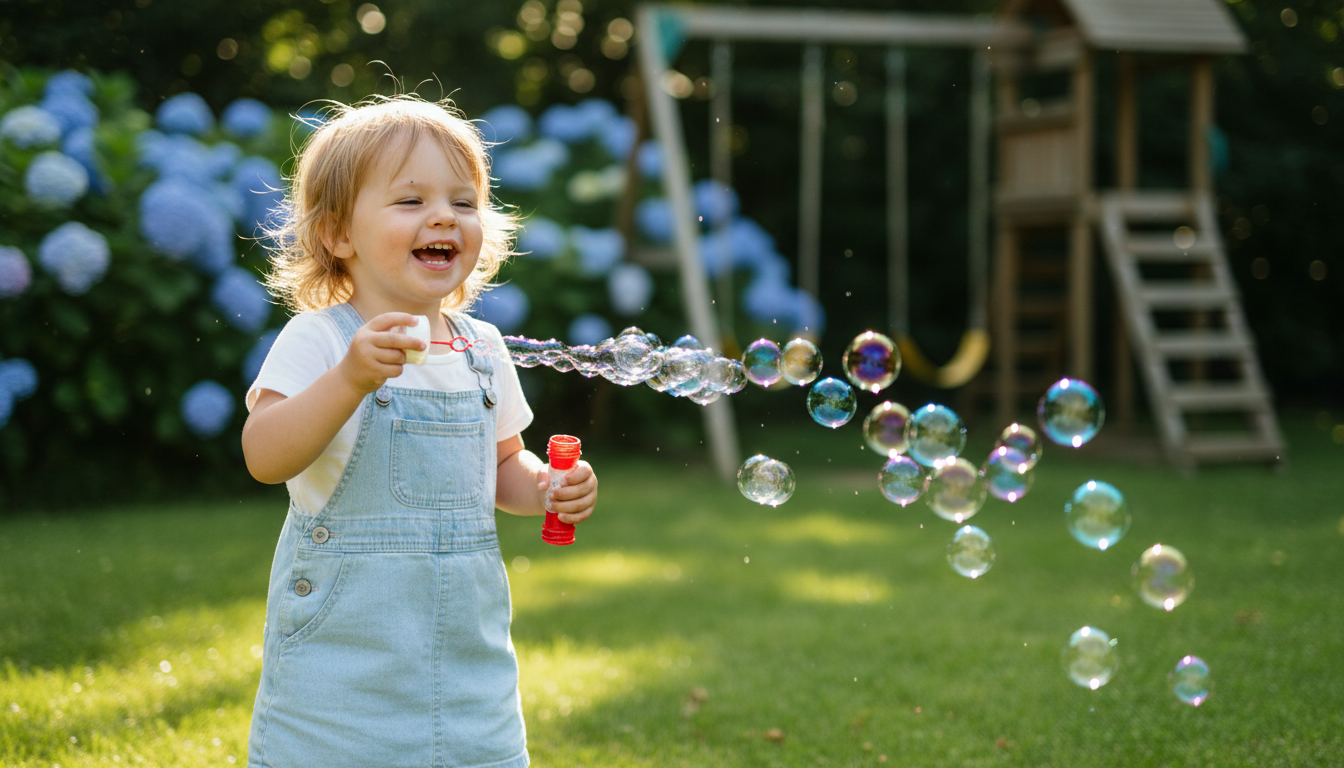
Table of Contents
- Introduction
- 1. Animal Sound Mimicry and the "Animal Kingdom"
- 2. The Power of "More": Teaching Essential Functional Words
- 3. Offering Choices to Build Vocabulary
- 4. Sorting Games for Cognitive Development
- 5. Interactive Shared Reading
- 6. Sensory Scavenger Hunts
- 7. Mirror Me: Imitation and Facial Expressions
- 8. Musical Language and Sing-Alongs
- 9. Visual Schedules and Communication Boards
- 10. Video Modeling: The Peer-to-Peer Effect
- 11. Routine-Based Labeling
- 12. Role-Playing Social Scenarios
- 13. Digital Storytelling with "Smart Screen Time"
- 14. Movement-Based Speech (Action Verbs)
- 15. Cooperative Play and Turn-Taking
- The Science Behind Our Approach
- Understanding the Value of Speech Blubs
- Realistic Expectations for Your Journey
- Setting Up for Success at Home
- Conclusion
- Frequently Asked Questions
Introduction
Did you know that approximately 1 in 4 children will face a speech or language delay during their early development? For families navigating an autism diagnosis, this statistic is often a lived reality. Many children on the spectrum find traditional communication styles challenging, leading to frustration for both the child and the caregiver. Our mission at Speech Blubs is to empower every child to "speak their minds and hearts," providing them with the tools they need to express their feelings, needs, and dreams.

At the core of our approach is the understanding that every child is unique. We don’t just see a diagnosis; we see a child who wants to connect with their world. Whether your child is nonverbal, a "late talker," or struggling with social communication, the right activities can bridge the gap between silence and connection. This blog post will explore fifteen evidence-based, engaging, and joyful autism speech therapy activities you can implement at home today. We will cover everything from sensory-integrated play to the science of video modeling, all designed to foster confidence and a love for learning.
Our goal is to provide you with a practical roadmap that turns "screen time" into "smart screen time," helping your child develop foundational communication skills through the power of play. By the end of this article, you will have a comprehensive toolkit of activities and a deeper understanding of how to support your child’s unique communication journey.
1. Animal Sound Mimicry and the "Animal Kingdom"
Many children with autism show a profound interest in animals. Animal noises are often some of the first sounds a child learns because they are repetitive, rhythmic, and fun to produce. Unlike complex words, a "moo" or a "baa" is a single, distinct sound that feels less intimidating.
For a parent whose 3-year-old "late talker" loves animals, the Animal Kingdom section of our app offers a fun, motivating way to practice these foundational sounds. By watching other children make these noises, your child utilizes mirror neurons to imitate the facial movements and vocalizations.
How to do it at home:
- Set up a toy farm or zoo.
- As you pick up each animal, model the sound clearly.
- Wait for your child to look at you or attempt the sound before moving to the next animal.
- Pair the sound with a physical movement (e.g., flapping arms like a bird).
2. The Power of "More": Teaching Essential Functional Words
Communication is most effective when it leads to a desired outcome. For a child with autism, learning "essential words" like "more," "help," "stop," and "open" can significantly reduce frustration. These words are "functional" because they empower the child to control their environment.

At Speech Blubs, we focus on these high-frequency words because they provide an immediate reward. If a child says "more" and receives another piece of their favorite snack, the value of speech is instantly reinforced.
How to do it at home:
- Give your child a very small portion of a favorite snack or a few bubbles.
- Once they finish, wait.
- Model the word "more" (and the sign for it) and wait for an attempt at communication.
- As soon as they gesture or try to say the word, give them the reward immediately.
3. Offering Choices to Build Vocabulary
Choice-making is a cornerstone of autism speech therapy activities. It encourages the child to use their voice or gestures to express a preference, which is a key step toward independence. It also helps them associate specific words with their physical counterparts.
How to do it at home:
- During morning routines, hold up two different shirts.
- Ask, "Do you want the blue shirt or the red shirt?" while wiggling the corresponding item.
- Wait for your child to point, reach, or attempt to name the color.
- This simple act transforms a passive routine into an active communication opportunity.
4. Sorting Games for Cognitive Development
Sorting and categorizing are not just about organization; they are about understanding how the world is structured. Children with autism often excel at finding patterns. By grouping objects, children learn to identify similarities, differences, and the names of categories.
How to do it at home:
- Use two bins and a pile of mixed items (e.g., plastic fruits and toy cars).
- Label one bin "Food" and the other "Go."
- Help your child sort the items while clearly naming each one: "Apple is food," "Car says zoom!"
- This builds the receptive language skills needed to follow instructions later on.
5. Interactive Shared Reading
Reading with a child on the spectrum requires a different approach than traditional storytime. Instead of reading every word on the page, focus on the "interactive" part. Use books with high-contrast visuals, textures (touch-and-feel), or flaps.
How to do it at home:
- Point to a picture and wait for your child to look.
- Ask simple questions: "Where is the dog?" or "What color is the bird?"
- If your child is nonverbal, they can participate by pointing to the images.
- The goal is shared attention—the "joint engagement" that is so vital for social communication.
6. Sensory Scavenger Hunts
Many children with autism have sensory processing differences. Integrating speech therapy with sensory input can make the learning process more regulated and enjoyable. A scavenger hunt that involves different textures (rough, smooth, squishy) keeps a child engaged and provides a context for new adjectives.
How to do it at home:
- Hide objects with different textures around the room.
- Give your child a "clue" based on the texture: "Find something squishy!"
- When they find the object, model the word: "Squishy ball!"
- You can track your child's progress and see how they respond to different stimuli by using our quick 3-minute preliminary screener, which provides an assessment and a next-steps plan.
7. Mirror Me: Imitation and Facial Expressions
Children with autism may struggle to interpret or produce facial expressions. The "Mirror Me" game helps build oral-motor skills and emotional literacy. Using a mirror allows the child to see their own mouth movements, which is essential for learning how to form specific speech sounds.
How to do it at home:
- Sit in front of a large mirror with your child.
- Make a silly face (e.g., sticking out your tongue or puffing your cheeks).
- Encourage them to "copy" you.
- Move into emotional expressions: "This is a happy face!" "This is a sad face!"
- This mimics our scientific methodology of peer-to-peer video modeling, which has been shown to increase engagement in children with autism.
8. Musical Language and Sing-Alongs
Music is processed in both hemispheres of the brain, making it a powerful tool for speech development. The rhythm and melody of songs like "The Wheels on the Bus" or "Old MacDonald" provide a predictable structure that makes it easier for children to "fill in the blanks."
How to do it at home:
- Sing a familiar song but stop abruptly before a key word.
- For example: "The wheels on the bus go round and..."
- Wait with an expectant look for your child to say "round."
- If they don't say it, model the word and continue. The joy of the music acts as its own reinforcement.
9. Visual Schedules and Communication Boards
For nonverbal children, communication boards or the Picture Exchange Communication System (PECS) can be life-changing. These tools provide a visual bridge to verbal communication. At Speech Blubs, we view these tools as supplements that help reduce frustration while the child works on vocalizing.
How to do it at home:
- Create a simple board with pictures of common needs: "Eat," "Drink," "Toilet," "Play."
- When your child wants something, encourage them to point to the picture.
- Always pair the picture with the spoken word: "Oh, you want to play!"
- This reinforces the connection between the symbol, the word, and the action.
10. Video Modeling: The Peer-to-Peer Effect
One of the most effective autism speech therapy activities is video modeling. Research suggests that children with autism are often more motivated to imitate their peers than adults. Our app utilizes this by featuring thousands of videos of children (our "Blubbers") performing speech exercises.
When a child sees another child successfully making a sound, they feel a sense of "If they can do it, I can too!" This reduces the "performance anxiety" often associated with clinical therapy. You can download Speech Blubs on the App Store to start exploring this unique peer-led approach.
11. Routine-Based Labeling
Consistency is key for children with autism. By narrating your daily routines, you provide a constant stream of language in a context that makes sense. Whether it's bath time, mealtime, or getting dressed, every moment is an opportunity for learning.
How to do it at home:
- Use "self-talk": Narrate what you are doing. "I am washing my hands. Scrub, scrub, scrub!"
- Use "parallel talk": Narrate what your child is doing. "You are jumping! Jump, jump, jump!"
- This helps the child map words onto actions without the pressure of a direct "Say 'apple'" command.
12. Role-Playing Social Scenarios
Social communication (pragmatics) is often a primary area of focus for children on the spectrum. Role-playing helps them practice what to say in specific situations, such as greeting a friend or asking for a turn.
How to do it at home:
- Use dolls or action figures to act out a "playdate."
- Have one toy say, "Hi! Can I play?"
- Help your child guide the other toy to respond: "Yes! Let's play with blocks."
- For a parent whose child struggles with these interactions, practicing in a low-stakes environment like home builds the confidence needed for the playground.
13. Digital Storytelling with "Smart Screen Time"
Not all screen time is created equal. While passive viewing of cartoons can lead to "zoning out," interactive apps can stimulate language centers. Speech Blubs was created by founders who grew up with speech problems themselves; they designed the tool they wished they had—one that blends scientific principles with pure joy.
By participating in interactive stories where the child must make sounds to progress, the screen becomes a bridge to the real world. You can get Speech Blubs on Google Play to see how our storytelling sections encourage active participation.
14. Movement-Based Speech (Action Verbs)
Many children with autism are "kinesthetic learners"—they learn best when their bodies are moving. Pairing action verbs with the actual movement helps solidify the meaning of the word.
How to do it at home:
- Play a version of "Simon Says."
- Instead of complex commands, focus on single verbs: "Jump!" "Spin!" "Clap!" "Run!"
- Perform the action together while shouting the word.
- This physical involvement helps with "word retrieval"—the ability to find the right word when they need it.
15. Cooperative Play and Turn-Taking
Communication is a two-way street. Turn-taking is the physical manifestation of a conversation. Games that require waiting and responding are excellent for developing the social-emotional foundations of speech.
How to do it at home:
- Use a simple ball or car.
- Roll it to your child and say, "My turn!"
- Encourage them to roll it back and prompt them to say (or sign) "Your turn!"
- This repetitive, back-and-forth flow is the exact structure of a spoken conversation.
The Science Behind Our Approach
Why do these activities work? At Speech Blubs, we rely on the concept of Video Modeling. When children watch their peers on screen, it activates their mirror neurons. These are special brain cells that fire both when an individual performs an action and when they observe someone else performing that same action. For a child with autism, this visual "blueprint" of how to move their mouth, use their breath, and form a smile is much more effective than verbal instructions alone.
Our method is backed by science, placing us in the top tier of speech apps worldwide. We don’t just want to teach children to talk; we want to foster a love for communication. To see the impact of this approach, we encourage you to read testimonials from other parents who have seen their children’s confidence soar.
Understanding the Value of Speech Blubs
We believe in transparency and providing the best possible value for families. We know that speech therapy can be expensive and difficult to access, which is why we’ve created a flexible pricing structure to suit every household.
Our current plans are:
- Monthly Subscription: $14.99 per month.
- Yearly Subscription: $59.99 per year.
While the monthly plan is a great way to test the waters, the Yearly Plan is our best value. When you choose the yearly option, the cost breaks down to just $4.99 per month—a savings of 66%!
Furthermore, the Yearly Plan includes exclusive features that the monthly plan does not:
- A 7-day free trial to ensure the app is the right fit for your child.
- The Reading Blubs app, which helps transition speech skills into early literacy.
- Early access to all new updates and content.
- 24-hour support response time from our dedicated team.
We recommend the Yearly Plan for families who are committed to making speech practice a joyful, consistent part of their daily routine. You can create your account and begin your 7-day free trial today to see the difference for yourself.
Realistic Expectations for Your Journey
It is important to remember that progress in speech development is rarely a straight line. There will be days of incredible breakthroughs and days where it feels like you are standing still. Our app is a powerful supplement to your child’s overall development plan and can be used alongside professional therapy with a Speech-Language Pathologist (SLP).
We don’t promise that your child will be giving public speeches in a month. Instead, we focus on the small, beautiful victories: the first time they look you in the eye while making a sound, the reduction in frustration when they can finally say "help," and the joyful family learning moments you create together. We are here to help your child find their voice, one "blub" at a time.
Setting Up for Success at Home
To get the most out of these autism speech therapy activities, consider these tips for your home environment:
- Minimize Distractions: Turn off background TVs or loud music to help your child focus on the sounds you are making.
- Get Down on Their Level: Sit on the floor so you are at eye level with your child. This makes it easier for them to observe your facial expressions.
- Follow Their Lead: If your child is obsessed with dinosaurs today, do all your speech activities with dinosaurs! Motivation is the engine of learning.
- Keep it Short: Five to ten minutes of high-quality, engaged play is better than thirty minutes of forced practice.
- Celebrate Everything: Every attempt at a sound, every gesture, and every moment of shared attention is a win.
Conclusion
Supporting a child with autism in their communication journey is one of the most rewarding challenges a parent can face. By incorporating these fifteen autism speech therapy activities into your daily life, you are doing more than just teaching words; you are building a bridge of connection and understanding. From the simplicity of animal noises to the advanced peer-led learning found in our app, every step you take brings your child closer to speaking their mind and heart.
At Speech Blubs, we are honored to be a part of your family’s story. We provide a screen-free alternative to passive viewing and a tool that encourages adult co-play and connection. Our "smart screen time" experiences are designed to be effective, effective, and—most importantly—joyful.
Ready to take the next step? Download Speech Blubs on the App Store or Google Play to begin. Remember to choose the Yearly Plan to unlock your 7-day free trial, the Reading Blubs app, and the best long-term value for your child’s development. Together, let's help your child find the words to share their world with you.
Frequently Asked Questions
1. How often should we do these activities?
Consistency is more important than duration. We recommend aiming for 10-15 minutes of dedicated "speech play" once or twice a day. Many parents find success by integrating these activities into existing routines, like during bath time or right after a snack when the child is most regulated.
2. My child is completely nonverbal. Will these activities still work?
Absolutely. Many of these activities, such as choice-making, sorting, and using communication boards, are designed specifically to build "pre-linguistic" skills. These are the foundational blocks—like imitation, joint attention, and understanding cause-and-effect—that must be in place before verbal speech can emerge.
3. Is the Speech Blubs app a replacement for professional speech therapy?
No, we view our app as a powerful supplement to professional therapy. While Speech Blubs provides high-quality, scientifically-backed exercises, a licensed Speech-Language Pathologist (SLP) can provide a clinical diagnosis and highly personalized treatment plan. Our app is a great tool for "homework" between professional sessions.
4. Why does Speech Blubs focus on videos of other children?
This is based on the principle of peer-led video modeling. Children with autism often find adults' facial movements complex and overwhelming. Peers provide a more relatable and motivating model. When a child sees someone who looks like them successfully completing a task, it activates their mirror neurons and boosts their confidence to try it themselves.
About the author