
15 Fun and Easy Toddler Halloween Craft Ideas
 By Speech Blubs Team•Feb 20, 2026•16 min.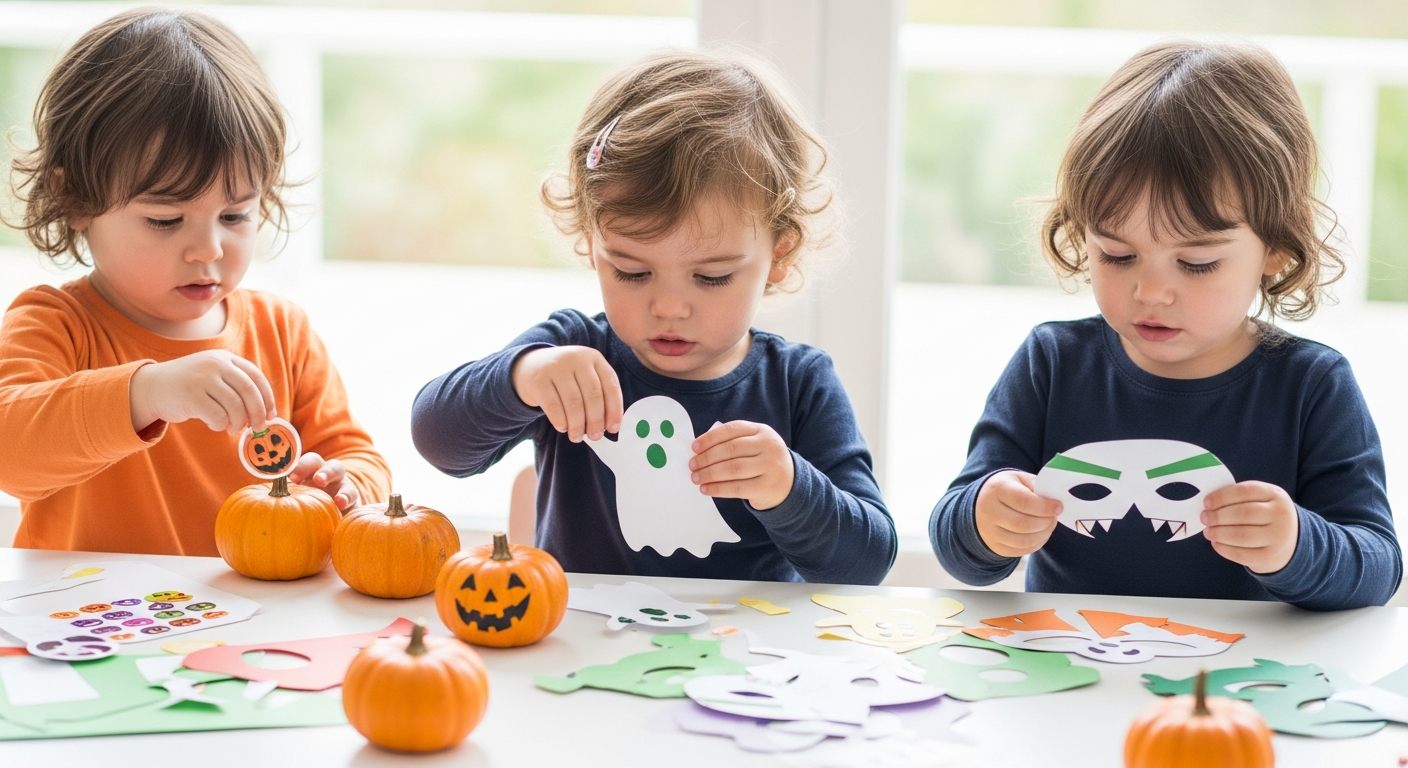
Table of Contents
- Introduction
- The Connection Between Crafting and Communication
- 1. The Classic Paper Plate Pumpkin
- 2. Handprint Ghosts: A Spooky Keepsake
- 3. Cotton Ball Ghosts
- 4. Toilet Paper Roll Bats
- 5. Dot Sticker Pumpkins: The No-Mess Miracle
- 6. Shaving Cream Pumpkin Marbling
- 7. Jell-O Monster Eyes: An Edible Adventure
- 8. Cookie Cutter Stamping
- 9. Torn Paper Pumpkins
- 10. Fizzy Pumpkin Painting (The Science Craft)
- 11. Shape Monsters
- 12. Yarn-Wrapped Mummies
- 13. Straw Blown Ghost Art
- 14. Paper Plate Spiders
- 15. Candy Corn Collage
- How Speech Blubs Enhances the Crafting Experience
- Is Your Child Meeting Their Milestones?
- Making the Most of the Season: Practical Tips for Parents
- Why Choose Speech Blubs This Halloween?
- Conclusion
- Frequently Asked Questions
Introduction
Have you ever spent an hour prepping a beautiful Pinterest-worthy craft, only for your toddler to spend thirty seconds "painting" their own forehead before running away to chase the dog? If so, you aren’t alone. Crafting with little ones can often feel like a chaotic whirlwind of glue sticks and glitter, but at Speech Blubs, we believe these messy moments are where the real magic happens. Halloween provides a uniquely festive backdrop for what we call "smart screen time" and active play—opportunities for your child to explore new textures, learn new words, and build the confidence they need to speak their minds and hearts.

The purpose of this guide is to provide you with a curated list of every easy toddler halloween craft we’ve tested and loved. We aren’t looking for museum-quality art; we are looking for activities that foster fine motor skills, encourage imitation, and spark joyful family connections. In this post, we will cover 15 simple, engaging projects ranging from paper plate pumpkins to sensory "monster eyes," while explaining the developmental science behind why these activities matter.
Our main message is simple: you don't need a degree in art or a bottomless bin of expensive supplies to support your child’s development. By combining these hands-on activities with the peer-led video modeling found in the Speech Blubs app, you can turn the spooky season into a powerful leap forward in your child’s communication journey.
The Connection Between Crafting and Communication
Before we dive into the glue and paint, it’s important to understand why we advocate for these activities. At Speech Blubs, our founders grew up with speech challenges themselves. They created the tool they wished they had—a solution that blends scientific principles with the pure joy of play. When a child engages in an easy toddler halloween craft, they aren't just making a decoration; they are practicing "joint attention." This is a foundational skill where a child and an adult focus on the same object together, which is a critical precursor to language development.
Our approach is rooted in the concept of video modeling. This scientific methodology involves children learning by watching their peers perform certain actions or sounds. We’ve seen how powerful it is for a child to see another child succeed. You can mirror this during craft time. When you say, "Look, I’m sticking the eye on the monster," and your child imitates you, they are utilizing their mirror neurons—the same neurological pathways we activate in our app to help children learn new sounds and words.
1. The Classic Paper Plate Pumpkin
This is perhaps the most iconic easy toddler halloween craft for a reason. It requires minimal supplies and offers high engagement.

- How to do it: Give your toddler an orange paper plate (or have them paint a white one orange). Provide pre-cut black triangles for eyes and a mouth. Let them choose where the pieces go.
- Speech Tip: This is a fantastic opportunity to work on facial features. Use the "mouth" and "eyes" to practice those specific words. If your child is using the Speech Blubs app, you can follow up this craft by visiting the "Face Bonanza" section to see other kids making funny faces.
- Value: It teaches shape recognition (triangles, circles) and spatial awareness.
2. Handprint Ghosts: A Spooky Keepsake
While we usually prioritize the process over the final product, some keepsakes are too cute to pass up.
- How to do it: Paint your child's hand with non-toxic white paint and press it onto black construction paper with the fingers pointing down. Once it dries, add googly eyes or draw a "boo" mouth with a black marker.
- Speech Tip: Practice the "B" sound. The word "Boo!" is a great "power word"—a short, explosive sound that is often easier for late talkers to master.
- Safety First: Always use washable, child-safe paints for any activity involving skin contact.
3. Cotton Ball Ghosts
Tactile exploration is key for toddlers who are still making sense of the world through touch.
- How to do it: Draw a simple ghost outline on a piece of cardstock. Let your toddler spread glue (or use a glue stick) inside the lines and press fluffy cotton balls onto the surface.
- Why it works: The soft texture of the cotton balls provides a sensory experience that can be very calming for some children. It also works on the "pincer grasp"—the ability to pick up small objects with the thumb and forefinger—which is essential for later writing skills.
4. Toilet Paper Roll Bats
Don't throw away those empty rolls! They are the perfect base for a three-dimensional friend.
- How to do it: Paint a toilet paper roll black. Cut out two simple wing shapes from black paper and help your child glue them to the sides. Add googly eyes and maybe some tiny white fangs.
- Integration: For a child who loves animals, this is a great bridge to our "Animal Kingdom" section. While bats are "spooky," they are also fascinating creatures. You can watch the "Bat" video in the app to hear the sounds they make and see peer models imitating them.
5. Dot Sticker Pumpkins: The No-Mess Miracle
If you are having a high-stress day and can't handle the thought of paint, this is the easy toddler halloween craft for you.
- How to do it: Buy a real pumpkin (a small "pie" pumpkin works best) and a pack of colorful dot stickers. Let your toddler go wild sticking them all over the pumpkin.
- The Skill: Peeling stickers is an incredible fine motor workout. It requires focus, coordination, and patience.
- The Conversation: Talk about the colors. "Can you find a blue sticker? Where does the red one go?" This builds color vocabulary in a natural, low-pressure environment.
6. Shaving Cream Pumpkin Marbling
This is a "contained mess" activity that toddlers absolutely adore.
- How to do it: Fill a tray with white shaving cream and drop in some orange food coloring. Let your child swirl it around with a stick. Press a pumpkin-shaped piece of cardstock onto the foam, lift it, and scrape off the excess cream to reveal a beautiful marbled pattern.
- Sensory Science: Sensory play like this helps "wire" the brain for learning. It can help children who are sensory-sensitive become more comfortable with different textures, which can even translate to being less picky with food textures!
7. Jell-O Monster Eyes: An Edible Adventure
For the very young toddlers who still put everything in their mouths, we recommend edible crafts.
- How to do it: Make a batch of green or purple Jell-O in a shallow pan. Hide large "monster eyes" (like plastic eggs or large grapes) inside.
- The Play: Let your child squish through the Jell-O to "rescue" the eyes.
- Language Building: Use descriptive words like "cold," "squishy," "sticky," and "wobbly." These adjectives help expand a child’s descriptive vocabulary beyond just nouns.
8. Cookie Cutter Stamping
This activity is great for developing hand-eye coordination.
- How to do it: Use Halloween-themed cookie cutters (bats, pumpkins, ghosts) as stamps. Dip them in a shallow dish of paint and press them onto paper.
- Why we love it: It provides instant gratification. The child sees a clear result for their action, which builds a sense of agency and confidence. If you're looking for more ways to build that confidence, check out our parent testimonials to see how other families have used play to empower their children.
9. Torn Paper Pumpkins
This is a fantastic way to use up scraps of orange construction paper.
- How to do it: Instead of using scissors (which can be frustrating for toddlers), have them tear orange paper into small pieces. Glue these pieces onto a pumpkin outline.
- The Benefit: Tearing paper strengthens the small muscles in the hands. It's a foundational skill that many parents overlook but is vital for physical development.
10. Fizzy Pumpkin Painting (The Science Craft)
Combine art with a little "magic" to keep a toddler's short attention span engaged.
- How to do it: Mix baking soda into your orange paint. Have your toddler paint a pumpkin. Then, give them a small dropper of vinegar to squeeze onto their painting. Watch it fizz!
- The "Wow" Factor: This introduces the concept of cause and effect. "I put the liquid on, and it went pop!" This excitement is a perfect motivator for vocalization.
11. Shape Monsters
Building a monster out of shapes is a great way to sneak in some educational content.
- How to do it: Cut out various shapes (squares, circles, triangles, rectangles) from different colored paper. Tell your child, "Let’s make a monster with a square body and three circle eyes!"
- Speech Development: This follows the "follow the lead" philosophy. If your child wants a triangle head, go with it! This empowers them to make choices and communicate their preferences.
12. Yarn-Wrapped Mummies
This is a wonderful activity for bilateral coordination (using both sides of the body together).
- How to do it: Cut a "person" shape out of cardboard. Give your toddler some white yarn and show them how to wrap it around and around the cardboard to make a mummy.
- The Skill: One hand holds the cardboard while the other moves the yarn. This "crossing the midline" is a major developmental milestone.
13. Straw Blown Ghost Art
This activity is actually a secret speech therapy tool!
- How to do it: Put a blob of slightly watery white paint on black paper. Give your child a straw and have them blow through it to move the paint around, creating a "whispy" ghost shape.
- The Secret: Blowing through a straw helps develop oral motor strength. It teaches children how to control their breath, which is essential for producing clear speech sounds. We often use similar "breath control" exercises in our scientific methodology.
14. Paper Plate Spiders
Spiders don't have to be scary—they can be colorful and silly!
- How to do it: Paint a plate black. Use a hole punch to make four holes on each side. Have your toddler thread pipe cleaners through the holes to make legs.
- Why it works: Threading is a complex task for a toddler. It requires focus and fine motor precision. It’s a "quiet time" craft that can help a child settle down before nap time.
15. Candy Corn Collage
While the candy itself might be a sugar rush, the craft is a great lesson in patterns.
- How to do it: Draw a large triangle. Divide it into three sections. Have your child glue yellow paper at the bottom, orange in the middle, and white at the top (or use buttons, beads, or tissue paper).
- Cognitive Skill: This introduces the concept of categorization and sequencing—important building blocks for both math and logical speaking.
How Speech Blubs Enhances the Crafting Experience
At Speech Blubs, we believe in "smart screen time." This means that when your child is using our app, they aren't just passively watching a cartoon; they are actively participating in a learning experience. After you finish an easy toddler halloween craft, you can use the app to reinforce the concepts your child just practiced.
For example, if you just made a "Paper Plate Spider," you can open the Speech Blubs app and find the spider in the "Animal Kingdom" section. Your child will see a peer model making the "Sss" sound or imitating the crawling motion of a spider. This "see it, do it" cycle is incredibly effective for children who need a little extra help with their communication skills.
We provide a screen-free alternative to passive viewing. Our app is designed to be used with a parent. Just as you sit on the floor and help with the glue stick, you can sit with your child and cheer them on as they mimic the kids in our videos. This builds a powerful tool for family connection.
Is Your Child Meeting Their Milestones?
As you engage in these crafts, you might find yourself wondering if your child’s speech is on track. Perhaps they aren’t quite making the sounds you expect, or they are struggling to follow simple directions during craft time.
If you are uncertain, we are here to help. We offer a quick 3-minute preliminary screener. It involves 9 simple questions about your child's communication habits and provides you with an immediate assessment and a customized next-steps plan. It’s a great way to get peace of mind or identify if your child could benefit from extra support.
Making the Most of the Season: Practical Tips for Parents
Crafting with toddlers is about the journey, not the destination. Here are a few tips to keep the experience joyful rather than stressful:
- Lower Your Expectations: Your toddler's ghost might look like a white blob. Their pumpkin might have 40 eyes and no mouth. That’s okay! In fact, it’s great. It shows they are exploring their own creativity.
- Narrate Everything: "I see you are using the blue paint." "That's a very big circle." "The glue feels sticky, doesn't it?" This constant stream of "language nutrition" helps their brains map words to objects and actions.
- Prepare the Space: Use an old tablecloth or a "craft mat" (an old shower curtain works wonders). If you aren't worried about the carpet, you'll be more patient with the process.
- Keep it Short: Toddler attention spans are measured in minutes, not hours. If they are "done" after five minutes, let them be done. You can always come back to it later.
Why Choose Speech Blubs This Halloween?
We know that 1 in 4 children will need some form of speech support during their development. Our mission is to provide an immediate, effective, and joyful solution for those families. We want every child to be able to "speak their minds and hearts," whether they are telling you they love their "spooky ghost" or simply asking for more glue.
Our app is a powerful supplement to your child's overall development plan. While it doesn't replace professional therapy, it is an excellent tool for building foundational skills like imitation, sound production, and vocabulary expansion. We focus on fostering a love for communication and reducing the frustration that often comes when a child can't make themselves understood.
Transparent Pricing and Unbeatable Value
We want to be transparent about how you can join our community. We offer two main plans designed to fit different family needs:
- Monthly Plan: For $14.99 per month, you get full access to our library of over 1,500 activities and the video modeling tools that have helped millions of children.
- Yearly Plan (Best Value): Our yearly plan is only $59.99 per year. When you break that down, it’s just $4.99 per month—a 66% savings compared to the monthly rate.
Why the Yearly Plan is the clear choice: When you choose the Yearly plan, you don't just save money; you get access to our full suite of premium features, including:
- A 7-day free trial so you can explore the app risk-free.
- The Reading Blubs app, which focuses on early literacy and phonics.
- Early access to all new updates and content releases.
- Priority 24-hour support response time.
The Monthly plan does not include the free trial or the Reading Blubs app. To give your child the most comprehensive support, we highly recommend the Yearly plan.
Conclusion
Halloween is a time for imagination, exploration, and, of course, a little bit of mess. Every easy toddler halloween craft on this list is more than just a way to kill time on a rainy October afternoon. They are intentional opportunities to build fine motor skills, foster joint attention, and create "language-rich" moments that help your child grow.
By pairing these hands-on activities with the science-backed video modeling in the Speech Blubs app, you are giving your child a head start in their communication journey. Whether they are mimicking a peer's "O" shape to say "Orange" or learning to describe the "soft" cotton on their ghost, these small steps lead to big milestones.
Are you ready to turn screen time into "smart time"? Don't wait until the pumpkins are carved and the candy is gone. Start your journey today and see why millions of parents trust us to help their children find their voices.
Ready to get started? Create your account and begin your 7-day free trial today by choosing our Yearly plan for the best value and the full suite of Speech Blubs features.
Frequently Asked Questions
What is the best age to start doing Halloween crafts with my toddler?
Most children can begin engaging in very simple crafts around 18 months to 2 years old. At this age, focus on "process art" like finger painting or sticker placement rather than a finished product. Always ensure that materials are non-toxic and that you are providing close supervision to prevent any small parts from being swallowed.
How can these crafts actually help my child's speech?
Crafts encourage "functional communication." During an activity, a child has many reasons to speak: to request more glue, to comment on a color, or to ask for help. By narrating your actions and encouraging your child to imitate sounds (like "Boo" for a ghost or "Sss" for a spider), you are building the neural pathways required for speech.
What if my child has a very short attention span?
That is completely normal for a toddler! To keep them engaged, choose crafts that have an immediate result, like the "Dot Sticker Pumpkin" or "Cookie Cutter Stamping." If they lose interest, don't force it. The goal is to keep the experience positive and joyful, as children learn best when they are having fun.
Does the Speech Blubs app replace the need for hands-on crafting?
Not at all! We view our app as a powerful supplement to real-world play. The Speech Blubs homepage explains our philosophy of "active" screen time. While the app provides the modeling and scientific structure, hands-on crafts provide the tactile and sensory experiences that are equally vital for a child's holistic development.
About the author