
25 Best Toddler Rainy Day Activities to Beat Boredom
 By Speech Blubs Team•Mar 25, 2026•15 min.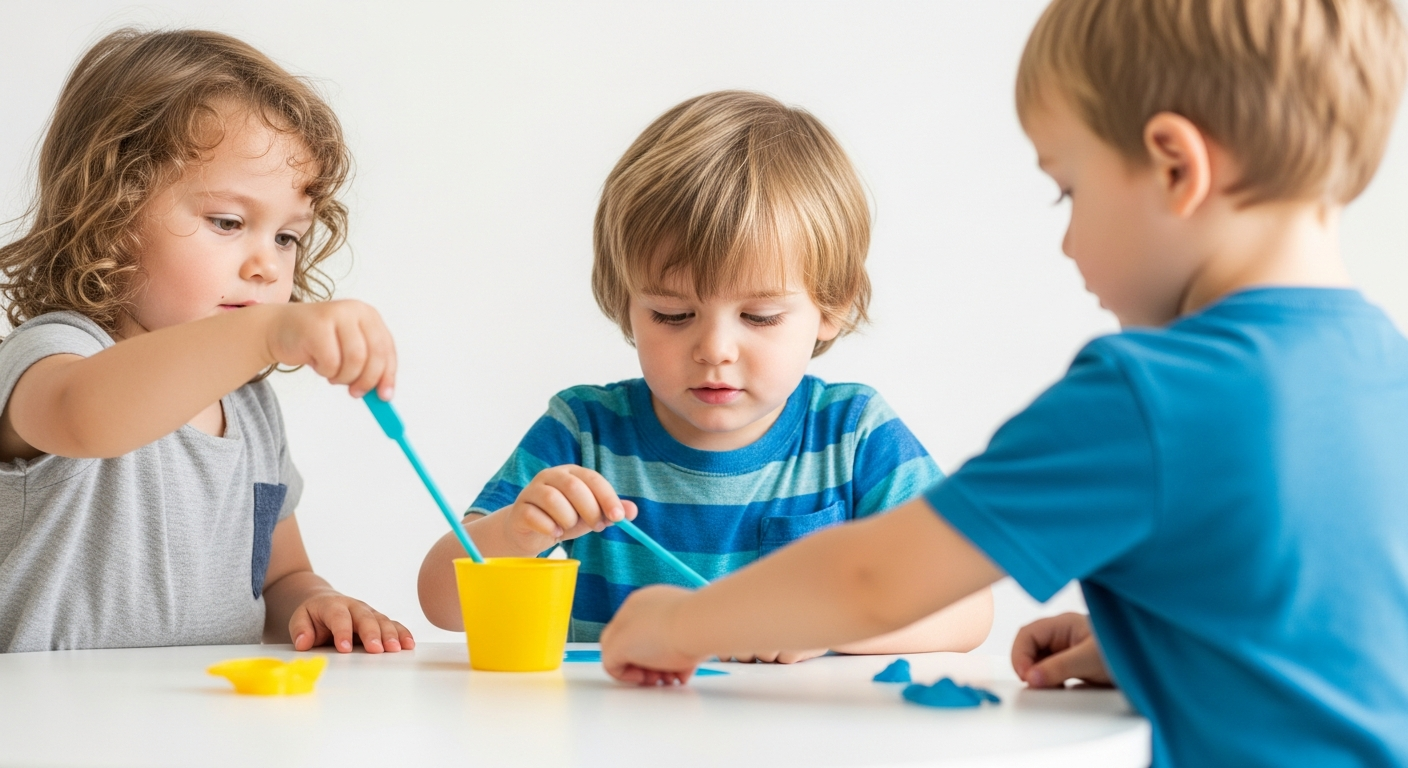
Table of Contents
- Introduction
- Why Rainy Day Play Matters for Development
- High-Energy "Energy Busters" for Rainy Days
- Fine Motor and Sensory Play Ideas
- Using "Smart Screen Time" as a Tool
- Creative and Imaginative Play
- Encouraging Independent Play (The Gift of Boredom)
- Kitchen Fun: Toddler "Cooking"
- Setting Realistic Expectations
- Transitioning Out of Play
- Making the Most of the Yearly Plan
- Summary of Activities
- Conclusion
- Frequently Asked Questions
Introduction
It’s 7:00 AM on a Tuesday, and the rhythmic drumming of raindrops against the windowpane is the first thing you hear. For many parents, that sound isn’t just a weather report—it’s a signal that the day’s plans for the park, the playground, or even a simple walk around the block have been washed away. If you are currently staring at a toddler who has enough energy to power a small city and you’re wondering how to keep them engaged without the living room turning into a scene from a disaster movie, you are not alone. In fact, finding creative ways to channel that toddler energy indoors is one of the most common challenges we hear about from the families in our community.
At Speech Blubs, we understand that these "stuck inside" moments are more than just a logistical hurdle; they are golden opportunities for connection, growth, and language development. Our mission is to empower children to speak their minds and hearts, and we believe that the best learning happens through joyful, active play. Whether it is through a high-energy obstacle course or a quiet session of "smart screen time" using our app, every rainy day can be a step forward in your child’s development.

In this post, we’re going to dive deep into a treasure trove of toddler rainy day activities. We will cover everything from high-octane "energy busters" to fine motor skill-builders and sensory play ideas. We’ll also discuss how to integrate language-rich moments into your day and how tools like Speech Blubs can supplement your child’s learning journey. By the end of this guide, you’ll have a complete roadmap for transforming a gloomy afternoon into a day filled with laughter, learning, and meaningful milestones.
Why Rainy Day Play Matters for Development
When the weather keeps us indoors, it’s easy to feel like the day is "on hold." However, for a toddler, every environment is a classroom. Indoor play offers unique benefits that outdoor play sometimes lacks. It encourages kids to focus on smaller details, navigate tighter spaces (improving spatial awareness), and engage in more verbal interaction with their caregivers.
At Speech Blubs, our company was born from the personal experiences of our founders, who all grew up with speech problems. They created the tool they wished they had—one that blends scientific principles with pure joy. We know that 1 in 4 children will need speech support at some point, and many of those children benefit immensely from the intentional, face-to-face play that happens during these indoor days.
Rainy day activities aren’t just about "killing time." They are about:
- Building Vocabulary: New activities introduce new words (e.g., "sticky," "bouncy," "under," "through").
- Strengthening Fine Motor Skills: Activities like threading or painting prepare tiny hands for writing.
- Emotional Regulation: Physical play helps burn off the "wiggles" that can lead to frustration and meltdowns.
- Confidence: Completing a DIY craft or an indoor "mission" builds a sense of accomplishment.
High-Energy "Energy Busters" for Rainy Days
When a toddler can’t run in the grass, that energy has to go somewhere. Instead of letting them climb the doorframes (though we’ve all been there!), try these structured activities to get their heart rates up and their smiles wide.

1. The Living Room Obstacle Course
This is the gold standard of toddler rainy day activities. Use what you have: couch cushions become mountains to climb, a row of kitchen chairs becomes a tunnel to crawl through, and a line of painter’s tape on the carpet becomes a "tightrope."
- Speech Connection: Use directional words as they navigate the course. "Can you go under the table?" "Now, jump over the pillow!" This helps them understand prepositions in a physical, memorable way.
2. Mattress or Pillow "Crashing"
If you have a spare crib mattress or a mountain of bed pillows, create a designated "crash zone." Let your toddler run (safely) and fall into the soft pile.
- Safety Tip: Always supervise this and ensure the landing area is clear of hard edges or furniture.
- Speech Connection: Practice "Ready... Set... GO!" This simple routine is fantastic for teaching anticipation and the power of a single, functional word.
3. Balloon Hockey
All you need are a few balloons and some "sticks" (fly swatters, rolled-up newspapers, or even wooden spoons). The goal is to keep the balloon in the air or hit it toward a "goal" (a laundry basket).
- Why it works: Balloons move slowly, giving toddlers more time to react and coordinate their movements compared to a heavy ball.
4. Crab Walks and Animal Races
Challenge your child to move like different animals. "Can you crawl like a bear?" "Can you scuttle like a crab?"
- Speech Connection: This is the perfect time to pair movements with sounds. While they are "being" a lion, they can practice their best "ROAR!" If they are a bird, they can "tweet." For a child who loves animals, this mimics the "Animal Kingdom" section of our app, where children learn by watching and imitating their peers. You can download Speech Blubs on the App Store to see this peer modeling in action.
Fine Motor and Sensory Play Ideas
Once the big wiggles are out, it’s time to focus on "quiet" play that challenges their brains and small muscle groups.
5. The "Pom Pom Push"
Take a plastic container (like an empty yogurt tub) and cut a small hole in the lid. Give your toddler a bowl of colorful craft pom-poms and let them push the pom-poms through the hole.
- Make it harder: Draw colored circles around different holes and ask them to match the blue pom-pom to the blue hole. This builds both motor skills and color recognition.
6. Ziploc Bag Fingerpainting
If you want to avoid the mess of traditional painting, put a few squirts of paint into a gallon-sized Ziploc bag. Seal it tightly (and tape the seal for extra security), then tape the bag to a table or window. Your toddler can "paint" by moving the colors around through the plastic.
- Learning Moment: Talk about what happens when blue and yellow mix. "Look! It turned into green!"
7. DIY Sensory Bins
A large plastic bin filled with dried beans, rice, or even water can keep a toddler occupied for an hour. Add small toy dinosaurs, measuring cups, and spoons.
- Why it's great: Sensory play is incredibly calming for many children. It allows them to explore textures and weights in a controlled environment.
- Note: If you are unsure if your child is hitting their sensory or communication milestones, take our quick 3-minute preliminary screener to get a simple assessment and a personalized next-steps plan.
8. Toy Car Wash
Fill a bin with soapy water and another with clean water. Give your child a few "dirty" toy cars and a scrub brush or cloth.
- Speech Connection: Focus on the "scrub-scrub-scrub" sound and the concepts of "dirty" and "clean."
Using "Smart Screen Time" as a Tool
We know that many parents feel guilty about using screens on rainy days. However, there is a massive difference between passive viewing (like watching endless cartoons) and interactive, educational tools. We advocate for "smart screen time"—experiences that are active, educational, and designed to be shared with a parent.
Our approach at Speech Blubs is rooted in the scientific methodology of video modeling. This isn't just a fancy term; it's a powerful way children learn. By watching videos of other children (their peers) performing actions or saying words, toddlers are naturally motivated to imitate. This activates "mirror neurons" in the brain, helping them pick up new communication skills more effectively than they might by watching a cartoon character.
How to Use the App on a Rainy Day
- Co-Play: Sit with your child. When the child on the screen says "Apple," you say "Apple" too!
- Use the Face Filters: Our fun, interactive filters turn your child into the character they are learning about, making the experience joyful and "silly."
- Bridge to Reality: If you just finished the "Yummy Time" section in the app, head to the kitchen and find a real piece of fruit to talk about.
To get the most out of these features, we highly recommend our Yearly Plan. While our monthly subscription is $14.99, the Yearly Plan is just $59.99 per year—which breaks down to only $4.99 per month. Choosing the Yearly Plan is the best value because it includes:
- A 7-day free trial to explore everything risk-free.
- The Reading Blubs app, designed to help with early literacy.
- Early access to all new updates and 24-hour support response times.
You can sign up on our website to start your trial and see why we are a favorite tool for parents worldwide.
Creative and Imaginative Play
Rainy days are the perfect backdrop for "make-believe." These activities require very little "stuff" but plenty of imagination.
9. The Classic Blanket Fort
Never underestimate the power of a few blankets draped over the dining room table. A fort isn't just a hiding spot; it’s a castle, a spaceship, or a cave.
- Activity: Bring a flashlight inside and read books together. This creates a cozy, low-stimulation environment that is perfect for bonding.
10. Cardboard Box Spaceship
If you have a large delivery box, don't throw it out! Give your child some crayons or stickers to decorate the "control panel."
- Scenario: For a parent whose 3-year-old "late talker" loves anything that goes "zoom," a cardboard spaceship offers a motivating way to practice "3, 2, 1... Blast off!"
11. Household Treasure Hunt
Hide a favorite toy or a few "treasures" (like shiny spoons or colorful socks) around a single room. Give your toddler simple clues: "It’s hiding under something blue!"
- Developmental Benefit: This builds problem-solving skills and teaches them to follow multi-step directions.
Encouraging Independent Play (The Gift of Boredom)
While we love playing with our kids, it’s important to remember that you don’t have to be the "entertainment director" every single second of a rainy day. In fact, a little bit of boredom is a good thing. It forces toddlers to use their own creativity to find something to do.
According to child development experts, kids who are allowed to experience boredom often develop better self-regulation and imaginative skills. If your toddler is safe and has access to their toys, it’s okay to let them wander and "figure it out" for 10 or 15 minutes while you enjoy a warm cup of coffee. This builds self-reliance and reduces codependency.
Kitchen Fun: Toddler "Cooking"
The kitchen is often the heart of the home, and it’s a fantastic place for toddler rainy day activities that teach life skills.
12. Sifting and Pouring
Give your toddler two bowls—one filled with dry pasta or flour and one empty. Give them a measuring cup and let them practice pouring from one to the other.
- What they learn: Volume, gravity, and hand-eye coordination.
13. Dough Play
Whether it’s store-bought playdough or a simple mix of flour and water, squishing dough is a great sensory experience.
- Speech Connection: Use action words like "squish," "roll," "cut," and "flat."
Setting Realistic Expectations
As you try these toddler rainy day activities, remember that every child is different. Some might spend 40 minutes engrossed in a sensory bin, while others might "finish" it in two minutes. That is perfectly normal!
Our goal at Speech Blubs isn't to promise that your child will be giving public speeches in a month. Instead, we want to help you foster a love for communication, build your child's confidence, and reduce the frustration that often comes with speech delays. We see our app as a powerful supplement to your child’s overall development and, when applicable, professional therapy. You can read many parent success stories on our website to see how other families have used our tools to create joyful learning moments.
Transitioning Out of Play
One of the hardest parts of indoor days is moving from one activity to the next. Toddlers often struggle with transitions, which can lead to tantrums.
- The 5-Minute Warning: Always give a heads-up. "In five minutes, we are going to clean up the cars and have a snack."
- The Clean-Up Song: Make the transition part of the play. "Can we put the blocks in the box as fast as a race car?"
- Schedule a "Rest" Period: After high-energy play, follow up with a quiet activity like looking at pictures in a book or using Speech Blubs. This helps their nervous system "level down."
Making the Most of the Yearly Plan
We’ve mentioned the value of our Yearly Plan, but let’s look closer at why it’s the best choice for families who want a consistent, high-quality resource. For $59.99 (saving you 66% compared to the monthly rate), you get a year-long partner in your child’s development.
The inclusion of Reading Blubs is particularly important. Early language skills are the foundation for reading. By starting with the speech exercises in Speech Blubs and moving into the literacy activities in Reading Blubs, you are providing a comprehensive educational path. Plus, having 24-hour support means if you ever have a question about how to use a certain feature, we are here to help immediately.
Ready to start your journey? Download Speech Blubs on Google Play or the App Store today to begin your 7-day free trial.
Summary of Activities
If you’re feeling overwhelmed by the options, here is a quick "Rainy Day Cheat Sheet" you can refer to:
CategoryActivityMaterials Needed
High Energy
Obstacle Course
Cushions, chairs, tape
Fine Motor
Pom Pom Push
Container, pom poms
Sensory
Toy Car Wash
Bin, soap, toy cars
Creative
Blanket Fort
Blankets, pillows
Language
Speech Blubs App
Tablet or phone
Quiet Play
Treasure Hunt
3-4 favorite toys
Conclusion
Rainy days don’t have to be a source of stress. While it’s tempting to count the minutes until bedtime, these indoor hours are actually a gift. They allow us to slow down, get on the floor with our little ones, and see the world through their eyes. Whether you are building a fort, scrubbing toy cars, or watching your child light up as they imitate a peer on Speech Blubs, you are doing the important work of building their brain and their heart.
Remember, you are your child's best teacher and most important playmate. By choosing activities that are engaging and developmentally appropriate, you are helping them build the skills they need to "speak their minds and hearts."
We invite you to join the thousands of families who have made Speech Blubs a part of their daily routine. Don’t wait for the next rainy day—start building those foundational skills now. Choose the Yearly plan for just $59.99 to get the best value, including the 7-day free trial and the Reading Blubs app.
Create your account and begin your 7-day free trial today.
Frequently Asked Questions
1. How much screen time is okay for a toddler on a rainy day?
While the American Academy of Pediatrics provides general guidelines, the quality of screen time is often more important than the quantity. Avoid "passive" viewing where a child just stares at a screen. Instead, opt for "smart screen time" like Speech Blubs, which encourages interaction, imitation, and co-play with a caregiver. 15-20 minutes of high-quality, interactive content is a great supplement to a day filled with physical play.
2. My toddler has a very short attention span. Which activities are best?
For kids who move quickly from one thing to another, "Sensory Bins" or "High-Energy Obstacle Courses" are usually the most successful. These activities provide constant feedback and can be changed easily. Don't worry if they only stay with an activity for five minutes—at this age, that's a perfectly normal attention span!
3. Do I need to buy expensive toys for these activities?
Not at all! Most of the best toddler rainy day activities use items you already have: cardboard boxes, painter's tape, kitchen utensils, and blankets. The "magic" isn't in the toy itself, but in how you and your child interact with it.
4. How can I encourage my "late talker" to participate in these games?
Focus on "functional" language and play. Use toys they already love (like cars or animals) to motivate them. Use lots of "Wait Time"—state a word like "Ready, set..." and wait 5-10 seconds to see if they try to fill in the "Go!" You can also use Speech Blubs to show them videos of other kids having fun with sounds, which can lower their anxiety about speaking.
About the author