
25 Creative Toddler Valentine's Day Activities for Home
 By Speech Blubs Team•Mar 18, 2026•13 min.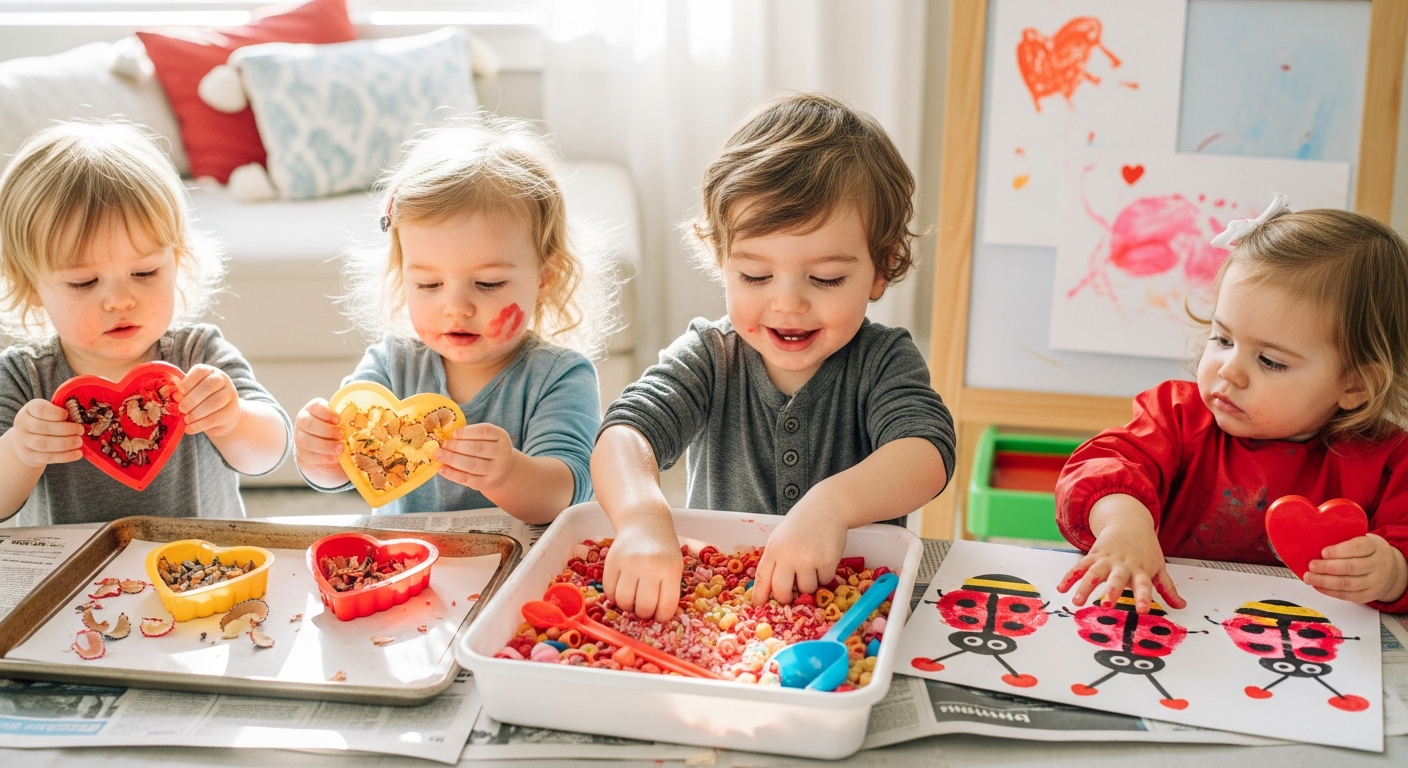
Table of Contents
- Introduction
- The Developmental Power of Play
- Sensory Toddler Valentine's Day Activities
- Fine Motor Skills and Focus
- Encouraging Early Literacy and Language
- Mathematical Thinking for Little Hearts
- Active Play: Gross Motor Fun
- The Speech Blubs Approach to "Smart Screen Time"
- Conclusion
- Frequently Asked Questions
Introduction
Did you know that by the age of three, a child’s brain is twice as active as an adult’s brain? It is a whirlwind of neural connections, especially when it comes to social-emotional development and communication. After the high-energy excitement of the December holidays, January can sometimes feel like a bit of a lull. However, Valentine’s Day offers us the perfect opportunity to re-engage that natural curiosity and turn the concept of "love" into a tangible, educational experience. For many parents, especially those of the 1 in 4 children who may experience speech or language delays, these holidays are more than just a calendar date; they are a chance to foster connection and build foundational skills in a low-pressure, joyful way.
In this post, we are going to explore a variety of toddler Valentine’s Day activities that focus on sensory play, fine motor development, early literacy, and gross motor movement. We will move beyond simple crafts to look at how these moments of play can actually support your child's journey toward confident communication. At Speech Blubs, we believe in empowering children to "speak their minds and hearts," and there is no better time to start than during a holiday dedicated to expressing those very things.

By the end of this guide, you will have a full toolkit of easy-to-implement ideas that transform your home into a learning lab. Whether you are using our "smart screen time" tools or getting messy with a bowl of red-dyed rice, the goal remains the same: creating joyful family learning moments that stick.
The Developmental Power of Play
Before we dive into the glitter and glue, it is important to understand why we prioritize play-based learning. For a toddler, concepts like "friendship," "kindness," or "affection" are quite abstract. They don't have years of experience to draw from. Activities give them the context they need to understand these big ideas. When we engage in toddler Valentine's Day activities, we aren't just making pretty cards; we are building vocabulary, practicing turn-taking, and strengthening the tiny muscles in their hands that will one day hold a pencil.
At Speech Blubs, our mission is rooted in the belief that learning should be fun and effective. Our founders grew up with speech challenges themselves, which is why we created a tool that blends scientific principles with pure joy. We use a unique "video modeling" methodology where children watch their peers perform activities and sounds, triggering mirror neurons in the brain that encourage imitation. This same spirit of imitation and peer-led discovery can be brought into your Valentine’s Day celebrations at home.
Sensory Toddler Valentine's Day Activities
Sensory play is the "work" of childhood. It allows children to explore the world through touch, sight, and sound, which is essential for cognitive development.
1. The Classic Valentine’s Day Sensory Bin
Fill a large plastic bin with a base of white rice or dried chickpeas. You can easily dye these by mixing them in a bag with a few drops of red or pink food coloring and a teaspoon of rubbing alcohol. Add in heart-shaped measuring spoons, small silicone cupcake liners, and red pompoms.
- Speech Tip: As your child scoops and pours, use "self-talk." Say, "I am scooping the red rice. Pour, pour, pour!" This helps them associate actions with words.
2. Candy Heart Oobleck
Oobleck is a fascinating non-Newtonian fluid made of cornstarch and water. For a festive twist, dye it purple and drop in some classic conversation hearts. It’s a wonderful way to discuss textures—is it hard or soft? Liquid or solid?

- Scenario: For a parent whose 3-year-old "late talker" loves sensory input, this activity provides a high-motivation environment to practice descriptive words like "sticky," "cold," and "goop."
3. Love Potion Bubble Foam
Mix two parts water with one part tear-free bubble bath in a blender to create thick, stiff foam. Add a drop of pink food coloring and some plastic hearts. This is a "clean" sensory activity that toddlers absolutely adore.
- Smart Screen Time Connection: Before you start the "messy" play, you might explore the Speech Blubs app to see how peer models use their mouths to blow bubbles or make "pop" sounds.
4. Dyed Pasta Exploration
Noodles are an inexpensive and taste-safe sensory base. Cook some spaghetti, drain it, and toss it with a little oil and food coloring. The wiggly, slippery texture of "love noodles" is a great conversation starter for kids who are hesitant about new textures.
5. Flower Petal Water Play
If you have some roses that are starting to wilt, don’t throw them away! Pluck the petals and put them in a bin of warm water with some plastic cups. This "Valentine’s Soup" is a calming activity that builds fine motor skills through pouring.
Fine Motor Skills and Focus
Fine motor skills involve the coordination of small muscles in the hands and fingers. These toddler Valentine's Day activities are perfect for building the strength needed for later writing skills.
6. Heart Sticker Activity
Draw a large heart outline on a piece of paper and give your toddler a sheet of dot stickers. Have them place the stickers along the line. This requires significant concentration and "pincer grasp" coordination.
7. Heart Beading and Lacing
Using large plastic heart beads and a pipe cleaner (which is sturdier than string for beginners), show your child how to thread the beads. This is a great time to practice color patterns—red, pink, red, pink.
- Pro Tip: If you’re wondering if your child’s fine motor or speech milestones are on track, you can take our quick 3-minute preliminary screener. It includes 9 simple questions and provides a personalized next-steps plan.
8. Heart Box Clothespin Clip
Take a heart-shaped box or even a piece of cardboard cut into a heart. Give your child several clothespins and show them how to squeeze them to clip them onto the edge of the heart. This "squeezing" motion is fantastic for building hand strength.
9. Love to Pieces Gluing
Rip up scraps of red, pink, and white construction paper. Give your toddler a glue stick or a small cup of wet glue with a paintbrush. Let them fill in a heart shape with the "pieces of love."
- Language Extension: Use words like "sticky," "on top," and "more" to encourage functional communication during the craft.
10. Playdough "Cookies"
Homemade playdough is soft and inviting. Provide heart-shaped cookie cutters and stamps. If your child loves "baking," this is a perfect opportunity for "pretend play," which is a vital milestone in language development.
Encouraging Early Literacy and Language
Communication is about more than just words; it’s about expressing feelings and understanding symbols. These activities focus on the "language of love."
11. Heart Letter Puzzles
Draw a heart and write an uppercase letter on one side and a lowercase letter on the other. Cut the heart down the middle in a unique zigzag pattern. Your toddler can work on matching the letters to "mend" the heart.
12. The "Love Poster"
Daily affirmations are a beautiful tradition. Create a poster where you write one thing you love about your child each day leading up to February 14th. Read it aloud to them. This builds their self-esteem and exposes them to positive language.
13. Mailbox Magic
Toddlers love "special deliveries." Set up a small mailbox (a shoebox works perfectly) and provide cards, envelopes, and "stamps" (stickers).
- Scenario: If your child is working on specific speech sounds, like the "m" in "mail" or "p" in "post," this activity creates natural repetition. You can even use the Google Play Store to download Speech Blubs and find the "Early Sounds" section to reinforce these phonemes through peer video modeling.
14. Reading and Storytelling
Cuddle up with books that focus on friendship and kindness. Look for books with vivid descriptions of emotions.
- Scientific Approach: Our methodology is backed by science and focuses on creating an environment where children feel safe to try new sounds. When you read together, you are creating that same safe, joyful space. You can learn more about our evidence-based approach on our research page.
15. Love Note Color Sort
Create "mail envelopes" in different colors and have your child sort heart-shaped "notes" into the matching colored envelope. This combines color recognition with the concept of sending messages.
Mathematical Thinking for Little Hearts
Math for toddlers isn't about equations; it's about patterns, sorting, and understanding size and quantity.
16. Sorting Hearts by Size
Cut out hearts of various sizes—small, medium, and large. Ask your child to help the "baby heart" find the "mommy heart" and the "daddy heart." This builds vocabulary related to comparison and size.
17. Counting Hearts Sticky Wall
Use clear contact paper taped to the wall (sticky side out). Draw numbered circles or hearts on a piece of paper behind the contact paper. Have your child stick the correct number of foam hearts into each section.
18. Heart Patterning
Use conversation hearts or colored paper hearts to create a simple pattern (Red, Blue, Red, Blue). Ask your child, "What comes next?" This develops the foundational logic skills needed for later mathematics.
19. Candy Heart Smash
While it sounds a bit chaotic, smashing candy hearts with a toy hammer is a great way to talk about "more" and "less." Once they are smashed, you can sort the "dust" from the "chunks," which is a sophisticated form of categorization.
20. Foam Heart Memory Match
Use pairs of identical foam hearts. Flip them over and play a simple game of memory. This builds visual recognition and short-term memory skills.
Active Play: Gross Motor Fun
It is February, and in many places, it is cold! These indoor toddler Valentine's Day activities help burn off energy while focusing on physical development.
21. Heart Hopscotch
Tape paper hearts to the floor in a hopscotch pattern. This encourages jumping, balance, and following a path. You can even write numbers or letters on the hearts to add a layer of learning.
22. Color Matching Stair Walk
If you have stairs, tape different colored hearts to each step. Ask your child to "Step on the red heart" or "Find the pink heart." This helps them practice using both legs evenly and improves coordination.
23. Heart Scavenger Hunt
Hide paper hearts around the living room and have your toddler find them. To make it more "educational," tell them they are looking for "3 red hearts" or "the heart hidden under the pillow." This practices prepositions (on, under, behind).
24. Musical Hearts
Like musical chairs, place large hearts on the floor. Play music and have your toddler dance. When the music stops, they must find a heart to stand on. This is excellent for practicing "stop and go" commands.
25. Heart "Balloon" Toss
Blow up a red balloon and try to keep it in the air by tapping it back and forth. This improves hand-eye coordination and gross motor timing.
The Speech Blubs Approach to "Smart Screen Time"
As parents, we often worry about screen time. Is it passive? Is it melting their brains? At Speech Blubs, we advocate for "smart screen time." This means using technology as a bridge to real-world interaction, not a replacement for it. Our app is designed to be a co-play experience. When your child watches a peer on the screen making a "heart" shape with their hands or saying "I love you," we want you to be right there with them, imitating the action and cheering them on.
We are proud of the impact we’ve had on millions of families. If you are curious about how other parents have navigated speech delays and used our tools, feel free to read our parent testimonials. It is truly inspiring to see children move from frustration to the joy of being understood.
Choosing the Right Path for Your Child
We offer two main ways to access our comprehensive library of activities and speech-building tools. While we want to be accessible to everyone, we always recommend our Yearly plan for the best long-term value and support.
- Monthly Plan ($14.99/month): This is a great "standard" option for those who want to try the app on a month-to-month basis.
- Yearly Plan ($59.99/year): This is the gold standard for our community. At just $4.99 per month, you save 66% compared to the monthly rate.
Most importantly, the Yearly plan includes:
- A 7-day free trial so you can explore everything risk-free.
- The Reading Blubs app, which focuses on early literacy and phonics.
- Early access to new updates and features.
- Priority 24-hour support response time.
To begin your journey, you can create your account and start your trial today.
Conclusion
Valentine’s Day is a beautiful reminder that our most important job as parents and caregivers is to foster a sense of love, security, and connection. Whether you are sorting colored hearts on the stairs, getting messy with purple oobleck, or sitting together and practicing new sounds on the Speech Blubs homepage, you are doing the hard work of building your child’s future.
These toddler Valentine's Day activities aren't just about the end product; they are about the process. They are about the giggle when the bubble foam gets on their nose, the look of pride when they match a letter, and the quiet moments of connection during a "love poster" reading.
We don’t promise that your child will be giving public speeches in a month. Development is a journey, not a race. But we do promise to provide you with the tools to make that journey joyful, evidence-based, and full of heart.
Ready to make this Valentine's Day unforgettable? Start your 7-day free trial today by downloading Speech Blubs. We highly recommend selecting the Yearly plan during sign-up to get the best value, including the Reading Blubs app and priority support. Let's help your little one speak their mind and heart!
Frequently Asked Questions
1. Are these activities suitable for children with speech delays?
Absolutely! In fact, many of these activities are specifically designed to encourage "functional language." By using sensory play and high-motivation themes like Valentine's Day, you create a natural environment where children want to communicate. Our app serves as a powerful supplement to these physical activities and professional therapy.
2. Do I need to buy expensive supplies for Valentine's Day crafts?
Not at all. Most of the activities listed here use common household items like rice, pasta, paper scraps, and tape. The most valuable "supply" you can provide is your undivided attention and co-play.
3. How much screen time is appropriate for a toddler?
The American Academy of Pediatrics suggests that for children ages 2 to 5, screen time should be limited to one hour per day of high-quality programming. Speech Blubs fits into the "high-quality" category because it is interactive, educational, and designed for adult-child co-play, rather than passive viewing like cartoons.
4. Why is the Yearly plan better than the Monthly plan?
While the Monthly plan offers flexibility, the Yearly plan is designed for families committed to seeing progress. It is significantly more cost-effective (saving 66%) and provides essential extras like the Reading Blubs app, which helps transition speech skills into reading skills. Plus, the 7-day free trial is exclusively available on the Yearly plan.
About the author