
57 Fun Toddler Movement Activities to Boost Development
 By Speech Blubs Team•Feb 23, 2026•15 min.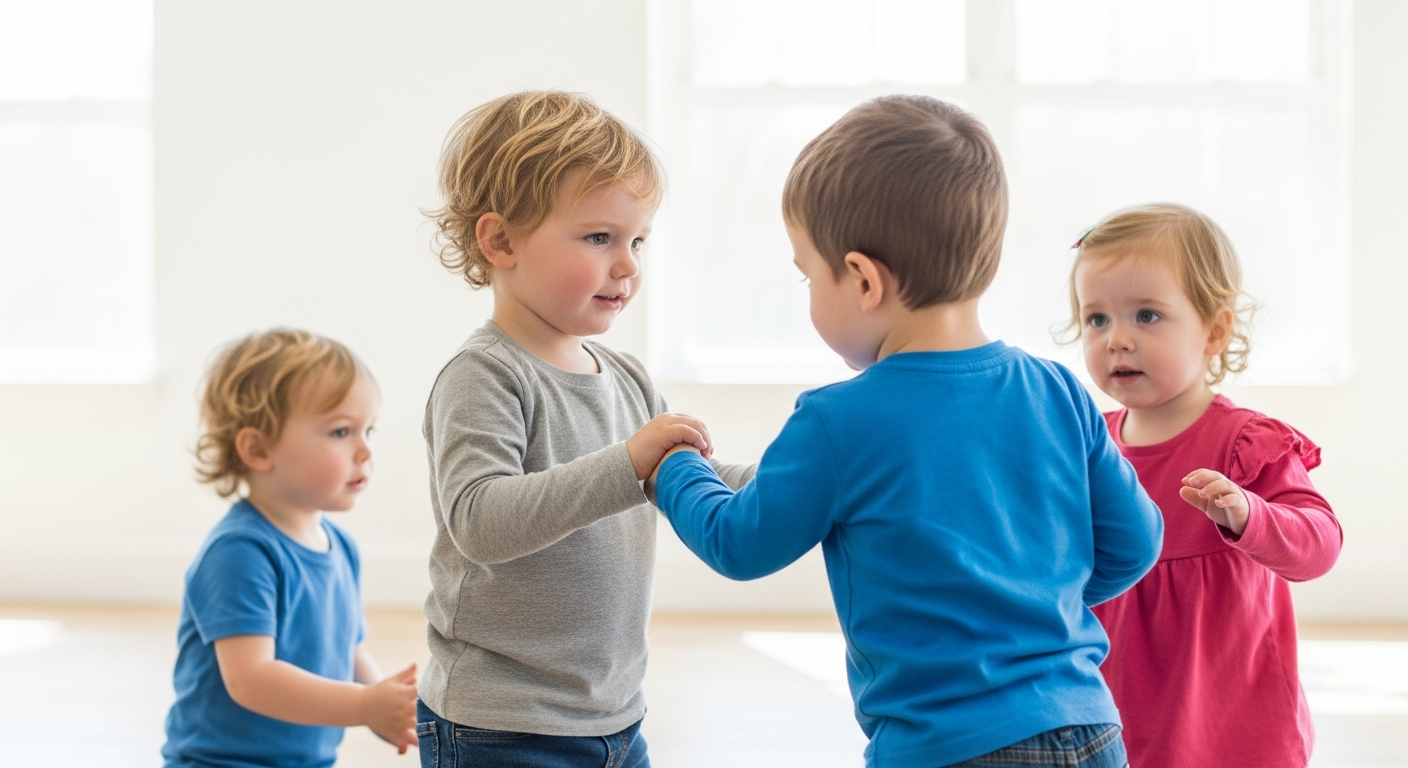
Table of Contents
- Introduction
- Why Movement is the Foundation of Learning
- Indoor Toddler Movement Activities for Rainy Days
- Outdoor Toddler Movement Activities for High Energy
- "Smart Screen Time": How Speech Blubs Enhances Movement
- Building Skills Through "Heavy Work"
- Encouraging Social Movement: Games for Groups
- Balancing the Day: Movement and Rest
- Why Choose Speech Blubs for Your Child's Journey?
- Value and Pricing: The Best Way to Support Your Child
- Practical Tips for Success
- Conclusion
- FAQ
Introduction
Did you know that toddlers and preschoolers between the ages of 2 and 4 actually need about three hours of physical activity every single day? If that number feels overwhelming, you aren't alone. Most parents find themselves caught in a cycle of "managed chaos," trying to keep up with a little one who seems to have an infinite supply of energy. At Speech Blubs, we understand that this energy isn't just a challenge to manage—it is a vital part of how your child learns to interact with the world and, eventually, how they learn to speak.
The purpose of this blog post is to provide you with a treasure trove of toddler movement activities that serve a dual purpose: burning off that "crazy toddler energy" and building the foundational gross motor skills necessary for healthy development. We will explore indoor and outdoor games, explain the science behind why movement matters for speech, and show you how to blend physical play with "smart screen time."

Our main message is simple: movement is the primary language of a toddler. By encouraging active play, we aren't just helping them stay fit; we are empowering them to build the confidence and brain connections they need to eventually "speak their minds and hearts." Whether you are looking for a way to survive a rainy afternoon or want to maximize a sunny day at the park, these activities are designed to create joyful family learning moments.
Why Movement is the Foundation of Learning
Before we dive into our list of 57 activities, it’s helpful to understand the "why" behind the wiggle. In the world of child development, we often talk about the vestibular and proprioceptive systems. While these sound like complex clinical terms, they are actually quite simple to understand.
The vestibular system, located in the inner ear, is the "director" of the nervous system. it tells your child where their body is in space and helps them maintain balance. The proprioceptive system involves the information that travels from the muscles and joints to the brain. When a child climbs, jumps, or pushes a heavy laundry basket, they are feeding these systems the "sensory snacks" they need to feel safe and secure in their bodies.
When these systems are well-regulated, a child is better able to focus. This is why you might notice your child is more talkative after a trip to the playground. Movement increases blood flow to the brain and organizes the nervous system, creating the perfect environment for language development. This is why we created Speech Blubs—to bridge the gap between active play and communication.
Indoor Toddler Movement Activities for Rainy Days
When you're stuck inside, the walls can start to feel a bit close. Instead of turning on a passive cartoon, try these indoor toddler movement activities to keep them moving.
1. The Animal Walk
This is a classic for a reason. Encourage your child to slither like a snake, hop like a frog, or walk like a heavy bear on all fours. This isn't just fun; it’s an exercise in motor planning. At Speech Blubs, we use a "video modeling" methodology where children watch their peers perform actions. For a parent whose 3-year-old "late talker" loves animals, the "Animal Kingdom" section of our app offers a motivating way to practice "moo" and "baa" sounds while physically mimicking the animal’s movements.

2. Keep the Balloon Up
Balloons move slowly, making them the perfect tool for toddlers who are still developing hand-eye coordination. Have them use their hands or even a soft pool noodle to keep a balloon off the ground.
3. Indoor Obstacle Course
You don't need fancy equipment. Use couch cushions as "islands," a dining room table as a tunnel to crawl under, and a line of painter's tape as a balance beam. Obstacle courses require children to remember a sequence of actions, which is a key cognitive skill used in forming sentences.
4. Avoid the Shark
Place foam floor tiles or towels across the living room floor. Tell your child the floor is "shark-filled water" and they must jump from island to island to stay safe. This encourages "jumping" and "landing," which builds core strength.
5. Tape Line Balance Beam
Stick a long piece of painter's tape on the floor. Ask your child to walk along it without falling off. To make it harder, ask them to walk backward or carry a "treasure" (a stuffed animal) while they balance.
6. Indoor Skating
If you have hardwood or tile floors, have your child place their feet on two paper plates or small face cloths. They can "skate" around the room, which provides a fantastic workout for their legs and core.
7. Bubble Wrap Jump
Don't throw away that packaging! Lay out a sheet of bubble wrap and let your child jump on it. The sensory feedback of the "pop" is incredibly satisfying and encourages repetitive jumping.
8. Pillow Walk
Line up every pillow in the house and have your child walk across them. The uneven surface challenges their balance much more than a flat floor does.
9. Indoor Bowling
Set up empty plastic bottles or toilet paper rolls and use a soft ball to knock them down. This helps with aim and understanding cause-and-effect.
10. The "Sneeze" Beanbag Game
Place a beanbag (or a rolled-up sock) on your head. Walk around the room, and then suddenly pretend to sneeze—"ACHOO!"—and let the beanbag fall. Toddlers find this hilarious and will want to do it over and over, practicing their balance in the process.
Outdoor Toddler Movement Activities for High Energy
When the weather permits, taking the play outside allows for "big" movements that just aren't possible indoors.
11. Nature Scavenger Hunt
Create a simple list of things to find: a yellow leaf, a round stone, a tiny stick, or a flower. This gets them walking, squatting, and reaching while also building their descriptive vocabulary. If you’re unsure if your child’s vocabulary is on track, you can take our quick 3-minute preliminary screener to get a simple assessment and a free 7-day trial.
12. Wet Sponge Designs
On a hot day, give your child a bucket of water and some sponges. Have them throw the wet sponges against a brick wall or the sidewalk to make patterns. This is excellent for shoulder stability and arm strength.
13. Bubble Chase
Blow bubbles and have your child chase, jump, and pop them. This simple activity covers almost every gross motor skill: running, reaching, squatting, and jumping.
14. Digging for Treasure
Whether in a sandbox or a designated patch of dirt, hiding small plastic dinosaurs or "gold" (painted stones) provides hours of entertainment. Digging builds upper body strength and fine motor control.
15. Jump the Waves
If you’re near water, jumping the tiny waves as they roll in is a thrilling way to practice timing and jumping.
16. Kick Bowling
Similar to indoor bowling, but use a larger ball and kick it to knock over larger targets, like plastic pails.
17. Leaf Pile Jump
In the autumn, raking leaves into a big pile and jumping into them is a sensory-rich experience that helps children learn to "crash" safely.
18. Follow the Leader (Animal Style)
Take a walk through the neighborhood but change your movement every few yards. "Now we walk like giraffes!" "Now we hop like bunnies!"
19. Ribbon Dancing
Tie long ribbons to sticks and let your children run and twirl them through the air. This helps them understand the concept of "trailing" and space.
20. The Sprinkler Leap
Set up a sprinkler and encourage your child to jump over the water stream. This adds an element of "risk" and excitement that keeps them engaged.
"Smart Screen Time": How Speech Blubs Enhances Movement
At Speech Blubs, we are often asked: "Isn't screen time the opposite of movement?" Our answer is that it doesn't have to be. We are dedicated to providing a screen-free alternative to passive viewing. Unlike cartoons where a child sits still and "zones out," our app is designed to be a "smart screen time" experience.
Our company was born from the personal experiences of our founders, who all grew up with speech problems. They created the tool they wished they had—one that blends scientific principles with play. Our unique approach uses video modeling, where children learn by watching and imitating their peers.
When a child sees a peer on the screen making a "fish face" or "roaring like a lion," they are naturally inclined to mirror that behavior. We encourage parents to use the app as a springboard for physical play. After using the "Animal Kingdom" section, turn off the device and do an "Animal Walk" around the house. This transition from digital learning to physical practice is what we call family connection.
Our method is backed by science, placing us in the top tier of speech apps worldwide. If you're interested in the data, you can read more about our scientific methodology and high MARS scale rating.
Building Skills Through "Heavy Work"
You might notice that your toddler loves to push the vacuum, pull a heavy wagon, or carry a gallon of milk. In the world of Occupational Therapy, this is called "heavy work." These activities provide intense proprioceptive input, which can be very calming for an overactive child.
21. The Grocery Helper
Let your toddler carry the lightweight (but bulky) items from the car to the house, like a bag of bread or a package of paper towels.
22. Laundry Basket Push
Fill a laundry basket with stuffed animals or books and have your child push it across the carpet. This is a full-body workout that builds core stability.
23. Tug of War
Using a soft rope or a towel, play a gentle game of tug of war. This helps with grip strength and balance.
24. Animal "Heavy" Walks
The "Crab Walk" (walking on hands and feet with your belly facing up) is one of the most challenging and beneficial heavy work activities for toddlers.
Encouraging Social Movement: Games for Groups
Toddler movement activities are even better when shared. If you have a playdate or siblings, these games help develop social skills like turn-taking and following directions.
25. Simon Says
This is the ultimate game for listening skills. "Simon says... jump like a kangaroo!" It teaches children to inhibit their impulses (not moving unless "Simon says") while staying active.
26. Freeze Tag
One person is "it." When they touch someone, that person must "freeze" like a statue until a friend crawls through their legs or touches their shoulder to "unfreeze" them.
27. Musical Statues
Turn up the music and dance! When the music stops, everyone must freeze. This helps with auditory processing and motor control. You can see how other parents use these types of games alongside our app by reading our parent success stories and testimonials.
28. Duck, Duck, Goose
A classic circle game that involves sitting, waiting, and then a sudden burst of sprinting. It’s perfect for practicing "stop and go" movements.
29. Parachute Play
If you have a large sheet, have everyone hold an edge and shake it up and down. Place a soft ball in the middle and try to keep it from falling off.
Balancing the Day: Movement and Rest
While we want to hit that three-hour mark for activity, it is equally important to know when to slow down. High-energy toddler movement activities should be balanced with "calming" movements.
30. Toddler Yoga
Introduce simple poses like "Downward Dog" (stretching like a puppy) or "Tree Pose" (balancing like a tree). This helps with flexibility and mindfulness.
31. The "Log Roll"
Have your child lie on the floor and roll from one side of the room to the other. This is a great way to "reset" the nervous system if they are becoming overstimulated.
32. Slow-Motion Race
Challenge your child to a race where the slowest person wins. This requires incredible muscle control and focus.
Why Choose Speech Blubs for Your Child's Journey?
We know that every child develops at their own pace. Our mission is to provide an immediate, effective, and joyful solution for the 1 in 4 children who need speech support. We don't just want kids to talk; we want them to feel the joy of being understood.
By incorporating Speech Blubs into your daily routine, you are providing your child with a powerful tool for development. We suggest using the app as a supplement to professional therapy and overall physical development. It’s about creating joyful family learning moments that reduce frustration for both you and your child.
Ready to begin? Download Speech Blubs on the App Store or Google Play to start your journey today.
Value and Pricing: The Best Way to Support Your Child
We believe in transparency and providing the best value for families. We offer two main plans to fit your needs:
- Monthly Plan: $14.99 per month. This is a great way to test the waters and see how your child responds to the video modeling.
- Yearly Plan: $59.99 per year. This is our clear best-value choice, breaking down to just $4.99 per month (a savings of 66%!).
The Yearly plan isn't just cheaper; it also includes high-value features that are not available in the monthly plan:
- A 7-day free trial so you can explore the app risk-free.
- Access to the Reading Blubs app, helping your child transition from speaking to reading.
- Early access to all new updates and 24-hour support response time.
To get the full suite of features and the free trial, we highly recommend selecting the Yearly plan when you create your account on our website.
Practical Tips for Success
When implementing these toddler movement activities, keep these three "Ps" in mind:
- Play Together: Your child is much more likely to be active if they see you jumping, crawling, and "roaring" with them.
- Patience: Some days, your toddler will have 10 minutes of focus; other days, they’ll have 30 seconds. That’s okay!
- Progress, Not Perfection: Don't worry about them doing the "perfect" frog hop. Focus on the fact that they are moving, laughing, and learning.
Remember, the goal isn't to create a professional athlete or an orator in a month. It’s about fostering a love for communication, building confidence, and creating those vital foundational skills.
Conclusion
Movement is the fuel that powers a child’s development. From the vestibular system's role in balance to the way gross motor play prepares the brain for language, every jump, crawl, and "animal walk" matters. By integrating these 57 toddler movement activities into your daily life, you are giving your child the physical and cognitive "smart start" they deserve.
At Speech Blubs, we are honored to be a part of your family’s growth. Our mix of Peer-to-Peer video modeling and joyful play is designed to help your child find their voice while having the time of their lives. We provide a powerful supplement to your child’s overall development plan, framing every activity with an implicit understanding of adult co-play and support.
Don't wait to start building your child's confidence. Choose the Yearly plan today to receive your 7-day free trial, the bonus Reading Blubs app, and full access to our scientific methodology. You can sign up on our web page or download the app directly from the Apple App Store or Google Play Store. Let’s get moving and get talking together!
FAQ
1. How much physical activity does my toddler really need every day? Experts recommend that toddlers (ages 2-4) get at least 180 minutes (3 hours) of physical activity spread throughout the day. This doesn't have to be structured exercise; it includes active play, running, jumping, and even helping with "heavy work" tasks like carrying groceries or pushing a laundry basket.
2. Can screen time actually encourage movement? Yes, if it is "smart screen time." Unlike passive viewing where a child is a spectator, Speech Blubs uses video modeling to encourage active participation. When kids see their peers performing actions or making sounds on the screen, they are motivated to imitate them, turning a digital experience into a physical and vocal activity.
3. What are the benefits of gross motor activities for speech development? Movement organizes the nervous system and increases blood flow to the brain, which improves focus. Specifically, gross motor play builds core strength and postural stability, which are necessary for the breath control and physical effort required for speaking. It also builds confidence and reduces the frustration often associated with speech delays.
4. My toddler has a very short attention span. How can I keep them engaged? The key is variety and short bursts of activity. You don't need to do one activity for 30 minutes. Instead, try a "circuit" of 2-minute activities: 2 minutes of animal walks, 2 minutes of bubble popping, and 2 minutes of "Simon Says." Using a motivating tool like the Speech Blubs app can also help capture their attention through engaging peer-to-peer videos.
About the author