
Best Toddler Plane Activities: Stress-Free Flight Tips
 By Speech Blubs Team•Mar 25, 2026•14 min.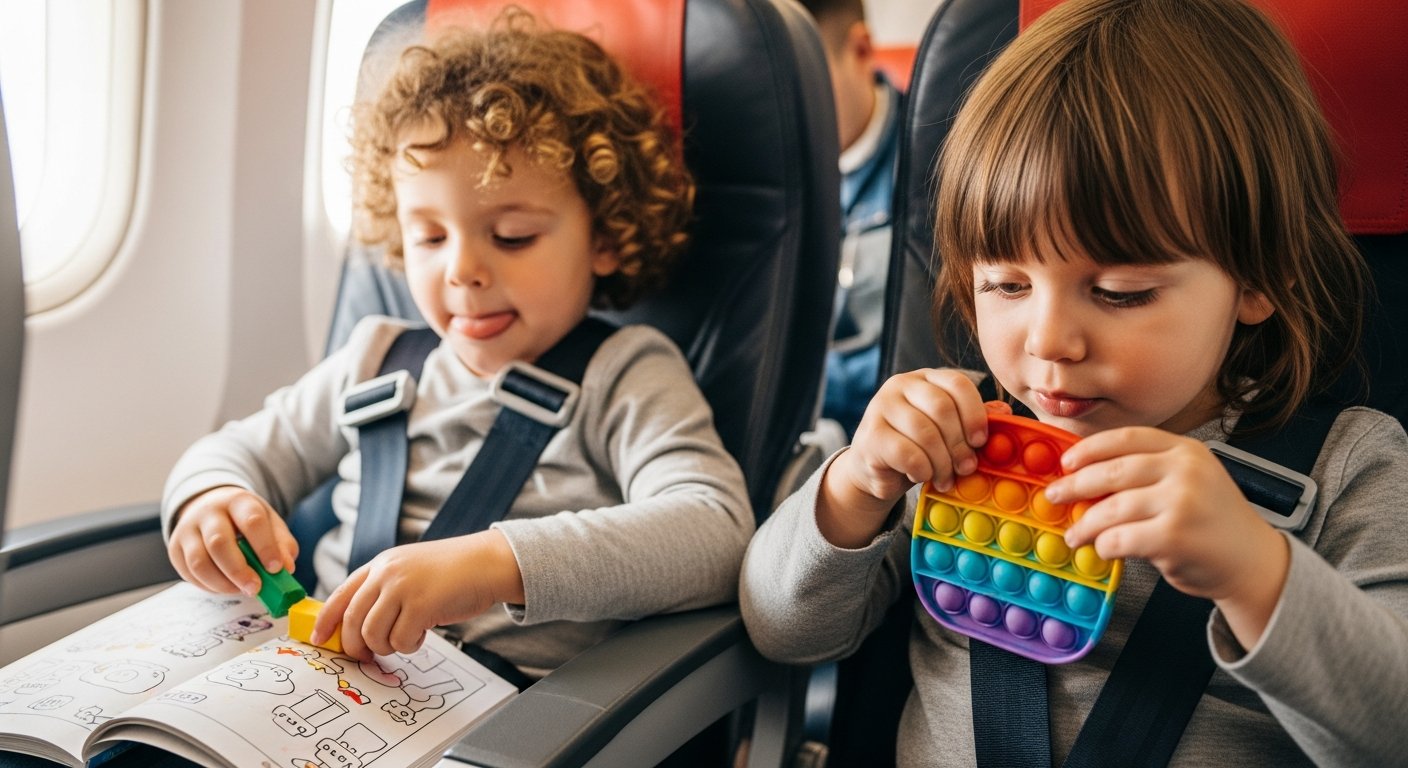
Table of Contents
- Introduction
- The Strategy of the "Surprise Bag"
- Screen-Free Activities for Fine Motor Focus
- Creative and Mess-Free Art
- The Role of "Smart Screen Time"
- Snacktivities: Eating as Entertainment
- Managing the Environment and Meltdowns
- Why Speech Blubs is the Ultimate Travel Companion
- Packing List: The Essentials
- Building Confidence Through Play
- Conclusion
- FAQ: Frequently Asked Questions
Introduction
The moment you click "confirm" on those vacation tickets, a wave of excitement usually follows. But for parents of little ones, that excitement is often quickly replaced by a nagging sense of dread: How am I going to keep my toddler entertained in a confined metal tube for six hours? You aren’t alone. At Speech Blubs, we know that the prospect of a long-haul flight with a two-year-old can feel more like a survival mission than a holiday. Whether it’s the fear of a mid-air meltdown or the stress of packing just the right toys, the pressure is real.
Our mission at Speech Blubs is to empower children to "speak their minds and hearts," and that doesn't stop when you’re 35,000 feet in the air. We believe that every moment, even a cramped flight, is an opportunity for connection, learning, and joy. This blog post is designed to be your comprehensive guide to the best toddler plane activities, blending screen-free classic play with our unique "smart screen time" approach. We’ll cover everything from the best fine-motor toys to pack, how to handle "snacktivities," and how to use Speech Blubs to turn a potential tantrum into a language-building win. By the end of this guide, you’ll have a clear, actionable plan to make your next flight not just bearable, but a truly positive experience for your whole family.

The Strategy of the "Surprise Bag"
One of the most effective ways to manage a toddler on a plane is the element of surprise. Rather than dumping all their toys into a backpack that they see every day, many seasoned traveling parents swear by the "Surprise Bag" or "Busy Bag" method.
The idea is simple: buy a few small, inexpensive new items and wrap them individually in colorful tissue paper or aluminum foil. Every hour (or whenever you feel a restless moment approaching), let your child "unwrap" a new activity. The act of unwrapping itself takes time and builds anticipation, effectively doubling the entertainment value of a $2 toy.
When choosing items for your surprise bag, think about variety. You want a mix of sensory toys, fine motor challenges, and quiet creative outlets. Remember, the goal isn't just to keep them quiet; it's to keep their brains engaged so they don't reach that point of overstimulated frustration.
Screen-Free Activities for Fine Motor Focus
Fine motor activities are the "holy grail" of plane travel. They require focus, hand-eye coordination, and usually keep little hands busy for long stretches.
1. Blue Painter's Tape
This is perhaps the cheapest and most versatile item in a parent’s travel kit. Blue painter’s tape is easy to tear and leaves no residue on airplane surfaces. You can tape down small toy animals to the tray table for a "rescue mission," create "roads" for toy cars, or simply let your toddler stick pieces of tape to their own arms and legs. It sounds simple, but for an 18-month-old, the tactile sensation of peeling tape is incredibly satisfying.
2. Suction Cup Spinners
If you have a window seat, suction cup spinners are a must. These colorful, silicone toys stick directly to the airplane window. Your toddler can bat at them to make them spin, which provides a great visual and sensory experience. For a child who might be nervous about the loud noises of the engines, the repetitive, soothing motion of a spinner can be very grounding.
3. Buckle Toys and Lacing Cards
Toddlers are often obsessed with "doing it themselves," especially when it comes to buckles on high chairs or car seats. A dedicated buckle toy—usually a plush animal with various plastic clips and zippers—is perfect for the plane. Similarly, lacing cards (sturdy cardboard shapes with holes for a shoelace to go through) help develop the pincer grasp and keep them focused on a singular, quiet task.

4. Pipe Cleaners and a Colander (or Spice Container)
If you have space in your carry-on, a small plastic colander and a pack of colorful pipe cleaners can provide twenty minutes of intense focus. Your toddler can poke the "fuzzy sticks" through the holes. If a colander is too bulky, an empty, clean spice container with large holes in the lid works just as well.
Creative and Mess-Free Art
We all love the idea of our kids being the next Picasso, but nobody wants a "Crayola-on-the-airline-upholstery" incident. The key to plane art is "mess-free."
Water Wow! Books
These books are a favorite among our community of parents. They come with a pen that you fill with a tiny bit of water. When the child "paints" the page, colors and pictures appear. Once the water dries, the image disappears, making the book infinitely reusable. It’s the perfect way to practice identifying colors and objects without a single drop of ink or paint landing on their clothes.
LCD Drawing Tablets
These lightweight, inexpensive tablets allow children to draw with a stylus and erase everything with the touch of a button. They are incredibly thin, making them easy to slide into the back pocket of the seat in front of you. For a parent whose 3-year-old "late talker" is just beginning to explore symbolic play, you can draw a simple shape—like a "baba" (ball)—and encourage them to point to it or try to mimic the sound.
Reusable Sticker Pads
Standard stickers are great, but they often end up permanently bonded to the tray table. Reusable "static cling" stickers are much better for travel. They stick to glossy scenes provided in the book (or the airplane window!) and can be moved around hundreds of times. At Speech Blubs, we love activities that encourage storytelling. You can ask your child, "Where is the cow going?" or "Can you put the sun in the sky?" to foster those early communication building blocks.
The Role of "Smart Screen Time"
At Speech Blubs, we are often asked: "Is screen time bad for my toddler’s development?" The answer is nuanced. While passive viewing—like sitting your child in front of hours of mindless cartoons—doesn't offer much in the way of developmental growth, "smart screen time" can be a powerful tool, especially in high-stress environments like an airplane.
Our app was created by founders who grew up with speech problems and wanted to create the tool they wished they’d had. We provide a screen-free alternative to passive consumption by turning the screen into an interactive, educational experience.
Why Video Modeling Works
The secret to our methodology is "video modeling." Research shows that children learn best by watching and imitating their peers. In the Speech Blubs app, your child doesn't just watch a character; they watch a real child perform a sound, a word, or a facial expression. This triggers "mirror neurons" in the brain, making the child much more likely to try the sound themselves.
On a plane, this can be a lifesaver. When the "new toy" novelty wears off and your child is getting restless, downloading Speech Blubs on the App Store or Google Play gives you access to over 1,500 activities that actually engage their brain.
Practice on the Go
For example, if your child loves animals, the "Animal Kingdom" section is a fantastic distraction. While you're waiting for the snack trolley, you can practice "moo" and "baa" sounds together. This transforms the screen from a "distraction" into a joyful family learning moment. It’s about creating a "smart" experience that reduces frustration by giving your child the tools to express themselves.
If you are unsure if your child’s speech is on track for their age, we highly recommend taking our quick 3-minute preliminary screener. It involves 9 simple questions and provides you with a personalized assessment and a next-steps plan, along with a free 7-day trial of the full app.
Snacktivities: Eating as Entertainment
On a plane, food is more than just nutrition; it’s an activity. The key to "snacktivities" is to choose foods that take a long time to eat and require a bit of manual dexterity.
- The Snack Spinner: Use a multi-compartment container (like a pill organizer or a specialized spinning snack container) and fill each section with something different: a few blueberries, some Cheerios, a piece of cheese, a single grape. The variety keeps them interested.
- Cereal Necklaces: Before the flight (or during, if you have a sturdy string), let your toddler thread "O" shaped cereals onto a piece of yarn. It combines a fine motor activity with a slow-release snack.
- "Ice Cubes in a Cup": Never underestimate the power of a plastic cup filled with ice. Toddlers love the cold sensation, the clinking sound, and trying to pick up the slippery cubes. It’s a great sensory experience that costs nothing and is available on every flight.
Managing the Environment and Meltdowns
Even with the best toddler plane activities, things won't always go perfectly. Part of our approach at Speech Blubs is to set realistic expectations. You aren't aiming for a perfectly silent child; you're aiming for a child who feels supported and engaged.
Ear Pressure
One of the main causes of mid-flight crying is ear pain during takeoff and landing. Encourage your child to drink water, use a pacifier, or chew on a snack during these times. The swallowing motion helps equalize the pressure in their ears.
Airplane Rules
Before you even leave for the airport, talk to your child about "Airplane Rules." Use simple language: "We stay in our seat," "We use our quiet voice," and "We keep our feet down." You can even role-play the flight at home with their stuffed animals to build familiarity.
Dealing with the "Kicker"
If your toddler starts kicking the seat in front of them, try using a "foot hammock" or simply removing their shoes. Often, children kick because their legs are dangling and uncomfortable. Propping their feet up on your carry-on bag underneath the seat can help them feel more secure.
The "Reset" Strategy
If a meltdown begins, don't panic about the other passengers. Most people have been there, and the ones who haven't don't matter in this moment. Try a "sensory reset." Take them to the airplane bathroom to wash their face with cool water, or walk them to the galley (if the seatbelt sign is off) to look out the small window in the door. Sometimes a change of scenery—even if it's just five feet away—is enough to break the cycle of a tantrum.
Why Speech Blubs is the Ultimate Travel Companion
While we advocates for plenty of screen-free play, we also recognize that modern parenting requires modern tools. Speech Blubs is designed to be a powerful supplement to your child's overall development. Our method is backed by science, focusing on social learning and building the foundational skills needed for complex communication.
Choosing the Right Plan
We want to be transparent about our pricing so you can choose what works best for your family’s travel schedule and budget.
- Monthly Plan: For $14.99 per month, you get full access to the Speech Blubs app. This is a great "trial" option if you just want to use it for a specific trip.
- Yearly Plan (Best Value): Our yearly plan is $59.99 per year, which breaks down to just $4.99 per month—a massive 66% savings.
We strongly recommend the Yearly Plan because it includes several high-value features that the monthly plan does not:
- 7-Day Free Trial: You can explore everything we offer risk-free before your trip.
- Reading Blubs: You get access to our sister app, Reading Blubs, which helps toddlers transition from sounds to early literacy.
- Early Access & Priority Support: You’ll get new updates before anyone else and a 24-hour response time from our support team if you have questions while traveling.
You can create your account and start your 7-day free trial today to see why over 4 million parents have trusted us to help their children "speak their minds and hearts."
Packing List: The Essentials
To ensure you have everything you need, here is a quick checklist for your toddler's carry-on:
- The Basics: Diapers (pack more than you think!), wipes, two changes of clothes (for the toddler and a spare shirt for you—trust us), and empty bags for trash or wet clothes.
- Comfort Items: Their favorite "lovey" or blanket. The familiar smell of home can be very soothing in a strange environment.
- Tech: A tablet with the Speech Blubs app downloaded for offline use, and toddler-sized headphones.
- Activities: 2-3 new "surprise" toys, a Water Wow book, and a roll of painter's tape.
- Snacks: A mix of "fast" snacks (fruit pouches) and "slow" snacks (Cheerios, string cheese).
Building Confidence Through Play
At the heart of all these activities is one goal: building your child's confidence. When a toddler successfully navigates a buckle toy or repeats a new word they heard in a Speech Blubs video, they feel a sense of mastery. This confidence is the best antidote to the anxiety and frustration that often lead to travel meltdowns.
Don't feel like you have to be an "entertainer" for the entire flight. It's okay to let your child be bored for a few minutes; boredom often sparks imaginative play. Watch them "drive" their toy car over the topography of the airplane blanket, or listen to them "talk" to the characters in their sticker book. These are the small, joyful moments that make traveling with kids worth the effort.
See what other families are saying about their journey by visiting our testimonials page. You'll find stories from parents who, like you, were nervous about travel and speech development, but found a path forward through play and the right tools.
Conclusion
Flying with a toddler doesn't have to be a nightmare. By combining a "Surprise Bag" of fine motor toys, mess-free creative outlets, and "smart screen time" like Speech Blubs, you can create a structured, engaging environment that fosters a love for communication and adventure. Remember, you are your child's best teacher and most important source of comfort. Your calm presence, paired with these activities, will help them feel secure and happy, even miles above the clouds.
Ready to make your next flight a breeze? Empower your child to find their voice and stay engaged with our science-backed tools. Download Speech Blubs today on the App Store or Google Play and start your 7-day free trial. We highly recommend selecting the Yearly Plan at checkout to save 66% and unlock the Reading Blubs app and priority support. Let's make this trip a joyful learning experience for your little one!
FAQ: Frequently Asked Questions
1. How do I keep my toddler from kicking the seat in front of them?
Kicking is often a sign of physical discomfort or boredom. First, try removing their shoes so the impact is less bothersome. Second, provide a "footrest" using your carry-on bag or an inflatable foot pillow so their legs aren't dangling. If the behavior continues, use it as a "teachable moment" to redirect them to a focused activity, like a sticker book or a Speech Blubs video.
2. Can I use Speech Blubs without Wi-Fi on the plane?
Yes! To use Speech Blubs on a plane, simply open the app while you still have an internet connection (at home or at the airport gate) and download the sections or "blubs" your child loves most. Once downloaded, they will be available for offline use during the flight.
3. What are the best mess-free art activities for a 2-year-old?
Water Wow! books and LCD drawing tablets are the gold standard for mess-free travel art. They require no ink, markers, or paint, meaning your child stays clean and the airplane interior stays pristine. Reusable static-cling stickers are also a great option for creative play without the sticky residue.
4. How can I help my toddler's ears during takeoff and landing?
The best way to help with ear pressure is to encourage swallowing. For toddlers, this can be done by offering a straw cup with water, a pacifier, or a chewy snack. For older toddlers, a piece of fruit leather or a "cereal necklace" can keep them chewing and swallowing throughout the descent, which helps equalize pressure.
About the author