
Bright Hanukkah Toddler Activities for Holiday Joy
 By Speech Blubs Team•Mar 18, 2026•14 min.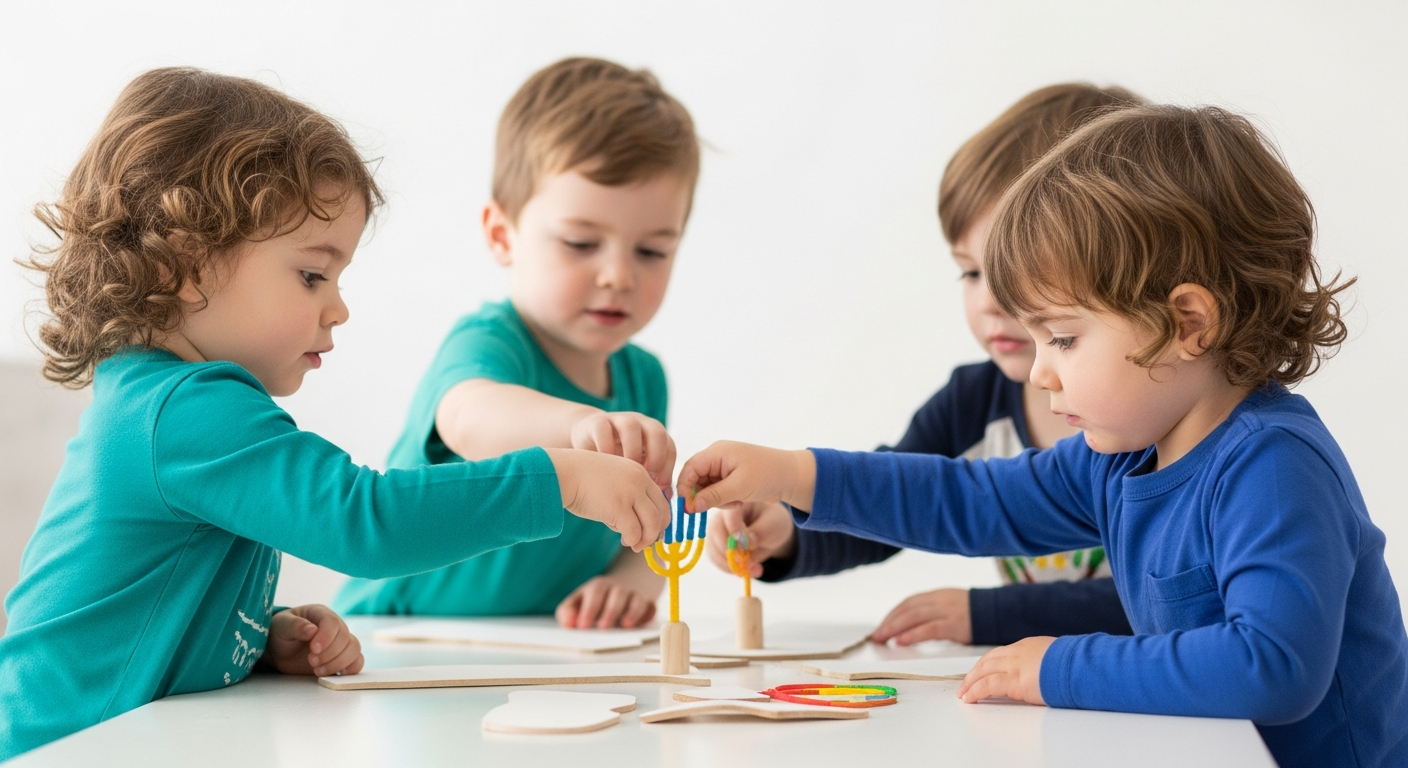
Table of Contents
- Introduction
- The Science of Play and Speech Development
- Sensory Hanukkah Toddler Activities
- Fine Motor Fun: Crafting the Festival of Lights
- Montessori-Inspired Hanukkah Learning
- Building Vocabulary Through Holiday Traditions
- Integrating Smart Screen Time with Speech Blubs
- Practical Scenarios: Bringing it All Together
- Hanukkah Traditions and Family Connection
- Frequently Asked Questions
- Conclusion: A Season of Growth
Introduction
Did you know that nearly one in four children will face a communication challenge during their early development? While that statistic might feel overwhelming, the solution often begins with something remarkably simple: joyful, intentional play. As the winter chill sets in and the first candles of the menorah are prepared for lighting, we have a unique opportunity to turn holiday traditions into powerful learning moments. Hanukkah, the Festival of Lights, isn't just a time for reflection and celebration; it is a sensory-rich playground where vocabulary, fine motor skills, and confidence can flourish.
At Speech Blubs, our mission is to empower children to speak their minds and hearts. We understand the journey of speech development because our founders lived it, having grown up with speech challenges themselves. We created the tools we wish we had as children—blending scientific principles with the magic of play. In this guide, we are going to explore a variety of Hanukkah toddler activities that go beyond simple entertainment. We will cover sensory bins that stimulate the brain, "snacktivities" that encourage new sounds, and Montessori-inspired games that build independence.

Our goal is to help you move away from passive screen time and toward "smart screen time" and active family connection. By the end of this post, you will have a comprehensive toolkit of activities designed to foster a love for communication and create joyful learning moments that last long after the eight nights have ended.
The Science of Play and Speech Development
Before we dive into the specific Hanukkah toddler activities, it is helpful to understand why these activities are so effective for early development. When a child engages in a hands-on activity—like dipping a finger into blue-dyed rice or grasping a wooden dreidel—they aren't just playing. They are building neural pathways.
At Speech Blubs, our methodology is rooted in the concept of video modeling. This is a scientifically proven technique where children learn by watching and imitating their peers. This process activates "mirror neurons" in the brain, which play a critical role in how we learn to speak and interact socially. Our research-backed approach is designed to turn screen time into an interactive experience. When you pair the digital modeling found in our app with the physical, sensory activities listed below, you create a holistic learning environment for your child.
For example, if your toddler is using the "Animal Kingdom" section of our app to practice "moo" and "baa" sounds, you can transition that learning to a Hanukkah context by practicing the "sh" sound for "shamash" or the "l" sound for "latke." This bridge between the digital and physical worlds is where the most significant progress often happens.
Sensory Hanukkah Toddler Activities
Sensory play is a cornerstone of early childhood education. It encourages children to explore the world through touch, sight, and sound, which is essential for cognitive growth.
The Hanukkah Sensory Bin
Sensory bins are a favorite here at Speech Blubs because they are endlessly customizable. For a Hanukkah theme, you can create a beautiful, engaging landscape with just a few household items.

What you’ll need:
- A plastic bin or large tray.
- Two cups of white rice.
- Blue and yellow food coloring.
- Vinegar (to set the dye).
- Small Hanukkah-themed items: wooden dreidels, plastic gelt (gold coins), and small menorah figurines.
How to set it up:
- Divide the rice into two bags.
- Add a teaspoon of vinegar and a few drops of food coloring to each bag (blue in one, yellow in the other).
- Shake the bags until the rice is evenly coated, then spread it out on a baking sheet to dry.
- Once dry, layer the rice in the bin and hide the coins and dreidels inside.
As your child digs for "treasure," use this time to model language. Say words like "dig," "find," "gold," and "blue." If your child is a "late talker," focusing on these simple, high-frequency words in a low-pressure environment can significantly reduce frustration. For parents who are unsure of where their child stands, we recommend taking our quick 3-minute preliminary screener. It consists of nine simple questions and provides a personalized assessment and next-steps plan.
Hanukkah Discovery Bottles
If you prefer a mess-free sensory experience, discovery bottles are a fantastic alternative. Fill a clear plastic bottle with rice, small blue sequins, tiny candles, and a few dreidels. Secure the cap with hot glue. As your toddler rolls the bottle, they can spot different items. This is a great "I Spy" game that builds descriptive vocabulary. Ask your child, "What do you see?" or "Can you find the yellow candle?"
Fine Motor Fun: Crafting the Festival of Lights
Fine motor skills—the coordination of small muscles in the hands and fingers—are closely linked to the development of the muscles used for speech.
Clay Dough Menorahs
Giving your child a ball of clay or play dough is a great way to build hand strength. Encourage them to flatten the ball into a "base." Then, give them eight or nine candles to press into the clay. This action of "pushing" and "placing" is excellent for hand-eye coordination.
While they work, you can sing a simple song to the tune of "Are You Sleeping?": "I have a candle, I have a candle. It is blue, it is blue. Help me find another one, help me find another one. Here it is, here it is."
Cookie Cutter Stamping
Using Hanukkah-themed cookie cutters (stars, menorahs, or dreidels) and washable tempera paint, your toddler can create their own holiday wrapping paper or cards. This activity allows them to practice their "pincer grasp" as they hold the cutters. If your child is particularly motivated by visual arts, this can be a great way to introduce words like "press," "lift," and "colorful."
The Handprint Menorah
This is a classic for a reason. Painting your child's hands and pressing them onto paper to form a menorah creates a lasting memory. The two palms (minus the thumbs) create the eight branches, and a single thumbprint in the middle serves as the shamash. This tactile experience can be a bit ticklish, which often leads to laughter—a perfect opportunity to practice joyful, spontaneous vocalization.
Montessori-Inspired Hanukkah Learning
The Montessori method emphasizes independence and purposeful activity. We love integrating these principles into our recommendations because they empower children to take the lead in their learning.
The Gelt Coin Box
Find an empty cardboard box and cut a narrow slit in the top. Provide your toddler with plastic or wooden gelt coins. The challenge is to orient the coin correctly to fit it through the slit. This "posting" activity requires focus, problem-solving, and dexterity. It mimics the "object permanence" lessons found in many early childhood curricula. As they drop the coin, you can say "clink!" or "in!" to reinforce the action with sound.
Hanukkah Scarf Pull
Take an empty tissue box and stuff it with blue, white, and yellow fabric scarves or ribbons. Let your toddler pull them out one by one. This activity develops bilateral coordination (using both sides of the body) and teaches the concept of "containment." It is simple, effective, and keeps little hands busy while you are preparing latkes in the kitchen.
Dreidel Color Matching
If you have a set of multi-colored dreidels, you can create a simple matching game. Paint the bottom of an egg carton with corresponding colors and ask your child to place each dreidel in its "home." This reinforces color identification and categorization—two foundational cognitive skills.
Building Vocabulary Through Holiday Traditions
Hanukkah is a "vocabulary-rich" holiday. There are so many specific words that we only use this time of year. Introducing these words through play helps children expand their language horizons.
The "Snacktivity": Marshmallow Dreidels
Food is a powerful motivator for communication. You can create edible dreidels using large marshmallows, pretzel sticks, Hershey’s Kisses, and a bit of Nutella or honey as "glue."
- Push a pretzel stick into the top of a marshmallow (the handle).
- Spread a little Nutella on the bottom of the marshmallow.
- Attach a Hershey’s Kiss to the bottom (the point).
As you build these together, talk about the shapes. "The kiss is a triangle!" "The marshmallow is a circle!" Eating the snack together while reading a Hanukkah story creates a positive association with both the holiday and the act of communicating. If your child is working on specific mouth movements, the sticky texture of the marshmallow can even be a fun way to practice tongue placement and jaw stability.
Hanukkah Picture Books
Reading together is one of the most effective ways to build language. Some of our favorite titles for toddlers include:
- Happy Hanukkah, Corduroy
- D is for Dreidel
- The Count’s Hanukkah Countdown (featuring characters from Sesame Street)
- Hanukkah Bear
When reading, don't feel like you have to stick to the text on the page. Point to the pictures and describe what is happening. Use an expressive voice to keep your child engaged. At Speech Blubs, we advocate for this kind of "dialogic reading," where the adult and child have a conversation about the book.
Integrating Smart Screen Time with Speech Blubs
In a world full of passive cartoons, we offer a different path. We believe in "smart screen time"—experiences that are active, educational, and designed for family connection. While physical activities like sensory bins are vital, the digital modeling found in the Speech Blubs app provides a unique layer of support.
Our app uses peer-to-peer video modeling, which is essentially "kids teaching kids." When a toddler sees another child on the screen making a specific sound or facial expression, they are much more likely to try it themselves. This reduces the pressure and frustration that sometimes comes with direct adult-led therapy.
For parents who want to dive deeper into the science behind what we do, you can read more about our methodology and high MARS scale rating on our website. We are proud to be a top-tier tool for speech development, used by thousands of families worldwide to build confidence and foundational skills.
To get the most out of our platform, we highly recommend our Yearly Plan. For just $59.99 per year (which is only $4.99 per month), you receive:
- A 7-day free trial to explore all features.
- The Reading Blubs app, which focuses on literacy and phonics.
- Early access to all new content updates.
- 24-hour support response time from our dedicated team.
Compared to the Monthly Plan at $14.99 per month, the Yearly Plan saves you 66% and provides a much more comprehensive suite of tools for your child's development journey. You can create your account and start your trial today to see the difference for yourself.
Practical Scenarios: Bringing it All Together
Let's look at how these activities might look in a real-world setting. Imagine a parent, Sarah, whose 2-year-old son, Leo, is a "late talker" and easily frustrated when he can't express his needs. Sarah decides to try a "Hanukkah Week" of activities.
On Monday, they start with the Hanukkah Sensory Bin. As Leo pulls out a gold coin, Sarah says, "Gold! Shiny gold!" Leo doesn't repeat the word yet, but he smiles and hands the coin to Sarah. On Tuesday, they use the Speech Blubs app for 10 minutes, focusing on the "Early Sounds" section. Leo watches a peer make a "pop" sound. Later that afternoon, while playing with the Hanukkah Scarf Pull, Leo pulls out a blue scarf and says "Po!" Sarah cheers, "Yes, pop! It popped out!"
By the end of the week, through a combination of physical play and the digital modeling in Speech Blubs, Leo is more engaged and less frustrated. This isn't about overnight miracles; it's about building a foundation of joy and confidence. You can see more stories from parents like Sarah who have seen their children's communication skills blossom through consistent, playful practice.
Hanukkah Traditions and Family Connection
The ultimate goal of all these Hanukkah toddler activities is to foster connection. The holidays can be a busy, stressful time, but carving out 15 minutes a day for intentional play can make a world of difference. Whether you are lighting the real menorah together (with careful supervision!) or playing a game of "Dreidel Drop" with a cardboard box, you are sending a message to your child: Your voice matters, and I am here to listen.
At Speech Blubs, we want to help every child "speak their minds and hearts." We provide a screen-free alternative to passive viewing and a powerful tool for family bonding. Our app is designed to be used with an adult, turning screen time into a co-playing experience that reinforces the skills you are practicing during your holiday crafts.
Frequently Asked Questions
1. What is the best age to start these Hanukkah toddler activities?
Most of the activities listed, such as sensory bins and discovery bottles, are perfect for children aged 18 months to 4 years. For younger toddlers, ensure that all items (like gelt or small dreidels) are large enough to not pose a choking hazard. Activities like "posting" coins or pulling scarves are excellent for developing the fine motor skills typical of the 2-year-old stage.
2. My child isn't talking yet. Can these activities still help?
Absolutely. Speech development begins with "pre-linguistic" skills like joint attention (looking at the same thing together), imitation, and fine motor control. Sensory play and Montessori-style activities build these foundational blocks. When paired with the video modeling in Speech Blubs, you are providing multiple ways for your child to process and eventually produce language.
3. How much time should we spend on the app versus physical play?
We recommend a balanced approach. Think of Speech Blubs as a "digital vitamin"—10 to 15 minutes of "smart screen time" per day is often enough to provide the modeling a child needs. The rest of the day can be filled with the physical, sensory, and social activities we've discussed. The key is consistency rather than duration.
4. Why is the Yearly Plan recommended over the Monthly Plan?
The Yearly Plan is designed for families who are committed to seeing long-term progress. It is significantly more cost-effective (saving 66%) and includes the Reading Blubs app, which is a vital tool as your child transitions from speaking to early literacy. Plus, the 7-day free trial allows you to test the full suite of features before making a final commitment.
Conclusion: A Season of Growth
Hanukkah is a celebration of light, resilience, and miracles. In many ways, the journey of a child finding their voice is its own kind of miracle. By incorporating these Hanukkah toddler activities into your holiday routine, you are doing more than just making crafts; you are providing the sensory input, motor practice, and linguistic modeling your child needs to thrive.
From the tactile joy of a blue rice sensory bin to the peer-led encouragement found in the Speech Blubs app, every interaction is an opportunity for growth. We invite you to join our community of parents and educators who are choosing "smart screen time" and joyful play.
Ready to start your journey? Download Speech Blubs today on the App Store or Google Play. For the best value and access to our full range of features, including Reading Blubs and priority support, be sure to select the Yearly Plan when you sign up on our website. Your 7-day free trial is the perfect way to light up your child’s world this Hanukkah. Let’s celebrate the Festival of Lights by helping your little one find their voice!
For more information on our mission and the science behind our app, feel free to visit our homepage. Happy Hanukkah from our family to yours!
About the author