
Creative Toddler Water Activity Ideas for Joyful Learning
 By Speech Blubs Team•Mar 18, 2026•15 min.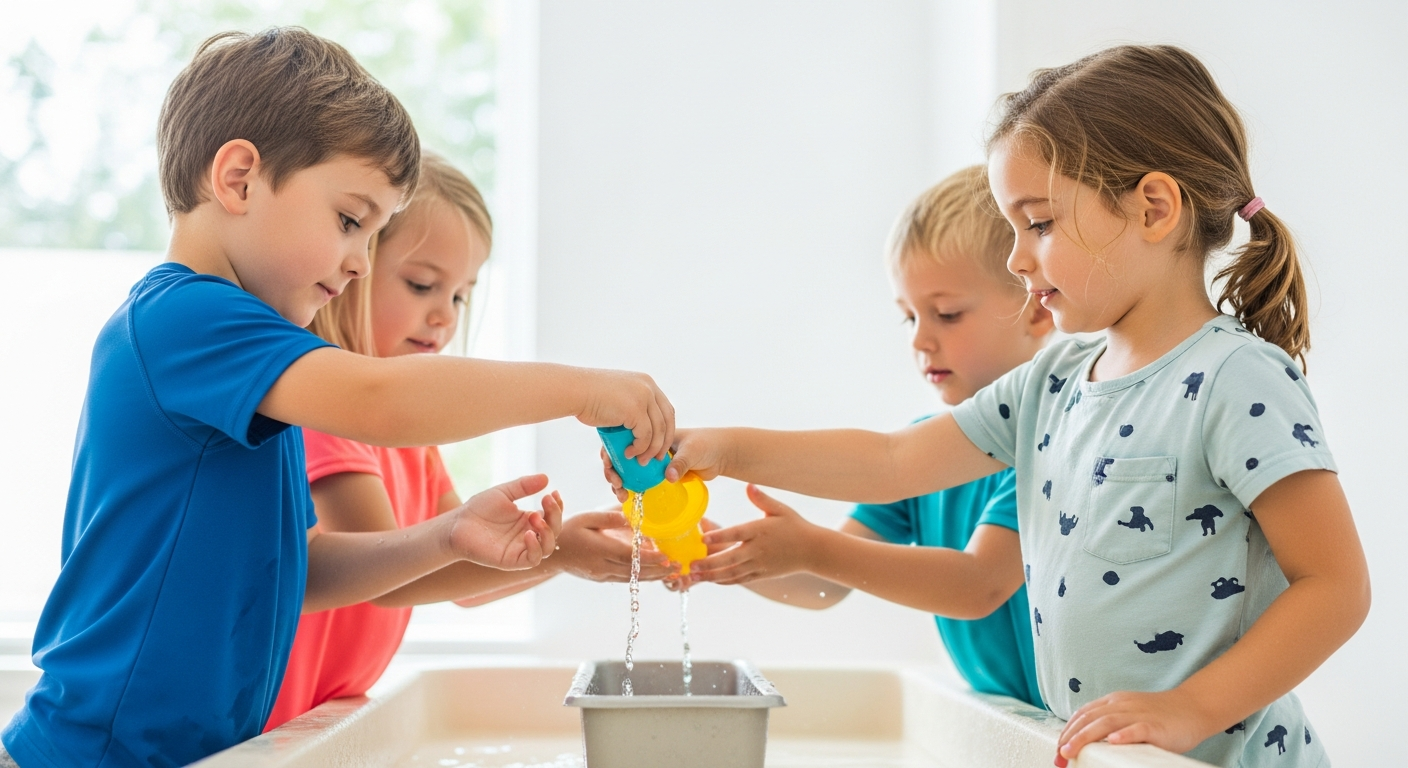
Table of Contents
- Introduction
- Why Water Play is a Developmental Powerhouse
- Essential Setup: How to Keep it Stress-Free
- Indoor Toddler Water Activity Ideas
- Outdoor Toddler Water Activity Adventures
- The Speech Blubs Methodology: Why Play Works
- Advanced Water Play for Preschoolers
- Integrating Physical Play with Smart Screen Time
- Getting the Most Value for Your Family
- Safety First: A Note for Parents
- Practical Vocabulary to Use During Water Play
- Conclusion
- FAQ
Introduction
Have you ever noticed that a toddler who screams at the mere mention of a "bath" will happily spend forty-five minutes straight splashing in a mud puddle or a kitchen sink? It is one of the great mysteries of parenthood, but it is also one of our most powerful tools. At Speech Blubs, we know that the most profound learning happens when children are truly engaged in play. Water play isn't just a way to keep your little one busy while you finish a lukewarm cup of coffee; it is a full-body, multi-sensory experience that builds the foundation for communication, motor skills, and cognitive development.
In this post, we are going to dive deep into a variety of toddler water activity ideas that you can set up in minutes. We will explore why water is such a developmentally rich medium, how to keep your floors (mostly) dry, and how to use these moments to foster language growth. We’ll also show you how to pair these physical activities with our unique "smart screen time" to create a holistic learning environment. Our mission is to empower children to speak their minds and hearts, and often, that journey starts with a simple splash.

Whether you are looking for indoor solutions for a rainy day or backyard adventures for a sunny afternoon, we have you covered. By the end of this article, you’ll have a toolkit of activities designed to spark curiosity and build confidence in your child’s growing world.
Why Water Play is a Developmental Powerhouse
Before we get into the "how," let’s talk about the "why." Water is what educators call an "open-ended material." It has no set rules, no right or wrong way to play, and it changes form based on what you do with it. This makes it a perfect match for the way toddlers learn. At Speech Blubs, we lean into this philosophy of joyful, pressure-free exploration.
Stimulating the Five Senses (and More)
When your child engages in a toddler water activity, they aren't just getting wet. They are engaging their entire sensory system:
- Touch: They feel the difference between cold ice and warm water, the slippery sensation of soap, and the texture of a wet sponge versus a dry one.
- Sight: They watch ripples form, see light reflecting off the surface, and witness colors mixing when you add a drop of food coloring.
- Hearing: The "splish-splash," the "gurgle-gurgle" of pouring, and the "plop" of a toy hitting the water all provide auditory feedback.
- Vestibular and Proprioception: These "hidden" senses are about balance and body awareness. Reaching across a water table or carrying a heavy bucket of water helps a child understand their own strength and how their body moves in space.
Building Communication and Vocabulary
Water play is a natural conversation starter. It’s hard not to talk when you’re having this much fun! You can narrate your child’s actions using "action words" (verbs) like pour, splash, sink, float, wash, and squeeze. This is exactly how we approach language in the Speech Blubs app—by focusing on functional, exciting words that kids actually want to use.
If you are ever unsure about where your child stands in their communication journey, we recommend taking our quick 3-minute preliminary screener. It involves 9 simple questions and provides a personalized assessment and next-steps plan to help your child thrive.

Essential Setup: How to Keep it Stress-Free
The biggest barrier to indoor water play is usually the fear of a soaked carpet or a ruined hardwood floor. We get it! But with a few simple precautions, you can create a "splash zone" that is easy to clean.
- The Tarp Trick: Lay down a large plastic tarp or an old shower curtain liner before you begin.
- The Towel Layer: On top of the tarp, spread out two or three thick bath towels. These will catch the inevitable drips before they migrate.
- Low Water Volume: You don’t need a gallon of water. Often, just half an inch of water in the bottom of a bin is enough to provide twenty minutes of entertainment.
- Sponge Control: If you give a toddler a giant car-washing sponge, they will squeeze a liter of water onto the floor. Cut household sponges into halves or quarters so they can only hold a small amount of liquid.
Indoor Toddler Water Activity Ideas
When you’re stuck inside, these activities are lifesavers. They require minimal equipment—mostly things you already have in your kitchen or toy box.
1. The DIY "LACK" Water Table
You don’t need to buy an expensive, bulky plastic water table. Many parents use the famous, inexpensive LACK side table from IKEA. Because it is lightweight and has a laminate surface, it can handle some moisture. Place two rectangular plastic food storage bins on top, fill them with a bit of water, and you have an instant sensory station.
Practical Scenario: For a parent whose 3-year-old "late talker" loves animals, the "Animal Kingdom" section of Speech Blubs offers a fun, motivating way to practice. After watching a peer in the app say "duck" and make a "quack" sound, you can bring that duck toy over to your DIY water table. Encourage your child to make the duck "swim" and "quack" just like the friend they saw on the screen. This bridge between digital learning and physical play is where the magic happens.
2. The Toy Car Wash
Fill one bin with soapy water (use tear-free baby shampoo for extra bubbles) and another with clean water for "rinsing." Give your child their favorite toy cars, a small scrub brush, or a rag.
- Learning Goal: This activity is great for practicing "sequencing"—first we wash, then we rinse, then we dry.
- Vocabulary: Dirty, clean, bubbles, scrub, dry.
3. Kitchen Sink "Soup"
Pull a sturdy step stool up to the kitchen sink. Plug the drain and add a tiny bit of water and a few drops of food coloring. Give your child whisks, ladles, measuring cups, and plastic bowls. They can "cook" to their heart's content.
4. Color Mixing Lab
Fill three clear cups with water and add primary food coloring (red, yellow, blue) to each. Give your child an empty ice cube tray and a plastic dropper or a small spoon. Let them experiment with what happens when red water meets yellow water. This is an early science lesson in disguise!
Outdoor Toddler Water Activity Adventures
When the sun is out, the backyard becomes the ultimate classroom. Outdoor play allows for larger movements and, yes, a bit more mess.
5. The "Save the Dinosaurs" Ice Excavation
This is a fan favorite that takes a little prep but offers a massive payoff. Freeze small plastic dinosaurs or insects in various containers of water overnight. The next day, give your child the "ice blocks" and a small spray bottle of warm water.
- The Mission: They have to "rescue" the toys from the ice.
- Speech Connection: As they work, you can use words like cold, ice, stuck, free, and melt. Our method at Speech Blubs is backed by extensive research into video modeling, which shows that children learn best by imitating their peers. You can find videos of kids exploring nature and "cold" things within the app to reinforce these concepts.
6. Sponge Water Bombs
Instead of water balloons, which can be a choking hazard and leave tiny plastic bits all over the yard, make sponge bombs. Tie three or four strips of colorful sponges together in the middle with a zip tie or string. Dunk them in a bucket of water and let the kids toss them at targets (or each other). They are soft, reusable, and hold a surprising amount of water.
7. Painting the House (With Water)
Give your toddler a large house-painting brush and a bucket of plain water. Tell them their job is to "paint" the fence, the siding of the house, or the driveway. They will love watching the "paint" appear (darkening the surface) and then mysteriously disappear as it evaporates. It’s a lesson in "now you see it, now you don't!"
8. The Nature Sensory Bin
Take a walk around the yard and collect sticks, leaves, rocks, and flower petals. Drop them into a large bin of water.
- Science Tip: Discuss which items sink to the bottom and which ones float on top.
- Vocabulary: Heavy, light, bottom, top, floating.
The Speech Blubs Methodology: Why Play Works
At Speech Blubs, our company was born from the personal experiences of our founders. They all grew up with speech problems and decided to create the tool they wished they had as children. We don't just provide "screen time"; we provide "smart screen time" that acts as a catalyst for real-world interaction.
Our app uses video modeling, a scientifically proven technique where children watch other children performing speech exercises and activities. This triggers "mirror neurons" in the brain, making the child much more likely to try the sound or word themselves. When you follow up a session on the app with a hands-on toddler water activity, you are reinforcing those neural pathways through physical experience.
We aren't here to promise that your child will be giving public speeches in a month. Every child develops at their own pace. Instead, we focus on the joy of the process: fostering a love for communication, building confidence, and reducing the frustration that often comes with speech delays.
If you're ready to see how video modeling can transform your child's learning, you can download Speech Blubs on the App Store or get it on Google Play.
Advanced Water Play for Preschoolers
As your child grows, you can add layers of complexity to their water play. This helps transition from simple sensory exploration to problem-solving and social play.
9. The Squirt Gun Knock-Down
Line up plastic cups on the edge of a table or a low wall. Give your child a squirt bottle or a small water gun and see if they can knock the cups over. This is excellent for hand-eye coordination and fine motor strength (the "squeeze" action is great for developing the muscles needed for writing later on).
10. DIY Water Blob
If you have a large sheet of heavy-duty plastic sheeting and some duct tape, you can create a "water blob." Fold the plastic in half and tape the edges securely, leaving a small hole for the hose. Fill it with water and seal the final hole. It creates a cool, squishy surface that kids can crawl and jump on without actually getting wet. It’s like a giant, outdoor water bed!
11. Pouring Station
This sounds simple, but it is endlessly fascinating for a toddler. Provide a variety of vessels: tall thin bud vases, wide shallow bowls, and funnel-shaped cups. Dye the water different colors. Watching how the same amount of water looks different in a tall glass versus a wide bowl is a fundamental lesson in "conservation of volume," a concept they will revisit in elementary school math.
Integrating Physical Play with Smart Screen Time
One of the most common questions parents ask us is, "How do I balance screen time with active play?" We believe the two should work together. At Speech Blubs, we provide a screen-free alternative to passive viewing (like mindless cartoons) by creating an interactive loop.
Imagine this: You spend 10 minutes on the Speech Blubs app with your child, exploring the "Big World" section. You see videos of children playing in the rain or splashing in puddles. Then, you put the phone away, grab your rain boots, and head outside for a real-life toddler water activity. The app provided the motivation and the vocabulary, and the puddle-jumping provided the experience.
This "co-play" model is what we advocate for. Our app is a powerful supplement to a child’s overall development plan and can be a wonderful companion to professional speech therapy. Don’t just take our word for it—read the success stories from thousands of parents who have seen their children’s confidence soar.
Getting the Most Value for Your Family
We want to be transparent about how to access our tools. We offer two main paths to joining the Speech Blubs family:
- The Monthly Plan: At $14.99 per month, this is a great way to test the waters if you aren't sure yet.
- The Yearly Plan: This is our best value option at $59.99 per year. When you break it down, it’s only $4.99 a month—less than the price of a fancy coffee.
Why Choose the Yearly Plan? It isn't just about the 66% savings. The Yearly plan includes exclusive, high-value features that the monthly plan does not:
- A 7-Day Free Trial: You can try everything out risk-free.
- Reading Blubs: Access to our additional app designed to jumpstart literacy and reading skills.
- Priority Support: You get a 24-hour support response time and early access to all our new updates.
To get the full suite of features and start your journey with a free trial, we encourage you to create your account on our website today.
Safety First: A Note for Parents
While water play is incredible for development, it requires 100% active supervision.
- Constant Supervision: A child can drown in as little as two inches of water. Never leave your child alone during a water activity, even for a "quick" trip to the kitchen.
- Clean Up Spills: To prevent slips and falls, keep a dry mop or an extra towel nearby to immediately wipe up any water that escapes the play area.
- Sun Protection: If playing outdoors, remember sunscreen and hats, even on cloudy days.
Practical Vocabulary to Use During Water Play
To help you turn these activities into language-building moments, here is a list of words and phrases you can model for your child:
- Verbs (Action Words): Splash, pour, dip, scrub, squeeze, dry, wash, float, sink, drip, spray.
- Adjectives (Describing Words): Wet, dry, cold, warm, soapy, bubbly, clear, heavy, light, empty, full.
- Simple Sentences: "The boat is floating," "I see bubbles," "The water is blue," "More water, please."
By using these words repeatedly during play, you are providing your child with the "building blocks" of language in a context that makes sense to them. If your child is struggling with specific sounds, the "Mouth Gym" section in Speech Blubs can help them practice the physical movements needed to say these words clearly.
Conclusion
The beauty of a toddler water activity lies in its simplicity. You don't need a backyard full of expensive toys or a degree in early childhood education to provide your child with a world-class learning experience. All you need is a plastic bin, a bit of water, and your presence.
By combining these tactile, sensory experiences with the peer-led video modeling found in Speech Blubs, you are giving your child a powerful head start. You are building their vocabulary, strengthening their motor skills, and—most importantly—creating joyful memories together as a family.
We invite you to join our community of over 5 million parents who are dedicated to helping their children "speak their minds and hearts." Ready to dive in? Choose our Yearly plan to receive your 7-day free trial, the Reading Blubs app, and full access to our transformative speech tools. Download Speech Blubs on the App Store or Google Play and start splashing into learning today!
FAQ
1. What age can I start water play with my toddler?
Most children can begin supervised water play as soon as they can sit up independently and have good head control, usually around 6 to 9 months. At this early stage, keep it very simple with just a shallow tray of water and a few rattles or spoons. As they move into the toddler years (1-3), you can introduce more complex tools like funnels and squirt bottles.
2. My child is a "late talker." Will water play really help?
Yes! Language development is deeply connected to sensory and motor experiences. Water play provides a low-pressure environment where children feel motivated to communicate their needs and observations. When paired with a tool like Speech Blubs, which uses peer modeling to encourage imitation, water play can be a key component in "unlocking" new words and sounds.
3. How do I stop my toddler from drinking the play water?
This is a very common challenge! The best approach is to use clean, potable water from the tap so that a small sip isn't a safety concern. Constantly model the correct behavior by saying, "Water is for splashing, not for drinking," and offer a dedicated water bottle or sippy cup nearby so they can satisfy their thirst properly.
4. Is the Speech Blubs 7-day free trial really free?
Absolutely. When you sign up for our Yearly plan, you get the first 7 days to explore all the features, including the "Animal Kingdom," "Mouth Gym," and the Reading Blubs app, at no cost. If you feel it isn't the right fit for your family, you can cancel before the trial ends and you won't be charged. We offer this because we are confident that once you see your child's engagement, you'll see the immense value it brings.
About the author