
Drooling and Speech Delay: What Parents Need to Know
 By Speech Blubs Team•Mar 12, 2026•14 min.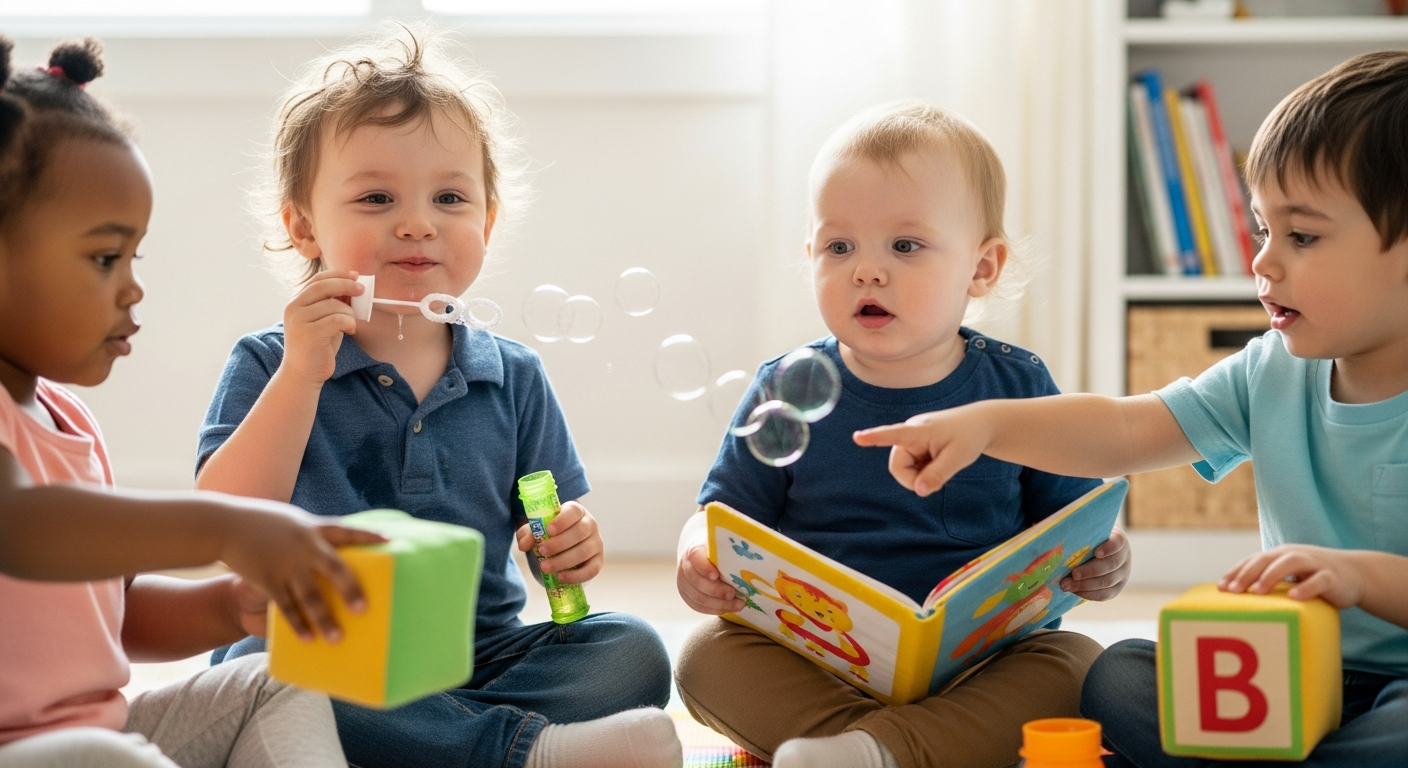
Table of Contents
- Introduction
- The Normalcy of the "Soggy Phase"
- What is Sialorrhea?
- Why Does Drooling and Speech Delay Happen Together?
- Common Underlying Causes
- How Excessive Drooling Impacts Communication
- Practical Strategies to Support Your Child at Home
- The Speech Blubs Methodology: Why it Works
- Choosing the Right Plan for Your Family
- When to Consult a Professional
- Creating Joyful Learning Moments
- FAQs
- Conclusion
Introduction
Have you ever found yourself constantly reaching for a fresh bib or wiping your toddler's chin for the hundredth time in a single afternoon? While a certain amount of "soggy" charm is expected in the early years, many parents eventually begin to wonder: when does the drooling stop being a phase and start being a signal? Is there a deeper connection between that lingering dampness and the fact that your little one isn't quite hitting their talking milestones yet? These are the exact questions that keep parents up at night, and at Speech Blubs, we are here to help you navigate them with empathy and expertise.
The relationship between drooling and speech delay is more than just a coincidence; it is often rooted in the way a child’s mouth, tongue, and jaw muscles develop and coordinate. In this article, we will explore why children drool, the biological mechanics behind it, and how it can impact a child's ability to form clear words. We will also provide practical, play-based strategies you can use at home to support your child’s oral motor development. Our mission is to empower children to speak their minds and hearts, and understanding the "why" behind their physical development is the first step in that journey. By the end of this post, you will have a clear understanding of when to seek help and how our unique approach to "smart screen time" can be a powerful ally in your child’s growth.

The Normalcy of the "Soggy Phase"
Before we dive into the complexities of speech delays, it is important to acknowledge that drooling is a perfectly normal part of infancy. Most babies begin to drool around three to six months of age as their salivary glands become more active and they begin the process of teething. During this time, the body increases saliva production to soothe sensitive gums and provide antibacterial protection for erupting teeth.
Typically, children begin to gain better control over their saliva as they develop the ability to swallow more efficiently and keep their lips closed. For most, this "soggy phase" naturally subsides by the age of two. However, if a child continues to drool excessively past the age of four, or if the drooling is accompanied by a noticeable delay in their verbal communication, it may be a sign of an underlying challenge with oral motor control.
What is Sialorrhea?
In the clinical world, excessive drooling is known as sialorrhea. While the name sounds complicated, it simply refers to the unintentional loss of saliva from the mouth. There are two primary types of sialorrhea that parents should be aware of:
- Anterior Sialorrhea: This is the most visible form, where saliva flows out of the front of the mouth. You’ll notice wet shirts, damp pillows, or even skin rashes around the chin and neck due to constant moisture.
- Posterior Sialorrhea: This is less obvious but can be more concerning. It occurs when saliva flows back toward the airway or lungs. If your child frequently coughs, gags, or seems congested without having a cold, they may be struggling to manage their saliva internally.
If you are feeling uncertain about your child's progress or whether their drooling is within the "normal" range, we recommend taking a moment for self-assessment. You can take our quick 3-minute preliminary screener to receive a simple assessment and a personalized next-steps plan. It consists of nine simple questions designed to give you clarity and peace of mind.

Why Does Drooling and Speech Delay Happen Together?
To understand the link between drooling and speech delay, we have to look at the mouth as a sophisticated piece of machinery. The same muscles required to keep saliva inside the mouth—the lips, tongue, and jaw—are the exact same muscles required to produce clear speech sounds.
If a child has low muscle tone (hypotonia) or a lack of coordination in these areas, two things often happen simultaneously:
- They cannot maintain a "lip seal": Without the strength to keep their mouth closed, saliva escapes.
- They cannot articulate sounds: Speech requires precise, rapid movements. If the tongue is "floppy" or the jaw is weak, sounds like "p," "b," "m," and "w" (which require lip closure) or "t" and "d" (which require tongue tip elevation) become very difficult to produce.
At Speech Blubs, our founders grew up with speech problems themselves. They created the tool they wished they had—one that turns these physical challenges into joyful, successful moments. Our app uses "video modeling," a scientifically-backed method where children watch and imitate their peers. When a child sees another child on the screen successfully making a sound or a funny face, it triggers "mirror neurons" in their brain, encouraging them to try the movement themselves. This is a far cry from passive cartoons; it is active, intentional play that builds the foundational strength needed to both manage drooling and start talking.
Common Underlying Causes
While every child develops at their own pace, there are several common reasons why a child might experience both excessive drooling and a speech delay:
1. Hypotonia (Low Muscle Tone)
This is perhaps the most frequent culprit. When the muscles of the face and mouth are "relaxed" or weak, the child may naturally rest with their mouth open. This "open-mouth posture" makes it nearly impossible to swallow saliva before it spills out. It also makes the high-speed movements of speech feel like running a marathon in sand.
2. Sensory Processing Issues
Some children simply aren't aware that their chin is wet. They may have "reduced oral awareness," meaning they don't feel the saliva pooling in their mouth. Because they don't feel it, their brain doesn't send the signal to swallow. This same lack of awareness can make it hard for them to "feel" where their tongue should go when trying to say a new word.
3. Anatomical Differences
Physical factors such as an oversized tongue (macroglossia), a high arched palate, or enlarged tonsils and adenoids can interfere with a child's ability to keep their mouth closed and swallow properly. If a child is a chronic "mouth breather" due to enlarged adenoids, drooling is almost inevitable.
4. Neurological Conditions
Conditions like Cerebral Palsy, Down Syndrome, or Childhood Apraxia of Speech involve the brain's ability to send signals to the muscles. In these cases, the "wiring" between the brain and the mouth needs extra support and repetition to form strong connections.
Our approach is designed to be a powerful supplement to professional therapy for children facing these challenges. You can read testimonials from parents who have seen their children build confidence and reduce frustration through our joyful learning moments.
How Excessive Drooling Impacts Communication
When a child struggles with drooling, the primary impact on speech is seen in their articulation. Articulation is the physical act of producing speech sounds. There are four main ways this manifests:
- Omissions: The child leaves out sounds entirely (e.g., saying "at" instead of "cat").
- Substitutions: One sound is replaced by another (e.g., saying "wabbit" instead of "rabbit").
- Distortions: The sound is made, but it's "slushy" or unclear due to excess saliva or poor tongue placement.
- Additions: Extra sounds are added to words.
Imagine trying to speak clearly with a mouth full of water—that is the daily reality for a child with sialorrhea. The effort required to manage the liquid often takes precedence over the effort required to form words, leading to frustration for both the child and the parent. Our goal is to reduce that frustration by turning mouth "work" into mouth "play."
Practical Strategies to Support Your Child at Home
If you've noticed your child is drooling more than expected and their words aren't coming quite as easily as their peers', there are several activities you can incorporate into your daily routine. These are not "cures," but rather ways to foster a love for communication and build foundational skills.
The "Wet vs. Dry" Concept
Helping a child develop sensory awareness is key. Use a soft towel and gently pat their chin. Say, "Oh, your chin is wet! Let’s make it dry." Use mirrors so they can see the difference. Establishing this vocabulary helps them eventually recognize the sensation of drooling on their own.
Skip the Sippy Cup
Many speech pathologists recommend moving away from traditional sippy cups and toward straws. Drinking through a straw requires "lip rounding" and significant muscle effort from the cheeks and tongue. This naturally strengthens the muscles needed for both swallowing and speaking.
Mouth Exercises ( disguised as play!)
- Blowing Bubbles: This encourages lip rounding and breath control.
- Mirror Faces: Spend time in front of a mirror making "big" faces—stick out your tongue, puff out your cheeks, and blow kisses. This is exactly what we do in Speech Blubs!
- Animal Sounds: For a parent whose 3-year-old "late talker" loves animals, our "Animal Kingdom" section offers a fun, motivating way to practice "moo" and "baa" sounds. These sounds require different types of lip and jaw movements that help build oral motor control in a low-pressure environment.
The Speech Blubs Methodology: Why it Works
At the heart of Speech Blubs is our scientific methodology, which places us in the top tier of speech apps worldwide. We don't just show animations; we show real children.
When your child opens the app, they aren't just watching a screen; they are engaging in a "smart screen time" experience. They see a peer making a specific sound or performing a facial movement. Because children are naturally wired to imitate other children, this creates a joyful family learning moment.
We provide a screen-free alternative to passive viewing. Instead of your child zoning out to a cartoon, they are actively participating, mirroring movements, and building the "muscle memory" needed for clear speech. This helps in developing key foundational skills, reducing the frustration that often leads to tantrums in late talkers.
Choosing the Right Plan for Your Family
We believe that every child deserves the chance to be understood. To build trust and provide the best possible experience, we offer two transparent pricing options designed to fit your family's needs:
- Monthly Plan: For $14.99 per month, you get full access to the Speech Blubs app and its library of over 1,500 activities. This plan does not include a free trial or additional bonus apps.
- Yearly Plan (Best Value): This is our most popular and effective choice. At $59.99 per year, the cost breaks down to just $4.99 per month—a massive 66% savings.
The Yearly Plan is designed for families committed to seeing long-term progress. When you choose the Yearly Plan, you also receive:
- A 7-day free trial to ensure the app is a perfect fit for your child.
- The Reading Blubs app, which helps transition speech skills into early literacy.
- Early access to all new updates and content.
- Priority 24-hour support response time from our dedicated team.
We encourage you to create your account and begin your 7-day free trial today by selecting the Yearly plan to unlock the full suite of features and start your journey toward clearer communication.
When to Consult a Professional
While apps and home activities are powerful supplements, they are part of a larger developmental plan. We always recommend consulting with your pediatrician or a Speech-Language Pathologist (SLP) if:
- Your child is over age 4 and still drools heavily.
- The drooling is causing skin infections or respiratory issues.
- Your child has fewer than 50 words by age 2.
- You or strangers struggle to understand your child's speech by age 3.
Early intervention is the "gold standard" for a reason. The earlier we address these oral motor challenges, the easier it is for your child to find their voice.
Creating Joyful Learning Moments
The journey of parenting a child with a speech delay can be filled with worry, but it should also be filled with joy. Every time your child manages a new sound, or successfully swallows instead of drooling, it is a victory worth celebrating. Our mission is to provide an immediate, effective, and joyful solution for the 1 in 4 children who need speech support.
By blending scientific principles with play, we help children transition from "the child who drools" to "the child who speaks." Whether you are practicing your "p" sounds while blowing bubbles or following along with the kids in our app, remember that you are building a bridge between your child's heart and the rest of the world.
Ready to see the difference for yourself? You can download Speech Blubs on the App Store or Google Play to get started.
FAQs
1. Can drooling actually cause a speech delay?
Drooling itself doesn't "cause" the delay, but it is often a symptom of the same underlying issue: poor oral motor control. If the muscles in the mouth aren't strong enough to hold back saliva, they likely aren't strong or coordinated enough to produce complex speech sounds. Addressing the muscle strength usually helps improve both the drooling and the speech.
2. Is it true that using a straw can help with drooling?
Yes! Using a straw is a great "workout" for the mouth. It requires the child to seal their lips around the straw, pull their tongue back, and use their cheeks to create suction. These are the exact movements needed to swallow saliva effectively and to produce sounds like "oo," "w," and "p."
3. At what age should I be concerned if my child is still drooling?
Most children grow out of drooling by age 2. By age 4, drooling is no longer considered developmentally typical. If your child is 2 or older and you notice they also aren't using as many words as their peers, it’s a good idea to seek a professional evaluation.
4. How does Speech Blubs help with oral motor skills?
Speech Blubs uses a technique called "video modeling." By watching real children perform specific mouth movements and sounds, your child’s brain is naturally encouraged to imitate them. This peer-to-peer connection is highly motivating and helps children practice the physical movements needed for speech in a way that feels like a game, rather than "therapy."
Conclusion
Understanding the link between drooling and speech delay is a vital step in supporting your child’s development. While it’s easy to feel overwhelmed by the "why" and the "what-ifs," remember that you are your child's best advocate and playmate. By focusing on building muscle strength, increasing sensory awareness, and providing the right tools, you are setting the stage for a lifetime of confident communication.
At Speech Blubs, we are honored to be a part of your family’s story. We provide a bridge from frustration to connection, using "smart screen time" to turn every day into a learning opportunity. We don't promise public speeches in a month, but we do promise a process that fosters a love for communication and builds the foundational skills your child needs to thrive.
Don’t wait to give your child the support they need. Download Speech Blubs on the App Store or Google Play today. For the best experience and the most comprehensive toolset, be sure to select the Yearly Plan. It includes your 7-day free trial, the Reading Blubs app, and exclusive features—all for just $4.99 a month. Let’s help your little one speak their mind and heart, one joyful moment at a time.
About the author