
Easy Toddler Activity Ideas for Happy Homes
 By Speech Blubs Team•Mar 18, 2026•16 min.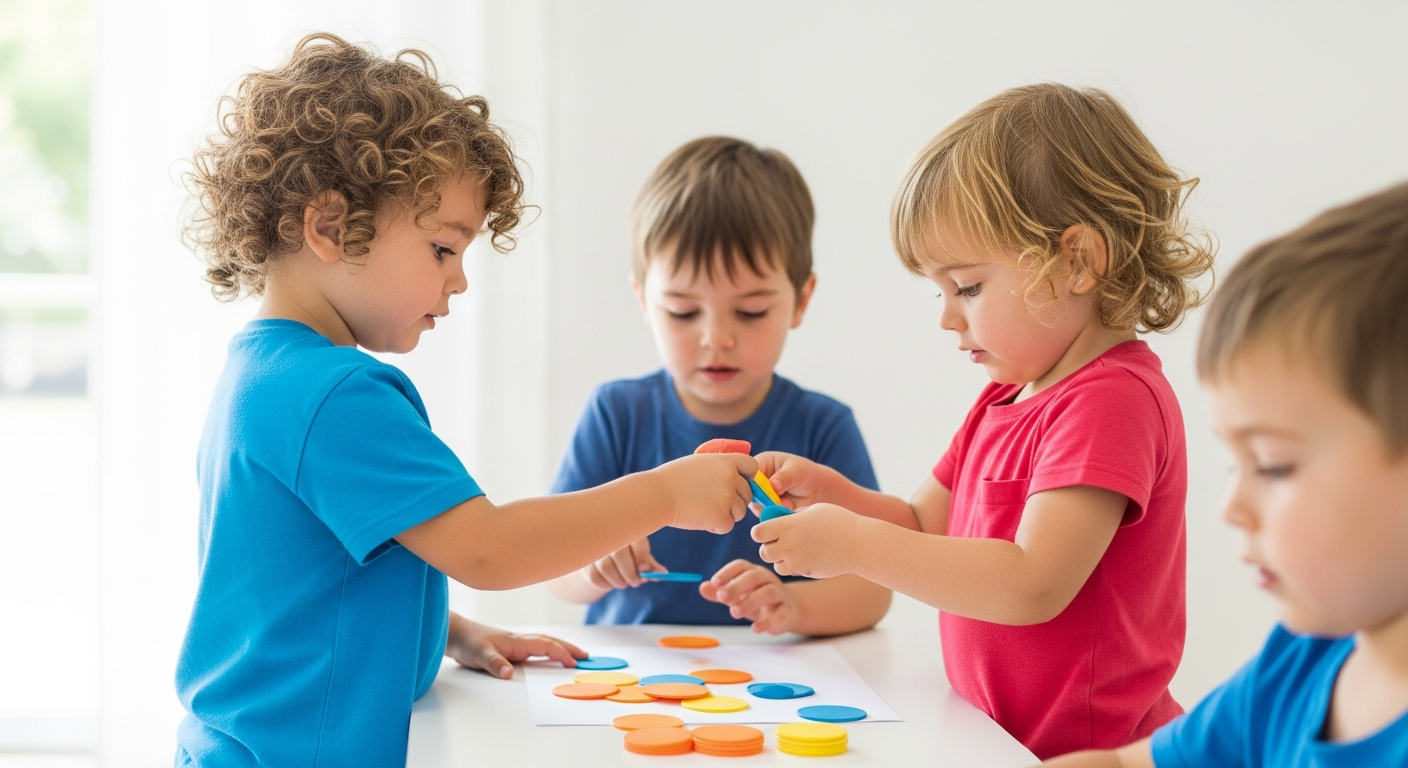
Table of Contents
- Introduction
- The Power of Play in Toddler Development
- Easy Sensory Activities for Language Growth
- Fine Motor Activities that Build Confidence
- Gross Motor Games for Active Learners
- Integrating Speech Blubs into Your Daily Routine
- More Low-Prep "Around the House" Ideas
- The Importance of Co-Play
- Practical Scenarios: Connecting Activities to App Features
- Building a "Boredom Buster" Kit
- Setting Realistic Expectations
- Frequently Asked Questions (FAQ)
- Conclusion
Introduction
Have you ever found yourself in the "four o'clock slump," where the toys are scattered, the coffee is cold, and your toddler is buzzing with an energy level that seems physically impossible? You aren't alone. In fact, research suggests that the average toddler asks hundreds of questions a day and possesses a drive for exploration that can leave even the most energetic parents feeling depleted. We know that as a parent, your brain power is often stretched thin between managing a household, working, and ensuring your little one is hitting their developmental milestones. You want to provide engaging, educational experiences, but sometimes you just need an easy toddler activity that doesn't require a trip to the craft store or an hour of setup.
The purpose of this guide is to provide you with a robust toolkit of low-prep, high-engagement activities that foster development and joy. We will explore sensory play, fine motor tasks, and "smart screen time" options that fit seamlessly into your busy life. At Speech Blubs, we believe that play is the most powerful tool for learning. Our mission is to empower children to speak their minds and hearts, and we’ve seen firsthand how the right activities can bridge the gap between a "late talker" and a confident communicator.

By the end of this post, you will have a comprehensive list of activities that require minimal materials but offer maximum developmental benefits. Whether you are looking to boost your child’s vocabulary, improve their hand-eye coordination, or simply find five minutes of peace while they are safely engaged, we have you covered. The main message is simple: you don’t need elaborate setups to be an amazing teacher for your child; you just need a few "go-to" ideas and the right tools to support their growing voice.
The Power of Play in Toddler Development
Before we dive into the specific activities, it’s important to understand why an easy toddler activity is more than just a way to pass the time. For a child between the ages of one and three, play is their full-time job. It is how they make sense of the world, test cause and effect, and build the neural pathways necessary for complex language and social interaction.
At Speech Blubs, our company was born from the personal experiences of our founders, who all grew up with speech problems. They created the tool they wished they had—a way to make speech practice feel like a game rather than a chore. We understand that about 1 in 4 children will need some form of speech support, and providing a joyful, immediate solution is at the core of what we do. Our approach blends scientific principles with play into "smart screen time" experiences that encourage active participation rather than passive scrolling.
Moving Beyond Passive Screen Time
One of the biggest challenges for modern parents is managing screen time. We often feel guilty for handing over a tablet, but there is a significant difference between passive viewing (like watching endless loops of cartoons) and active, educational engagement. Our app is designed to be a screen-free alternative to those passive experiences by encouraging children to mimic, speak, and interact.
We use a unique "video modeling" methodology. This is based on the science of mirror neurons—the brain cells that fire both when we perform an action and when we see someone else perform that same action. By watching their peers on screen, children are naturally motivated to imitate sounds and words. This builds confidence and reduces the frustration often felt by children who are struggling to communicate.

If you’re curious about where your child stands in their development, you can take our quick 3-minute preliminary screener. It involves 9 simple questions and provides you with a professional assessment and a customized next-steps plan.
Easy Sensory Activities for Language Growth
Sensory play is a toddler’s best friend. It involves any activity that stimulates a child’s senses: touch, smell, taste, sight, and hearing. From a speech perspective, sensory bins are vocabulary gold mines. As your child touches cold ice or crunchy noodles, you have the perfect opportunity to introduce descriptive words like "freezing," "smooth," "bumpy," or "loud."
1. The Noodle Sensory Bin
This is perhaps the ultimate easy toddler activity. Simply take a bag of dry pasta (rotini or penne works great) and pour it into a plastic tub. Add some scoops, spoons, or small plastic animals.
Practical Scenario: For a parent whose 3-year-old "late talker" loves animals, the "Animal Kingdom" section of the Speech Blubs app offers a fun, motivating way to practice "moo" and "baa" sounds. After using the app to watch other kids make animal sounds, you can transition to the noodle bin. Hide the plastic animals in the noodles and "rescue" them, mimicking the sounds you just practiced in the app. This reinforces the learning in a tactile, real-world environment.
2. Popsicle Bath
This idea, popularized by the "Busy Toddler" community, is a lifesaver for those long afternoons. Simply give your child a popsicle and put them in a lukewarm bath. It’s low mess because any drips are immediately washed away, and it provides a unique sensory contrast between the cold popsicle and the warm water. This is a great time to talk about "cold" vs. "hot" and "sticky" vs. "clean."
3. Kitchen Sink "Toy Wash"
Fill your kitchen sink with a little bit of soapy water and grab a handful of waterproof toys—plastic cars, dinosaurs, or blocks. Give your child a clean sponge or an old toothbrush and let them go to town. This activity is fantastic for teaching "action words" (verbs). You can narrate what they are doing: "You are scrubbing the car!" or "Look, you are splashing the water!"
Fine Motor Activities that Build Confidence
Fine motor skills involve the coordination of small muscles in the hands and fingers. These skills are essential for later tasks like writing, buttoning clothes, and using utensils. However, they are also deeply connected to speech. The parts of the brain responsible for fine motor control and language production are closely linked!
4. The Sticker Wall
Grab a giant roll of craft paper (or even some old flattened cardboard boxes) and tape it to the wall at your child’s eye level. Give them a sheet of stickers and let them decorate. Peeling stickers is an incredible workout for tiny finger muscles.
Speech Tip: Ask your child to tell you where they are putting the sticker. "On top?" "At the bottom?" "Next to the red one?" This builds their understanding of prepositions and spatial awareness.
5. Pom Pom Push
Take an old oatmeal container or a plastic Tupperware lid and cut a small hole in it. Give your child a bag of colorful pom poms and show them how to push the pom poms through the hole. They love the "disappearing" act, and the repetitive motion is very soothing for many toddlers. You can even sort by color to add a cognitive layer to the play.
To see how these types of foundational skills are backed by experts, you can read more about our science-backed research which places Speech Blubs in the top tier of speech apps globally.
Gross Motor Games for Active Learners
Sometimes, toddlers just need to move. Gross motor activities involve the large muscles of the body and are great for burning off that "tornado" energy.
6. Painter's Tape Car Track
Use blue painter's tape to create a "road" across your living room floor. You can make loops, zig-zags, and parking spots. Give your child their favorite toy cars and let them drive along the lines. This is an easy toddler activity that can stay on your floor for days without damaging the finish.
Scenario: If your child is working on following directions, you can use the car track to play "Red Light, Green Light." Use the Speech Blubs app beforehand to watch the "Early Words" section, focusing on words like "Go" and "Stop." Then, practice those exact words as they drive their cars on the tape track.
7. The Indoor Ball Toss
Laundry baskets aren't just for clothes; they make excellent basketball hoops. Use soft plush balls or even rolled-up socks. Encourage your child to throw the "ball" into the basket. This helps with gross motor coordination and can be a great way to practice counting: "One! Two! Three!"
Integrating Speech Blubs into Your Daily Routine
While physical play is vital, integrating "smart screen time" can provide the structured modeling that some children need to jumpstart their language. Our app is not meant to replace you as the parent or a professional therapist; rather, it’s a powerful supplement designed to foster a love for communication and reduce frustration.
Why Choose the Yearly Plan?
When you decide to join the Speech Blubs family, we want to ensure you get the absolute best value for your child’s development. While we offer a Monthly plan at $14.99 per month, our Yearly plan is the clear best choice for families committed to progress.
The Yearly plan is $59.99 per year, which breaks down to just $4.99 per month. That is a savings of 66% compared to the monthly rate! But the value goes beyond just the price tag. The Yearly plan includes:
- A 7-day free trial: You can explore everything we have to offer before committing.
- The Reading Blubs app: An extra app designed to help toddlers transition from speech to early reading skills.
- Early access to new updates: Be the first to try our newest features and exercises.
- 24-hour support response time: Our team is here to help you whenever you need us.
The Monthly plan does not include the free trial, the Reading Blubs app, or the priority support. To give your child the full suite of tools, we highly recommend the Yearly option. You can create your account and begin your 7-day free trial today.
More Low-Prep "Around the House" Ideas
If you find yourself stuck at home on a rainy day, look no further than your pantry and junk drawer. Here are more quick ideas that require zero "brain power" to set up:
8. Card Slot Drop
Cut a slit in the top of an empty oatmeal container or a shoebox. Give your child a deck of playing cards (or even old business cards). They will spend a surprising amount of time dropping the cards through the slot, dumping them out, and starting over.
9. Colander and Pipe Cleaners
Turn a kitchen colander upside down. Give your child a handful of colorful pipe cleaners and show them how to poke them through the holes. This is an incredible fine motor challenge that keeps little hands very busy.
10. Animal Washing Station
Does your child have plastic dinosaurs or farm animals that have seen better days? Put them in a small bin with a little water and a drop of dish soap. Give them an old toothbrush and let them "scrub-a-dub-dub." This is a perfect activity for a warm day on the porch or in the bathtub.
11. The Cereal Snacking Bin
When you truly need to get the dishes done or finish an email, fill a sensory bin with a dry, safe-to-eat cereal like Cheerios. Add some measuring cups and spoons. Your toddler can "practice" pouring and scooping while having a little snack at the same time.
12. "Paint" with Water
On a dry day, give your child a cup of water and a real paintbrush. Let them "paint" the driveway, the siding of the house, or even the fence. They love seeing the dark marks the water makes and watching them "disappear" as they dry.
The Importance of Co-Play
While many of these activities are designed so that a child can explore them independently for short periods, the real magic happens during co-play. You are your child’s first and most important teacher. By sitting on the floor with them, narrating their actions, and showing enthusiasm, you are validating their efforts and building their confidence.
When using Speech Blubs on Google Play, we encourage parents to sit with their children. Watch the video models together. Laugh when the filters put a funny hat on your child’s face. When the peer on the screen says "Apple," you say "Apple" too! This shared experience creates joyful family learning moments that stick.
Our method is designed to be effective and joyful. We don’t want to give you a "chore"; we want to give you a way to connect. See what other parents are saying about their journey on our parent testimonials page.
Practical Scenarios: Connecting Activities to App Features
To help you see how these activities work in real life, let’s look at a few common challenges and how you can use a combination of physical play and Speech Blubs to help.
Scenario: The Child Who Struggles with Transitions
If your toddler has a hard time stopping one activity to move to another (like leaving the park or coming to dinner), use the "Timer" concept.
- The Activity: Set up a "Pom Pom Drop" using a paper towel tube taped to the wall.
- The App Connection: Use the "Daily Routine" section in Speech Blubs to talk about what comes next. By watching other children perform routine tasks, your child learns the "script" for the day, which can reduce the anxiety and frustration that leads to tantrums.
Scenario: The Child with a Limited Vocabulary
If your child uses the same few words for everything, they might need a "vocabulary burst."
- The Activity: Try "Color Sorting with Toys." Lay out pieces of colored construction paper and have your child find toys from around the room that match the colors.
- The App Connection: Use the "Colors" section in the app. The video modeling will show children identifying and naming colors in a fun, upbeat way. When they see a peer say "Blue!" they are much more likely to try the word themselves than if an adult simply repeats it to them.
Building a "Boredom Buster" Kit
To make these activities even easier, we recommend putting together a "Boredom Buster" kit. Keep a plastic bin in a closet that contains:
- A roll of blue painter's tape.
- A bag of large pom poms.
- A pack of stickers.
- A few pipe cleaners.
- A set of "Do-A-Dot" markers.
Having these items in one place means that when you are exhausted and your toddler is restless, you don't have to think. You just grab the bin, pick one easy toddler activity, and let the fun begin.
Setting Realistic Expectations
As a child development expert, I want to remind you to be kind to yourself. Some days, an activity will last 45 minutes and you’ll feel like a parenting superstar. Other days, you’ll set up a beautiful sensory bin and your toddler will dump it over and walk away in thirty seconds. Both of these scenarios are completely normal.
Development isn't a straight line; it’s a series of leaps and plateaus. Our goal at Speech Blubs is to support you through those plateaus and celebrate the leaps. We don't promise that your child will be giving public speeches in a month. Instead, we focus on fostering a love for communication, building foundational skills, and creating those small, joyful moments of connection that eventually lead to big breakthroughs.
Frequently Asked Questions (FAQ)
1. What if my toddler tries to eat the materials in a sensory bin?
This is a very common concern! For younger toddlers who are still exploring with their mouths, always use "taste-safe" materials. Instead of water beads or small beans, use large pasta, dry cereal, or even whipped cream for "painting." Always supervise sensory play closely.
2. How long should an easy toddler activity actually last?
The attention span of a toddler is typically about 2 to 3 minutes per year of age. So, for a two-year-old, a 5-to-6-minute stretch of focused play is actually quite a success! Don't feel discouraged if they move on quickly; they are simply wired to explore many different things in a short amount of time.
3. Is screen time really okay for a child with a speech delay?
The American Academy of Pediatrics suggests that for children ages 2 to 5, screen time should be limited to one hour per day of high-quality programming. At Speech Blubs, we focus on "smart screen time" that is interactive and educational. When used as a supplement to physical play and human interaction, it can be a powerful tool for imitation and sound production.
4. How can I encourage my child to talk during these activities?
The best way is to use "Parallel Talk." This means you narrate what your child is doing as they do it, without constantly asking them questions. Instead of saying, "What color is that?" try saying, "You found the blue car! Vroom, vroom, the blue car is fast!" This provides a language-rich environment without putting pressure on the child to perform.
Conclusion
Finding an easy toddler activity shouldn't be a source of stress. Whether it's as simple as a popsicle in the bathtub or a sophisticated car track made of tape, the goal is the same: to engage your child's curiosity and support their growing mind. By combining these hands-on activities with the scientific methodology of Speech Blubs, you are providing your child with a well-rounded developmental foundation.
We invite you to join our community of over 4 million parents who have discovered the joy of "smart screen time." Remember, our Yearly plan offers the most comprehensive experience, including the 7-day free trial, the Reading Blubs app, and priority support—all for just $59.99 a year (saving you 66% compared to the monthly plan).
Ready to see your child speak their mind and heart? Download Speech Blubs on the Apple App Store or Google Play Store to begin. For those on a desktop, you can sign up on our website to start your journey. Don't forget to select the Yearly plan to unlock your 7-day free trial and the full suite of Speech Blubs features. Let’s make learning a joyful adventure together!
About the author