
Engaging Valentines Day Toddler Activities for Home
 By Speech Blubs Team•Mar 25, 2026•13 min.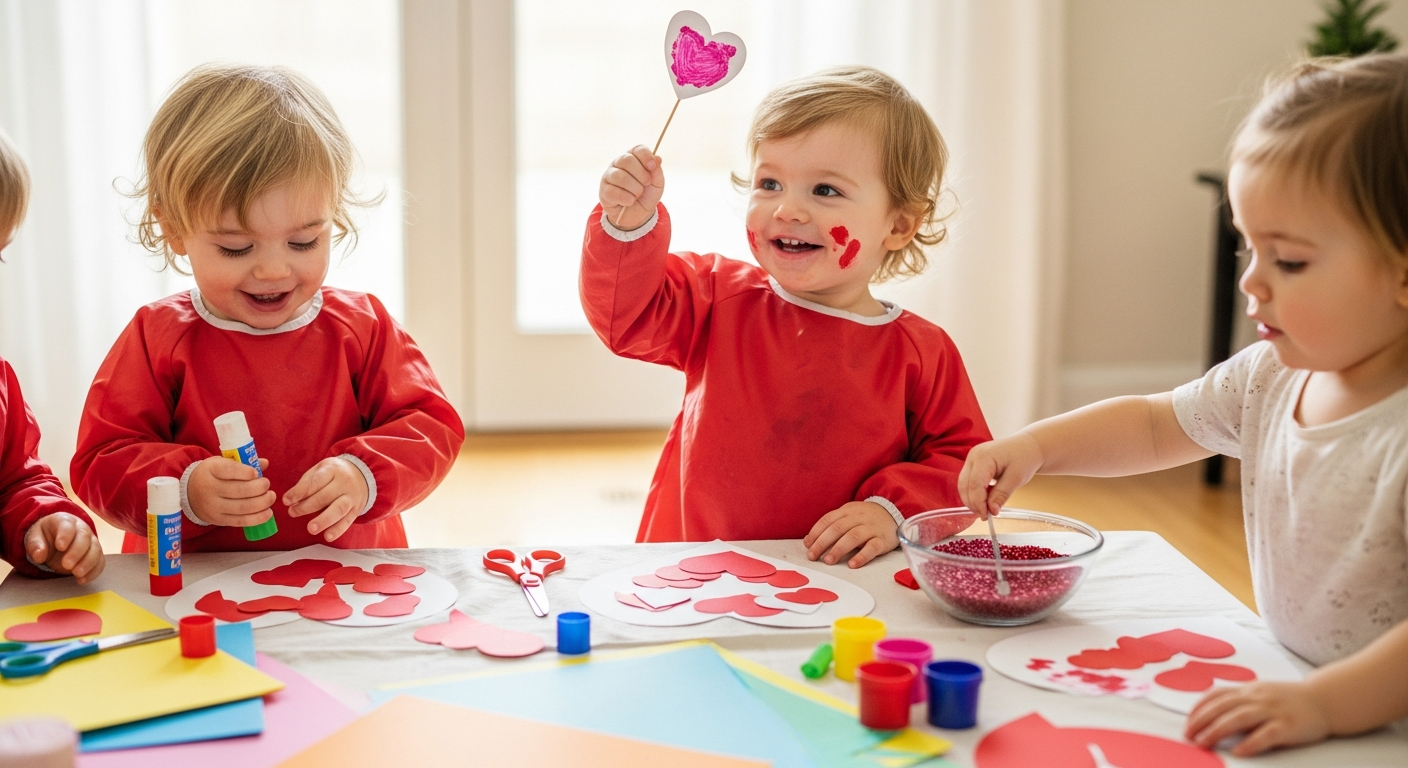
Table of Contents
- Introduction
- Why Valentine's Day is Great for Speech Development
- Sensory Valentines Day Toddler Activities
- Creative Arts and Crafts for Tiny Hands
- Literacy and Language Games
- Gross Motor "Heart" Games
- Incorporating Smart Screen Time with Speech Blubs
- A Realistic Approach to Milestone Progress
- Setting Up Your Valentine's Activity Station
- How to Get Started Today
- FAQ
- Conclusion
Introduction
Does the period after the winter holidays ever feel a bit like a "learning hangover" for your little one? After the high energy of December, January and February can sometimes feel a bit quiet. But then comes Valentine's Day—a holiday that, while abstract for a two-year-old, offers a beautiful opportunity to celebrate love, friendship, and most importantly, communication. At Speech Blubs, we believe every moment is an opportunity for a child to "speak their mind and heart," and Valentine’s Day is the perfect backdrop for this mission.
This blog post is designed to be your go-to resource for Valentines Day toddler activities that are not only fun but are specifically curated to boost speech, language, and fine motor development. We will dive into sensory bins that spark descriptive words, crafts that encourage following directions, and "smart screen time" options that use video modeling to turn play into a learning powerhouse.

Our goal is to help you move beyond passive viewing and into a world of active, joyful family connection. By the end of this article, you will have a full toolkit of low-prep, high-impact activities that foster a love for communication and build your child's confidence. Because at its core, Valentine’s Day isn’t just about candy hearts—it’s about the joy of connecting with the people we love most.
Why Valentine's Day is Great for Speech Development
For a toddler, a holiday is more than just a date on the calendar; it’s a sensory experience. Valentine’s Day introduces a specific set of vocabulary—words like heart, red, pink, hug, love, friend, and give. For a child who might be a "late talker" or is currently working on expanding their sentences, these thematic activities provide a natural "hook" for learning.
Our founders at Speech Blubs grew up with speech challenges themselves. They created our tool because they wanted to provide the joyful, effective solution they wish they had as kids. We know that 1 in 4 children will need some form of speech support. Activities like the ones listed below are fantastic supplements to professional therapy or a child's general development plan. They reduce frustration by giving children the tools to express their feelings in a fun, low-pressure environment.
Before you dive into the crafts, you might be wondering where your child currently stands in their communication journey. To get a better picture, you can take our quick 3-minute preliminary screener. It involves just 9 simple questions and provides an assessment and next-steps plan to help you support your child's growth.
Sensory Valentines Day Toddler Activities
Sensory play is the foundation of early childhood learning. When toddlers touch, smell, and see new textures, their brains are working overtime to process information. This is the perfect time to narrate what they are doing.
The Classic "Love" Sensory Bin
A sensory bin is a staple for a reason. You can create a Valentine’s-themed bin by dyeing white rice or chickpeas red and pink.

- How to do it: Mix 1 cup of dry rice with a teaspoon of vinegar and a few drops of red food coloring in a baggie. Shake it up and let it dry.
- The Speech Connection: As your child scoops and pours, use action words (verbs). "You are pouring the rice!" "The rice is falling."
- Speech Blubs Integration: For a parent whose 3-year-old loves animals, you can hide small plastic animals in the red rice. Use the "Animal Kingdom" section of the Speech Blubs app on the App Store to practice the "moo" and "baa" sounds as you "find" the animals in the "love" rice.
Candy Heart Oobleck
Oobleck is a non-Newtonian fluid (it’s both a solid and a liquid!) made from cornstarch and water.
- How to do it: Mix two parts cornstarch to one part water. Add purple or pink food coloring and drop in some conversation hearts.
- The Learning Moment: This is a great activity for teaching opposites. Is it hard or soft? Is it wet or dry?
- Scientific Approach: Our methodology is based on scientific principles, including the use of "video modeling." While your child plays with the oobleck, they are engaging their senses. Later, you can use Speech Blubs to watch other children make similar mouth movements and sounds, which activates "mirror neurons" in the brain. Learn more about the science behind our method.
Love Potion Bubble Foam
If you want a "cleaner" sensory experience (well, soapy clean!), bubble foam is the way to go.
- How to do it: Mix 2 parts water with 1 part tear-free bubble bath or dish soap in a blender. Add food coloring and whip it until it forms stiff peaks.
- Activity: Put the foam in a large tub and let your toddler "wash" plastic hearts or red toy cars.
- Vocabulary Focus: Focus on adjectives like bubbly, fluffy, slippery, and clean.
Creative Arts and Crafts for Tiny Hands
Crafting with toddlers is less about the final product and more about the process. It’s about building fine motor skills and following simple, one-step directions.
Cardboard Tube "Love Bugs"
Don't throw away those toilet paper rolls! They make the perfect body for a Love Bug.
- Materials: Tubes, construction paper, googly eyes, and pipe cleaners.
- Procedure: Help your child glue paper around the tube. Cut out heart shapes for wings.
- Language Prompt: Ask your child, "Where do the eyes go?" This helps with body part identification.
- Speech Blubs Tip: Use the "This is Me" section in the app to practice pointing to eyes, ears, and noses on the screen, then translate that to the Love Bug they are building.
Coffee Filter Water-Color Hearts
This activity is mesmerizing for toddlers and involves a bit of "magic" science.
- Materials: White coffee filters cut into heart shapes, washable markers, and a spray bottle or dropper with water.
- Procedure: Let your toddler scribble on the filters with red, purple, and pink markers. Then, let them spray water onto the filter. Watch the colors bleed and blend!
- Communication Goal: This is perfect for practicing "Requesting." Have your child say "more" or "water" before you give them the spray bottle.
"Love You to Pieces" Suncatchers
Using contact paper (sticky paper) is a mess-free way to let toddlers "glue."
- How to do it: Cut a heart outline out of black construction paper. Place it on a piece of clear contact paper. Let your toddler rip up small pieces of pink and red tissue paper and stick them inside the heart.
- Social Proof: We’ve heard from thousands of parents that activities like these, paired with our app, create joyful family learning moments. Check out our testimonials and parent reviews to see how other families are finding success.
Literacy and Language Games
Valentine’s Day is a wonderful time to introduce the concept of "mail" and sending messages to people we care about.
The Toddler Post Office
Set up a small cardboard box as a mailbox and give your child envelopes and "stamps" (stickers).
- The Activity: Encourage them to "write" letters (scribbles are great!) and "deliver" them to family members in the house.
- The Benefit: This fosters "expressive language." They are pretending to communicate a message.
- Expansion: Read books about friendship and love. While reading, point to pictures and ask, "What is the bear doing?" (He is hugging!).
Heart Letter Match
Draw large hearts on a piece of butcher paper and write uppercase letters inside them. Write the corresponding lowercase letters on small foam hearts or sticky notes.
- The Game: Have your child match the "baby" letter to the "mommy" letter.
- Speech Integration: Practice the sound the letter makes, not just the name. "This is A, it says /a/ /a/ Apple!"
Gross Motor "Heart" Games
Sometimes toddlers just need to move! These activities get the blood pumping while reinforcing the Valentine's theme.
Heart Hopscotch
Tape paper hearts to the floor in a path.
- The Game: Encourage your child to jump from heart to heart.
- Vocabulary: Practice "Jump!" "Stop!" and "Go!" This is excellent for children working on verbalizing simple commands.
The Great Heart Hunt
Think of this as an Easter Egg hunt, but with paper hearts.
- The Setup: Hide red and pink hearts around the living room.
- The Mission: Ask your child to find them and bring them back to a "treasure basket."
- Prepositions Practice: Use this to teach locations. "Is the heart under the chair?" "Is it on top of the table?"
Incorporating Smart Screen Time with Speech Blubs
In a world full of passive cartoons, we offer a different path. At Speech Blubs, we provide "smart screen time" that is active and participatory. Our app is built on the principle of video modeling, where your child watches other children (peers) performing speech exercises.
"Children are much more likely to imitate another child than an adult. It feels like a 'playdate' rather than a lesson."
When you are doing these Valentine’s activities, you can use the app as a powerful supplement. For example, after making a "Love Bug," you can go to the app and find related words to practice. This creates a cohesive learning environment where the physical and digital worlds support each other.
Why Choose the Yearly Plan?
If you’re ready to take the next step in your child's communication journey, we highly recommend our Yearly Plan. While we offer a Monthly plan for $14.99, the Yearly plan is just $59.99 (which breaks down to only $4.99/month—a 66% savings!).
The Yearly plan is the best choice for families because it includes:
- A 7-day free trial to explore everything risk-free.
- The Reading Blubs app, which helps transition speech skills into early literacy.
- Early access to all new updates and 24-hour support response time.
Ready to see the difference? Create your account and begin your 7-day free trial today.
A Realistic Approach to Milestone Progress
As a parent, it’s easy to feel pressured to see immediate results. You might wonder, "If we do these activities, will my child be giving public speeches in a month?" We want to set realistic expectations. Speech development is a marathon, not a sprint.
The goal of these Valentine's Day activities and using Speech Blubs is to:
- Foster a love for communication.
- Build your child's confidence.
- Reduce frustration for both the child and the parent.
- Create joyful family learning moments.
Think of these activities as the building blocks. Every time your child identifies a "red heart" or says "mama, look!" during a craft, a new connection is being made in their brain. If you are ever concerned about significant delays, we always recommend consulting with a professional Speech-Language Pathologist (SLP). Our app is designed to work beautifully alongside professional therapy, providing the "homework" that kids actually want to do.
Setting Up Your Valentine's Activity Station
To make these activities successful, preparation is key. Here are a few tips for a stress-free experience:
- Co-Play is Key: These aren't "set it and forget it" activities. Your presence and narration are what turn a simple craft into a speech lesson.
- Follow Their Lead: If your toddler wants to put 50 stickers on one heart instead of matching them, that’s okay! Follow their interest and talk about what they are doing.
- Limit Distractions: Turn off the background TV and put your phone away (unless you’re using the Speech Blubs app together!).
How to Get Started Today
You don't need a huge budget or a lot of time to make Valentine's Day special. Start with one sensory bin or one simple craft. If you find your child is particularly engaged by a certain theme—like animals or vehicles—lean into that.
If you want to see how Speech Blubs can specifically help your child, download the app on the Google Play Store or Apple App Store. Start with the screener, and then let the video modeling do the work of encouraging your child to produce new sounds and words.
FAQ
1. Are these activities suitable for a 2-year-old with a speech delay?
Absolutely. In fact, these activities are specifically designed to be low-pressure and high-engagement, which is ideal for children with speech delays. Focus on "modeling" the language for them (e.g., you say the word "heart" while pointing to it) rather than forcing them to say it. Pair these activities with the peer-led video modeling in Speech Blubs for the best results.
2. What if my child doesn't want to sit still for crafts?
That is perfectly normal for a toddler! If your child is high-energy, skip the sitting crafts and focus on the "Gross Motor" activities like Heart Hopscotch or the Heart Hunt. Movement actually helps many children process language better. You can also use the Speech Blubs app for short, 5-10 minute "smart screen time" bursts that keep them engaged without requiring long periods of sitting.
3. How much do the Speech Blubs plans cost?
We believe in transparent pricing. We offer a Monthly plan for $14.99 per month. However, our Yearly plan offers the best value at $59.99 per year (only $4.99/month). The Yearly plan also includes a 7-day free trial, the Reading Blubs app, and 24-hour support response time, which are not included in the monthly option.
4. How does "video modeling" actually help my child talk?
Video modeling is a research-based method where children learn by observing others. In Speech Blubs, your child watches videos of other children performing mouth exercises and saying words. This triggers "mirror neurons," which are the same neurons that would fire if your child were performing the action themselves. It makes the "work" of speech therapy feel like a fun social interaction with a peer.
Conclusion
Valentine's Day is a wonderful reminder to celebrate the connections we have with our children. By engaging in these toddler-friendly activities, you aren't just making crafts; you're building the foundational skills your child needs to "speak their mind and heart." Whether it's through the squishy texture of oobleck, the excitement of a heart hunt, or the interactive fun of video modeling, every moment spent together is an investment in their future communication.
We invite you to join the Speech Blubs family and see how our "smart screen time" can supplement your child's development. Our approach is rooted in play, backed by science, and born from our own personal experiences with speech challenges.
Ready to make this Valentine's Day a milestone for your child's speech? Start your journey today by downloading the app on the App Store or Google Play Store.
For the best experience and full access to our suite of tools—including Reading Blubs and our 7-day free trial—be sure to select the Yearly plan. It's our most popular choice for a reason, offering a 66% discount compared to the monthly plan. Let's work together to give your child the gift of confidence and communication this February!
About the author