
Fun and Easy St. Patrick’s Day Toddler Activities
 By Speech Blubs Team•Mar 25, 2026•14 min.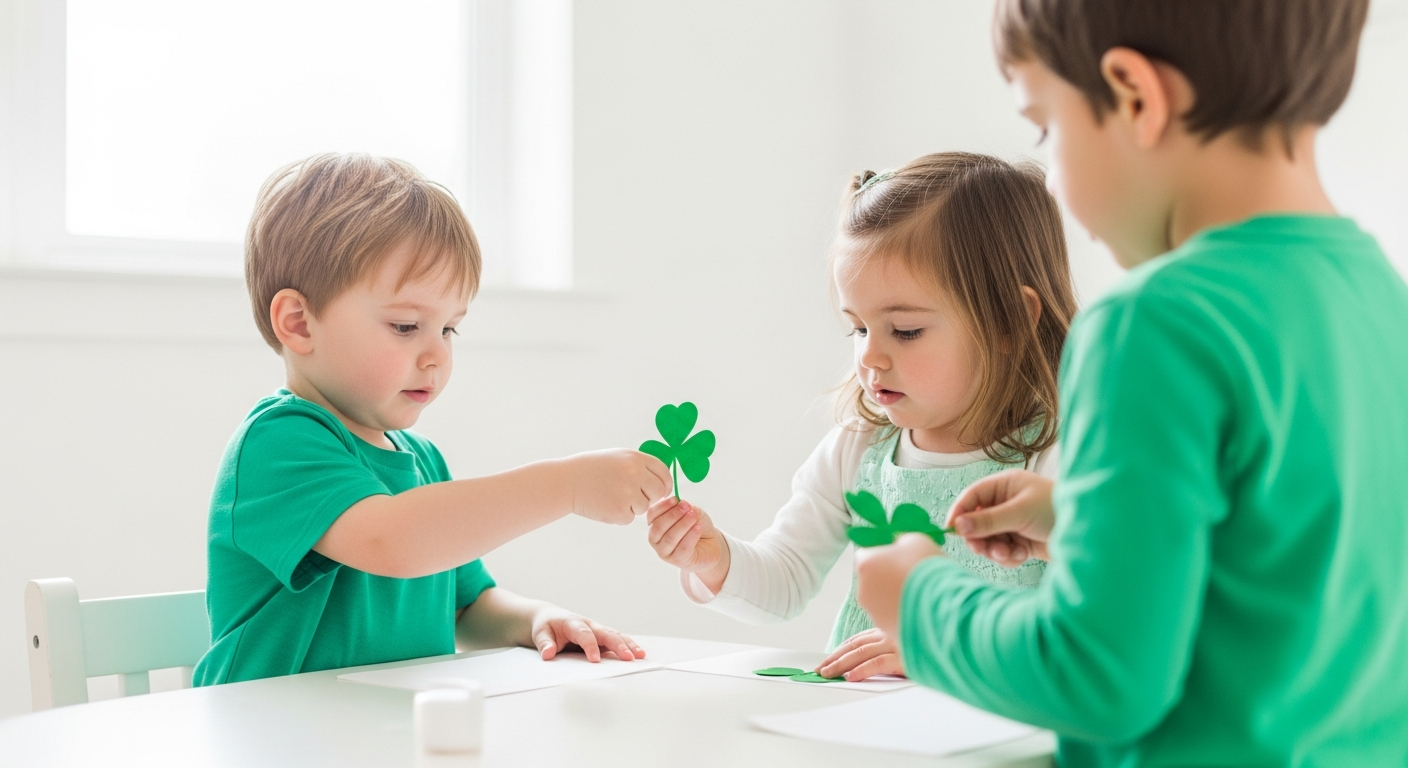
Table of Contents
- Introduction
- Why St. Patrick’s Day is a Speech Therapy Goldmine
- Sensory Play: Exploring the Emerald Isle at Home
- Arts and Crafts: Fine Motor Magic
- Movement and Gross Motor: The Great Green Hunt
- Calming Activities for After the Party
- Identifying When Your Child Needs More Support
- The Speech Blubs Experience: Why Choose the Yearly Plan?
- Using "Video Modeling" During the Holidays
- Practical Scenarios: Bringing it All Together
- Conclusion
- FAQ
Introduction
Did you know that by age three, a toddler's brain is twice as active as an adult's? This period of rapid growth is the perfect time to introduce "stealth learning"—activities that feel like pure play but are secretly building the foundations of speech, motor skills, and cognitive development. St. Patrick’s Day offers a literal pot of gold when it comes to these opportunities. With its vibrant rainbows, tactile "gold" coins, and lush green textures, this holiday is a sensory playground for little learners.
In this post, we are going to dive deep into a variety of st patrick's day toddler activities that you can do at home with simple supplies. We will cover everything from messy sensory bins and fine motor crafts to gross motor scavenger hunts and calming sensory bottles. More importantly, we’ll show you how to turn these festive moments into speech-building opportunities, using the same principles we use at Speech Blubs to help children find their voices.

Our mission is to empower children to "speak their minds and hearts," a goal born from the personal experiences of our founders, who all navigated speech challenges in their own childhoods. Whether your child is a "late talker" or simply a curious preschooler, these activities are designed to foster a love for communication and build the confidence they need to thrive.
Why St. Patrick’s Day is a Speech Therapy Goldmine
Holidays provide a break from the routine, which is often when the biggest developmental leaps happen. When a child is engaged in a novel, exciting activity—like hunting for a hidden leprechaun—their brain is more primed to absorb new vocabulary and practice difficult sounds.
The Power of Sensory-Rich Learning
Toddlers learn through their senses. When they plunge their hands into a bin of green-dyed rice, they aren't just feeling texture; they are building neural pathways. This "sensory-rich" environment is the perfect backdrop for language. By describing what they feel (crunchy, cold, smooth) and what they see (bright, green, shiny), you are expanding their expressive language in a way that feels natural.
Building Confidence Through Play
For a child who struggles with speech, "practicing" can often feel frustrating. However, when the practice is wrapped in a game of "I Spy" with gold coins, the pressure vanishes. This shift from "performance" to "play" is a core tenet of our philosophy. We believe in providing joyful solutions for the 1 in 4 children who need speech support, blending scientific principles with play into "smart screen time" experiences.
Sensory Play: Exploring the Emerald Isle at Home
Sensory bins are the bread and butter of toddler development. They encourage "independent play," which gives parents a much-needed breather while the child works on their focus and fine motor control.
1. The Rainbow Bright Sensory Tray
This tray is a visual masterpiece that helps with color recognition and counting.
- What you need: A large wooden tray or plastic bin, dyed green rice (as "grass"), a foam cauldron, and gold plastic coins.
- How to do it: Create a "rainbow" in the center using different colors of dyed rice. Place the cauldron at one end and hide the coins throughout the green "grass" rice.
- Speech Tip: As your child finds a coin, practice the "K" sound in "Coin." If they are just starting to talk, focus on the "G" sound in "Gold" or "Green."
2. Gold Jello Dig (Taste-Safe Play)
If your toddler is still in the "everything goes in the mouth" phase, this is the activity for you.

- What you need: Lemon or lime jello and plastic gold coins (ensure they are large enough to not be a choking hazard).
- How to do it: Prepare the jello according to the box instructions, but submerge the coins in the liquid before it sets in the fridge. Once firm, give your toddler a spoon and let them "rescue" the treasure.
- Speech Tip: Use "action" words. "Dig! Scoop! Found it! Sticky!" These simple verbs are the building blocks of early sentences.
3. Mixed Pasta and Beans "Green" Bin
Textures are vital for sensory processing. Mixing different shapes like penne, fusilli, and dried lima beans provides a varied tactile experience.
- How to dye pasta: Place dry pasta in a bag with a splash of vinegar and green food coloring. Shake it up and let it dry on a cookie sheet.
- The Activity: Hide small St. Patrick’s Day-themed erasers or shamrock cutouts in the mix.
- Practical Scenario: For a parent whose 3-year-old "late talker" loves animals, you could hide small plastic farm animals in the "green grass" pasta. In the "Animal Kingdom" section of the Speech Blubs app, your child can watch other kids make animal sounds, then they can find the corresponding animal in their sensory bin and try to imitate the sound themselves. This bridge between digital modeling and physical play is incredibly powerful.
Arts and Crafts: Fine Motor Magic
Crafting isn't just about the finished product; it’s about the "pincer grasp," bilateral coordination (using both hands together), and following multi-step directions.
4. Bell Pepper Shamrock Stamping
Nature provides the best tools! A bell pepper cut in half looks exactly like a three or four-leaf clover.
- What you need: A green bell pepper, green washable paint, and white cardstock.
- How to do it: Cut the pepper in half and remove the seeds. Let your child dip the cut end into the paint and stamp it onto the paper.
- Developmental Benefit: This helps with hand-eye coordination. Ask your child, "Is this a three or four-leaf clover?" to sneak in some early math and counting.
5. Tissue Paper Shamrocks
Tearing and scrunching paper is one of the best ways to build the tiny muscles in a toddler’s hands—muscles they will later need for holding a pencil and even for the complex movements of the mouth during speech.
- What you need: Green construction paper (cut into a shamrock shape), green tissue paper, and glue.
- How to do it: Have your child tear the tissue paper into small bits, roll them into tiny balls, and glue them onto the shamrock template.
- Speech Tip: Focus on "prepositions." Tell them to put the glue "on" the paper or put the ball "next to" the other one.
6. Fruit Loop™ Rainbow Necklaces
This classic activity is a hit because it ends with a snack!
- What you need: Fruit Loops cereal and a pipe cleaner or piece of yarn.
- How to do it: Have your child thread the cereal onto the string, perhaps even trying to follow the colors of the rainbow (red, orange, yellow, green, blue, purple).
- Speech Tip: This is great for "sequencing" vocabulary. "First, we put on red. Next, we put on orange. Last, we tie it!"
Movement and Gross Motor: The Great Green Hunt
Toddlers have endless energy. Channeling that energy into a structured game helps with "proprioception" (knowing where their body is in space) and "visual scanning."
7. The Indoor Green Scavenger Hunt
- How to do it: Give your child a small bucket or a "pot of gold" and ask them to find five green items in the house.
- The Twist: To make it a speech activity, have them bring each item back and tell you what it is and what it does. "This is a green sock. It goes on my foot!"
- Why it works: It encourages "functional mobility" and helps them generalize the color "green" across different objects in their environment.
8. The Rainbow Road Obstacle Course
Use colored pillows, construction paper, or painter's tape to create a "rainbow road" on your living room floor.
- The Activity: Tell your child they have to hop over the "red" river, crawl under the "yellow" bridge, and spin on the "green" grass.
- Speech Tip: Following "conditional" directions ("If you are standing on red, touch your nose") is a high-level language skill that you can practice in a fun, low-stakes way.
Calming Activities for After the Party
Sometimes, the excitement of a holiday can lead to sensory overload. It’s important to have "cool down" activities ready.
9. St. Patrick’s Day Sensory Bottles
These are often called "calm down jars" for a reason. Watching the glitter slowly settle can help a dysregulated toddler find their center.
- What you need: An empty plastic water bottle, corn syrup (to slow the movement), green glitter, and tiny gold sequins.
- How to do it: Fill the bottle 3/4 with water and the rest with corn syrup. Add your glitter and coins. Glue the cap shut (essential!).
- Speech Tip: Use "descriptive" adverbs. "Look how slowly the gold falls. The bottle is heavy."
10. Reading Blubs and Smart Screen Time
After a day of physical play, a 15-minute session of "smart screen time" can be a great way to wind down. Unlike passive cartoons that can lead to "zoning out," Speech Blubs uses a scientific methodology called video modeling.
Our app features videos of children (not cartoons or adults) performing speech exercises. When your child sees another child making a sound, their "mirror neurons" fire, making them much more likely to try the sound themselves. You can see the impact of this approach in our parent success stories, where thousands of families have seen their children’s confidence bloom.
Identifying When Your Child Needs More Support
While these st patrick's day toddler activities are fantastic for development, many parents wonder if their child's speech is on track. It’s natural to compare your child to others at the playground or in daycare, but every child follows their own timeline.
If you are feeling uncertain, we recommend taking our quick 3-minute preliminary screener. It consists of 9 simple questions about your child's current communication habits. After completing it, you’ll receive a personalized assessment and a next-steps plan. It’s a great way to get a baseline and see if a tool like Speech Blubs—or professional therapy—might be beneficial.
Remember, our app is designed to be a powerful supplement to your child's overall development plan. We don't promise that your child will be giving public speeches in a month, but we do focus on building the foundational skills—like imitation, breath control, and vocabulary—that make future communication possible.
The Speech Blubs Experience: Why Choose the Yearly Plan?
We want to make speech support accessible to every family. That’s why we offer transparent pricing and a range of features to suit different needs.
Pricing and Features
We offer two main ways to join the Speech Blubs family:
- Monthly Subscription: At $14.99 per month, this gives you full access to our library of 1,500+ activities and regular content updates.
- Yearly Subscription (The Best Value): At $59.99 per year, the cost breaks down to just $4.99 per month.
We always recommend the Yearly plan because it offers a significantly more comprehensive experience for your child's growth. When you choose the Yearly plan, you receive:
- A 7-Day Free Trial: You can explore everything we have to offer before committing.
- The Reading Blubs App: This is an exclusive addition for our yearly members, focusing on the transition from speech to early literacy and reading.
- Priority Support: You get 24-hour support response times to help with any technical or pedagogical questions.
- Early Access: Be the first to try out our newest updates and features.
The Monthly plan does not include the free trial or the Reading Blubs app, so for families committed to seeing long-term progress, the Yearly plan is the clear winner. You can create your account and start your trial today on our website.
Using "Video Modeling" During the Holidays
The core of Speech Blubs is our video modeling technique. During St. Patrick's Day, you can use this concept even without the app. If you want your child to learn the word "Shamrock," don't just say the word to them. Have an older sibling or a friend say it while the toddler watches their mouth.
However, the app takes this further by providing high-frequency, peer-led modeling that is scientifically designed to be engaging. We provide a screen-free alternative to passive viewing, creating a tool for family connection. We encourage "co-play"—sit with your child, watch the "Blubbers" (the kids in the app), and try to make the sounds together.
"Our approach isn't about parking a child in front of a tablet. It's about using technology to spark real-world interaction. The app gives them the 'how,' and activities like a St. Patrick's Day scavenger hunt give them the 'where' to use their new skills."
Practical Scenarios: Bringing it All Together
Let’s look at a common challenge. Imagine a 2-year-old who is very active but has limited words. They might get frustrated when they can't tell you what they want.
The Strategy:
- Morning: Start with the Green Scavenger Hunt. This burns off physical energy and focuses their attention on a single concept: the color green.
- Mid-Day: Do the Bell Pepper Stamping. This is a calming, sit-down activity that requires focus. Use this time to model simple words like "Paint," "Push," and "Green."
- Afternoon: Open the Speech Blubs app on the Apple App Store or Google Play Store. Go to the section featuring colors or simple "Early Sounds." Let them watch other kids say the words they just practiced during the craft.
- Evening: Wind down with the Sensory Bottle.
This multi-sensory approach ensures that the child is hearing, seeing, feeling, and moving. This "layered" learning is what makes the information stick.
Conclusion
St. Patrick’s Day is more than just a day for wearing green; it’s a chance to create joyful family learning moments. By engaging in st patrick's day toddler activities like sensory bins, shamrock crafts, and rainbow hunts, you are providing your child with the rich environment they need to develop their communication and motor skills.
At Speech Blubs, we are proud to be a part of that journey. Our unique blend of scientific video modeling and playful interaction is designed to help your child find the confidence to speak their heart. We don’t just want children to talk; we want them to feel empowered and heard.
Ready to see how your child responds to the power of peer modeling? Download Speech Blubs on the App Store or Google Play today. We recommend choosing the Yearly plan to unlock your 7-day free trial, the Reading Blubs app, and the full suite of features that will support your child’s development all year long. Let’s make this St. Patrick’s Day the start of a wonderful new chapter in your child’s speech journey!
FAQ
What are the best St. Patrick's Day activities for a 2-year-old who still puts things in their mouth?
For younger toddlers, "taste-safe" sensory play is best. We recommend the "Gold Jello Dig" using lime jello or a sensory bin filled with ground-up Cheerios (to look like sand) and large plastic gold coins. Always supervise play to ensure small items aren't swallowed, and focus on simple sensory words like "cold," "yum," and "find."
How can these activities help my "late talker"?
These activities help by removing the pressure of "structured" practice and replacing it with "incidental learning." When a child is engaged in a fun task, they are more likely to vocalize naturally. By pairing these physical activities with the peer-led video modeling in the Speech Blubs app, you are reinforcing the sounds and words in multiple ways, which is key for children with speech delays.
Are sensory bins messy? How do I manage the cleanup?
They can be! To minimize the mess, place a large sheet or a plastic tablecloth under the sensory bin before you start. This makes it easy to gather up any stray rice or pasta when the activity is finished. You can also set "bin rules"—reminding your toddler that the materials stay "in the box." If the mess is a concern, try "dry" bins like the Fruit Loop necklace station.
How do I know if my child’s speech is "normal" for their age?
Every child is different, but there are certain milestones experts look for. For example, by age two, most children should have about 50 words and be starting to put two words together. If you are unsure, you can take our quick 3-minute preliminary screener on our website to get a better understanding of where your child stands and what the next steps should be.
About the author