
Fun and Easy Toddler Activities to Support Development
 By Speech Blubs Team•Mar 25, 2026•13 min.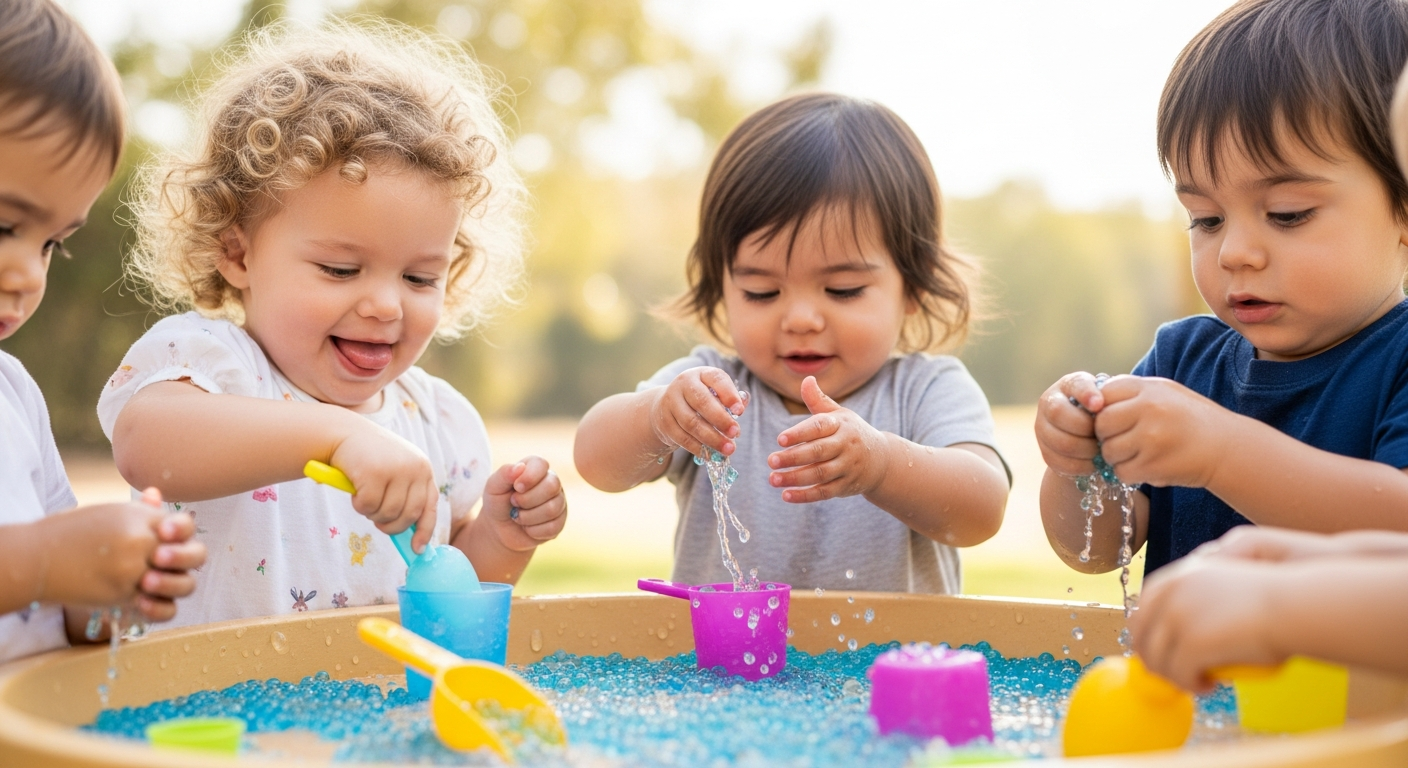
Table of Contents
- Introduction
- Why Play is the "Work" of Childhood
- Sensory Play: Exploring with the Senses
- Fine Motor Fun: Strengthening Little Hands
- Gross Motor Games: Moving Big Muscles
- Creative and Artistic Exploration
- Language-Rich Activities to Encourage Talking
- Integrating Speech Blubs Into Your Routine
- Realistic Expectations and Joyful Learning
- More "Around the House" Ideas
- Conclusion
- Frequently Asked Questions
Introduction
Did you know that by the age of three, a child’s brain has already reached 80% of its adult size? This period of rapid growth is an incredible window of opportunity for learning, yet for many parents, the pressure to provide constant enrichment can feel overwhelming. You might find yourself staring at a living room full of toys while your toddler is busy trying to "help" you unload the dishwasher or unroll the toilet paper. The truth is, children don't need expensive gadgets or elaborate lesson plans to thrive. They need connection, exploration, and play.
At Speech Blubs, our mission is to empower children to speak their minds and hearts. We understand the challenges of parenting because our founders grew up with speech struggles themselves; they created the tool they wished they’d had as kids. We know that the best learning happens when a child is having fun. In this post, we are going to share a wealth of easy toddler activities that require minimal setup but offer maximum engagement. We’ll cover sensory play, fine motor exercises, and ways to boost communication skills through simple, everyday moments.

Our goal is to show you that "smart screen time" and hands-on play can work together to build a strong foundation for your child's future. By the end of this article, you will have a toolkit of low-prep ideas to keep your little one busy, happy, and learning.
Why Play is the "Work" of Childhood
When we see a toddler splashing in a tub of water or sticking pieces of tape to a table, we aren't just seeing a "distraction" to keep them quiet while we make dinner. We are witnessing a scientist at work. For a toddler, every texture, sound, and movement is a piece of data about how the world functions.
Play is the primary way children develop language. As they interact with objects, they learn nouns (ball, water, tape), verbs (splash, stick, roll), and descriptors (wet, sticky, fast). This is why we focus so heavily on the marriage of science and play. By engaging in these easy toddler activities, you are providing the "input" your child needs to eventually produce "output"—words, sentences, and stories.
If you are ever unsure where your child stands in their development, we recommend taking our quick 3-minute preliminary screener. It involves just 9 simple questions and provides an assessment and a next-steps plan to help you support your child's unique journey.
Sensory Play: Exploring with the Senses
Sensory play is any activity that stimulates a child’s senses: touch, smell, taste, sight, and hearing. It is crucial for brain development because it builds nerve connections in the brain’s pathways.
The Magic of the Noodle Bin
One of the easiest toddler activities you can set up is a noodle sensory bin. Simply take a large plastic container and fill it with dry pasta of various shapes—penne, rotini, or bowties. Add a few measuring cups, spoons, and small plastic animals.
- Why it works: Toddlers love the sound the noodles make when they are poured.
- Language Tip: Use the "Animal Kingdom" section of Speech Blubs on the App Store to find the animal your child is playing with in the bin. If they find a cow in the noodles, watch the peer-model video of a child saying "Moo!" This reinforces the connection between the physical toy and the spoken word.
The "Popsicle Bath"
If you’re having one of those afternoons where everyone is a little grumpy, the popsicle bath is a game-changer. Put your toddler in a lukewarm bath and give them a popsicle.

- Why it works: It’s a multi-sensory experience. They feel the warm water and the cold popsicle, taste the sweetness, and see the colors melt.
- Low Stress: The best part? Any sticky mess washes right down the drain.
Soapy Water Toy Wash
Fill a kitchen sink or a shallow bin with bubbly water. Give your child a few "dirty" plastic cars or animals and a clean sponge or old toothbrush. They will spend ages "scrubbing" their toys. This mimics real-life chores, which toddlers find fascinating. It’s a great way to practice words like "bubbles," "wash," "clean," and "dry."
Fine Motor Fun: Strengthening Little Hands
Fine motor skills involve the coordination of small muscles in the hands and fingers. These skills are the precursors to writing, buttoning clothes, and using utensils.
Painter’s Tape Car Track
Painter’s tape is a parent’s best friend. You can use it to create a "track" all over your living room floor. Create straight lines, zig-zags, and circles.
- The Activity: Give your child their toy cars and encourage them to "drive" on the tape lines.
- The Benefit: Following the lines requires hand-eye coordination and focus. For a child who loves vehicles, this is a high-motivation activity. You can even use the "Toy Box" section of our app to practice the "vroom vroom" sounds together.
The Pom-Pom Push
Take an empty cardboard box and poke several holes in the top, just large enough for a craft pom-pom to fit through. Give your child a bowl of colorful pom-poms and let them push the balls into the holes.
- Variation: Use an old spice container with larger holes and toothpicks or coffee stirrers for an extra challenge.
- Safety Note: Always supervise your toddler during these activities to ensure small items stay out of their mouths.
Sticker Walls and Windows
Toddlers are obsessed with stickers, but the tiny ones can be frustrating for their developing grip. Try using larger "reusable" window clings or foam stickers. Tape a large piece of butcher paper to the wall (or use a sliding glass door) and let them go to town. Peeling the stickers off the backing is an incredible workout for those tiny finger muscles.
Gross Motor Games: Moving Big Muscles
Sometimes, toddlers just need to burn off steam. Gross motor activities involve larger movements like running, jumping, and throwing.
Laundry Basket Basketball
You don’t need a hoop to play basketball. A simple laundry basket and a few soft balls (or even rolled-up socks) work perfectly.
- The Goal: See how many "baskets" they can make from a short distance.
- The Lesson: This teaches spatial awareness and the concept of "in" and "out."
Indoor Scavenger Hunt
You don’t need to print anything out for a successful hunt. Simply say, "Can you find something blue?" or "Bring me something soft!"
- Real-World Scenario: For a parent whose 3-year-old "late talker" loves animals, a hunt for "hidden" stuffed animals around the house is a fantastic way to practice animal names. When they find the lion under the sofa, you can celebrate with a big "Roar!"
- Building Confidence: These small wins build a child's confidence in their ability to understand and follow directions, which reduces the frustration often associated with speech delays.
Creative and Artistic Exploration
Art at the toddler stage is all about the process, not the final product. Don't worry about creating a masterpiece; focus on the exploration of materials.
Bath Tub Art Studio
If you are worried about paint getting on your carpet, take the art to the tub. You can buy washable bathtub crayons or make your own "paint" by mixing shaving cream with a drop of food coloring. Let them "paint" the walls of the tub and then rinse it all away with the showerhead.
Dot Marker Masterpieces
Dot markers (often called "Bingo daubers") are much easier for toddlers to handle than traditional markers or crayons because they don't require a specific grip or much pressure. Roll out a long piece of paper on the floor and let them dot away.
Language-Rich Activities to Encourage Talking
At Speech Blubs, we believe that every interaction is an opportunity for language growth. You don't need to be a professional therapist to help your child communicate; you just need to be present and engaged.
The Power of Video Modeling
Our app utilizes a scientifically-backed method called "video modeling." This is based on the idea of mirror neurons—when a child sees another child performing a task or making a sound, their brain reacts as if they are doing it themselves. This makes learning feel like a fun imitation game rather than a chore.
When you use the app during your "easy toddler activities" time, you are providing a powerful tool for family connection. We suggest co-playing: watch the videos together, mimic the funny faces, and repeat the sounds. This is "smart screen time" that encourages active participation rather than passive scrolling.
Reading Together
Reading is one of the most effective ways to build vocabulary. However, you don't always have to read the words on the page. Point to the pictures and ask, "Where is the dog?" or "What is the boy doing?"
- Pro Tip: For families on our Yearly plan, you get access to the Reading Blubs app, which is specifically designed to bridge the gap between speech and literacy.
Integrating Speech Blubs Into Your Routine
While physical play is vital, we recognize that modern parents need digital tools that are safe, effective, and educational. Speech Blubs was designed to be a "smart" supplement to your child's development plan. We are proud to be a highly-rated tool that parents can trust, placing us in the top tier of speech apps worldwide. You can read about the research behind our methodology to see how we blend science with play.
Transparent Pricing and Best Value
We want to be clear about how you can join our community. We offer two main plans to fit your family's needs:
- Monthly Plan: $14.99 per month. This is a great way to test the waters if you're looking for a short-term solution.
- Yearly Plan: $59.99 per year. This is our best value option, breaking down to just $4.99 per month.
When you choose the Yearly plan, you get much more than just a lower price. It includes:
- A 7-day free trial so you can explore everything risk-free.
- The Reading Blubs app (not included in the monthly plan).
- Early access to new updates and features.
- 24-hour support response time from our dedicated team.
We encourage you to sign up for a web account or download the app today to see the difference for yourself.
Realistic Expectations and Joyful Learning
It is important to remember that every child develops at their own pace. While these easy toddler activities and the Speech Blubs app are powerful tools, they are not magic wands that guarantee a child will be giving public speeches in a month. Development is a marathon, not a sprint.
Our goal is to foster a love for communication and build the foundational skills that will eventually lead to fluent speech. We want to reduce the frustration that comes when a child can't express their needs and replace it with joyful family learning moments. Whether your child is a "late talker" or simply reaching their milestones, these activities are designed to create a supportive, fun environment.
Don't just take our word for it—see what thousands of other parents are saying in our testimonials section. Many parents have found that the combination of physical play and our video modeling approach has helped their children find their voices.
More "Around the House" Ideas
When you are short on time and energy, these 10 ideas require almost zero prep:
- Cardboard Boxes: A box can be a car, a house, or a rocket ship. Give them some crayons and let their imagination run wild.
- Pots and Pans Drum Set: It’s loud, but it’s great for rhythm and coordination.
- Muffin Tin Sorting: Give them a muffin tin and various small objects (blocks, large buttons, toy grapes) and ask them to put one in each hole.
- Watering Plants: Give them a small watering can or a spray bottle and let them "help" with the house plants.
- Socking Matching: While you do laundry, let them try to find the pairs.
- Pillow Forts: Crawling through tunnels of pillows is great gross motor work.
- Contact Paper Art: Tape contact paper to a table (sticky side up) and let them press bits of yarn, paper, or leaves onto it.
- Whisking Pom-Poms: Put pom-poms inside a kitchen whisk and let them figure out how to pull them out.
- Colander Pipe Cleaners: Turn a colander upside down and have them poke pipe cleaners through the holes.
- Animal Wash: Similar to the car wash, but use their plastic farm animals and some "mud" (cocoa powder and water).
Conclusion
Parenting a toddler is a beautiful, chaotic, and often exhausting journey. You don't need to be a "super parent" with a closet full of expensive educational toys to give your child a great start. By leaning into easy toddler activities like sensory bins, tape tracks, and simple household chores, you are providing the rich environment your child needs to grow.
At Speech Blubs, we are here to support you every step of the way. We believe that play is the most powerful tool for learning, and we’ve built our app to reflect that. We invite you to join our mission of helping children speak their minds and hearts.
Are you ready to see your child's confidence grow? Start your journey with us today. For the best experience and the most features, we recommend our Yearly plan. It gives you the full suite of tools, including Reading Blubs and our 7-day free trial, at a fraction of the monthly cost.
Download Speech Blubs today and start your 7-day free trial:
Let’s make learning a joyful, shared experience for your whole family.
Frequently Asked Questions
1. How much time should my toddler spend on these activities?
There is no "perfect" amount of time. Toddlers typically have short attention spans, often ranging from 5 to 15 minutes per activity. The goal isn't duration, but quality of engagement. If they are having fun and exploring, they are learning! You can weave these activities throughout your day as they fit your schedule.
2. Can Speech Blubs replace professional speech therapy?
Speech Blubs is a powerful tool designed to supplement a child's overall development and, when applicable, professional therapy. It is not a replacement for a licensed Speech-Language Pathologist (SLP). However, many SLPs recommend our app as a way to encourage "homework" play between sessions.
3. Is screen time actually okay for my 2-year-old?
Not all screen time is created equal. Passive viewing (like watching cartoons) is very different from "smart screen time." Speech Blubs is designed to be interactive and requires the child to listen, observe, and respond. We always recommend "co-play," where an adult interacts with the child while using the app to maximize the learning benefits.
4. What if my child doesn't want to do the activity I set up?
That is perfectly normal! Toddlers are asserting their independence. If they aren't interested in the noodle bin, don't force it. Try following their lead. If they are more interested in the box the noodles came in, play with the box! The best learning happens when the child is intrinsically motivated.
About the author