
Fun and Educational Valentine's Day Toddler Activities
 By Speech Blubs Team•Mar 18, 2026•13 min.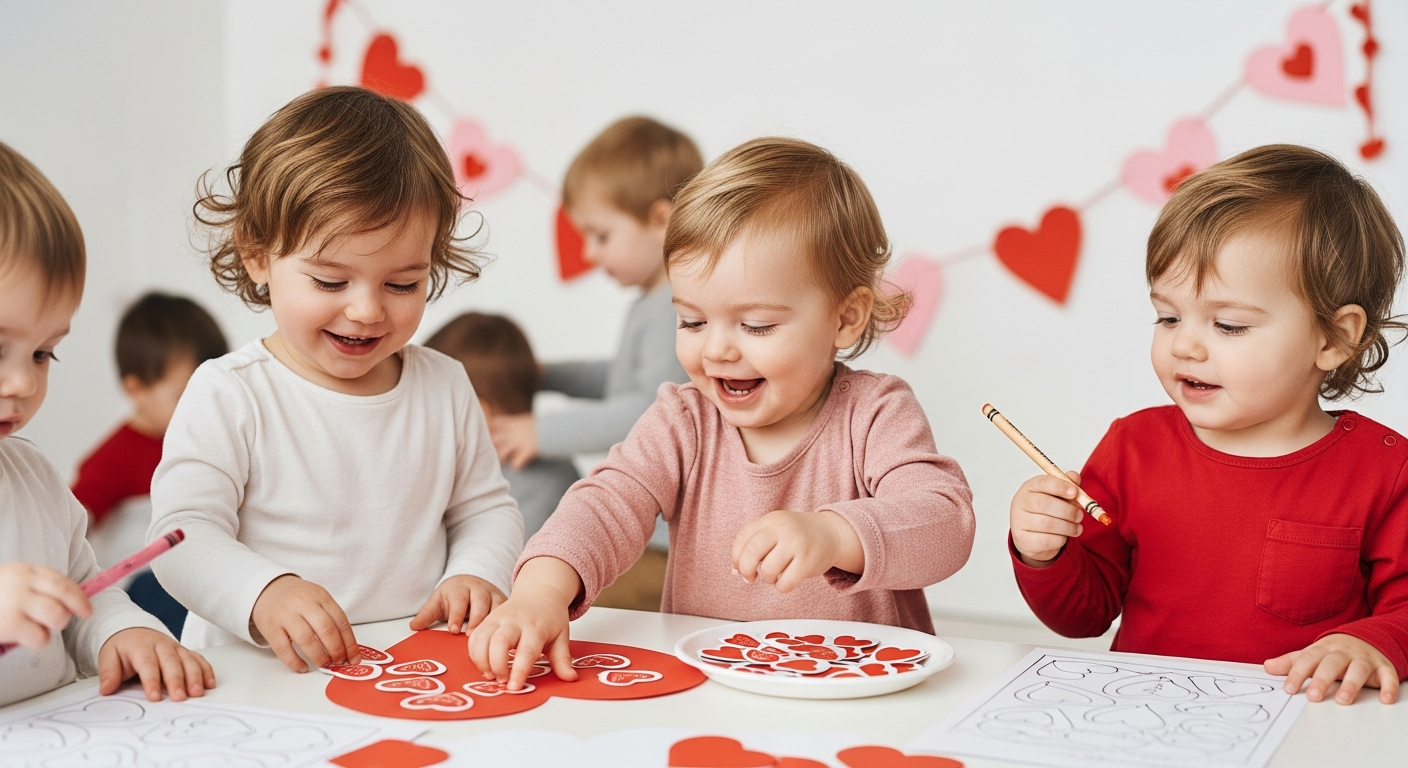
Table of Contents
- Introduction
- The Importance of Themed Play in Early Development
- Sensory Valentine's Day Toddler Activities
- Creative Arts and Crafts for Little Hands
- Literacy and Math-Based Valentine Activities
- Gross Motor Fun: Getting the Heart Pumping
- Why "Smart Screen Time" Matters This Valentine's Day
- Practical Scenario: Speech Blubs in Action
- Making the Most of Your Speech Blubs Experience
- Tips for a Stress-Free Valentine's Day
- A Legacy of Love and Communication
- Conclusion
- Frequently Asked Questions
Introduction
Did you know that by the age of three, a child’s brain is actually twice as active as an adult’s? This incredible window of development is filled with curiosity, rapid language acquisition, and a deep desire to connect with the world. While many adults see February 14th as a day for roses and candlelight, for a toddler, it is a sensory-rich wonderland of vibrant reds, sticky textures, and new words to explore. Valentine's Day offers a unique, heart-shaped lens through which we can view early childhood development, turning a simple holiday into a powerful learning experience.
In this guide, we will explore a wide variety of Valentine's Day toddler activities that go beyond simple crafts. We will dive into sensory bins that stimulate the tactile system, gross motor games that get little bodies moving, and literacy-focused play that builds the foundation for future reading. Furthermore, we will discuss how these festive moments can be enhanced by "smart screen time" tools like Speech Blubs, which utilizes peer-to-peer video modeling to encourage kids to speak their minds and hearts. Our goal is to provide you with a comprehensive toolkit to make this Valentine’s Day both joyful and educationally rewarding for your little one.

The central message of this post is simple: when we blend festive fun with evidence-based developmental strategies, we create lasting memories and foster the critical communication skills every child needs to thrive.
The Importance of Themed Play in Early Development
For a toddler, the world is often a confusing place full of abstract concepts. Holidays like Valentine’s Day provide a "thematic anchor" that helps children organize their learning. When a child sees a heart on a sticker, a heart in a book, and a heart-shaped cookie, they are practicing categorization and pattern recognition.
At Speech Blubs, we believe that learning should never feel like a chore. Our founders, who all grew up with various speech challenges, created the Speech Blubs app specifically to be the joyful tool they wish they had as children. By using Valentine’s Day toddler activities as a springboard for language, we can reduce the frustration that often comes with speech delays and replace it with confidence and connection.
Building Vocabulary Through Celebration
Valentine's Day is a goldmine for "functional" vocabulary—words that kids can use in their everyday lives. Think of words like:
- Colors: Red, pink, white, purple.
- Shapes: Heart, circle, square (cards).
- Emotions: Love, happy, kind, friend.
- Actions: Cut, glue, give, hug, kiss.
By narrating your activities (e.g., "I am putting the red heart on the pink paper"), you are providing a rich linguistic environment. If you are unsure where your child stands in their communication journey, you can take our quick 3-minute preliminary screener which consists of 9 simple questions to help you understand their current level and provides a next-steps plan.
Sensory Valentine's Day Toddler Activities
Sensory play is the foundation of all learning. When toddlers touch, smell, and see new things, they are building neural pathways in the brain.
1. The Sweet Heart Rice Bin
Sensory bins are a staple for a reason. They provide endless opportunities for fine motor practice and language.

- What you need: White rice, red or pink food coloring, vinegar, and a large plastic bin.
- The Setup: Mix 1 cup of rice with 1 teaspoon of vinegar and a few drops of food coloring in a bag. Shake until coated and let it dry.
- The Play: Add measuring cups, scoops, and small heart-shaped trinkets.
- The Language: Use descriptive words like "crunchy," "smooth," "pour," and "hide."
2. Love Potion Bubble Foam
This is a clean, soapy way to explore textures.
- What you need: Dish soap, water, red food coloring, and a hand mixer.
- The Setup: Mix 2 parts water with 1 part dish soap and a drop of color. Whip it with the mixer until stiff peaks form.
- The Play: Let your toddler use their hands to "paint" the foam or hide plastic hearts inside.
- The Science: This builds tactile tolerance, which is especially helpful for kids who are "sensory defensive" or picky about textures.
3. Candy Heart Oobleck
Oobleck is a non-Newtonian fluid—it acts like a solid when you squeeze it and a liquid when you let it go.
- What you need: Cornstarch, water, and conversation hearts.
- The Setup: Mix 2 cups of cornstarch with 1 cup of water.
- The Play: Add the candy hearts. Watch as they "sink" and "float." This is a great time to talk about opposites!
Creative Arts and Crafts for Little Hands
Crafting with toddlers isn't about the final product; it's about the process. These Valentine's Day toddler activities help develop the small muscles in the hands that will one day be used for writing.
4. Fingerprint Heart Keepsakes
This is a classic for a reason. It uses the child's own body to create art.
- The Activity: Fold a piece of paper in half. Help your child dip their thumb in red paint and press it at an angle. Repeat on the other side to create a heart shape.
- The Benefit: This encourages "pointy finger" isolation, a key fine motor milestone.
5. Contact Paper "Stained Glass" Hearts
This is a low-mess alternative to traditional gluing.
- What you need: Clear contact paper (shelf liner), tissue paper squares, and a construction paper heart frame.
- The Setup: Tape the contact paper to a window or table with the sticky side facing out. Place the heart frame on top.
- The Play: Let your toddler stick tissue paper squares inside the frame.
- Speech Connection: As they work, you can use the Speech Blubs app on the App Store to find the "Colors" section. Watching other children say "red" or "blue" while they are holding those colors reinforces the connection between the object and the word.
6. Paper Heart Threading
Threading is excellent for bilateral coordination (using both sides of the body together).
- What you need: Stiff cardstock hearts with holes punched around the edges and a piece of yarn or a shoelace.
- The Activity: Show your child how to "sew" through the holes.
- The Challenge: If this is too hard, use a pipe cleaner instead of yarn, as the stiffness makes it easier to navigate the holes.
Literacy and Math-Based Valentine Activities
Early literacy isn't about reading full sentences; it's about recognizing that symbols have meaning.
7. Alphabet Heart Match
- The Setup: Cut 26 hearts in half. Write the uppercase letter on one half and the lowercase on the other.
- The Play: Spread them out and help your child find the matches.
- Speech Blubs Integration: For families who choose the Yearly plan, we include the Reading Blubs app at no extra cost. While they play with physical letters, Reading Blubs provides the digital foundation for phonemic awareness.
8. Counting "Love Notes"
- The Activity: Label five envelopes with numbers 1-5. Ask your child to put the corresponding number of paper hearts (or "letters") into each envelope.
- The Language: Count out loud together. "One... two... three! Three hearts for the mailbox."
Gross Motor Fun: Getting the Heart Pumping
Physical activity is linked to better cognitive function. These Valentine's Day toddler activities help with balance and coordination.
9. Heart Hopscotch
- The Setup: Use sidewalk chalk (outdoors) or painters' tape (indoors) to create heart shapes on the floor.
- The Play: Assign a task to each heart. "Jump in the red heart!" or "Spin in the big heart!"
- The Benefit: This teaches following multi-step directions, which is a critical communication skill.
10. The Valentine Scavenger Hunt
- The Play: Hide 10 red hearts around the living room. Give your child a basket and ask them to find them all.
- The Language: Use spatial prepositions. "Is the heart under the chair?" "Is it behind the pillow?"
Why "Smart Screen Time" Matters This Valentine's Day
We know that many parents feel guilty about screen time. However, there is a massive difference between passive viewing (like watching a mindless cartoon) and "smart screen time." At Speech Blubs, we leverage the power of video modeling.
Science shows that children are naturally programmed to learn from their peers. Our app features videos of real children—not cartoons—performing speech exercises. This triggers "mirror neurons" in your child's brain, making them much more likely to try and imitate the sounds and words they see. We are proud to say our methodology is backed by research and has earned a high rating on the MARS scale for educational quality.
Realistic Expectations for Speech Progress
It’s important to remember that every child develops at their own pace. We don't promise that your child will be giving public speeches in a month. Instead, our focus is on fostering a love for communication and building the foundational skills—like imitation and joint attention—that make language possible. Using Speech Blubs is a powerful supplement to your child's overall development plan and professional therapy. You can read how other families have found joy in this process on our testimonials page.
Practical Scenario: Speech Blubs in Action
Imagine a parent, Sarah, whose 2-year-old son, Leo, is a "late talker." Leo loves animals but often gets frustrated when he can't ask for his favorite snacks. On Valentine's Day, Sarah decides to do the "Sweet Heart Rice Bin."
As Leo plays with the rice, Sarah opens the Speech Blubs app on Google Play and navigates to the "Yummy Time" section. She finds the video for "Cake." Leo watches a girl his age say "Cake!" and then he looks at the red heart-shaped "cakes" he is making in the rice.
Because the app is interactive and uses peer modeling, Leo feels less pressure than when Sarah asks him to "Say cake." He mimics the girl’s mouth movements and lets out a soft "Ca...". This small victory is a building block for his confidence. This is how we blend physical Valentine's Day toddler activities with digital tools to create a holistic learning environment.
Making the Most of Your Speech Blubs Experience
We want to make speech support accessible to as many families as possible. We offer two clear paths for our users:
- Monthly Subscription: At $14.99 per month, this plan gives you full access to the Speech Blubs app.
- Yearly Subscription: At $59.99 per year, this is our best value plan (breaking down to just $4.99/month).
The Yearly plan is the superior choice for most families because it includes:
- A 7-day free trial so you can explore the app risk-free.
- The Reading Blubs app, which extends the learning into early literacy.
- Early access to new updates and a 24-hour support response time.
By choosing the yearly option, you are committing to a consistent routine that supports your child's growth throughout the entire year, not just on holidays. You can create your account and start your trial today to see the difference for yourself.
Tips for a Stress-Free Valentine's Day
- Follow Their Lead: If your toddler wants to dump the rice bin out instead of finding the hidden hearts, let them! The goal is engagement, not perfection.
- Keep it Short: Toddler attention spans are brief. Five to ten minutes of a dedicated activity is a win.
- Co-Play is Key: Whether you are crafting or using the Speech Blubs app, do it together. Your engagement is the most powerful motivator for your child.
- Celebrate Small Wins: Did they hold the glue stick correctly? Did they try to make a "p" sound? Celebrate it! Positive reinforcement builds the confidence needed to keep trying.
A Legacy of Love and Communication
Our mission to help children "speak their minds and hearts" is deeply personal to us. When you choose to integrate Valentine's Day toddler activities with a tool like Speech Blubs, you are doing more than just passing the time. You are giving your child the gift of expression. You are helping them move from frustration to connection.
As you prepare your red construction paper and your heart-shaped cookie cutters, remember that you are your child's best teacher. Tools like the Speech Blubs App Store download are here to support you in that role, providing a joyful, scientifically-backed way to encourage those first words and sentences.
Conclusion
Valentine's Day is a beautiful opportunity to pause and focus on the love we have for our little ones. By engaging in these Valentine's Day toddler activities—from sensory bins to gross motor games—you are providing the "fuel" for their developing brains. When you pair these physical activities with the peer-modeling power of Speech Blubs, you create a comprehensive support system for their language and communication skills.
Don't wait to start this journey. Whether your child is just starting to babble or is struggling with specific sounds, we are here to help. Ready to get started? Download Speech Blubs on the App Store or Google Play today to begin your 7-day free trial. We highly recommend selecting the Yearly plan to unlock the full suite of features, including the Reading Blubs app and priority support, for the best possible value. Let’s make this February a month of breakthroughs and joyful family learning moments!
Frequently Asked Questions
1. Are these activities safe for toddlers who still put everything in their mouths?
Many of the activities listed, such as the rice sensory bin and oobleck, can be made "taste-safe." Use food-grade dyes and supervise play closely. For very young toddlers, avoid small plastic trinkets that could be choking hazards and stick to larger foam hearts or edible items like large pasta shapes.
2. How much screen time is recommended for a 2-year-old?
The American Academy of Pediatrics suggests limiting screen time for children ages 2-5 to one hour of high-quality programming per day, ideally with a parent co-viewing. Speech Blubs is designed for "smart screen time," where the child is encouraged to interact, move their mouth, and speak, rather than just passively watching. We recommend short, 10-15 minute sessions together.
3. My child has a diagnosed speech delay. Can these activities replace therapy?
No, these activities and the Speech Blubs app are intended to be powerful supplements to professional speech-language therapy. They are excellent for practicing at home and building confidence, but they do not replace the personalized care of a licensed Speech-Language Pathologist (SLP). Always consult with your therapist about how to best integrate the app into your child's routine.
4. What is the benefit of the "video modeling" used in Speech Blubs?
Video modeling is a well-researched technique where a child learns a behavior by watching a video of someone else performing it. In our case, watching other children make specific sounds or say words activates "mirror neurons" in the toddler's brain. This makes the child more likely to imitate the sound because they see someone "just like them" doing it successfully, which feels more attainable than imitating an adult.
About the author