
Fun and Safe Toddler Cutting Activities for Fine Motor Skills
 By Speech Blubs Team•Mar 25, 2026•14 min.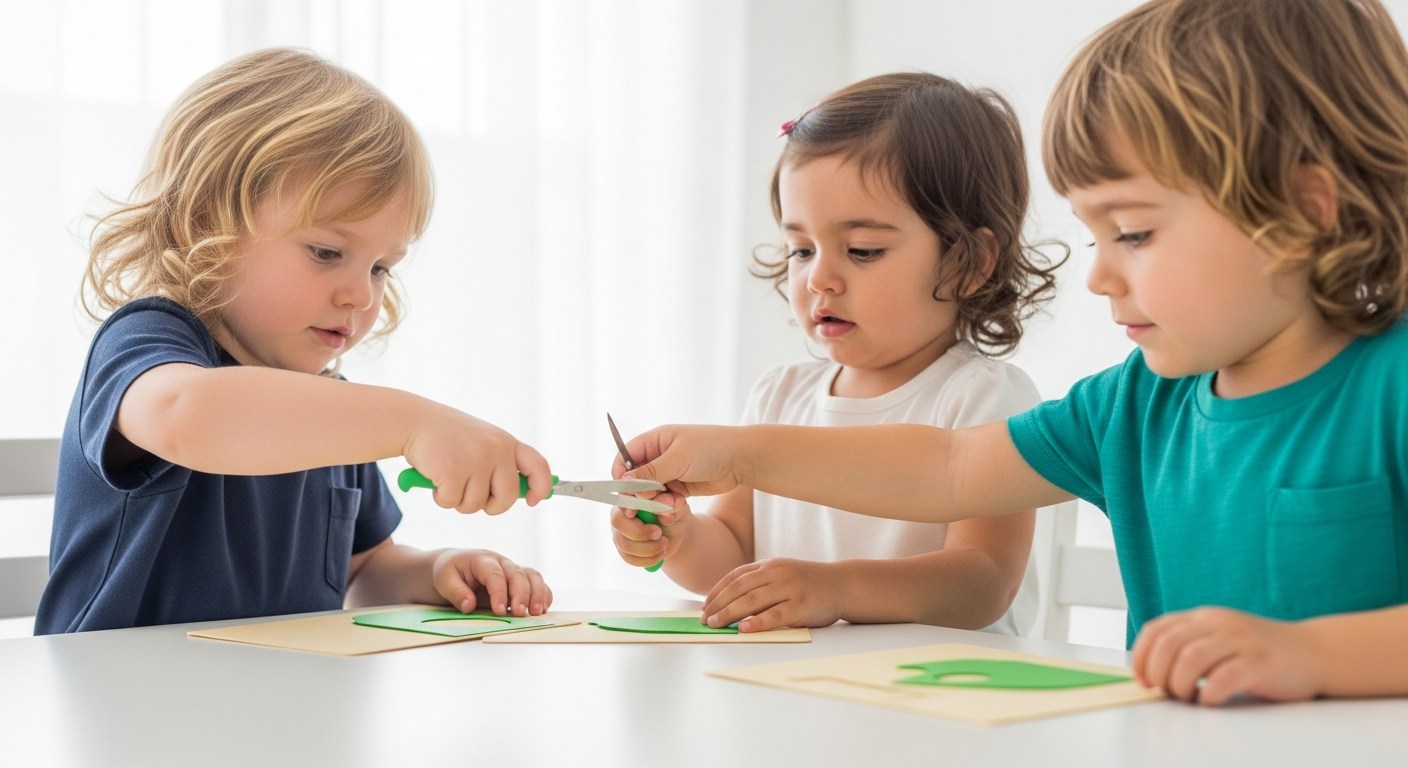
Table of Contents
- Introduction
- Why Cutting Matters: More Than Just Paper and Blades
- Signs of Scissor Readiness
- Essential Tools for Toddler Cutting Activities
- Beginner Toddler Cutting Activities: The "Snip" Phase
- Intermediate Toddler Cutting Activities: Moving the Scissors
- Advanced Toddler Cutting Activities: Shapes and Curves
- The "Smiley Face" Trick: A Teaching Essential
- Safety Rules for Toddler Cutting Activities
- Supporting the "Lefty" Child
- Integrating Physical Play with Speech Blubs
- Choosing the Right Plan for Your Family
- Conclusion
- FAQs
Introduction
Have you ever watched your toddler attempt to open a snack bag or pick up a tiny blueberry, only to see a flash of frustration when their little fingers don’t quite do what they want them to do? This struggle is a completely normal part of childhood, but it’s also a signal that your child is ready to start building the foundational strength needed for independence. One of the most effective and exciting ways to bridge this gap is through toddler cutting activities. While the idea of handing a pair of scissors to a two- or three-year-old might feel a bit daunting at first, mastering this skill is a major developmental milestone that boosts confidence, hand-eye coordination, and even the focus required for later academic success.

At Speech Blubs, our mission is to empower children to speak their minds and hearts. We know that development doesn’t happen in a vacuum; the fine motor skills used for cutting are closely linked to the coordination and control needed for speech and overall communication. Our founders, who all grew up with speech challenges themselves, created Speech Blubs to be the tool they wished they had—a joyful, scientific, and play-based way to support the 1 in 4 children who need a little extra help. Just as our app uses "video modeling" to help kids learn from their peers, teaching a child to cut involves observation, imitation, and lots of practice.
In this comprehensive guide, we will explore the developmental benefits of scissor skills, how to tell if your child is ready, and provide a wealth of engaging toddler cutting activities ranging from "nature bins" to creative "haircuts." We’ll also discuss how to keep things safe and how to integrate these physical skills with the cognitive and linguistic gains your child is making. By the end of this article, you’ll have a clear roadmap for turning a potentially nervous moment into a joyful family learning experience.
Why Cutting Matters: More Than Just Paper and Blades
When a child picks up a pair of scissors, they aren't just learning how to slice through paper. They are engaging in a complex neurological and physical workout. For toddlers, cutting is one of the first tasks that requires "bilateral coordination"—the ability to use both sides of the body at the same time to complete different movements. Think about it: one hand holds and moves the paper, while the other hand opens and closes the scissors.
The Science of Fine Motor Development
Fine motor skills involve the small muscles in the hands and wrists. These are the same muscles your child will eventually use to hold a pencil, button a shirt, and use a fork. Cutting helps strengthen the "thumb-index-middle finger" tripod, which is essential for a mature grasp.
Furthermore, our approach at Speech Blubs is rooted in the understanding that physical and cognitive development are intertwined. Our method is backed by science, utilizing the power of mirror neurons. When a child watches a peer in our app make a sound, their brain mimics that action. Similarly, when a child watches you or a peer cut, they are building the neural pathways necessary to replicate that movement.

Building Confidence and Reducing Frustration
Frustration often stems from a lack of control. A toddler who cannot communicate their needs or manipulate their environment effectively may experience more frequent meltdowns. By providing structured toddler cutting activities, you are giving them a "win." The moment a child successfully snips a piece of playdough or a strip of paper, they feel a sense of mastery. This confidence carries over into other areas of their life, including their willingness to try new words or engage in social play.
Signs of Scissor Readiness
Before diving into toddler cutting activities, it’s important to assess if your child has the foundational strength required. You don't want to start too early and cause unnecessary stress. Look for these signs:
- Hand Strength: Can they squeeze a spray bottle or use tongs to pick up pom-poms?
- Bilateral Coordination: Can they pull apart a piece of construction paper or roll a "snake" out of playdough using both hands?
- Instruction Following: Can they follow simple two-step directions, such as "pick up the paper and put it on the table"?
- Interest: Do they watch you intently when you use scissors or try to grab them?
If you are unsure where your child stands in their overall development, you can take our 3-minute preliminary screener. It involves 9 simple questions and provides an assessment and next-steps plan to help you understand your child’s unique needs.
Essential Tools for Toddler Cutting Activities
Choosing the right scissors is the most important step for safety and success. Never hand a toddler adult kitchen shears or sharp crafting scissors.
- Plastic Safety Scissors: These are often entirely plastic, including the "blades." They only cut paper and won't hurt skin or hair. They are perfect for the absolute beginner.
- Blunt-Tip Metal Scissors: Once your child understands the basic "open-close" motion, these provide a cleaner cut, which reduces frustration. Brands like Fiskars offer excellent small-hand versions.
- Spring-Loaded Scissors: These are a fantastic "cheat code" for kids with low hand strength. They have a small lever that automatically opens the scissors back up after a snip, allowing the child to focus solely on the "closing" motion.
Beginner Toddler Cutting Activities: The "Snip" Phase
The first stage of cutting isn't about following a line; it’s about the "snip." Snipping is a single motion where the child makes one cut that doesn't necessarily go all the way through the material.
1. Playdough Haircuts
Playdough is the ultimate beginner material. It provides resistance, which builds muscle, but it stays still, making it easier to manage than floppy paper.
- The Activity: Roll the playdough into "snakes" or "sausages." Ask your child to "give the snake a haircut" by snipping off small pieces.
- Speech Blubs Connection: For a parent whose child loves the "Animal Kingdom" section of our app, you can imagine the playdough is a lion’s mane or a sheep’s wool. As they cut, encourage them to practice the animal sounds they’ve learned, like "snip, snip, roar!"
2. Straw Snips
Plastic or paper straws are excellent for practice because they are rigid. They don't bend when the scissors press against them, which is a common problem with thin paper.
- The Activity: Give your child a handful of colorful straws and let them snip them into tiny beads.
- Pro Tip: These "straw beads" can later be used for a stringing activity, further boosting fine motor skills.
3. Fringing
Fringing involves making several small snips along the edge of a piece of paper without cutting all the way through.
- The Activity: Use a strip of cardstock (which is stiffer and easier to hold than standard paper). Draw short vertical lines along the bottom inch. Your child’s goal is to cut on those lines to create "grass" or "fringe" for a rug.
Intermediate Toddler Cutting Activities: Moving the Scissors
Once your child can snip reliably, they are ready to learn how to move the scissors forward. This requires them to "re-open" the blades while moving their hand.
4. Cutting "Tracks"
Instead of a simple line, draw a "track" using two parallel lines about an inch apart. This gives the child a "buffer zone" and makes them feel more successful even if they aren't perfectly straight.
- The Activity: Create tracks on construction paper. You can tell your child they are driving a car or a train down the track.
- Speech Blubs Connection: If your child is obsessed with the "Big Wheels" section of Speech Blubs, draw a track for a fire truck. While they cut, encourage them to make the "wee-ooo" siren sound, blending motor practice with vocal play.
5. The Nature Bin
This is a wonderful sensory experience that takes the pressure off "getting it right."
- The Activity: Collect leaves, long grass, and thin twigs in a bin. Let your child go to town snipping the greenery. Leaves are surprisingly easy to cut and offer a satisfying "crunch" sound.
- The Benefit: This is a screen-free way to explore the world, much like how Speech Blubs provides a screen-free alternative to passive viewing by encouraging active participation.
6. Junk Mail Shredding
Don't throw away those old envelopes and flyers!
- The Activity: Give your child a stack of non-essential mail. Let them cut it into as many pieces as they want. This is a low-stakes way to practice without worrying about wasting "nice" craft supplies.
Advanced Toddler Cutting Activities: Shapes and Curves
Cutting a curve is the "black belt" level of toddler cutting. It requires the "paper hand" to rotate the sheet while the "scissor hand" continues to cut.
7. Circle Tiers
Draw large circles on cardstock. Cutting a circle is difficult because the movement never stops.
- The Activity: Have your child cut out large circles to be "plates" for a play kitchen or "moons" for a space scene.
- Speech Blubs Connection: In our "Yummy Time" section, we talk about different foods. Your child can cut out circles to represent pizzas or cookies, and then "feed" them to their stuffed animals while practicing words like "yum," "eat," and "more."
8. Zig-Zags and Waves
Once straight lines are easy, introduce variety.
- The Activity: Draw a large zig-zag (like mountain peaks) or a wavy line (like ocean waves). These require the child to stop, pivot the paper, and start again.
The "Smiley Face" Trick: A Teaching Essential
If your child keeps turning their hand upside down or sideways, try this classic tip used by occupational therapists: Draw a small smiley face on your child’s thumb nail. Tell them, "The smiley face always needs to see you!" This simple visual cue reminds them to keep their thumb pointing toward the ceiling, which is the correct anatomical position for efficient cutting.
We use similar visual cues in Speech Blubs through our peer-led videos. When children see another child’s face and mouth moving correctly, they have a blueprint to follow. You can see the impact of this approach by reading our parent success stories.
Safety Rules for Toddler Cutting Activities
Safety is paramount. Before you even open the drawer, establish the "Scissors Rules":
- Sitting Only: We only cut while sitting at a table.
- Paper Only: Scissors are for paper, playdough, or nature bins—never hair, clothes, or skin.
- The "Walking" Rule: If we must move with scissors, we hold them closed in our fist with the points facing down.
- Adult Supervision: Scissors are a "together" activity. They are kept in a high place when not in use.
Supporting the "Lefty" Child
About 10% of children are left-handed. If your child is a lefty, it is highly recommended to buy true left-handed scissors. Why? Because the blades on right-handed scissors are layered in a way that allows a right-handed person to see the line they are cutting. If a lefty uses them, the top blade obscures the line. Providing the right tools prevents frustration and allows their natural dexterity to shine.
Integrating Physical Play with Speech Blubs
At Speech Blubs, we believe in "smart screen time." This means our app isn't a "babysitter"; it’s a springboard for real-world interaction. After a session using the app, you can use toddler cutting activities to reinforce the themes your child just explored.
For example, if you just finished the "Living Shapes" section, grab some paper and try to cut out the shapes you saw. This multisensory approach—seeing the shape, saying the name, and then physically creating it—solidifies learning in a way that passive watching never could.
Our mission is to help children "speak their minds and hearts," and that communication starts with the confidence to try new things. Whether it's a new word or a new pair of scissors, every small step is a victory. Ready to see how Speech Blubs can support your child's journey? Download Speech Blubs on the App Store or Google Play to begin.
Choosing the Right Plan for Your Family
We want to make speech support accessible and effective for every family. To get the most out of our resources, we offer two main subscription options:
- Monthly Plan: For $14.99 per month, you get full access to the Speech Blubs app and all its engaging content.
- Yearly Plan: This is our best value option at $59.99 per year, which breaks down to just $4.99 per month. That's a 66% savings compared to the monthly rate!
The Yearly Plan is designed to provide a comprehensive, long-term learning experience. When you choose the yearly option, you also receive:
- A 7-day free trial to explore everything we have to offer.
- Access to the Reading Blubs app, helping your child transition from speech to literacy.
- Early access to new updates and features.
- Priority 24-hour support response time from our dedicated team.
The monthly plan does not include these exclusive benefits, so we highly encourage families to select the yearly option to provide their children with the full suite of developmental tools. You can create your account and begin your 7-day free trial today.
Conclusion
Toddler cutting activities are about so much more than just confetti on the floor. They are a rite of passage into a world of independence, fine motor precision, and cognitive growth. By starting with simple materials like playdough and straws, providing the right tools, and keeping the atmosphere joyful and safe, you are giving your child a powerful set of skills that will serve them for a lifetime.
Remember that every child develops at their own pace. Some may take to scissors instantly, while others may need months of "snip" practice before they can follow a line. The goal isn't perfection; it's the process of learning, the reduction of frustration, and the creation of joyful family moments.
At Speech Blubs, we are here to walk this path with you. Our founders’ personal experiences drive our commitment to providing an immediate, effective solution for children who need a little extra boost. By blending scientific principles with the magic of play, we help children find their voices.
We invite you to join our community of over 5 million parents. Start your journey today by downloading the app on the Google Play Store or the App Store. Don’t forget to choose the Yearly Plan during sign-up to unlock your 7-day free trial, the Reading Blubs app, and the best possible value for your child’s development. Let’s help your little one speak their mind and heart, one snip at a time!
FAQs
1. What is the best age to start toddler cutting activities?
Most children are ready to begin exploring scissors between the ages of 2 and 3. However, it’s more about "readiness" than age. If your child can follow simple directions and has enough hand strength to squeeze a spray bottle, they can likely start with plastic safety scissors and playdough.
2. My child is frustrated because they can’t cut a straight line. What should I do?
Frustration is common! Go back a step. If they can’t cut a line, let them focus on "fringing" or "snipping" small pieces of straws or playdough. Use the "Smiley Face" trick on their thumb to ensure they are holding the scissors correctly. Remember, the goal is to build strength and confidence, not to create a masterpiece.
3. Are plastic safety scissors actually effective?
Plastic-bladed scissors are excellent for absolute beginners because they eliminate the risk of injury to skin or hair. However, they only work on paper. As your child’s coordination improves, moving to blunt-tip metal scissors will actually reduce frustration because they provide a cleaner, easier cut.
4. How can I help my left-handed toddler learn to cut?
The best thing you can do is buy specifically designed left-handed scissors. In right-handed scissors, the blades are reversed, making it impossible for a lefty to see the line they are cutting. Using the correct tools from the start will prevent your child from developing awkward hand positions to compensate.
About the author