
Fun and Simple Speech Therapy Activities for Toddlers at Home
Boost your child's communication with effective speech therapy activities for toddlers at home. Explore expert tips, video modeling, and fun games to start
 By Speech Blubs Team•Apr 22, 2026•14 min.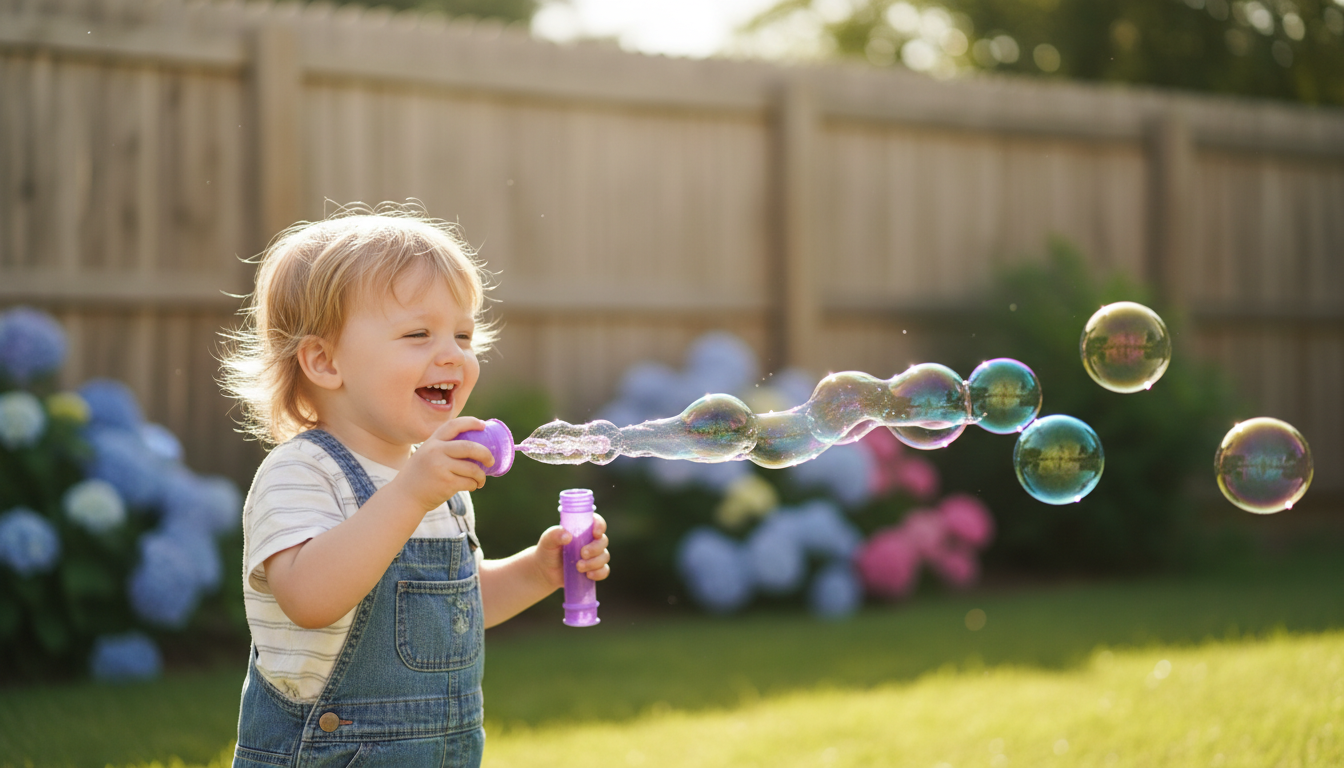
Table of Contents
- Introduction
- Why Home-Based Speech Practice Matters
- The Science of "Smart Screen Time" and Video Modeling
- Foundational Speech Therapy Activities for Toddlers at Home (Ages 0-2)
- Expanding Communication (Ages 2-4)
- Advanced Language Skills (Ages 4-6)
- Integrating Speech Blubs into Your Routine
- The Do’s and Don’ts of At-Home Practice
- Value and Pricing: Investing in Your Child’s Voice
- Practical Play: Beyond the Screen
- Creating Joyful Family Moments
- FAQ: Frequently Asked Questions
- Conclusion
Introduction
Did you know that approximately one in four children will face some form of speech or language delay during their early development? It is a startling statistic, yet it highlights a vital truth: if you are concerned about your child’s communication milestones, you are certainly not alone. At Speech Blubs, our mission is to empower children to speak their minds and hearts. Our company was born from the personal experiences of our founders, who all grew up with speech challenges themselves. They created the tool they wished they had—a joyful, effective way to bridge the gap between silence and expression.
The purpose of this blog post is to provide you with a comprehensive toolkit of speech therapy activities for toddlers at home. We will explore the science behind early language development, offer practical and engaging exercises tailored to different age groups, and show you how to seamlessly integrate "smart screen time" into your daily routine. We believe that therapy shouldn't feel like a chore; instead, it should be a natural extension of the love and play that already exists in your home. By the end of this article, you will have a clear plan to help your child find their voice through the power of connection and play.

Why Home-Based Speech Practice Matters
When we talk about speech therapy, many parents immediately envision a clinical setting with flashcards and mirrors. While professional therapy is an invaluable resource, the most significant breakthroughs often happen in the living room, the bathtub, or at the dinner table. Research, including studies from Vanderbilt University, consistently shows that when parents are actively involved in practicing speech therapy activities for toddlers at home, children make faster and more sustainable progress.
You are your child’s first and most influential teacher. You know their favorite toys, the silly faces that make them giggle, and the exact moment they become too tired to focus. This intimate knowledge allows you to turn everyday moments into high-impact learning opportunities. Practicing at home reduces the "performance pressure" a child might feel in a new environment, allowing them to experiment with sounds and words in a space where they feel safe and understood.
Our goal isn't to turn you into a clinical pathologist overnight. Rather, we want to help you foster a love for communication and build your child’s confidence. By focusing on foundational skills and reducing frustration, you are creating a joyful learning environment that supports your child’s overall development.
The Science of "Smart Screen Time" and Video Modeling
At Speech Blubs, we advocate for a move away from passive screen time—like sitting a child in front of a cartoon—toward "smart screen time." Our methodology is rooted in the scientific principle of video modeling. This approach is backed by extensive research into mirror neurons, which are brain cells that fire both when we perform an action and when we observe someone else performing that same action.
Our app features "Peer Models"—real children, not animations—who demonstrate sounds and words. When your toddler watches another child make a "B" sound or say "Banana," their mirror neurons activate, making it much more likely that they will attempt to imitate the sound. This "kids teaching kids" approach is one-of-a-kind. It transforms a screen into a tool for active participation and family connection rather than a passive distraction.

Foundational Speech Therapy Activities for Toddlers at Home (Ages 0-2)
In the earliest stages of development, we are focused on the "building blocks" of language: imitation, sound play, and joint attention.
1. Mirror Imitation Games
The bathroom mirror is one of the best tools you already own. Stand in front of it with your toddler and make exaggerated facial expressions. Stick out your tongue, puff out your cheeks, or make a wide "O" with your mouth.
- Why it helps: It builds oral-motor awareness. Your child begins to see how their mouth moves to create different shapes.
- Speech Blubs Tip: Our app uses a digital mirror feature that places fun filters (like animal ears or hats) on your child’s face while they practice sounds, making this mimicry even more engaging.
2. Narrating the Day (Parallel Talk)
Think of yourself as a sports commentator for your child's life. As you go about your routine, narrate what you are doing: "I am pouring the milk. The milk is cold. Now I am stirring the cereal. Stir, stir, stir."
- Why it helps: This provides a language-rich environment without demanding a response. It helps children map words to actions in real-time.
3. Animal Sound Exploration
Animal sounds are often the easiest for toddlers to master because they are repetitive and fun. Focus on simple ones like "Moo," "Baa," and "Woof."
- Practical Scenario: For a parent whose 2-year-old "late talker" loves animals, the "Animal Kingdom" section in the Speech Blubs app offers a fun, motivating way to practice. If your child sees a peer model say "Moo," and then they try it themselves, give them a huge high-five! You can download Speech Blubs on the App Store to explore these animal sounds together.
Expanding Communication (Ages 2-4)
As your child enters the toddler years, we move from single sounds to words and simple phrases. Frustration often peaks during this stage if a child can't communicate their needs. These speech therapy activities for toddlers at home focus on reducing that friction.
4. The Power of Choice
Instead of asking an open-ended question like "What do you want to drink?", offer two specific choices while holding the items up: "Do you want milk or juice?"
- Why it helps: This provides the vocabulary they need for the answer right in the question. It empowers them to make a decision and reduces the "guessing game" that leads to tantrums.
5. Expectant Waiting
This is a "ninja" move in speech therapy. Start an activity your child loves, like blowing bubbles, and then suddenly stop. Hold the wand ready, look at your child with an expectant expression, and wait.
- Why it helps: This pause creates a "communication vacuum" that your child will want to fill. They might say "More," "Bubbles," or even just make a sound to get you to start again. It teaches them that their voice has the power to make things happen.
6. Expansion and Recasting
If your child says a single word, like "Dog," you "expand" it into a short phrase: "Yes, big dog!" or "The dog is running!"
- Why it helps: You are modeling the next level of language development. You aren't correcting them; you are simply showing them how to build on what they already know.
7. Strategic Sabotage
This sounds a bit "mean," but it’s actually very effective. Put a favorite toy in a clear container that they can't open, or give them a bowl of cereal without a spoon.
- Why it helps: It creates a natural need for them to use language to ask for "Help" or a "Spoon." If you are unsure where your child stands in their development, you can take our quick 3-minute preliminary screener to get a simple assessment and a plan for next steps.
Advanced Language Skills (Ages 4-6)
For older toddlers and preschoolers, we focus on sentence structure, categorization, and storytelling.
8. I Spy With a Twist
Play "I Spy," but instead of just colors, focus on sounds or functions. "I spy something that starts with the 'S' sound," or "I spy something we use to sweep the floor."
- Why it helps: This builds phonological awareness and word retrieval skills, which are essential for reading readiness.
9. Storytime with a "What’s Next?" Pause
When reading a familiar book, stop before the end of a sentence or a major plot point and let your child fill in the blank.
- Why it helps: This encourages expressive language and demonstrates their comprehension of the story's narrative flow.
10. The Sorting Game
Use laundry or groceries to practice categorization. Ask your child to find all the things that are "socks" or all the things that are "fruit."
- Why it helps: Categorization is a key cognitive skill that helps children organize their growing vocabulary.
Integrating Speech Blubs into Your Routine
We designed Speech Blubs to be a powerful supplement to your child’s overall development plan. Whether you are using it alongside professional therapy or as a way to boost foundational skills, the key is co-play.
A Practical Scenario: Imagine a 4-year-old who is struggling with "L" sounds. Sitting them down for 30 minutes of drills might lead to tears. Instead, you open the "Lion" section of the app. You and your child watch a peer model say "L-L-Lion." You both roar like lions, use the app's face filters to turn into lions, and then go on a "lion hunt" around the house. Suddenly, therapy isn't work; it’s a joyful family moment.
To see how other families have transformed their home routines, you can read our parent testimonials. If you're ready to dive in, start your 7-day free trial on our website.
The Do’s and Don’ts of At-Home Practice
To ensure these speech therapy activities for toddlers at home are effective, keep these guidelines in mind:
The Do’s:
- DO follow your child’s lead. If they are obsessed with trucks, use trucks for every activity. Language is much easier to learn when the child is genuinely interested in the topic.
- DO keep sessions short. For toddlers, 10 to 15 minutes of focused play is plenty. It’s better to have three 5-minute sessions throughout the day than one grueling 15-minute session.
- DO be silly. Use animated voices, dramatic pauses, and plenty of praise. Your enthusiasm is contagious.
- DO focus on the process. Don't worry about perfect pronunciation immediately. Celebrate the fact that your child is trying to communicate.
The Don’ts:
- DON’T turn it into a test. Avoid saying "Say 'Apple.' Say it. Say 'Apple.'" This often causes children to shut down. Instead, model the word and wait.
- DON’T practice when they are tired or hungry. Timing is everything. Pick a time when they are well-rested and "regulated."
- DON’T do it alone. Involve siblings, grandparents, and caregivers. The more people modeling good communication, the better.
Value and Pricing: Investing in Your Child’s Voice
We believe that every child deserves the chance to speak their mind. To make our "smart screen time" solution accessible, we offer two straightforward plans. Transparency is important to us as we build a community of trust with parents.
- Monthly Plan: $14.99 per month. This is a great way to try the app and see how your child responds to video modeling.
- Yearly Plan (Best Value): $59.99 per year.
We highly recommend the Yearly Plan for families who are serious about consistent progress. Not only does it break down to just $4.99 per month (a 66% saving), but it also includes exclusive features that the monthly plan does not:
- A 7-day free trial: Test everything out before you commit.
- Reading Blubs: You get access to our sister app, which focuses on early literacy and phonics.
- Priority Support: You get a 24-hour response time from our support team.
- Early Access: Be the first to use new updates and sections as they are released.
Choosing the yearly plan ensures your child has a consistent, long-term tool for their development journey. You can sign up and get Speech Blubs on Google Play to get started today.
Practical Play: Beyond the Screen
While our app is a powerful tool, it’s meant to spark real-world interaction. Here are a few more "screen-free" speech therapy activities for toddlers at home that you can do anywhere:
11. The Laundry "Socks" Game
Sorting laundry is a chore for us, but a game for a toddler. Have them find "Mama’s socks" or "Daddy’s shirt."
- Why it helps: It teaches possessives and builds vocabulary related to everyday objects.
- Pro-Tip: If they put a sock in the wrong pile, be silly! "Silly sock! You belong to Bodhi, not Daddy!"
12. Bubbles and Straws
Blowing bubbles or drinking a thick smoothie through a straw isn't just fun; it’s a workout for the mouth.
- Why it helps: It strengthens the muscles needed for clear speech production. If a child has "low tone" in their mouth, these activities can help them gain the control needed for complex sounds.
13. Singing Rhymes and Songs
Songs like "The Wheels on the Bus" or "Itsy Bitsy Spider" use rhythm and rhyme, which are the foundations of phonological awareness.
- Why it helps: The repetitive nature of songs makes it easy for children to memorize and predict what comes next, giving them a sense of mastery over language.
Creating Joyful Family Moments
At the heart of all speech therapy activities for toddlers at home is the concept of connection. When we created Speech Blubs, we didn't just want to build an app; we wanted to provide a bridge for families. When a child finally says "Mama," "More," or "I love you," it isn't just a developmental milestone—it's a moment of pure joy.
We encourage you to frame your at-home practice as "special play time." Turn off the TV, put away your own phone, and give your child your undivided attention. Use the app for a few minutes to get the "spark" of imitation going, and then follow that spark into real-world play. This combination of "smart screen time" and active parent engagement is the most effective way to help your child thrive.
FAQ: Frequently Asked Questions
1. How do I know if my child actually needs speech therapy?
Every child develops at their own pace, but there are general milestones. If your child isn't babbling by 12 months, using single words by 15-18 months, or using two-word phrases by age 2, it is a good idea to consult a pediatrician. You can also use our preliminary screener for a quick, 9-question assessment that provides an immediate plan of action.
2. Can using an app like Speech Blubs replace a traditional speech therapist?
Speech Blubs is a powerful tool designed to supplement and support your child's development. It is not a replacement for professional therapy if your child has a diagnosed delay or disorder. However, it is an excellent resource for home practice and can significantly "boost" the progress made in professional sessions. Think of it as a gym for their communication skills!
3. Does sign language delay a child from talking?
This is a common myth! Research shows that teaching basic signs like "More," "All done," and "Help" actually reduces frustration and acts as a bridge to verbal language. It gives the child a way to communicate while they are still working on the motor skills needed for speech.
4. How much time should we spend on these activities each day?
Consistency is much more important than duration. Aim for 10 to 15 minutes of focused activity. You can weave these moments into your existing routine—like talking during bath time or playing a quick game in the app while waiting for dinner. Short, joyful bursts of learning are the most effective for toddlers.
Conclusion
Helping your child find their voice is one of the most rewarding journeys you will ever take. By incorporating speech therapy activities for toddlers at home into your daily life, you are providing them with the tools they need to navigate the world with confidence. Whether you are narrating your morning routine, playing "I Spy" at the grocery store, or using the video modeling technology in Speech Blubs, every interaction counts.
Remember, our mission is to help your child speak their mind and heart. We are here to support you with scientific methodology, joyful play, and a community of experts who understand exactly what you are going through. Don’t wait for the "right time" to start—the best time is right now, in the middle of your everyday life.
Ready to see your child’s progress take off? Start your 7-day free trial by signing up on our website today. We strongly recommend choosing the Yearly Plan to unlock the full suite of features, including Reading Blubs and priority support, all for the best value of just $4.99 per month. Let’s make communication a joyful adventure for your little one!
About the author