
Fun Toddler Physical Activities to Boost Development
 By Speech Blubs Team•Mar 25, 2026•15 min.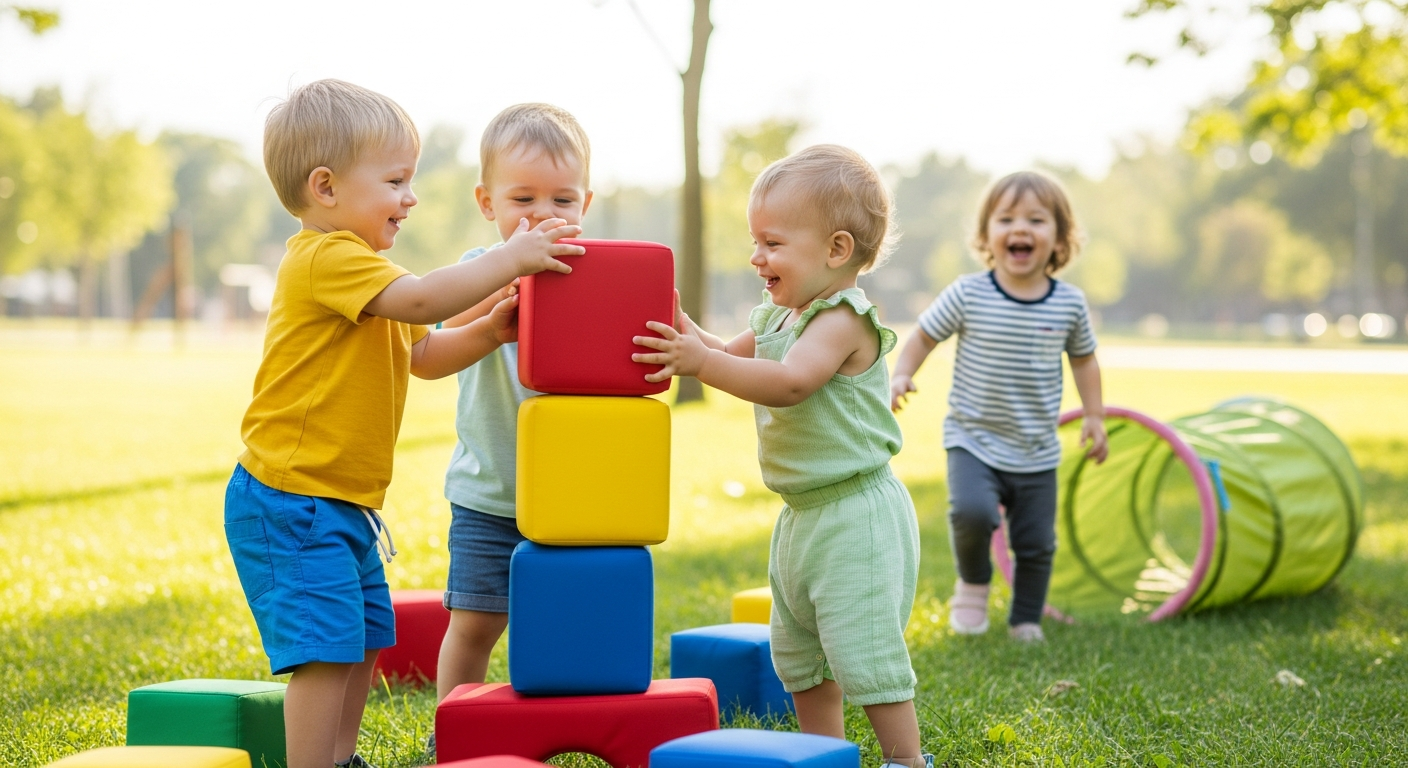
Table of Contents
- Introduction
- Why Physical Activity Matters for Your Toddler
- Creating a Safe and Inviting Play Space
- 15 Fun Outdoor Physical Activities for Toddlers
- 15 Engaging Indoor Activities for Active Toddlers
- Integrating Speech Blubs into Your Active Routine
- The Science of Play and Speech
- Choosing the Best Plan for Your Family
- Realistic Expectations for Your Child's Growth
- Practical Scenarios: Play in Action
- Conclusion
- Frequently Asked Questions
Introduction
Did you know that the average toddler requires at least three hours of physical activity every single day to support their rapidly growing bodies and brains? For many parents, this statistic might feel a bit overwhelming, especially when you’re balancing work, chores, and the general chaos of raising a little human. However, physical movement isn't just about "burning off energy" so they sleep better at night—though that is a wonderful bonus. It is a foundational pillar for their cognitive, social, and even linguistic development.
In this post, we are going to explore a wide variety of toddler physical activities that you can easily integrate into your daily routine, whether you are stuck indoors on a rainy day or enjoying the sunshine at a local park. We will discuss why movement is so critical for children between the ages of two and four, how to set up a safe environment for play, and how you can use "smart screen time" tools like Speech Blubs to complement these high-energy moments. Our goal is to provide you with a toolkit of ideas that turn every day into a joyful learning experience.

At Speech Blubs, our mission is to empower children to speak their minds and hearts. We believe that a child’s development is holistic; when they move their bodies, they are building the coordination and confidence they need to eventually move their mouths and find their voices. By the end of this article, you will have a comprehensive list of activities and a deeper understanding of how to support your child's physical and communicative journey.
Why Physical Activity Matters for Your Toddler
Movement is the primary way toddlers learn about the world around them. When a child climbs a chair or jumps into a pile of leaves, they are performing complex calculations about gravity, space, and their own physical limits. This "active play" is essential for developing gross motor skills—the large muscle movements in the arms, legs, and torso.
Building Strong Foundations
Regular physical activity helps in building stronger muscles and bones, improving cardiovascular health, and reducing the long-term risk of chronic illnesses. But the benefits go beyond the physical. Children who engage in plenty of toddler physical activities tend to have better emotional regulation and social skills. Think about a game of tag: it requires a child to follow rules, take turns, and manage the excitement (and sometimes frustration) of being "it."
The Connection Between Movement and Speech
You might wonder how jumping in a sprinkler relates to learning new words. In child development, we often see that motor skills and language skills develop in tandem. There is a scientific concept called "mirror neurons," which are the same brain cells that fire when a person performs an action and when they see someone else performing that same action.
At Speech Blubs, we use this scientific principle through our "video modeling" methodology. In our app, children watch their peers perform speech exercises. This encourages them to imitate what they see. Similarly, when you do an "animal walk" with your child, they are watching your movements and imitating them, which is the same foundational skill needed for speech. By fostering a love for imitation through physical play, you are preparing their brain for complex communication tasks.

Creating a Safe and Inviting Play Space
Before diving into the activities, it’s important to ensure your home or yard is ready for action. Toddlers are naturally curious and often test the limits of their environment.
Adjust to Their Level
When setting up a play area, try to see the world from your child’s perspective. Get down on your hands and knees. Are there sharp corners at eye level? Is there a tempting bookshelf that looks like a ladder? By bringing the fun down to their height, you minimize the risk of falls and encourage independent exploration.
Organize for Independence
We suggest using low, open bins for toys. When a child can see their balls, ribbons, or blocks, they are more likely to initiate play themselves. This builds their sense of autonomy. If you have a child who loves animals, keeping a "zoo bin" with plastic creatures can lead to spontaneous games of "Imitate the Animal," which is a fantastic way to practice both gross motor movements and animal sounds.
Space for "Smart Screen Time"
Even the most active day needs moments of rest. This is where we recommend incorporating a tool like Speech Blubs as a powerful supplement to your child's development. Unlike passive cartoons that can lead to sedentary behavior, our app is designed to be interactive "smart screen time." We encourage parents to engage in "co-play," sitting with their child as they watch peer-led videos. If your child is winding down from a game of chase, you can open the "Animal Kingdom" section of the app to practice the "moo" and "baa" sounds of the animals they were just pretending to be.
15 Fun Outdoor Physical Activities for Toddlers
The great outdoors provides the ultimate sensory playground. Here are some of our favorite ways to get toddlers moving outside:
- Animal Walks: Encourage your child to gallop like a horse, slither like a snake, or hop like a frog. This is a great way to use different muscle groups.
- Bubble Chasing: Blow bubbles and have your toddler jump to pop them. This works on hand-eye coordination and tracking.
- Nature Scavenger Hunt: Give them a simple list (a red leaf, a smooth stone, a yellow flower). Walking through uneven grass helps build balance.
- Wet Sponge Art: On a hot day, let them throw wet sponges against a brick wall or fence. It’s a great shoulder and arm workout!
- Puddle Jumping: Never underestimate the joy of a pair of rain boots and a muddy puddle. It builds leg strength and pure happiness.
- Obstacle Course: Use hula hoops to jump through, "tunnels" made of lawn chairs to crawl under, and a garden hose to walk along like a tightrope.
- Kick Bowling: Set up empty plastic bottles and have your child kick a ball to knock them down.
- Tricycle or Balance Bike: Riding helps develop the core strength and coordination needed for later developmental milestones.
- Garden Digging: Provide a small shovel and a patch of dirt. Digging is an excellent upper-body workout for little ones.
- Parachute Play: Use an old bedsheet. Have everyone grab an edge and shake it to keep a beach ball bouncing in the middle.
- Leaf Pile Jumps: In the autumn, raking leaves into a big pile provides endless opportunities for jumping and crashing safely.
- Freeze Tag: A classic that teaches "stop and go" commands, which is vital for safety and impulse control.
- Follow the Leader: Take turns being the leader. Walk backward, march with high knees, or spin in circles.
- Sprinkler Fun: Running through water is a high-energy activity that keeps kids cool while they work their hearts and lungs.
- Bean Bag Toss: Aim for a hula hoop or a bucket. This improves throwing accuracy and focus.
15 Engaging Indoor Activities for Active Toddlers
When the weather doesn't cooperate, you can still meet those three hours of daily movement with these indoor toddler physical activities:
- Balloon Volleyball: Use a balloon to play a gentle game of "Keepy Uppy." Since balloons move slowly, they are perfect for developing a toddler's reaction time.
- Indoor Skating: Have your child stand on two small towels or paper plates on a hard floor. They can "skate" around the room, which is a fantastic workout for their legs and core.
- The Floor is Lava: Place pillows and cushions across the floor. Your child has to navigate the room without touching the "lava" (the floor).
- Dance Party: Turn up the music and let loose! Dancing is one of the best ways to encourage self-expression and rhythmic movement.
- Pillow Walk: Line up every pillow in the house to create a "bridge." Walking on the uneven surface of pillows is a great challenge for a toddler's balance.
- Tunnel Crawl: Use cardboard boxes or a blanket draped over chairs to create a long tunnel for your child to crawl through.
- Sorting Sprint: Place a pile of colorful socks or toys at one end of the room and bins at the other. Have them run one item at a time to the correct bin.
- Yoga for Tots: Simple poses like "Downward Dog" or "Tree Pose" help with flexibility and calming the nervous system.
- Animal Charades: Act out an animal and have your child guess which one you are, then switch.
- Crab Walk: Show them how to sit, lift their bellies, and walk on their hands and feet. It's tough but fun!
- Tape Lines: Use painter's tape to make different lines on the floor (zig-zag, curvy, straight). Have your child walk, hop, or crawl along the lines.
- Bubble Wrap Stomp: If you have leftover shipping supplies, let them jump on the bubbles to hear the "pop!"
- Laundry Basket Ride: Pull your child around the house in a laundry basket (carefully!). Holding on works their core and grip.
- Simon Says: Use physical commands like "touch your toes" or "reach for the sky."
- Indoor Bowling: Use empty water bottles and a soft plush ball.
Integrating Speech Blubs into Your Active Routine
We know that parenting is about finding a balance. After an hour of high-energy obstacle courses, your child might need a "brain break." This is the perfect time to introduce Speech Blubs, which provides a joyful solution for children who need speech support or simply want to boost their communication skills.
How it Works
Our app uses "smart screen time" to get kids talking. Instead of just watching a screen, kids are encouraged to participate. For example, after doing an "Animal Walk" (like we suggested in our outdoor list), you can sit down together and open the Speech Blubs app. If your child was just hopping like a bunny, find the bunny in our app. They will see a video of another child making the "hop hop" sound or saying "rabbit."
This peer-to-peer modeling is incredibly effective. It reduces the "performance pressure" many late talkers feel when an adult asks them to "say this." Instead, they see a friend doing it and want to join the fun. Our app is a powerful tool for family connection, turning screen time into a collaborative activity rather than a solitary one.
Assessing Your Child’s Progress
If you are ever concerned about whether your child is meeting their developmental milestones—physically or linguistically—we offer a quick 3-minute preliminary screener. It consists of 9 simple questions and provides you with an assessment and a next-steps plan. It’s a great way to gain peace of mind and see if your child could benefit from our unique approach.
The Science of Play and Speech
We are committed to a methodology backed by science. In fact, our approach has placed us in the top tier of speech apps worldwide, with a high rating on the MARS (Mobile App Rating Scale). You can read more about the research behind Speech Blubs to see how we blend play with clinical principles.
The core of our method is video modeling. When toddlers engage in physical activities, they are using their gross motor skills. When they use Speech Blubs, they are transitioning that "imitation muscle" to their fine motor skills—the tiny movements of the tongue, lips, and jaw. By combining physical play with smart screen time, you are providing a 360-degree approach to their development.
Choosing the Best Plan for Your Family
We want to be transparent about our pricing because we value the trust of the parents we serve. We offer two main plans to help your child "speak their minds and hearts."
- Monthly Plan: For $14.99 per month, you get full access to the Speech Blubs app and its library of 1,500+ activities.
- Yearly Plan: For $59.99 per year, which breaks down to just $4.99 per month, you get the best value and the most features.
The Yearly Plan is the clear choice for families committed to their child's growth. It includes:
- A 7-day free trial so you can explore everything risk-free.
- Access to the Reading Blubs app, which helps transition your child from speaking to reading.
- Early access to new updates and a 24-hour support response time.
Please note that the Monthly plan does not include the free trial, the Reading Blubs app, or the priority support. We highly recommend starting with the Yearly plan to ensure you have all the tools necessary to support your child's journey. You can create your account and begin your free trial today to see the difference for yourself.
Realistic Expectations for Your Child's Growth
While we are passionate about the effectiveness of toddler physical activities and our app, it is important to set realistic expectations. Every child develops at their own pace. You won't see your child giving public speeches after one week of using the app or jumping hurdles after one afternoon in the park.
The goal is to foster a love for communication and movement. We want to reduce frustration—both for the child who can't express themselves and for the parent who wants to help. By building these foundational skills through play, you are creating joyful family learning moments that last a lifetime. Speech Blubs should be viewed as a powerful supplement to your child's overall development plan and, when necessary, professional speech therapy.
Practical Scenarios: Play in Action
Let’s look at how this might look in a real home. Imagine a parent of a 3-year-old who is a "late talker" but has endless energy. This child loves vehicles.
- The Physical Activity: The parent sets up a "car wash" outside with a bucket of soapy water and their child’s ride-on toy. The child is scrubbing, reaching, and squatting—all great toddler physical activities.
- The Transition: Once the car is clean and the child is drying off, they sit on the porch together.
- The Speech Blubs Integration: The parent opens the app to the "Beep Beep" section. The child sees a peer making a "vroom vroom" sound. Because the child is already excited about cars from the physical activity, they are much more likely to imitate the sound they see on the screen.
This seamless blend of physical play and targeted speech practice is the heart of what we do. You can see many more success stories and reviews from parents who have used this method to help their children thrive.
Conclusion
Physical activity is not just a way to fill the time; it is the "work" of childhood. By providing your toddler with a variety of ways to move, jump, crawl, and explore, you are giving them the best possible start in life. Whether you are building an indoor obstacle course or racing through the backyard, every movement is a step toward better health and more confident communication.
Remember that you don't have to do it alone. At Speech Blubs, we are here to support you with "smart screen time" that turns the digital world into a playground for language. Our founders created the tool they wished they had when they were struggling with speech problems, and we are honored to share it with your family.
Ready to take the next step? Don't forget to download Speech Blubs on the Google Play Store to begin your journey. We encourage you to choose the Yearly plan to take advantage of the 7-day free trial and the full suite of features, including Reading Blubs. Let's get moving and get talking!
Frequently Asked Questions
1. How much physical activity does my toddler really need?
Experts, including the American Academy of Pediatrics, recommend that toddlers and preschoolers (ages 2-4) get at least 180 minutes (3 hours) of physical activity spread throughout the day. This can include light activity like standing and playing, as well as more vigorous activity like running and jumping.
2. What if I don't have a yard for outdoor play?
You don't need a large outdoor space to keep your toddler active! Many toddler physical activities are perfect for indoors, such as "The Floor is Lava," "Indoor Skating" on towels, or a simple dance party. Using tools like Speech Blubs can also provide an interactive "smart screen time" break that keeps their minds active even when their bodies are resting.
3. Can physical activities really help my child start talking?
Yes! Motor development and language development are closely linked. Physical play often involves imitation (like animal walks), which is a core skill needed for speech. Furthermore, high-energy play can reduce frustration and build the confidence a child needs to try new sounds and words.
4. Is the Yearly plan for Speech Blubs better than the Monthly plan?
We believe the Yearly plan offers the best value for families. Not only is it significantly cheaper (saving you 66% compared to the monthly price), but it also includes a 7-day free trial, access to the Reading Blubs app, and priority 24-hour support. The Monthly plan does not include these extra benefits.
About the author