
Fun Toddler Winter Activities for Development and Play
 By Speech Blubs Team•Mar 25, 2026•14 min.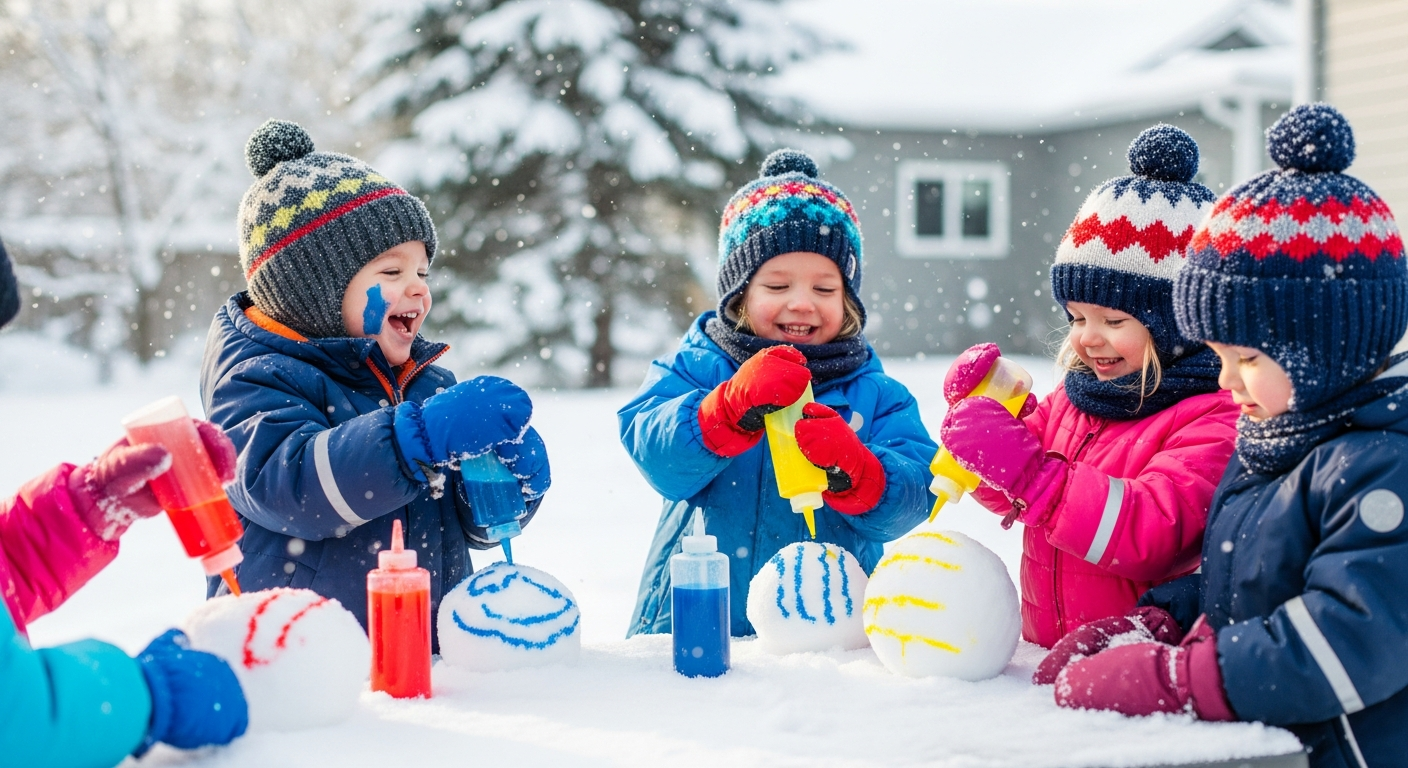
Table of Contents
- Introduction
- The Power of Sensory Play in Winter
- Embracing the Great Outdoors
- Creative Indoor Crafts for Cozy Afternoons
- Integrating Smart Screen Time
- Practical Scenarios: Connecting Play to Speech
- Community and Social Winter Activities
- The Speech Blubs Difference: Why Our Method Works
- Making the Most of the Season (and Your Budget)
- Tips for Parents: Keeping Your Cool in the Cold
- Conclusion
- Frequently Asked Questions
Introduction
Have you ever looked out the window at a gray, freezing winter morning and felt a small surge of panic as your toddler started scaling the back of the sofa? We have all been there. When the "witching hour" hits at 3:00 PM, the sun is already dipping low, and the thermometer refuses to budge above freezing, the walls of your home can start to feel very small. For parents of toddlers, winter often feels less like a "wonderland" and more like a marathon of finding ways to burn off endless energy without losing your mind.
However, these chilly months actually offer a unique landscape for your child’s growth. Winter provides sensory experiences that no other season can match—the crunch of snow, the biting cold of an ice cube, the cozy warmth of a fuzzy blanket, and the sticky sweetness of a holiday treat. These are not just fun moments; they are building blocks for language, motor skills, and cognitive development.

In this post, we are going to explore a massive variety of toddler winter activities designed to keep your little one engaged, learning, and—most importantly—having fun. We will dive into indoor sensory bins, outdoor snowy adventures, creative crafts, and how you can use "smart screen time" to bridge the gap when you need a breather. Our goal at Speech Blubs is to empower children to speak their minds and hearts, and winter play is one of the most joyful ways to make that happen.
By the end of this guide, you will have a toolkit of activities that turn the "winter blues" into a season of breakthrough moments in communication and confidence.
The Power of Sensory Play in Winter
Sensory play is a buzzword in child development for a reason. When a toddler engages their senses—touch, smell, sight, sound, and taste—their brain builds new neural pathways. Winter offers a literal "blank canvas" of white snow and ice that can be transformed into a laboratory for learning.
1. Arctic Water Play and Ice Rescue
This is a classic activity that never fails to captivate a curious mind. It’s simple to set up and provides hours of engagement.
How to do it:
- Take a silicone tray or a muffin tin and place small plastic animals (penguins, polar bears, or even just colorful blocks) inside.
- Fill with water and freeze them overnight.
- Once frozen, place the "ice blocks" into a large plastic bin.
- Provide your child with a small spray bottle or a squeeze bottle filled with warm water.
- Encourage them to "rescue" the animals by melting the ice.
The Developmental Benefit: As your child works to free the toys, they are building fine motor strength in their hands—the same strength they will eventually need for writing and zipping up their own coats. From a language perspective, this is a goldmine. You can model "power words" like cold, wet, melt, fast, and gone.
For a parent whose 3-year-old "late talker" loves animals, the "Animal Kingdom" section in the Speech Blubs app offers a fun, motivating way to practice the sounds those rescued animals make, like "growl" or "squawk," after the physical play is done. You can download Speech Blubs on the App Store to find the perfect animal-themed videos to match this activity.

2. Indoor Snow Painting
If it’s too cold to spend more than five minutes outside, bring the outside in. This is one of our favorite toddler winter activities because it’s low-mess (relatively!) and high-impact.
How to do it:
- Fill a large, shallow storage bin with fresh snow from outside.
- Place the bin on a towel on your kitchen floor.
- Fill a muffin tin with water and a few drops of food coloring in each cup.
- Give your child eye droppers, pipettes, or even just paintbrushes.
- Let them "paint" the snow.
The Developmental Benefit: This teaches color mixing and cause-and-effect. Watch their eyes light up when the blue water hits the white snow and creates a vibrant splash. This is a perfect time to practice "color words." If your child is struggling with certain sounds, seeing their peer in a video modeling the word "Blue" or "Red" can be a powerful catalyst. Our approach uses video modeling, where children learn by watching other children, which is scientifically proven to be more effective than watching adults.
Embracing the Great Outdoors
While indoor play is a lifesaver, there is no substitute for fresh air and the physical challenge of moving through snow.
3. Animal Track Detectives
After a fresh snowfall, the world becomes a giant map. This activity encourages observation and critical thinking.
How to do it:
- Bundle up and head to the backyard or a local park.
- Look for tracks! Can you find bird prints? Squirrel scurries? Your own boot prints?
- Talk about who might have made them. "Look! A tiny bird hopped here."
The Developmental Benefit: This builds "pre-literacy" skills. Reading tracks is very similar to reading symbols or letters on a page. It requires looking at shapes and interpreting meaning. It also provides a great opportunity for "spatial" vocabulary like over, under, next to, and behind.
4. The Classic Snowman (with a Twist)
Building a snowman is a rite of passage, but you can turn it into a high-level communication exercise.
How to do it:
- Instead of just building one big snowman, try building a "Snow Family."
- Give each snowman a different emotion using stones or sticks for the mouth (happy, sad, surprised).
- Ask your toddler, "How does this snowman feel?"
The Developmental Benefit: This supports emotional intelligence and social-emotional learning. Toddlers often struggle to name their feelings, and using a "third party" like a snowman makes it easier to practice.
If you are unsure about your child's developmental milestones or speech progress, we recommend taking a moment to check. You can take our quick 3-minute preliminary screener to get a simple assessment and a free 7-day trial of our tools.
Creative Indoor Crafts for Cozy Afternoons
When the wind is howling, sometimes the best place to be is at the kitchen table with some glue and glitter.
5. Puffy Paint Melted Snowmen
This is a sensory craft that results in a cool, 3D texture that kids love to touch even after it’s dry.
How to do it:
- Mix equal parts white liquid glue and shaving cream in a bowl.
- Stir until it looks like thick, fluffy clouds.
- Let your toddler "plop" the mixture onto blue construction paper to look like a melting snowman.
- While it’s still wet, have them add "loose parts" like buttons, a paper carrot nose, and googly eyes.
The Developmental Benefit: The texture of the shaving cream mixture is a unique tactile experience. It’s also a great lesson in "sequencing"—first we mix, then we plop, then we decorate. Sequencing is a foundational skill for telling stories and following multi-step directions.
6. The "Indoor Campout"
Winter is the perfect time to reclaim the living room.
How to do it:
- Use every blanket and pillow in the house to build an epic fort.
- Bring in flashlights and a "picnic" lunch.
- Spend time inside the fort reading books together.
The Developmental Benefit: Fort-building is a lesson in engineering and problem-solving (how do we make the roof stay up?). It also creates a "low-arousal" environment that is perfect for children who might get overstimulated easily. Inside the fort, focus on "joint attention"—the act of both of you focusing on the same thing, like a book or a toy. This is the bedrock of all communication.
Integrating Smart Screen Time
At Speech Blubs, we know that parents are human. You cannot be "on" 24/7, and sometimes you need 20 minutes to fold laundry or simply drink a cup of coffee while it’s still hot. This is where "smart screen time" comes in. Unlike passive cartoons that can lead to "zoning out," we’ve designed a tool that requires active participation.
Our founders all grew up with speech problems. They created the tool they wished they had—one that turns the screen into a mirror and a playground. We use peer-led video modeling because research shows that toddlers are much more likely to imitate another child than an adult.
When you choose the Yearly Plan for $59.99 (only $4.99/month), you aren't just getting an app; you are getting a comprehensive developmental suite. This includes:
- A 7-day free trial to ensure it's a perfect fit for your family.
- The Reading Blubs app to help transition from speech to literacy.
- Early access to all new updates and 24-hour support response time.
Compared to the Monthly plan ($14.99/month), the Yearly plan saves you 66% and provides a much more robust experience for your child's long-term growth. To see the difference it makes, you can read what other parents are saying about their success stories.
Practical Scenarios: Connecting Play to Speech
Let’s look at how these toddler winter activities translate into real-world communication wins.
Scenario A: The Truck Lover If your toddler is obsessed with anything that has wheels, try Construction Snow Play. Bring a bin of snow inside and let them use their toy excavators to move the "heavy loads." While they play, they are naturally practicing sounds like "vroom" and "beep." Later, when they use the "Vehicles" section in Speech Blubs, they will see a peer making those same sounds. This reinforces the connection between their physical play and their verbal expression.
Scenario B: The Quiet Observer For a child who is a bit more hesitant to speak, Indoor Snow Painting is a low-pressure way to engage. There is no "right way" to paint snow. As they drop colors, you can simply narrate: "Look, blue! Splash!" By not demanding a response, you create a safe space for them to eventually pipe up with their own observations. You can create your account and begin your 7-day free trial today to find more activities that match your child's temperament.
Community and Social Winter Activities
Winter doesn't have to be isolating. In fact, some of the best toddler winter activities happen when you step out into your community.
7. The Local Library Storytime
Most libraries have dedicated winter programming. This is a great way for your toddler to see other children engaging with books and songs.
The Developmental Benefit: Social modeling is huge. When your toddler sees five other kids clapping along to a song, they are much more likely to join in. It’s also an opportunity for you to pick up new books to read in your indoor fort!
8. Nature Centers and Indoor Zoos
Many nature centers have "discovery rooms" designed specifically for toddlers. These often include touch-tanks, pelt samples, and indoor play structures.
The Developmental Benefit: This expands their world beyond the home. New environments stimulate new vocabulary. A trip to an indoor conservatory might introduce words like tropical, humid, leaf, and butterfly—words they wouldn't normally encounter in a snowy backyard.
The Speech Blubs Difference: Why Our Method Works
We often get asked why we focus so much on "smart screen time" as a supplement to professional therapy or home play. The answer lies in the science of Mirror Neurons. When a child watches another child perform an action or say a word, the neurons in their own brain "fire" as if they were doing it themselves. This creates a bridge between observation and imitation.
Our mission is to help 1 in 4 children who need speech support find an immediate, effective, and joyful solution. We don't promise that your child will be giving public speeches in a month. Development is a marathon, not a sprint. Instead, we focus on:
- Fostering a love for communication.
- Building confidence through success.
- Reducing the frustration that comes from not being able to express needs.
- Creating joyful family learning moments.
Winter can be a long season, but it is also a season of incredible "togetherness." Whether you are building a snowman, painting with ice, or laughing at a silly face in the Speech Blubs app, you are building the foundation for your child’s future.
Making the Most of the Season (and Your Budget)
We believe that high-quality developmental tools should be accessible. That’s why we’ve structured our pricing to give the most value to families who are committed to the journey.
- Monthly Plan: $14.99 per month. This is great for a quick look, but it doesn't include the full suite of features.
- Yearly Plan: $59.99 per year. This is our best value and the one we recommend for every family. It breaks down to just $4.99 per month.
When you choose the Yearly plan, you get the 7-day free trial, the Reading Blubs app, and priority support. It’s a complete package designed to grow with your toddler from their first words to their first sentences. You can download Speech Blubs on Google Play to get started with the yearly plan today.
Tips for Parents: Keeping Your Cool in the Cold
Before we wrap up, let’s talk about your well-being. Parenting a toddler in winter is exhausting. Here are three quick tips to keep your sanity:
- Lower Your Expectations: If an activity lasts 5 minutes instead of 20, that’s okay! Toddler attention spans are short. The "win" is the engagement, not the duration.
- Lean into the "Mess": Snow melts, paint washes off, and shaving cream is basically soap. If you spend the whole time worrying about the floor, neither of you will have fun. Put down a cheap plastic tablecloth and let it go.
- Co-Play is Key: Whether it's a physical sensory bin or using Speech Blubs, your involvement makes the difference. Sit on the floor. Make the silly faces. Your child values your attention more than any toy in the world.
Conclusion
Winter doesn't have to be a season of "hibernation" for your toddler’s development. From the chilly thrill of an ice rescue to the fluffy joy of puffy paint snowmen, these toddler winter activities are powerful tools for building language, motor skills, and confidence. By mixing physical, sensory play with "smart screen time" experiences, you provide a balanced environment where your child can truly "speak their minds and hearts."
We invite you to make this winter a season of growth. Don't let the cold weather slow down your child's progress. Instead, use these tools to create lasting memories and foundational skills.
Ready to take the next step? We highly recommend choosing our Yearly plan. For just $59.99 a year, you get the best value, a 7-day free trial, and the full suite of Speech Blubs and Reading Blubs features. It’s the perfect companion for those long winter days. Create your account today and start your journey toward joyful communication!
Frequently Asked Questions
What are the best indoor toddler winter activities for language development?
Sensory bins like "Arctic Water Play" are fantastic because they encourage the use of descriptive "power words" (cold, wet, melt). Reading together in a "blanket fort" is also highly effective as it focuses on joint attention and vocabulary building in a cozy, low-distraction environment.
How much does Speech Blubs cost, and is there a free trial?
We offer two main plans. The Monthly plan is $14.99. The Yearly plan is the best value at $59.99 per year (only $4.99/month). The Yearly plan includes a 7-day free trial, the Reading Blubs app, and early access to new updates. The Monthly plan does not include the trial or the extra app.
Is screen time okay for toddlers during the winter?
Yes, if it is "smart screen time." Unlike passive cartoons, Speech Blubs is an active, educational tool based on scientific principles like video modeling. It is designed to be a supplement to your child's development and is most effective when used with adult co-play.
How does video modeling help my child talk?
Video modeling works by utilizing "mirror neurons." When your toddler watches another child (a peer) perform a speech sound or action, their brain reacts as if they are doing it themselves. This makes them much more likely to imitate the sound and gain the confidence to speak.
About the author