
Heartfelt Fun: Easy DIY Valentine Crafts for Kids
 By Speech Blubs Team•Jan 13, 2026•23 min.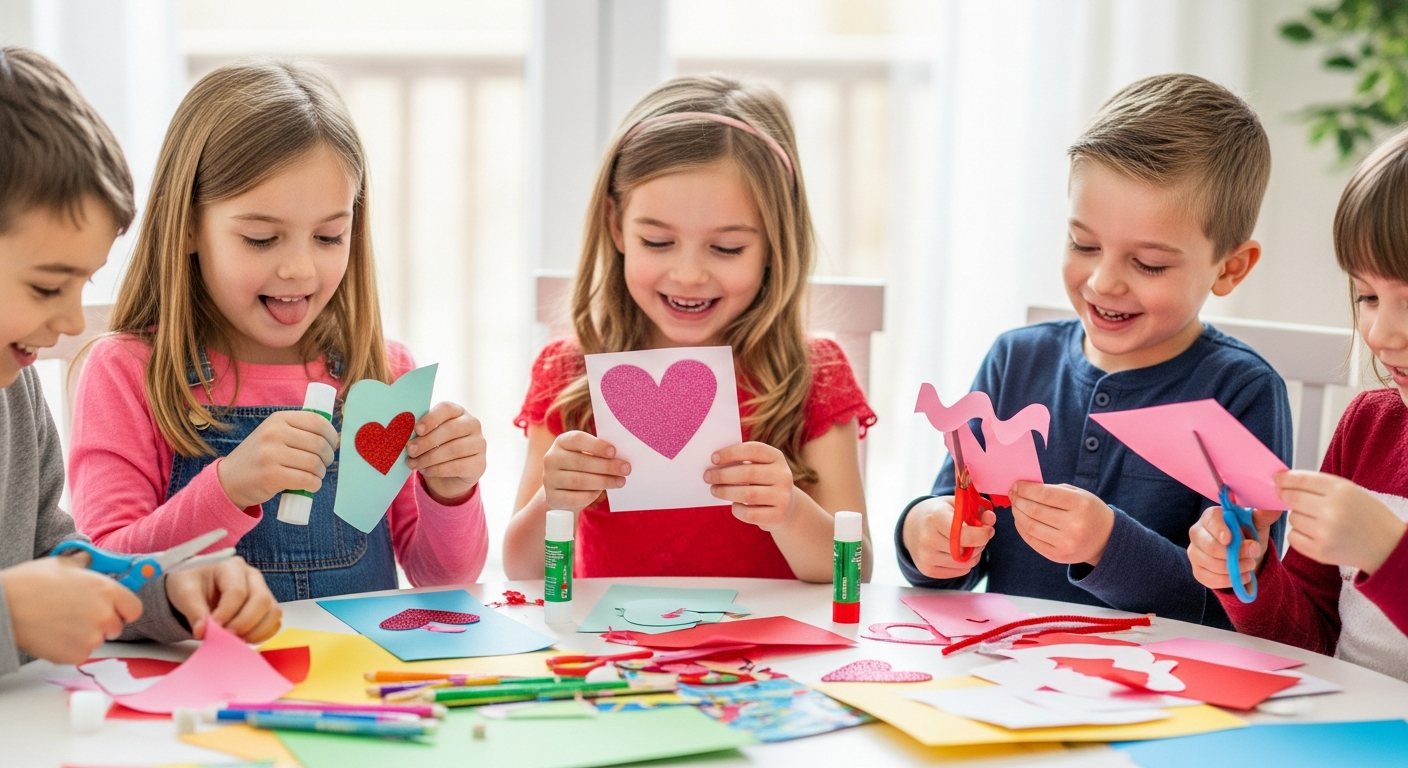
Table of Contents
- Introduction
- The Developmental Power of Hands-On Crafts
- Tips for a Joyful Crafting Experience
- Easy DIY Valentine Crafts for Kids
- Beyond the Craft Table: Nurturing Communication Skills with Speech Blubs
- Unlock Full Potential: Speech Blubs Pricing & Value
- Conclusion
- Frequently Asked Questions
Valentine’s Day stirs something truly special in our hearts – a desire to express love, friendship, and connection in tangible ways. For children, this season offers a magical opportunity to explore creativity, develop crucial skills, and create cherished memories. Imagine the beaming smile on your child's face as they proudly present a handmade card or decoration, a testament to their budding imagination and hard work. But beyond the glitter and glue, engaging in simple DIY Valentine crafts offers a powerful pathway for growth, particularly in developing communication skills.
This comprehensive guide is dedicated to helping you unlock the joy and developmental benefits of crafting with your kids this Valentine’s Day. We’ll explore a delightful array of easy, accessible, and engaging projects suitable for various age groups, ensuring that every child, from the littlest toddler to the blossoming pre-teen, can participate in the fun. We believe that play is the most powerful teacher, and that includes activities that foster a love for communication and self-expression. As we dive into these delightful crafts, we'll also show you how these hands-on activities complement the language-building journey that we champion at Speech Blubs, helping children to truly "speak their minds and hearts."

Introduction
Have you ever noticed how a simple activity like mixing colors or cutting shapes can light up a child's entire world? Valentine’s Day, with its emphasis on love and connection, provides the perfect backdrop for these moments of discovery and delight. It’s a time when we collectively embrace heartfelt gestures, making it an ideal opportunity to engage our children in creative expression. But these aren't just pretty decorations; they're powerful learning tools. Crafting is a multi-sensory experience that inherently encourages communication, problem-solving, and emotional expression – all foundational elements for strong speech and language development.
In this blog post, we’re sharing over 75 easy DIY Valentine crafts for kids that require minimal supplies and offer maximum fun. From adorable handprint keepsakes for toddlers to intricate projects for older children, you'll find inspiration to fill your home with love and creativity. More than just providing instructions, we'll delve into the developmental benefits of each craft, highlighting how they foster fine motor skills, cognitive development, and, crucially, language acquisition. We'll also illustrate how these hands-on experiences beautifully align with the mission of Speech Blubs, transforming ordinary moments into extraordinary learning opportunities for your child’s communication journey. Get ready to embark on a joyful crafting adventure that will not only create beautiful Valentine's Day decor but also strengthen your child's confidence and ability to connect with the world around them.
The Developmental Power of Hands-On Crafts
Before we dive into the specific craft ideas, let's explore why crafting is so much more than just a fun pastime. For children, every snip of the scissors, every dab of glue, and every choice of color is a mini-lesson in itself. These activities are rich environments for holistic development, laying crucial groundwork for academic success and social-emotional well-being.
Fine Motor Skill Development
Many Valentine’s crafts involve actions like cutting, gluing, drawing, tearing, and molding. These are all excellent exercises for developing fine motor skills – the coordination of small muscles in the hands and fingers. Strong fine motor skills are essential not just for crafting, but for everyday tasks like dressing, eating, and, importantly, writing. Holding a crayon, manipulating tissue paper, or threading beads all contribute to dexterity and hand-eye coordination.

Cognitive Growth and Problem Solving
Crafting encourages children to think creatively and solve problems. How do I make this heart stick? What colors will look good together? How can I transform a toilet paper roll into a stamp? These questions foster critical thinking, planning, and spatial reasoning. Following instructions (even simple ones for toddlers) helps develop listening comprehension and sequencing skills.
Emotional Expression and Self-Confidence
Art is a powerful outlet for emotions. Through crafts, children can express feelings of love, joy, and friendship. The act of creating something unique and beautiful instills a sense of accomplishment and boosts self-esteem. When a child proudly displays their handmade Valentine, they're not just showing off a craft; they're showcasing their effort, creativity, and growing capabilities. This positive reinforcement encourages further exploration and learning.
Language and Communication Enhancement
Perhaps one of the most significant, yet often overlooked, benefits of crafting is its impact on language development. From the moment you begin discussing a project to the final display, you're engaging in a language-rich dialogue with your child.
- Vocabulary Expansion: Naming colors, shapes, materials (glue, paper, glitter), actions (cut, fold, stick, paint), and textures (bumpy, smooth, sticky) naturally broadens a child's vocabulary.
- Following Instructions: Simple multi-step directions ("First, get the red paper. Next, cut a heart shape.") build listening skills and the ability to process verbal cues.
- Descriptive Language: Encouraging your child to describe their creation ("Tell me about your shiny heart!") promotes the use of adjectives, phrases, and storytelling.
- Social Interaction: Crafting with a parent, sibling, or friend involves turn-taking, sharing, and verbalizing needs or ideas, strengthening conversational skills.
- Expressing Feelings: Discussing who the craft is for and what message it conveys ("This is for Grandma because I love her!") helps children link emotions to words.
At Speech Blubs, we understand that language blossoms in rich, interactive environments. That's why we create engaging "smart screen time" experiences that complement these hands-on activities. Our unique video modeling methodology provides a powerful tool for children to learn by observing and imitating their peers, creating a dynamic learning environment that supports speech and language development.
Tips for a Joyful Crafting Experience
To make your Valentine’s crafting as enjoyable and beneficial as possible, keep these tips in mind:
- Embrace the Mess: Crafting can be messy, and that's okay! Lay down newspaper or a plastic tablecloth. Focus on the process, not just the perfect outcome.
- Keep it Simple: Especially for younger children, choose crafts with few steps and easily manipulated materials.
- Gather Materials First: Have everything ready before you start to avoid interruptions and keep little hands engaged.
- Focus on the Process, Not Perfection: The goal is exploration and learning, not creating a museum-worthy piece. Encourage effort and creativity, not flawless execution.
- Talk, Talk, Talk: Narrate your actions, ask open-ended questions, and encourage your child to talk about what they're doing and seeing. This is where the real language learning happens!
- Allow for Choice: Let your child choose colors, shapes, or where to put a sticker. This fosters independence and ownership.
- Celebrate Their Work: Display their creations proudly! This boosts confidence and reinforces the value of their efforts.
Easy DIY Valentine Crafts for Kids
Now, let’s get to the fun part! We’ve curated a fantastic list of easy DIY Valentine crafts, broken down by age group to ensure the activities are developmentally appropriate and maximally engaging. Remember, these are jumping-off points – feel free to adapt them to your child’s interests and abilities!
Crafts for Tiny Hands (Toddlers, 1-3 Years)
For our youngest crafters, the focus is on sensory exploration, simple actions, and developing early fine motor skills. These crafts are perfect for introducing basic concepts like colors, shapes, and textures.
1. Heart Stamps with Cardboard Rolls
- Materials: Empty toilet paper or paper towel rolls, washable paint (red, pink, purple), paper.
- How to Make:
- Gently bend an empty cardboard roll into a heart shape, securing the bend with a piece of tape if needed.
- Pour small puddles of different colored paints onto a paper plate.
- Show your child how to dip the heart-shaped end of the roll into the paint and then stamp it onto paper.
- Developmental Benefits: Excellent for grasping, hand-eye coordination, and cause-and-effect understanding.
- Speech Blubs Connection: As your child stamps, verbally label the colors ("Red heart! Pink heart!"), count the stamps ("One, two, three hearts!"), and describe the action ("Stamp! Stamp!"). This repetitive labeling is fantastic for early vocabulary building, much like the clear, repeated models found in our app.
2. Tissue Paper Heart Suncatchers
- Materials: Contact paper or clear self-adhesive laminating sheets, various colors of tissue paper (cut into small squares or torn into pieces), construction paper (optional for frame).
- How to Make:
- Peel the backing off one piece of contact paper and place it sticky-side up on a table.
- Let your child stick the tissue paper pieces onto the contact paper. Encourage them to cover as much space as possible.
- Once complete, place another piece of contact paper on top, sticky-side down, to seal the tissue paper in.
- Trim the edges into a heart shape (or any shape) or cut a heart frame from construction paper to glue around the edges.
- Hang in a window to catch the light!
- Developmental Benefits: Develops pincer grasp (picking up small pieces), bilateral coordination (using both hands), and color recognition.
- Speech Blubs Connection: Talk about the colors, "sticky," "shiny," and the feeling of light. Encourage words like "more" as they add pieces, or "open" when you peel the paper. These are core early vocabulary targets supported by our engaging Speech Blubs app activities.
3. Valentine Playdough Fun
- Materials: Store-bought or homemade playdough (red, pink, white), heart-shaped cookie cutters, rolling pins, glitter (optional).
- How to Make:
- Simply provide your child with the playdough and tools.
- Let them explore, squish, roll, and cut out heart shapes.
- Add glitter for extra sparkle!
- Developmental Benefits: Fantastic for strengthening hand muscles, sensory exploration, and imaginative play.
- Speech Blubs Connection: This is a goldmine for descriptive language! Talk about "soft," "squishy," "red," "big heart," "small heart." Use action words like "roll," "squish," "cut," "pat." Engage your child in simple pretend play scenarios, which are critical for developing narrative skills.
Crafts for Budding Artists (Preschoolers, 3-5 Years)
Preschoolers are developing more refined motor skills and beginning to follow multi-step instructions. These crafts introduce more complex concepts while keeping the process fun and forgiving.
1. Tissue Paper Heart Wreath
- Materials: Cardboard (cut into a heart or circle shape for the base), tissue paper (red, pink, purple, white) cut into 2-inch squares, glue, ribbon for hanging.
- How to Make:
- Show your child how to crumple each tissue paper square into a small ball.
- Apply glue to a section of the cardboard base.
- Have your child press the tissue paper balls onto the glue, covering the entire wreath form.
- Once dry, attach a ribbon loop for hanging.
- Developmental Benefits: Reinforces fine motor skills (crumpling, sticking), color recognition, and encourages patience to cover the entire shape.
- Speech Blubs Connection: Discuss the "soft" tissue paper, the "sticky" glue, and the "crinkly" sound. Use directional words like "around" the heart, or "all over." Asking "What color should we use next?" encourages decision-making and expressive language.
2. Paper Heart Animals (Penguin, Snail, Fox)
- Materials: Construction paper in various colors, scissors (child-safe), glue stick, googly eyes (optional), markers.
- How to Make:
- Pre-cut various sizes of heart shapes from different colored construction paper.
- Provide an example or a picture of an animal made from hearts (e.g., a large black heart for a penguin body, two smaller black hearts for wings, a white heart for the belly, etc.).
- Encourage your child to arrange and glue the hearts to create their own animal. Add googly eyes or draw features with markers.
- Developmental Benefits: Develops shape recognition, spatial reasoning (how shapes fit together), and fosters creativity. Cutting with child-safe scissors (with supervision) is excellent for pre-writing skills.
- Speech Blubs Connection: This is fantastic for story-telling! "What kind of animal is it? What does it eat? Where does it live?" Use action verbs like "cut," "glue," "draw," "wiggle" (for googly eyes). This kind of narrative play helps children expand their sentence structure and imagination, directly supporting the skills reinforced by our app's playful scenarios. If you're wondering about your child's communication progress, take our quick 3-minute preliminary screener to get a simple assessment and a free 7-day trial to see how we can help.
3. Crayon Resist Hearts
- Materials: White paper, white crayon, watercolors, paintbrush.
- How to Make:
- On the white paper, draw heart shapes or simple messages (like "LOVE") with the white crayon. Press firmly!
- Give your child watercolors and a brush, and let them paint over the entire paper.
- Watch as the crayon drawing "resists" the paint, revealing the hidden image.
- Developmental Benefits: Introduces scientific concepts (resistance), encourages artistic exploration, and strengthens hand muscles through crayon grip.
- Speech Blubs Connection: Use words like "magic," "hidden," "reveal," "surprise!" Describe the colors as they appear. Ask, "What do you see?" or "What color will you use next?" This encourages imaginative language and color vocabulary.
Crafts for Creative Explorers (Elementary, 5-9 Years)
At this age, children can handle more detailed instructions, use a wider range of materials, and often enjoy adding their personal touch to projects. These crafts can foster independence and more complex problem-solving.
1. Air-Dry Clay or Salt Dough Hearts
- Materials: Air-dry clay or salt dough (recipe: 1 cup flour, 1/2 cup salt, 1/2 cup water), heart-shaped cookie cutters, paint, glitter, string.
- How to Make:
- If using salt dough, mix ingredients, knead until smooth. Roll out the clay/dough to about 1/4 inch thick.
- Use cookie cutters to make heart shapes. You can also press fingerprints or initial into the clay for a personal touch.
- Use a straw to poke a hole at the top of each heart for hanging.
- Allow air-dry clay to dry completely (24-72 hours) or bake salt dough at 250°F (120°C) until hard.
- Once dry/cool, paint and decorate the hearts. Thread a string through the hole for hanging or gifting.
- Developmental Benefits: Sensory input, fine motor strength (kneading, rolling), creativity in decoration, and understanding of material properties.
- Speech Blubs Connection: Discuss the transformation from "soft" dough to "hard" ornament. Use action verbs: "mix," "roll," "cut," "bake," "paint." Ask "What will you draw on your heart?" or "Who is this special heart for?" These questions encourage planning and expressing intentions, skills nurtured through the structured play in our app.
2. Borax Crystal Hearts
- Materials: Pipe cleaners, Borax laundry booster, very hot water, wide-mouthed jar or container, pencil or stick, string.
- How to Make:
- Shape pipe cleaners into heart forms. You might need to twist ends together to keep the shape.
- Tie a string to the top of each pipe cleaner heart, and tie the other end to a pencil so the heart can hang suspended in the jar without touching the bottom or sides.
- In the jar, mix Borax into very hot water (about 3 tablespoons per cup of water) until no more Borax dissolves (it will look cloudy).
- Carefully lower the pipe cleaner heart into the Borax solution, resting the pencil across the top of the jar.
- Leave undisturbed for several hours or overnight. Crystals will form on the pipe cleaners!
- Carefully remove the crystal hearts and let them dry on a paper towel.
- Developmental Benefits: Introduces basic chemistry concepts, patience, observation skills, and following multi-step scientific processes.
- Speech Blubs Connection: This is fantastic for introducing scientific vocabulary: "solution," "dissolve," "crystal," "suspend." Talk about "what will happen?" and "what did you observe?" Encourage detailed descriptions of the crystals’ appearance. This type of inquiry-based discussion directly supports the kind of active, discovery-based learning central to our approach at Speech Blubs.
3. String Art Hearts
- Materials: Cardboard or a block of wood, small nails (if using wood), hammer (adult supervision!), embroidery floss or yarn in various colors, heart template, pushpins (if using cardboard).
- How to Make:
- Draw or print a heart template onto paper and tape it to your cardboard/wood.
- For wood: Carefully hammer small nails around the outline of the heart, evenly spaced. Remove the paper.
- For cardboard: Poke small holes around the heart outline with a sharp pencil or pushpin. Insert pushpins into each hole.
- Tie one end of the embroidery floss to a nail/pin.
- Begin "stringing" the yarn across the heart, crisscrossing it randomly from nail to nail/pin to pin, creating a beautiful web of color. Tie off the end when done.
- Developmental Benefits: Enhances fine motor skills (wrapping, tying), spatial reasoning, pattern recognition, and focus.
- Speech Blubs Connection: Describe the texture of the yarn ("fuzzy," "smooth"), the colors, and the process ("wrap around," "crisscross," "tight"). Ask, "How is your heart changing?" or "What pattern are you making?" This encourages complex descriptive language and sequential thinking.
Crafts for Aspiring Makers (Older Kids, 9+)
Older children are ready for more intricate projects that require planning, precision, and sustained effort. These crafts can lead to truly impressive results and encourage advanced problem-solving skills.
1. Origami Heart Bookmarks
- Materials: Square sheets of origami paper (or regular paper cut into squares), markers (optional).
- How to Make:
- Follow a detailed origami tutorial for a heart bookmark. Many excellent step-by-step videos and diagrams are available online.
- The process typically involves folding a square into a triangle, then folding corners to the center, and making several more precise folds to form the heart shape that slips over a page corner.
- Decorate with markers if desired.
- Developmental Benefits: Exceptional for following multi-step instructions, spatial reasoning, precision, patience, and fine motor dexterity.
- Speech Blubs Connection: This activity is fantastic for developing "sequencing" vocabulary: "first," "next," "then," "after that," "finally." Work through the steps together, verbalizing each one. Discuss geometric terms like "square," "triangle," "corner," "edge." This complex language use is exactly what we support at Speech Blubs, where children learn to process and articulate intricate concepts through engaging interactions.
2. DIY Slap Bracelets
- Materials: Old plastic ruler or flexible plastic sheet, fabric scraps or duct tape in Valentine's patterns, glue (fabric glue or hot glue, with supervision), embellishments (buttons, beads, glitter).
- How to Make:
- Cut the flexible plastic into strips about 1 inch wide and 9-10 inches long with rounded ends. (Adult may need to help with sharp cutting tools).
- Cover one side of the plastic strip with fabric or patterned duct tape. Ensure the edges are neatly folded over and secured.
- Repeat for the other side.
- Decorate with buttons, small fabric hearts, or glitter. Let dry completely.
- Once the decoration is dry, gently "slap" it on a wrist to test its curl!
- Developmental Benefits: Requires precision in cutting and gluing, encourages design thinking, and revives a classic toy with a personal touch.
- Speech Blubs Connection: Talk about "flexible" versus "rigid," "pattern," "design," "smooth," "rough." Discuss the process of "covering," "decorating," and "slapping." This project provides a context for discussing different materials and their properties, enriching their descriptive vocabulary.
3. Woven Heart Baskets/Pockets
- Materials: Two contrasting colors of construction paper, scissors, ruler, pencil, glue.
- How to Make:
- Fold each piece of construction paper in half.
- Draw a half-heart shape along the fold of each.
- Starting from the folded edge, draw parallel lines towards the curved edge, stopping about an inch before the edge. Cut along these lines, creating strips.
- Cut out the half-heart shapes. When unfolded, each will be a full heart with vertical slits.
- Take one heart and weave the strips of the second heart through its slits, alternating "over" and "under." Push the strips up as you weave to create a basket-like effect.
- Secure the ends of the woven strips with a tiny dab of glue.
- You can leave the top edges open to form a small pocket or glue them shut for a decorative flat heart.
- Developmental Benefits: Exceptional for fine motor skills, spatial reasoning, understanding patterns, and problem-solving through intricate weaving.
- Speech Blubs Connection: This craft is a perfect opportunity to use positional words: "over," "under," "through," "in," "out." Discuss the "pattern" created by weaving. Ask, "What happens if we go over, then under?" This kind of analytical language supports complex thought and descriptive communication, skills that children refine with our fun, interactive tools.
Beyond the Craft Table: Nurturing Communication Skills with Speech Blubs
While hands-on crafts are incredibly valuable, we understand that nurturing a child’s communication development is a multifaceted journey. At Speech Blubs, our mission is to empower children to "speak their minds and hearts," providing an immediate, effective, and joyful solution for the 1 in 4 children who need speech support. Our company was born from the personal experiences of our founders, who all grew up with speech problems and created the tool they wished they had.
We blend scientific principles with play, transforming screen time into a "smart screen time" experience. Unlike passive viewing like cartoons, Speech Blubs is an active, interactive tool that encourages engagement and learning. We’ve leveraged the power of our unique video modeling methodology, where children learn by watching and imitating their peers, activating mirror neurons in the brain for optimal learning. This approach has earned us a top-tier rating on the MARS scale for educational apps.
How Speech Blubs Complements Crafting for Language Growth
Think of it this way: crafting builds the physical dexterity and conceptual understanding, and Speech Blubs provides the targeted, engaging practice for verbal expression.
- Vocabulary Reinforcement: After naming colors, shapes, and actions during crafts, reinforce these words through our app's themed sections. For a child who loves animals and is practicing sounds like 'moo' and 'baa,' our 'Animal Kingdom' section offers a fun, motivating way to practice these sounds with peers.
- Imaginative Play: Many of our activities stimulate imaginative play, helping children develop narrative skills similar to inventing stories for their handmade paper animals.
- Emotional Expression: We have dedicated sections that help children identify and articulate emotions, mirroring the feelings they might express while making a heartfelt Valentine for a loved one.
- Following Instructions: The structured activities in Speech Blubs help children practice following verbal cues, a skill directly transferable from the craft table.
We offer a powerful supplement to a child's overall development plan and, when applicable, professional therapy. We provide a screen-free alternative to passive viewing and a powerful tool for family connection, just like a crafting session. Don't just take our word for it; see what other parents are saying about their child's success with Speech Blubs.
Unsure if your child could benefit from speech support? Take our quick 3-minute preliminary screener. It involves 9 simple questions and provides an assessment along with a next-steps plan. This valuable tool is completely free and can help you determine if Speech Blubs is the right fit for your family.
Unlock Full Potential: Speech Blubs Pricing & Value
We believe in making effective speech and language support accessible and affordable for every family. To help you integrate Speech Blubs into your child’s learning journey, we offer transparent and value-driven pricing plans.
Our subscription options are designed to provide flexibility, but we highly recommend our Yearly plan for the ultimate value and benefits:
- Monthly Plan: Priced at $14.99 per month. While convenient, this plan does not include some of our most sought-after features.
- Yearly Plan: Our best value, priced at $59.99 per year. This breaks down to just $4.99 per month, allowing you to save 66% compared to the monthly subscription!
The Yearly Plan isn't just about significant savings; it's about unlocking the full Speech Blubs experience and providing your child with consistent, comprehensive support. With the Yearly plan, you receive:
- A 7-day free trial: Experience the full power of Speech Blubs before committing.
- The extra Reading Blubs app: Double the fun, double the learning! This additional app is included exclusively with the Yearly plan, supporting early literacy skills.
- Early access to new updates: Be the first to try out our latest features and content.
- 24-hour support response time: Get your questions answered quickly and efficiently.
The Monthly plan, unfortunately, does not include these invaluable benefits. We want you to have the best tools at your fingertips, which is why we’ve packed so much value into our Yearly subscription.
Conclusion
This Valentine’s Day, let’s go beyond store-bought cards and create lasting memories and meaningful learning experiences with our children. The simple act of crafting offers a treasure trove of developmental benefits, from honing fine motor skills and boosting cognitive abilities to fostering emotional expression and, crucially, nurturing strong language and communication skills. Every heart cut, every color chosen, and every glue stick applied is an opportunity for a rich conversation, a new word learned, and a step forward in your child's ability to "speak their minds and hearts."
As you guide your child through these delightful DIY Valentine crafts, remember that these hands-on activities are powerful allies in their journey to confident communication. And when you’re ready to complement these real-world experiences with engaging, expert-backed digital support, Speech Blubs is here. Our unique video modeling methodology and "smart screen time" experiences are designed to make learning to communicate joyful and effective, just like a successful craft project.
Ready to empower your child's voice and make this Valentine’s Day (and every day) a celebration of communication? We invite you to explore the full potential of Speech Blubs. The best way to begin is by choosing our Yearly plan, which includes a 7-day free trial and unlocks exclusive access to the Reading Blubs app, early updates, and dedicated support.
Don't wait to give your child the gift of confident communication!
Download Speech Blubs on the App Store
Get Speech Blubs on Google Play
Alternatively, you can create your account and start your 7-day free trial today! Remember to select the Yearly plan to access the free trial and all the fantastic features for comprehensive speech and language support. We are excited to be a part of your family's journey! Visit our homepage for more information.
Frequently Asked Questions
Q1: What age groups are these Valentine crafts suitable for?
A1: This guide includes crafts for toddlers (1-3 years) focusing on sensory exploration and simple actions, preschoolers (3-5 years) for developing fine motor skills and following instructions, elementary students (5-9 years) for more detailed projects, and older kids (9+) for intricate and creative endeavors. We've tried to provide a wide range to ensure there's something for every child!
Q2: How can I make these crafts more beneficial for my child's language development?
A2: The key is to talk, talk, talk! Narrate your actions, ask open-ended questions about colors, shapes, actions, and textures, and encourage your child to describe what they are doing and seeing. Use descriptive words, action verbs, and positional language (e.g., "put the glue under the paper," "the heart is on top"). This constant verbal interaction creates a rich language environment.
Q3: What if my child isn't interested in crafting?
A3: Every child is different! Try offering a variety of craft types and materials, or choose crafts that align with their current interests (e.g., if they love animals, try the paper heart animals). Keep sessions short and low-pressure. Focus on the sensory experience rather than the finished product. Sometimes just observing you craft can spark their interest. Remember, the goal is fun and engagement, not forced participation.
Q4: How does Speech Blubs specifically help with speech development alongside crafting?
A4: While crafting provides a fantastic hands-on environment for language exposure, Speech Blubs offers targeted, structured practice using our unique video modeling methodology. It reinforces vocabulary learned during crafts, helps with articulation through imitation of peers, and supports following instructions and expressive language. It acts as a fun, interactive supplement, turning screen time into an active learning experience that complements the tactile, social, and cognitive benefits of crafting.
About the author