
Helping Your Child Talk: Flashcards for Speech Delay
 By Speech Blubs Team•Mar 9, 2026•14 min.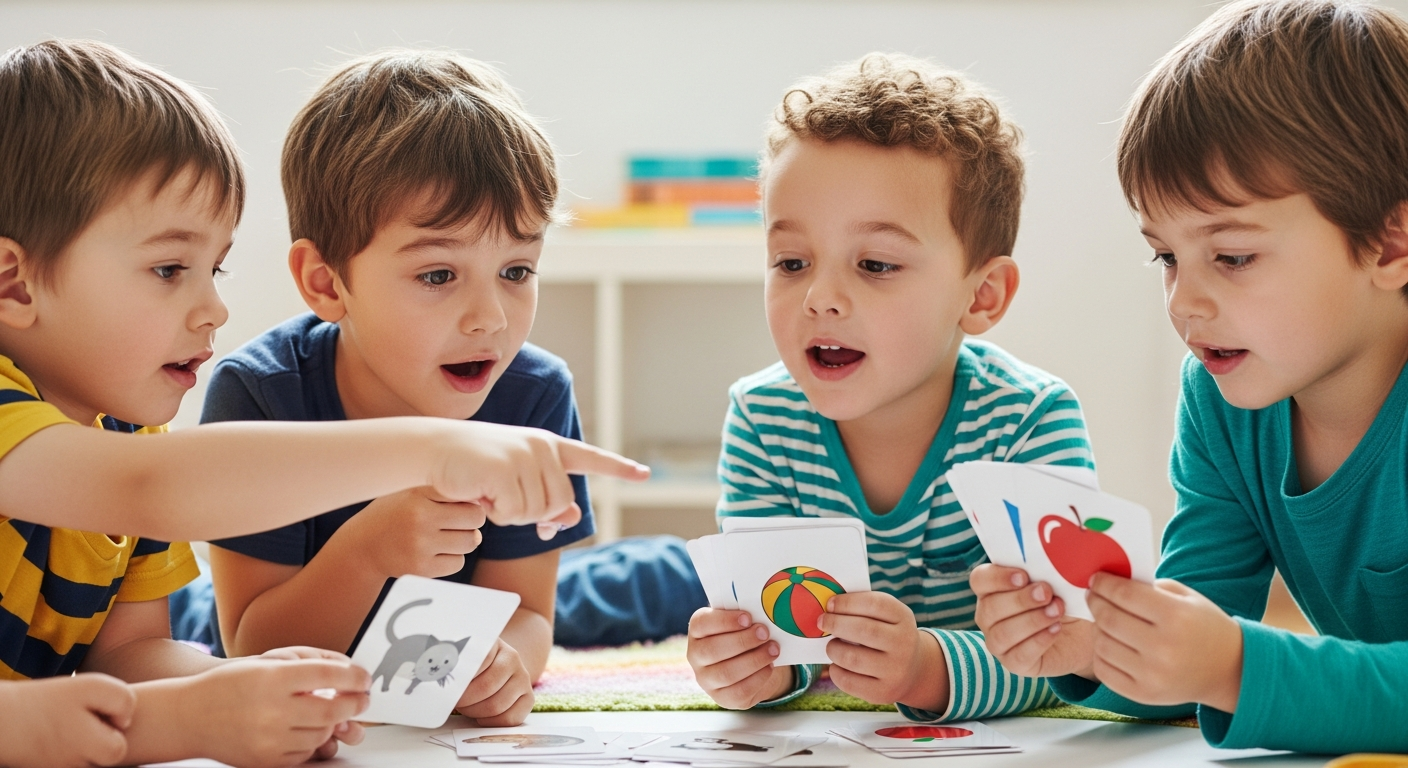
Table of Contents
- Introduction
- The Science of Visual Learning and Speech
- Moving Beyond "Drill and Kill"
- Practical Scenarios: Flashcards in Action
- Digital vs. Physical Flashcards: Finding the Balance
- Essential Categories for Speech Development
- Setting Realistic Expectations
- Choosing the Right Path for Your Family
- How to Maximize Flashcard Effectiveness
- Integrating Speech Blubs into Your Routine
- Building a Support System
- Summary of Key Takeaways
- Conclusion
- Frequently Asked Questions
Introduction
Have you ever looked at your toddler and wondered what is going on inside their brilliant, busy mind, only to feel a pang of worry when the words don’t come out as expected? You are certainly not alone. Statistics suggest that roughly 1 in 4 children will experience some form of speech or language delay during their early years. It is a journey filled with questions, and for many parents, the search for tools often leads to a classic staple: flashcards.
The purpose of this blog post is to explore how flashcards for speech delay can be transformed from simple pieces of cardboard into dynamic, interactive tools for communication. We will dive deep into the science of visual learning, discuss the difference between traditional "drill" methods and modern "smart screen time," and provide you with practical, play-based strategies to help your child find their voice. At Speech Blubs, our mission is to empower children to speak their minds and hearts. We believe that with the right approach, every learning moment can be a joyful step toward better communication. Our main message is simple: flashcards are most effective when they are used as a bridge to real-world connection and play, rather than just a memorization tool.

The Science of Visual Learning and Speech
When a child is struggling to find the right words, their brain often relies heavily on visual processing. Children are naturally visual learners, and for those with speech delays, a picture can act as a crucial anchor for a concept they haven’t yet mastered vocally. This is where flashcards for speech delay come into play. They provide a static, unchanging image that a child can study at their own pace, which is often less overwhelming than the fast-paced flow of natural conversation.
However, science tells us that the brain learns best when it can connect a visual image to an action. This is the foundation of our "video modeling" methodology at Speech Blubs. Our app utilizes the power of mirror neurons—specialized brain cells that fire both when an individual performs an action and when they observe someone else performing that same action. By watching other children (peers) make sounds and say words on screen, your child’s brain is literally practicing the movement of speech. You can learn more about the scientific research behind our method, which places us in the top tier of speech apps worldwide.
While traditional paper flashcards provide the visual, "smart screen time" like Speech Blubs adds the dimension of peer-to-peer imitation. This combination helps transition a child from simply recognizing a picture to attempting to reproduce the sound themselves.
Moving Beyond "Drill and Kill"
A common mistake many well-meaning parents make is turning flashcard time into a high-pressure "test." If you hold up a card and repeatedly ask, "What’s this? Say apple. Say apple!" you might find your child turning away or becoming frustrated. This "drill and kill" approach can make learning feel like a chore.
Instead, we advocate for a play-based approach. Flashcards should be an invitation to interact. For example, if you are using a card with a picture of a ball, don’t just ask for the word. Roll a real ball to your child. Bounce it. Make a "boing" sound. Then, show the card and say, "Ball! Let's find the ball." By connecting the card to a physical experience, the word becomes meaningful.

Our founders at Speech Blubs understand this frustration firsthand. They all grew up with speech problems and created the tool they wished they had—one that blends scientific principles with the pure joy of play. We want to provide an immediate, effective solution that reduces frustration and builds confidence. You can see how this approach has helped thousands of families by reading our parent testimonials.
Practical Scenarios: Flashcards in Action
To help you visualize how to use these tools, let’s look at some real-world scenarios.
For the Animal Lover
Imagine you have a 3-year-old "late talker" who is obsessed with the zoo. Instead of sitting at a table with cards, take the cards to their play area. If you are using the "Animal Kingdom" section of the Speech Blubs app, you can pair the digital "flashcards" (the video models) with their favorite toy figurines. When the app shows a peer making a "moo" sound for a cow, encourage your child to make their toy cow "moo" too. This turns a speech exercise into a storytelling session.
For the Active Explorer
If your child can't sit still, don’t force them to. Hide flashcards around the room. Ask them to "run and find the jumping frog!" When they find the card, they get to jump like a frog while you model the word "jump." This physical movement helps "lock in" the vocabulary and keeps the energy positive.
For Daily Routines
Use flashcards to help your child navigate their day. A card showing a "toothbrush" or "shoes" can act as a visual prompt. Before headng to the bathroom, show the toothbrush card. This reduces the cognitive load of processing a verbal command alone and gives them a clear visual goal.
To see where your child currently stands and which activities might be best for them, we recommend taking our quick 3-minute preliminary screener. It involves just 9 simple questions and provides an assessment and a next-steps plan to help you get started.
Digital vs. Physical Flashcards: Finding the Balance
Parents often ask if they should use physical cards or digital apps. The answer is often "both," but with a caveat. Traditional flashcards are great for tactile learners and for screen-free moments. However, they lack the engagement and modeling that a "smart" digital tool provides.
Speech Blubs is designed to be a "smart screen time" experience, which is a powerful alternative to passive viewing like watching cartoons. While a cartoon is a one-way street, our app is built for interaction. It encourages the child to respond, mimic, and participate. It’s a tool for family connection, meant to be used with an adult co-playing and supporting the journey.
If you’re ready to try a digital approach that goes beyond static images, you can download Speech Blubs on the App Store or get it on the Google Play Store to begin your journey.
Essential Categories for Speech Development
When selecting or creating flashcards for speech delay, it’s helpful to focus on specific categories that build foundational communication skills.
1. Functional Nouns
Focus on words your child needs every day. This includes food items (juice, apple, cookie), toys (ball, car, doll), and body parts (nose, eyes, hands). When a child can label their world, their frustration levels typically drop because they can finally point to or name what they want.
2. Action Verbs
Verbs are the "engines" of sentences. Without them, a child can’t move from single words to phrases. Use cards that show clear actions like eat, sleep, run, wash, and swing. In our app, we use vivid video modeling to show these actions in real-time, making it much easier for a child to grasp the concept of "doing."
3. Emotions and Social Cues
Identifying feelings is a critical part of communication. Cards showing happy, sad, angry, and surprised help children understand their own internal states and the reactions of others. This builds empathy and social-emotional intelligence.
4. Prepositions and Basic Concepts
Once your child has a handle on nouns and verbs, you can introduce concepts like on, under, big, and small. These help them describe their environment with more detail.
Setting Realistic Expectations
It is important to remember that every child develops at their own unique pace. Using flashcards or speech apps is not about achieving instant results—it’s about fostering a love for communication and building a strong foundation. You won't see your child giving public speeches in a month, but you might see them smile more when they successfully make a "b" sound, or see their confidence grow as they realize they can be understood.
We frame Speech Blubs as a powerful supplement to a child’s overall development plan. Whether you are working with a professional speech-language pathologist (SLP) or doing home-based enrichment, our goal is to create joyful family learning moments. We are here to help your child develop key foundational skills while reducing the stress that often accompanies a speech delay.
Choosing the Right Path for Your Family
We know that parents have a lot of choices when it comes to educational tools. We want to be transparent about how Speech Blubs works so you can make the best decision for your family. We offer two main paths to access our full suite of features:
- Monthly Plan: For $14.99 per month, you get full access to our library of over 1,500 activities.
- Yearly Plan: For $59.99 per year (which breaks down to just $4.99/month), you get the best value for your child’s development.
We highly recommend the Yearly Plan because it is designed for long-term success. It includes:
- A 7-day free trial so you can explore everything risk-free.
- The Reading Blubs app, which helps transition speech skills into early literacy.
- Early access to all new updates and content.
- 24-hour support response time from our dedicated team.
The Monthly plan does not include the free trial or the Reading Blubs app, making the Yearly plan the clear choice for families committed to a comprehensive learning experience. You can create your account and begin your 7-day free trial today on our web portal.
How to Maximize Flashcard Effectiveness
To get the most out of your flashcards for speech delay—whether they are physical or the digital ones found in Speech Blubs—keep these five tips in mind:
- Follow the Child's Lead: If they are interested in the "Dinosaur" card, talk about dinosaurs. Don't force them to look at the "Broccoli" card if they aren't interested.
- Use "Self-Talk": Narrate what you are doing with the cards. "I am picking up the blue car. The car goes vroom!"
- Wait for a Response: After you model a word, count to five in your head. Give your child the "space" to try and respond. Silence can be a powerful invitation.
- Celebrate All Attempts: If your child says "ba" for "ball," celebrate it! Positive reinforcement builds the confidence they need to try the full word next time.
- Keep it Short: Five to ten minutes of high-quality, joyful interaction is much better than thirty minutes of forced "work."
Integrating Speech Blubs into Your Routine
Many parents find success by integrating Speech Blubs into specific parts of their day. For instance, you might use the "Morning Routine" section while your child is getting dressed, or the "Yummy Time" section while preparing a snack. Because our app uses peers to model speech, children often view it as "playing with friends" rather than an educational lesson.
Our methodology is unique because it isn't just about watching; it's about doing. The app uses the camera to allow children to see themselves on screen alongside their "tutors," further engaging those mirror neurons and making the connection between the peer's mouth movements and their own.
If you haven't yet, you can download Speech Blubs on the App Store to see this video modeling in action. It’s a one-of-a-kind experience that transforms traditional flashcard concepts into something truly interactive.
Building a Support System
A speech delay can sometimes feel isolating for parents, but there is a vast community of people ready to help. Beyond apps and cards, consider connecting with local parent groups or seeking a consultation with a speech-language pathologist. We view Speech Blubs as a "companion" to professional therapy, providing a way to practice the skills learned in a clinical setting through fun, home-based play.
The founders of Speech Blubs started this company because they knew what it felt like to struggle with communication. They wanted to ensure that no child has to feel left behind. By combining technology with proven therapeutic techniques, we aim to give every child the tools they need to share their unique voice with the world.
Summary of Key Takeaways
Flashcards for speech delay are a versatile and accessible tool, but their effectiveness depends entirely on how they are used.
- Prioritize Interaction: Use cards as a gateway to real-world play, not just for "naming" objects.
- Embrace Technology Wisely: "Smart screen time" like Speech Blubs uses video modeling to activate mirror neurons, which static cards cannot do.
- Focus on the Process: Build confidence and joy first; the words will follow.
- Be Consistent but Brief: Short, frequent bursts of play-based learning are more effective than long, stressful sessions.
- Choose the Best Value: A comprehensive plan, like the Speech Blubs Yearly Plan, provides the trial period and extra tools (like Reading Blubs) needed for a holistic approach.
Conclusion
Helping a child with a speech delay is a marathon, not a sprint. It requires patience, empathy, and the right set of tools. Whether you choose to use physical flashcards for speech delay, digital modeling, or a combination of both, the most important element is your presence and support. By turning learning into a game and celebrating every small victory, you are creating a safe space for your child to grow.
At Speech Blubs, we are honored to be a part of your family's journey. We invite you to experience the difference that "smart screen time" can make. Ready to get started? Download the app on the App Store or Google Play to begin your 7-day free trial. We strongly recommend choosing the Yearly plan to unlock the full suite of features, including Reading Blubs and 24-hour support, for only $59.99 per year. Let’s work together to help your child speak their mind and heart!
Frequently Asked Questions
1. Are flashcards effective for non-verbal toddlers?
Flashcards can be effective for non-verbal toddlers as long as they are used to build understanding (receptive language) rather than just demanding speech (expressive language). For a non-verbal child, focus on "point to the..." or "can you find the..." activities. Pairing digital flashcards with video modeling, as seen in Speech Blubs, is often more effective because it shows the child the actual mechanics of how to produce the sound.
2. How many flashcards should I use per session?
Less is usually more. For toddlers and young children with speech delays, focus on 3 to 5 cards per session. This prevents overwhelm and allows you to dive deep into each word—playing with the object, making the sound, and using it in a sentence—rather than just rushing through a large stack.
3. Can digital flashcards replace physical ones?
Digital flashcards and physical cards each have their own benefits. Physical cards are tactile and screen-free, while digital tools like Speech Blubs offer "video modeling" and interactive elements that keep children engaged longer and show them how to say the words. A balanced approach using both is often the most successful strategy.
4. How do I know if my child actually has a speech delay?
Every child hits milestones at different times, but there are general guidelines. If your child isn't using at least 50 words or starting to combine two words by age two, it may be worth investigating. The best first step is to take our quick 3-minute preliminary screener, which can provide you with a clearer picture and a plan for what to do next.
About the author