
Helping Your Child with Speech Delay: Tips and Milestones
 By Speech Blubs Team•Mar 9, 2026•15 min.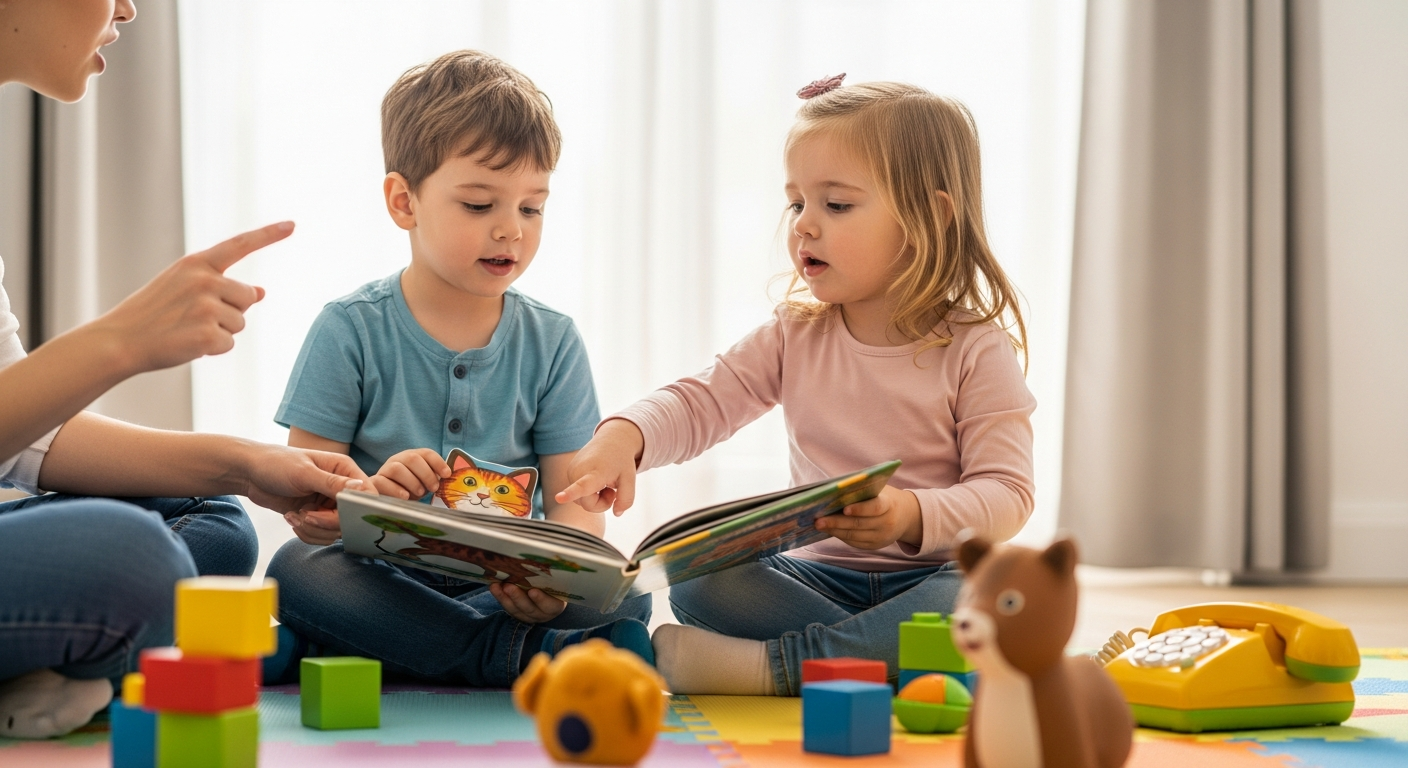
Table of Contents
- Introduction
- Understanding Speech vs. Language
- Developmental Milestones: What to Expect
- Red Flags: When to Seek Support
- Common Causes of Speech and Language Delays
- The Speech Blubs Approach: "Smart Screen Time"
- How Parents Can Help at Home
- Choosing the Right Plan for Your Family
- The Role of a Speech-Language Pathologist (SLP)
- Fostering Confidence and Reducing Frustration
- Frequently Asked Questions
- Conclusion
Introduction
Every parent eagerly awaits the moment their little one looks them in the eye and says those magical first words: "Mama" or "Dada." We spend months cooing back at our babies, narrating our grocery trips, and singing lullabies, all in anticipation of that first "real" conversation. But what happens when that milestone seems to be slipping further away? If you are noticing that your little one isn't quite hitting the marks you expected, or if they seem frustrated when trying to communicate, you might find yourself wondering if you are raising a child with speech delay.
First, take a deep breath. At Speech Blubs, we understand exactly how you feel. Our founders grew up with speech challenges themselves, and they created this platform to be the joyful, effective tool they wish they’d had. We know that roughly one in four children will need some form of speech support, and our mission is to empower every child to speak their minds and hearts.

In this post, we will explore the differences between speech and language, walk through the essential developmental milestones, and identify the red flags that warrant a conversation with your pediatrician. We’ll also discuss the common causes of delays and provide practical, play-based strategies you can use at home—including how our unique "video modeling" approach turns screen time into a powerful learning experience. Our goal is to replace your worry with a clear, actionable plan to foster your child’s love for communication and build their confidence.
Understanding Speech vs. Language
Before diving into milestones, it is crucial to understand that "speech" and "language" are not the same thing, though we often use the terms interchangeably. Recognizing the difference can help you better describe your child's progress to a professional.
What is Speech?
Speech refers to the physical act of producing sounds. It involves the coordination of the tongue, lips, jaw, and vocal cords to create audible words. If a child has a speech delay, they may be trying to communicate complex ideas but are difficult to understand because they cannot yet form the specific sounds required for certain words. For example, a child might say "tat" instead of "cat" or "wabbit" instead of "rabbit."
What is Language?
Language is a broader system of communication. It involves sharing and receiving information in a way that makes sense. This includes:
- Receptive Language: Understanding what others are saying (following directions, recognizing the names of objects).
- Expressive Language: The ability to convey thoughts, needs, and feelings through words, gestures, or writing.
A child with speech delay might have a language delay as well, but not always. A child might have a massive vocabulary (strong language) but struggle to articulate the sounds (speech delay). Conversely, they might speak very clearly but only know a handful of words (language delay).
Key Takeaway: Speech is about the sounds we make; language is about the meaning we convey and understand.
Developmental Milestones: What to Expect
While every child develops at their own pace, milestones provide a helpful framework for understanding typical progress. If you are unsure where your child stands, we recommend taking our quick 3-minute preliminary screener. It consists of nine simple questions and provides an assessment and a next-steps plan tailored to your child.

Birth to 6 Months
During these early months, communication is all about foundation. Your baby should:
- Startle at loud noises.
- Quiet down or smile when they hear your voice.
- Make "pleasure" sounds like cooing and gurgling.
- Have different cries for different needs (hunger, sleep, discomfort).
6 to 12 Months
This is the stage of "babbling." You should notice:
- The addition of consonant sounds to vowels (e.g., "ba-ba-ba" or "da-da-da").
- Responding to their name.
- Using gestures like waving "bye-bye" or pointing to things they want.
- By their first birthday, most children can say one or two simple words like "Mama," "Dada," or "Uh-oh."
12 to 18 Months
The vocabulary begins to grow slowly but surely. A child in this range typically:
- Follows simple, one-step directions (like "Pick up the ball").
- Points to a few body parts when asked.
- Has a vocabulary of about 10 to 20 words, even if they aren't perfectly pronounced.
18 to 24 Months
By age two, there is often a "language explosion." Look for:
- The ability to put two words together, such as "more juice" or "go park."
- Following simple commands without needing gestures.
- A vocabulary of at least 50 words.
- Caregivers should be able to understand about 50% of what the child says.
3 to 4 Years
At this stage, your child is becoming a conversationalist. They should:
- Use sentences with four or more words.
- Talk about their day or school activities.
- Be understood by strangers at least 75% to 90% of the time.
Red Flags: When to Seek Support
If your child isn't hitting every milestone exactly on the month, there is no need to panic. However, there are certain "red flags" that suggest a child with speech delay may benefit from professional intervention.
Under 12 Months
- Does not babble or make a variety of sounds.
- Does not respond to their name or loud noises.
- Does not use gestures like pointing or waving.
18 to 24 Months
- Prefers using gestures over vocalizations to communicate their needs.
- Has trouble imitating sounds.
- Does not follow simple verbal requests (e.g., "Give me the spoon").
- By age two, cannot produce words or phrases spontaneously and only imitates what they hear.
3 to 4 Years
- Their speech is very difficult for anyone outside the immediate family to understand.
- They consistently leave out certain sounds or syllables (e.g., "at" instead of "cat").
- They seem frustrated by their inability to communicate their thoughts.
If you recognize these signs, we encourage you to consult your pediatrician. Early intervention is the most effective way to help a child catch up and prevent future academic or social frustrations. You can also read testimonials from other parents who navigated these same concerns and found success by taking proactive steps.
Common Causes of Speech and Language Delays
Understanding why a delay is happening is the first step toward finding the right solution. There are several common reasons why a child might be struggling.
1. Oral-Motor Issues
Many children with speech delays have difficulty coordinating the muscles in their mouth. This might be due to:
- Apraxia of Speech: The brain has trouble sending the correct signals to the muscles used for speaking.
- Dysarthria: The muscles themselves are weak or have limited range of motion.
- Physical Impairments: A short frenulum (the fold under the tongue) or a cleft palate can physically hinder sound production.
2. Hearing Loss
If a child cannot hear sounds clearly, they cannot learn to imitate them. Chronic ear infections are a common culprit for temporary hearing loss. Even if your child passed their newborn hearing screen, it is vital to have their hearing re-evaluated if a speech delay is suspected. Children who struggle to hear often have trouble not just with saying words, but with understanding the language used around them.
3. Autism Spectrum Disorder (ASD)
Speech and language delays are often one of the first signs of autism. Children with ASD may have difficulty with social communication, such as making eye contact, using gestures, or responding to social cues. They might also exhibit "echolalia," which is the repetition of phrases they’ve heard on TV or from others without necessarily understanding the meaning.
4. Environmental and Psychological Factors
In some cases, a child simply hasn't had enough verbal stimulation. If a child is in an environment where they aren't spoken to frequently, or where their needs are met before they even have to try to communicate, they may be slower to develop speech. Bilingualism can also cause a temporary delay as the child’s brain works to process two different language systems, though these children typically catch up by age five and eventually excel in both languages.
The Speech Blubs Approach: "Smart Screen Time"
In today's world, parents are often told to avoid screens entirely. However, we believe there is a massive difference between passive viewing—like letting a child watch mindless cartoons—and "smart screen time."
At Speech Blubs, we’ve developed a unique "video modeling" methodology. Our app features videos of other children (peers) performing speech exercises, making sounds, and saying words. Scientific research shows that children are far more likely to imitate their peers than adults. This approach activates "mirror neurons" in the brain, creating a powerful learning loop.
Our method is backed by science and has earned a high rating on the MARS scale for educational quality. We aren't just an app; we are a bridge to better communication.
How It Works in Practice
Imagine you have a 3-year-old "late talker" who is obsessed with animals but struggles to name them. In the Speech Blubs app, you can head to the "Animal Kingdom" section. Your child will see a video of a peer making a "moo" sound while dressed as a cow. Because they see someone who looks like them having fun, they are naturally motivated to mimic the sound. This turns a potentially frustrating therapy session into a joyful family learning moment.
We provide a powerful supplement to professional therapy, helping to foster a love for communication and build the foundational skills a child needs to eventually "speak their minds and hearts." To start this journey, you can download Speech Blubs on the App Store or get it on Google Play.
How Parents Can Help at Home
You are your child's first and most important teacher. While professional tools and therapists are invaluable, the work you do at home is what truly cements their progress.
1. Narrate Your Day
Think of yourself as a sports commentator for your life. As you go about your chores, describe what you are doing in simple terms.
- "I am pouring the cold milk into the blue cup."
- "Now I am putting on my red shoes. One shoe, two shoes!"
- "Look at the big, green tree."
This constant stream of language helps a child with speech delay connect objects and actions with their names.
2. Read, Read, and Read Some More
It’s never too early to start reading. For younger toddlers, choose board books with large, colorful pictures of familiar objects. Instead of just reading the text, ask questions: "Where is the doggy?" or "What does the cow say?" Follow your child's lead—if they want to stay on the page with the tractor for five minutes, stay there and talk about the tractor!
3. Encourage Imitation (With a Twist)
Start by imitating them. If your child makes a sound or a gesture, copy it back to them. This teaches them that communication is a two-way street. Once you have their attention, try to get them to imitate a new, simple sound. Use big facial expressions and clear mouth movements to show them how the sound is made.
4. Create "Communication Temptations"
Sometimes we are too good at anticipating our children's needs. If your child always gets their juice the moment they point at the fridge, they have no reason to use words. Try waiting a few extra seconds. Point to the juice and ask, "Juice? Do you want juice?" Give them the opportunity to attempt the word before handing it over.
Choosing the Right Plan for Your Family
We believe that every family should have access to effective speech support. We offer two transparent pricing tiers to ensure you find the best fit for your needs.
The Monthly Plan
Our Monthly plan is $14.99 per month. It is a great way to explore the app and see how your child responds to our video modeling methodology.
The Yearly Plan (Best Value)
The Yearly plan is our most popular choice, offering a massive 66% savings compared to the monthly rate. It is priced at $59.99 per year, which breaks down to just $4.99 per month.
When you choose the Yearly plan, you receive exclusive benefits that are not included in the Monthly plan:
- 7-Day Free Trial: You can try the full experience risk-free for a week.
- Reading Blubs: You get full access to our secondary app, Reading Blubs, which focuses on early literacy and phonics.
- Priority Support: You’ll receive 24-hour support response times and early access to all new feature updates.
Ready to see the difference peer-led learning can make? Create your account and begin your 7-day free trial today. We recommend selecting the Yearly plan during sign-up to unlock all the premium features and the extra Reading Blubs app.
The Role of a Speech-Language Pathologist (SLP)
If you are concerned that your child is a child with speech delay, the best professional to turn to is a Speech-Language Pathologist (SLP). An SLP will conduct a comprehensive evaluation to determine exactly where the delay lies.
What Happens During an Evaluation?
An SLP will look at several factors:
- Receptive Language: What does your child understand?
- Expressive Language: What can they say?
- Articulation: Are they producing sounds correctly for their age?
- Oral-Motor Status: How are the muscles in their mouth working together?
Based on these results, the SLP will create a customized therapy plan. We often find that parents use Speech Blubs as a "homework" tool alongside their professional therapy sessions. The app keeps children engaged and practicing their sounds between appointments, which can help speed up the progress and make the transition to clear speech much smoother.
Fostering Confidence and Reducing Frustration
One of the biggest hurdles for a child with speech delay is the frustration that comes with not being understood. This can lead to tantrums, withdrawal, or behavioral issues. Our mission at Speech Blubs is to reduce that frustration by making communication fun.
When a child sees another child successfully making a sound, it reduces the "performance pressure" they might feel when an adult is asking them to speak. It turns "work" into "play." By focusing on joyful family learning moments, you are building your child's confidence. You are telling them that their voice matters and that you are there to help them find it.
Remember, the goal isn't just to get them to talk; it's to help them develop the skills to express who they are. Every "baa," "moo," and "mama" is a victory worth celebrating.
Frequently Asked Questions
1. Is it normal for a boy to talk later than a girl?
While it is statistically true that speech delays are three to four times more common in boys than in girls, it is not "normal" for a child to miss major milestones simply because of their gender. If a boy is not meeting the age-appropriate milestones, he should be evaluated just as a girl would be. "Wait and see" is rarely the best approach; early intervention is always preferred.
2. Can using a pacifier cause a speech delay?
Extended pacifier use (especially after age two) can sometimes interfere with the development of the muscles needed for speech. It can also limit the opportunities a child has to practice making sounds. While a pacifier isn't always the sole cause of a delay, limiting its use to naptime and bedtime can often help encourage more vocalization during the day.
3. Will my child grow out of a speech delay on their own?
Some children are "late bloomers" who eventually catch up without formal intervention. However, there is no way to know for sure if a child will catch up or if there is an underlying issue that requires help. It is always safer and more effective to seek an evaluation early. Addressing a delay before a child starts school can prevent future struggles with reading, writing, and social interactions.
4. How much time should my child spend on the Speech Blubs app?
We recommend "smart screen time" in short, focused bursts. 15 to 20 minutes a day of co-playing with the app is usually sufficient. The key is to use the app as a tool for interaction—talk about what you see on the screen, imitate the children in the videos together, and celebrate your child’s attempts at making sounds.
Conclusion
Navigating life with a child with speech delay can feel like an emotional rollercoaster. There are days of worry and days of intense joy when a new sound finally clicks. Please remember that you aren't alone on this journey. Whether your child is just starting to babble or is struggling to put sentences together, there are tools and communities ready to support you.
By staying informed about milestones, watching for red flags, and incorporating playful learning into your daily routine, you are giving your child the best possible start. At Speech Blubs, we are honored to be a part of your family’s story, helping your little one move from silence to "smart screen time" to confident communication.
Don't wait for the next milestone to pass. Start fostering your child’s love for language today. Download Speech Blubs on the App Store or Google Play and begin your journey toward clearer communication. We highly recommend choosing our Yearly plan to take advantage of the 7-day free trial, the Reading Blubs app, and the best overall value at just $4.99 per month. Let's help your child speak their mind and heart, one joyful sound at a time.
About the author