
Improving Communication with a P Word List for Speech Therapy
Boost your child's articulation with our comprehensive p word list for speech therapy. Discover expert tips, fun activities, and video modeling to master the
 By Speech Blubs Team•Apr 22, 2026•14 min.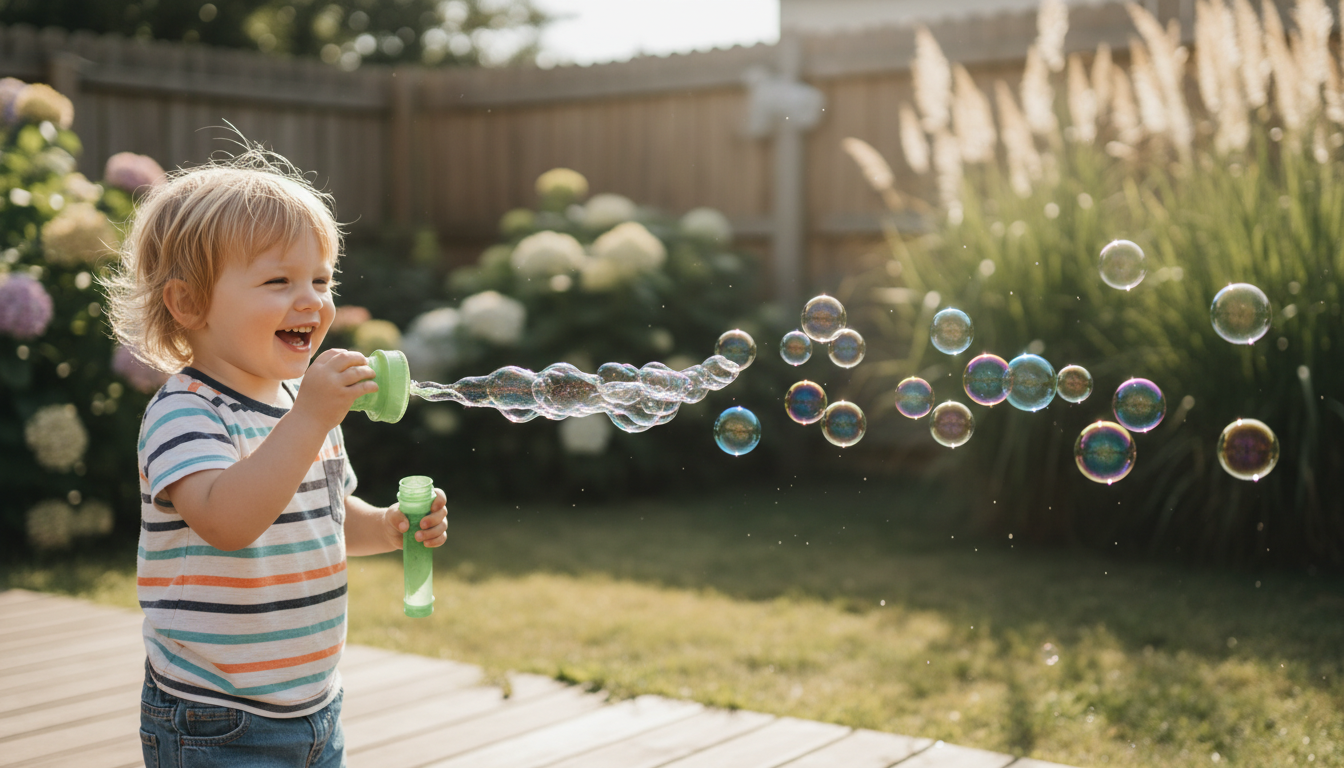
Table of Contents
- Introduction
- Understanding the Mechanics of the /P/ Sound
- Initial P Word List for Speech Therapy
- Medial P Word List for Speech Therapy
- Final P Word List for Speech Therapy
- Moving Beyond Single Words: Phrases and Sentences
- Fun Games and Activities for /P/ Sound Practice
- Practical Scenarios: Connecting Practice to Real Life
- Choosing the Right Path for Your Child
- Frequently Asked Questions
- Conclusion
Introduction
Did you know that the "p" sound is one of the most common building blocks of the English language, appearing in roughly one-fifth of the words we speak every day? From the first "papa" to the excited "pizza" at a birthday party, this simple sound is a cornerstone of early communication. For most children, the ability to pop their lips and release that tiny burst of air comes naturally between the ages of two and three. However, for many others, mastering this sound can be a frustrating hurdle. When a child struggles with the "p" sound, they might say "big" instead of "pig" or "fizza" instead of "pizza," which can lead to misunderstandings and a dip in their burgeoning confidence.
At Speech Blubs, our mission is to empower every child to speak their minds and hearts. We understand the unique challenges families face because our company was born from the personal experiences of our founders, who all grew up with speech hurdles themselves. They created the tool they wished they had—a joyful, effective solution for the one in four children who need extra support. We believe in "smart screen time," where scientific principles meet play, providing a powerful tool for family connection rather than passive viewing.

In this guide, we will provide a comprehensive p word list for speech therapy, organized by word position and syllable count. We will also explore the mechanics of the "p" sound, offer practical home activities, and explain how our unique video modeling methodology can help your child find their voice. Whether you are working with a speech-language pathologist or looking for ways to support your child at home, this resource is designed to make practice both productive and fun.
If you are unsure where your child stands in their development, you can take our quick 3-minute preliminary screener. It involves just nine simple questions and provides an assessment and a next-steps plan to help you navigate your journey.
Understanding the Mechanics of the /P/ Sound
Before diving into our word lists, it helps to understand what is actually happening in the mouth when we make the "p" sound. In the world of speech therapy, /p/ is known as a voiceless bilabial stop.
- Voiceless: This means the vocal cords do not vibrate when producing the sound. If you place your hand on your throat and say "p," you shouldn't feel a buzz. Compare this to the "b" sound (as in "ball"), where your throat vibrates.
- Bilabial: This refers to the use of both lips. To make the sound, the upper and lower lips must come together completely.
- Stop (or Plosive): This means the airflow is briefly blocked and then released in a quick burst.
Because the /p/ sound is so visual—you can clearly see the lips coming together and popping open—it is often one of the first sounds we target in therapy. It is the "quiet" twin of the /b/ sound. If your child can already say "ba-ba," they are halfway there! We often suggest telling a child to "turn their voice box off" to turn a /b/ into a /p/.
Mastering this sound is about more than just clear pronunciation; it’s about reducing the frustration a child feels when they aren't understood. Our approach at Speech Blubs focuses on fostering a love for communication and building the foundational skills necessary for lifelong success.

Initial P Word List for Speech Therapy
The "initial" position means the /p/ sound occurs at the very beginning of the word. This is usually the easiest place for children to start practicing because the sound isn't hidden behind other consonants or vowels.
1-Syllable Initial P Words
These words are perfect for beginners. They are short, punchy, and often represent objects or actions your child sees every day.
- Pie
- Pig
- Pen
- Pan
- Pot
- Pin
- Pet
- Pat
- Pop
- Puff
- Pear
- Peach
- Park
- Path
- Pool
2-Syllable Initial P Words
As your child gains confidence, you can introduce longer words. These require a bit more coordination as they move from the /p/ sound into the rest of the word.
- Panda
- Pizza
- Pencil
- Paper
- Puppy
- Puppet
- Peanut
- Pickle
- Penguin
- Pillow
- Party
- Purple
- Pancakes
- Parent
3+ Syllable Initial P Words
These complex words are great for older children or those who have mastered the basics and are working on multi-syllabic coordination.
- Piano
- Pineapple
- Policeman
- Pumpkin
- Pajamas
- Passenger
- Peppermint
- Potato
- Pacific
- Parachute
For a parent whose 3-year-old "late talker" loves animals, focusing on words like "pig," "panda," and "puppy" can be incredibly motivating. Within the Speech Blubs app, the "Animal Kingdom" section uses video modeling to show children their peers making these exact sounds, which encourages them to imitate and play along. You can download Speech Blubs on the App Store to explore these categories together.
Medial P Word List for Speech Therapy
The "medial" position means the /p/ sound is tucked away in the middle of the word. This can be trickier because the child has to start with one sound, transition into the /p/, and then move to a final sound.
2-Syllable Medial P Words
- Apple
- Happy
- Hippo
- Open
- Zipper
- Diaper
- Napkin
- Paper
- Puppy
- Copper
- Dipping
- Soapy
- Typing
3-Syllable Medial P Words
- Octopus
- Hamburger (Note: some dialects emphasize the 'p' sound in 'hamburg-er' transitions)
- Computer
- Spaghetti (The 'p' is subtle here but important for flow)
- Grasshopper
- Newspaper
- Pineapple
- Reporter
- Slippery
- Superstar
4+ Syllable Medial P Words
- Hippopotamus
- Caterpillar
- Apartment
- Opportunity
- Metropolitan
When practicing medial sounds, we find that visual aids are key. For instance, if you are using the word "apple," you can point to an actual apple or a picture in our app while emphasizing the "p" in the middle. Our methodology is backed by science, utilizing mirror neurons that fire when children watch other children perform an action—in this case, speaking!
Final P Word List for Speech Therapy
The "final" position means the word ends with the /p/ sound. Children sometimes "drop" the ends of words, so practicing these is vital for overall intelligibility.
1-Syllable Final P Words
- Cup
- Map
- Cap
- Hop
- Top
- Mop
- Stop
- Lip
- Ship
- Sheep
- Soap
- Soup
- Up
- Nap
- Tap
2-Syllable Final P Words
- Ketchup
- Makeup
- Asleep
- Backup
- Bus stop
- Cleanup
- Doorstop
- Flip-flop
- Grown-up
- Workshop
3+ Syllable Final P Words
- Envelope
- Lollipop
- Telescope
- Potato chip
- Buttercup
- Relationship
- Championship
If your little one is a fan of snack time, "ketchup," "soup," and "potato chip" are excellent functional words to practice. To see how other families have successfully integrated these practices into their daily routines, read our parent testimonials.
Moving Beyond Single Words: Phrases and Sentences
Once your child is comfortable saying individual words from the p word list for speech therapy, it’s time to bridge the gap to conversational speech. We do this by using carrier phrases and short sentences.
Carrier Phrases
Carrier phrases are short, repetitive sentence starters that allow the child to focus on the target word while practicing the rhythm of speech.
- "I see a pig."
- "I want a pear."
- "I found a penny."
- "He has a cup."
- "She likes pizza."
- "Put it up."
Short Sentences
These sentences help with the transition between different sounds and improve overall fluency.
- Initial: "The panda is eating." / "Pass the peas, please."
- Medial: "I am so happy today." / "The hippo is in the water."
- Final: "Please stop at the sign." / "Wash your hands with soap."
By turning these into a game—perhaps during a "painting party" where you use pink and purple paint to draw a puppy—you create joyful learning moments that stick. Ready to start your journey? Create your account and begin your 7-day free trial today.
Fun Games and Activities for /P/ Sound Practice
At Speech Blubs, we believe that play is the work of childhood. If an activity isn't fun, a child is less likely to engage. Here are some of our favorite "low-tech" ways to practice the /p/ sound alongside our "smart screen time" app.
1. The Tissue Paper Dance
This is a classic speech therapy technique for the /p/ sound. Because /p/ requires a burst of air, you can use a small piece of tissue paper to provide visual feedback.
- How to do it: Hold a thin strip of tissue paper an inch or two away from your child's lips.
- The Goal: When they say a word like "pop" or "puff," the air should make the tissue paper move or "dance." If it doesn't move, they might be using their "voice" (making a /b/ sound) instead of just the air.
2. Bubble Popping
Children of all ages love bubbles, and they are perfect for practicing the /p/ sound.
- How to do it: Blow bubbles and encourage your child to pop them with their finger.
- The Goal: Every time they pop a bubble, have them say "Pop!" or "Pop, pop, pop!" This practices the initial and final /p/ sound in a highly motivating environment.
3. The Lucky Dip Box
Fill a box with objects that start with or contain the /p/ sound.
- How to do it: Use items like a pen, a picture of a pig, a toy plane, an apple, or a purse.
- The Goal: Have your child reach in, pull out an item, and name it. You can use the carrier phrase "I found a..." to increase the difficulty.
4. Video Modeling with Speech Blubs
While physical games are great, our app provides a unique "peer-to-peer" learning experience. In Speech Blubs, children watch videos of other kids (not cartoons or adults) making speech sounds.
- Why it works: Children are naturally inclined to imitate other children. When they see a peer saying "pizza" or "puppy," it builds their confidence and reduces the pressure they might feel when an adult is "teaching" them.
- Smart Screen Time: Unlike passive cartoons, our app is an interactive experience designed for co-play. Sit with your child, watch the "Blubers" together, and imitate the sounds as a team.
Practical Scenarios: Connecting Practice to Real Life
Let’s look at how these lists and activities translate to everyday moments.
Scenario A: The Grocery Store Imagine you are walking through the produce aisle with your toddler. This is a goldmine for "p" words! You can point out the pears, peaches, potatoes, and pineapples. Ask your child, "Should we pick a pear or a peach?" This provides natural "auditory bombardment," where the child hears the sound modeled correctly multiple times in a functional context.
Scenario B: Getting Ready for Bed Bedtime routines are perfect for consistent practice. You can talk about putting on pajamas, brushing teeth with toothpaste, and finally, falling asleep. By using the same words every night, you help your child build the motor pathways needed for clear speech.
Scenario C: Playtime with Pirates For a child who loves imaginative play, a "pirate" theme is incredibly effective. You can talk about a pirate, a parrot, a penny, and a map. "Let's find the map and the pirate's gold!" This takes the pressure off "working" on speech and puts the focus on the adventure.
If these scenarios sound like a great fit for your family, you can find even more themed activities by downloading Speech Blubs on Google Play.
Choosing the Right Path for Your Child
Every child's speech journey is unique. Some children may just need a little extra nudge and some fun practice at home, while others may require the guidance of a professional speech-language pathologist (SLP). Speech Blubs is designed to be a powerful supplement to a child’s overall development plan. It’s not about replacing therapy; it’s about providing high-quality, scientifically-backed tools that make the "homework" part of therapy feel like play.
Our app focuses on:
- Reducing Frustration: When a child can communicate their needs (like asking for "soup" or "apple juice"), their frustration levels drop significantly.
- Building Confidence: Success breeds success. Mastering small sounds like /p/ gives children the courage to try more complex words.
- Foundational Skills: We don't just teach words; we teach the building blocks of communication, including eye contact, imitation, and turn-taking.
We offer two simple ways to access our full suite of tools:
- Monthly Plan: For $14.99 per month, you get full access to the Speech Blubs app and its vast library of activities.
- Yearly Plan: For $59.99 per year, which breaks down to just $4.99 per month, you get the absolute best value.
Why the Yearly Plan is the Clear Choice: Choosing the yearly plan isn't just about saving 66%. It also unlocks exclusive benefits that help your child progress even faster, including:
- A 7-day free trial to explore everything risk-free.
- The Reading Blubs app, which helps transition speech skills into early literacy.
- Early access to all new updates and content.
- Priority 24-hour support response time for any questions you have.
The Monthly plan does not include the free trial or the Reading Blubs app, making the Yearly plan the most comprehensive choice for families committed to their child's growth.
Frequently Asked Questions
1. At what age should my child be able to say the "p" sound?
Most children master the /p/ sound between the ages of 2 and 3. It is considered an "early-developing" sound because it is very visual and easy to imitate. If your child is 3 and still consistently substituting the /p/ sound (e.g., saying "b" or "f" instead), it may be a good time to consult with a professional or start targeted practice using a p word list for speech therapy.
2. My child says "b" instead of "p." Is this normal?
Yes, this is a very common substitution! Because /b/ and /p/ are made with the exact same mouth shape, children often get them confused. The only difference is that /b/ uses the voice box (voiced) and /p/ does not (voiceless). Using techniques like the "Tissue Paper Dance" can help them feel the difference between the two sounds.
3. How often should we practice these word lists?
Consistency is much more important than duration. Instead of one long 30-minute session that might tire your child out, aim for 5 to 10 minutes of "smart screen time" or play-based practice every day. Fitting it into natural routines—like during snack time or while playing at the park—makes it feel less like "work" and more like part of your day.
4. Can an app really help with speech therapy?
While an app should not replace professional therapy if a child has a significant delay, "smart screen time" like Speech Blubs is a powerful tool. Our video modeling methodology is based on scientific principles that encourage imitation. When used as a supplement to family interaction and professional guidance, it can significantly boost a child's confidence and rate of progress.
Conclusion
Helping your child master the "p" sound is a journey of a thousand tiny "pops." By using a structured p word list for speech therapy, engaging in sensory-rich activities like bubble popping, and utilizing modern tools like video modeling, you are giving your child the gift of clear communication. Remember, the goal is not perfection overnight; it’s about fostering a love for language and creating joyful moments of connection within your family.
At Speech Blubs, we are honored to be a part of your child's story. We've seen firsthand how a little bit of "smart screen time" can turn frustration into a "big, happy smile." Whether you are practicing initial words like "pizza" or final sounds like "cup," every effort you make is a step toward helping your child speak their mind and heart.
Ready to take the next step? Choose our Yearly plan today to receive your 7-day free trial, full access to both Speech Blubs and Reading Blubs, and the best price available. Download Speech Blubs on the App Store or Google Play to begin your journey and discover why thousands of parents trust us to support their children's development. Let's start popping those "p" sounds together!
About the author