
Kids Party Games: Fun, Laughter, & Learning
 By Speech Blubs Team•Jan 28, 2026•23 min.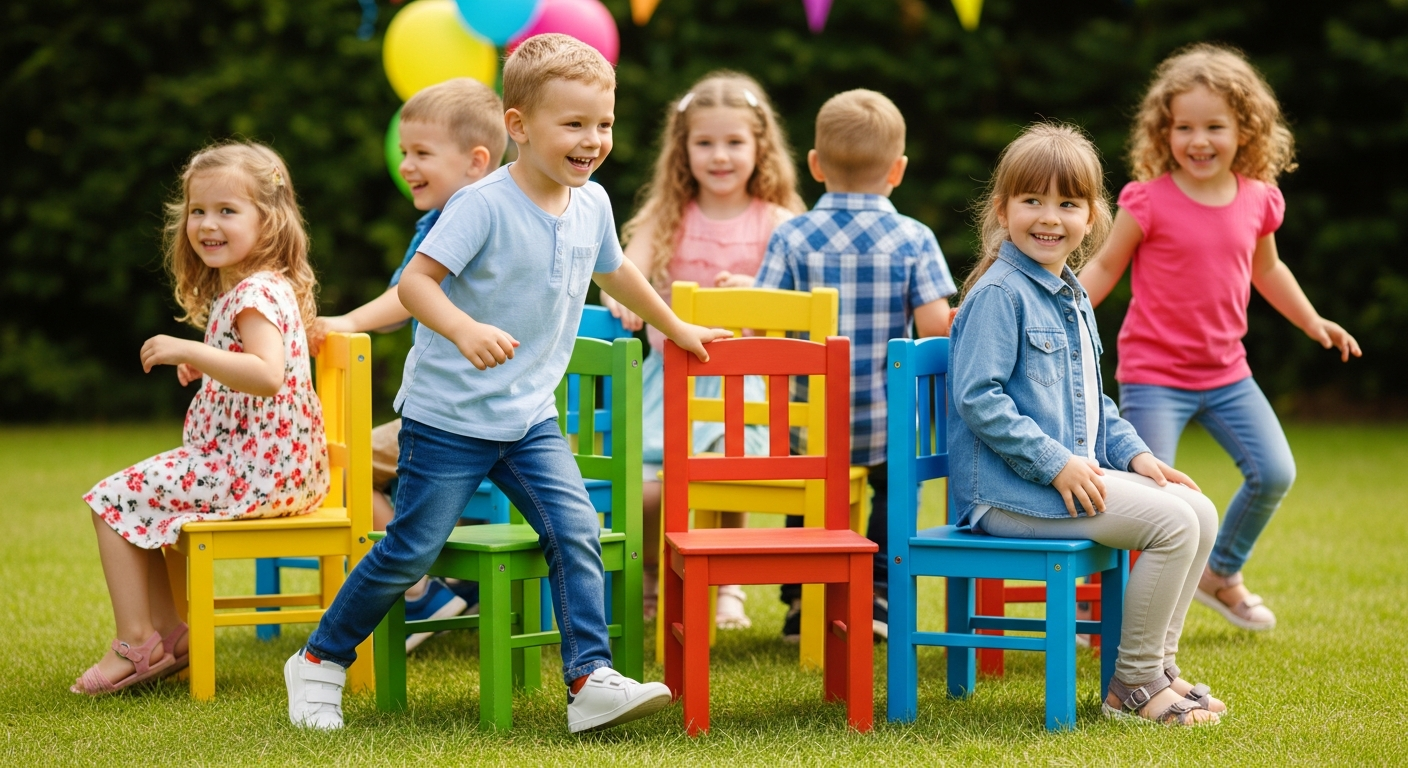
Table of Contents
- The Magic of Kids Party Games: More Than Just Play
- Choosing the Perfect Game: Factors to Consider
- Classic & Timeless Kids Party Games
- Outdoor & Active Kids Party Games
- Enhancing Communication Through Play
- Making the Most of Every Party Moment
- Discover the Speech Blubs Difference
- Conclusion
- Frequently Asked Questions (FAQ)
There's a unique kind of magic in a child's party – the bright decorations, the excited chatter, the joyful chaos of kids at play. But beyond the balloons and cake, what truly makes a children's party unforgettable and incredibly valuable are the games. They're not just about filling time; they're vibrant canvases where crucial life skills, from communication to cooperation, are painted with every giggle and cheer.
This post is your ultimate guide to hosting a party brimming with engagement and developmental benefits. We'll explore a treasure trove of kids party games, from timeless classics to high-energy outdoor adventures, and discuss how each one nurtures your child's growth. More importantly, we'll uncover how these seemingly simple activities are powerful catalysts for developing speech, language, and social skills, creating meaningful connections, and building confidence. Get ready to transform your next celebration into an experience that sparks imagination, strengthens bonds, and fosters a lifelong love for communication.

The Magic of Kids Party Games: More Than Just Play
Every parent knows the power of play. It’s how children explore their world, test boundaries, and make sense of complex emotions. Kids party games elevate this natural inclination, weaving in structure, social interaction, and often, a dash of healthy competition. They are miniature ecosystems for growth, where children learn valuable lessons without even realizing it.
Why Games are Vital for Child Development
Consider the sheer breadth of skills a child employs during a simple game of "Duck, Duck, Goose" or a lively scavenger hunt:
- Social Skills: Taking turns, sharing, negotiating, understanding rules, winning gracefully, losing with resilience, empathy, teamwork.
- Emotional Regulation: Managing excitement, dealing with frustration, patience, self-control.
- Cognitive Development: Problem-solving, strategic thinking, memory, following instructions, counting, pattern recognition.
- Physical Development: Fine and gross motor skills, balance, coordination, spatial awareness.
- Communication Skills: Listening attentively, speaking clearly, expressing needs and ideas, asking questions, storytelling, understanding non-verbal cues.
It's this last point, communication, that truly resonates with us at Speech Blubs. We believe that empowering children to "speak their minds and hearts" is one of the greatest gifts we can give them. Party games are an ideal environment for this, offering natural, low-pressure opportunities for children to practice and expand their verbal and non-verbal communication in joyful, authentic ways. They learn to vocalize excitement, articulate instructions, respond to prompts, and engage in the give-and-take of conversation – all essential building blocks for confident communicators.
Ready to see how Speech Blubs can further support your child’s communication journey? Download Speech Blubs on the App Store or Google Play and start your free trial today!
Choosing the Perfect Game: Factors to Consider
Selecting the right games can make or break a party. Before diving into our list of fantastic games, take a moment to consider these key factors:

Age Group and Developmental Stage
This is paramount. A game that’s thrilling for a 7-year-old might be overwhelming for a 3-year-old and boring for a 10-year-old. Tailor your choices to the majority age range of your guests. For younger children, focus on simple rules, immediate gratification, and games that encourage basic motor skills and single-word responses. Older children can handle more complex rules, strategic thinking, and team-based challenges that demand intricate communication.
Space and Environment
Are you playing indoors or outdoors? Do you have a large backyard or a cozy living room? This will dictate the types of games you can play. High-energy running games are best saved for open spaces, while quiet, observational games can work well indoors.
Number of Children
Some games are perfect for small, intimate gatherings, while others shine with a large group. Consider whether a game can be easily scaled up or down.
Party Theme
If you have a theme, try to integrate games that fit it! A pirate party might have a "treasure dig," while a superhero party could feature an "obstacle course" to test their powers.
Developmental Goals
As parents, we're always looking for ways to support our children's growth. Think about what skills you want to subtly encourage. Is your child working on listening skills? Games like "Simon Says" are perfect. Trying to boost their descriptive vocabulary? "I Spy" is a winner. For a parent whose 3-year-old "late talker" loves animals, incorporating a game like "Animal Charades" might lead to spontaneous "moo" or "baa" sounds, reinforcing early vocalizations.
Classic & Timeless Kids Party Games
These games have delighted generations of children for a reason – they're simple, engaging, and packed with developmental opportunities.
1. Red Light, Green Light
One person acts as the "stoplight" while the others are "traffic." The stoplight faces away and calls "Green Light!" The traffic runs forward. When the stoplight turns around and yells "Red Light!" everyone must freeze. Anyone caught moving is out or sent back to the start. The first to reach the stoplight wins.
- Developmental Benefits: Impulse control, listening skills, following multi-step instructions, gross motor skills.
- Communication Focus: Responding to verbal cues ("red light," "green light"), understanding commands.
2. Capture the Flag
Divide kids into two teams, each with a "flag" (a bandana or fabric strip) hidden in their territory. The goal is to capture the opposing team's flag without being tagged in their territory. If tagged, a player might be frozen, out, or join the opposing team.
- Developmental Benefits: Teamwork, strategy, problem-solving, gross motor skills, negotiation (if rules allow freeing teammates).
- Communication Focus: Discussing strategy, communicating within the team, calling out tags.
3. Steal the Bacon
Form two teams and assign each player a number (each team has a "1," "2," etc.). Place an object (the "bacon") in the middle. When a number is called, that player from each team races to grab the bacon and return it to their side without being tagged by the other player.
- Developmental Benefits: Quick thinking, number recognition (if you call numbers), agility, turn-taking.
- Communication Focus: Listening for numbers, calling out "bacon" or "tag."
4. Tug-of-War
A classic test of strength and teamwork. Two teams pull on opposite ends of a rope, trying to pull the other team past a center mark.
- Developmental Benefits: Gross motor skills, cooperation, physical exertion, understanding cause and effect.
- Communication Focus: Verbal encouragement, coordinating pulls ("pull!"), expressing effort.
5. Cornhole / Ring Toss
Set up targets (boards with holes for cornhole, plastic cones for ring toss) and have players take turns tossing beanbags or rings.
- Developmental Benefits: Hand-eye coordination, fine motor skills, counting (scoring), patience, turn-taking.
- Communication Focus: Counting scores, cheering for others, asking "my turn?"
6. Hopscotch
Draw a hopscotch grid with chalk. Players toss a marker into a square and hop through the pattern, skipping the square with the marker, retrieving it on the way back.
- Developmental Benefits: Balance, coordination, counting, following sequences, spatial awareness.
- Communication Focus: Counting, naming numbers, reciting the sequence of hops.
7. Scavenger Hunt
Hide a series of objects or clues around the party area. Kids work individually or in teams to find them.
- Developmental Benefits: Problem-solving, observation skills, teamwork, critical thinking, reading comprehension (if clues are written).
- Communication Focus: Describing objects, discussing clues, negotiating roles within a team. For a parent with a child working on prepositions, clues like "find something under the blue blanket" or "look behind the big tree" provide fantastic real-world practice.
8. Simon Says / Opposites
In "Simon Says," the leader gives commands, but players only follow if the command starts with "Simon says." In "Opposites," players must do the opposite of the command.
- Developmental Benefits: Listening comprehension, impulse control, following multi-step instructions, understanding concepts (e.g., opposites, actions).
- Communication Focus: Processing verbal commands, identifying key phrases, understanding various action verbs.
9. Parachute Games
Using a large play parachute (or even a sheet), kids work together to make waves, send balls bouncing, or create a "tent."
- Developmental Benefits: Cooperation, rhythm, gross motor skills, teamwork, understanding cause and effect.
- Communication Focus: Coordinating actions ("up! down!"), descriptive language ("fast," "slow," "high," "low"), requesting turns.
10. Kid-Friendly Truth or Dare
Prepare slips of paper with silly "truths" (e.g., "What's your favorite animal sound?") and harmless "dares" (e.g., "Do your best chicken dance"). Players choose one.
- Developmental Benefits: Social interaction, expressive language, creativity, managing mild suspense.
- Communication Focus: Articulating answers, performing actions, engaging in lighthearted social conversation.
11. Follow the Leader
One child leads, and everyone else mimics their movements, actions, and silly gestures as they move around.
- Developmental Benefits: Imitation, motor planning, observation skills, gross motor skills.
- Communication Focus: Non-verbal communication, understanding actions. This game directly mirrors the "video modeling" technique we use at Speech Blubs, where children learn by watching and imitating their peers.
12. Charades
Write various words or phrases on slips of paper (animals, actions, movie titles). Players take turns acting them out without speaking, while others guess.
- Developmental Benefits: Non-verbal communication, imaginative play, critical thinking, inferencing.
- Communication Focus: Expressive language (guessing), understanding concepts, descriptive language. This is a fantastic way for children to connect actions with words, a core principle in early speech development. For a child working on action verbs or animal sounds, acting out "jump" or "roar" can be a highly motivating and memorable learning experience.
13. Keep It Up (Balloon Game)
Challenge players (individually or in teams) to keep a balloon off the ground using only their hands or designated body parts.
- Developmental Benefits: Hand-eye coordination, gross motor skills, teamwork, counting (how many hits).
- Communication Focus: Counting, verbal encouragement, calling out "mine!"
14. Obstacle Course
Create a fun course with household items (pillows to jump over, tunnels to crawl through, chairs to weave around).
- Developmental Benefits: Gross motor skills, problem-solving, following sequences, spatial awareness.
- Communication Focus: Following instructions, using directional language ("over," "under," "through"), describing actions.
15. Twister
Lay out the mat and use the spinner to call out colors and body parts. Players must put the specified body part on the correct color without falling.
- Developmental Benefits: Body awareness, flexibility, balance, following multi-step instructions.
- Communication Focus: Identifying body parts and colors, directional language ("left foot," "red").
16. Hide and Seek / Sardines
Hide and Seek: One player counts while others hide. The counter finds them. Sardines: One player hides, and everyone else searches. When a player finds the hider, they join them in the hiding spot. The last person to find the group wins.
- Developmental Benefits: Spatial awareness, problem-solving, social interaction, patience.
- Communication Focus: Counting, calling out "ready or not!", subtle non-verbal cues.
17. Monkey in the Middle
One or more players ("monkeys") stand in the middle, while other players toss a ball over their heads. The monkeys try to intercept the ball.
- Developmental Benefits: Hand-eye coordination, gross motor skills, teamwork, strategic thinking.
- Communication Focus: Calling out for the ball, coordinating throws.
18. I Spy
One person says, "I spy with my little eyes something..." and describes an object they see (e.g., "something red," "something soft"). Others guess.
- Developmental Benefits: Observation skills, descriptive language, vocabulary development, deductive reasoning.
- Communication Focus: Asking questions, using adjectives and nouns, providing clear descriptions. For a child working on expanding their vocabulary, "I Spy" offers endless opportunities to practice new words and descriptive phrases in a fun, natural setting.
19. Pin the Tail on the Donkey (or Unicorn/Pirate!)
A large picture of a tailless animal (or character) is hung. Blindfolded players try to pin the "tail" (or eye patch, horn, etc.) in the correct spot.
- Developmental Benefits: Spatial reasoning, fine motor skills, body awareness (when blindfolded), humor.
- Communication Focus: Giving and following simple directional cues ("a little to the left," "up a bit").
20. Piñata
A brightly decorated container filled with treats is hung up. Blindfolded children take turns trying to hit it with a stick until it breaks, raining down goodies.
- Developmental Benefits: Hand-eye coordination, anticipation, turn-taking, gross motor skills.
- Communication Focus: Expressing excitement, counting turns, cheering for others.
21. Pass the Parcel
A present is wrapped in multiple layers, with a small treat or prize between each layer. Kids sit in a circle and pass the parcel as music plays. When the music stops, whoever holds the parcel unwraps one layer.
- Developmental Benefits: Listening skills, patience, turn-taking, fine motor skills (unwrapping).
- Communication Focus: Listening for musical cues, expressing excitement, sharing.
22. Egg 'n' Spoon Race
Players race while balancing an egg (real or plastic) on a spoon.
- Developmental Benefits: Balance, focus, fine motor control, patience.
- Communication Focus: Encouraging peers, expressing frustration or success.
23. Musical Chairs / Musical Statues
Musical Chairs: Chairs are arranged in a circle, one less than the number of players. Music plays, and kids dance around the chairs. When the music stops, everyone rushes to sit. The person left standing is out, and a chair is removed. Musical Statues: Kids dance while music plays. When the music stops, they must freeze like a statue. Anyone caught moving is out.
- Developmental Benefits: Listening skills, impulse control, gross motor skills, quick reactions, self-regulation.
- Communication Focus: Responding to musical cues, expressing excitement, understanding rules.
24. Sleeping Lions
This is a wonderful cool-down game for younger children. All players lie on the floor and pretend to be sleeping lions. The goal is to remain perfectly still and quiet. The first person to move or make a sound is out. The winner is the last sleeping lion.
- Developmental Benefits: Self-regulation, quiet focus, patience, body control.
- Communication Focus: Non-verbal communication, understanding instructions.
Outdoor & Active Kids Party Games
When the weather's good and you have space, these games are perfect for burning off energy and promoting active play.
25. Slip and Slide
Set up a long plastic sheet, secure it, and keep it wet with a hose or sprinkler. Kids take turns sliding.
- Developmental Benefits: Gross motor skills, sensory input, balance, body awareness.
- Communication Focus: Expressing excitement, describing the sensation ("slippery," "fast").
26. Water Balloon Toss / Fight
Toss: Kids pair up and toss water balloons, stepping further apart after each successful catch. Fight: A free-for-all water balloon battle!
- Developmental Benefits: Hand-eye coordination, gross motor skills, precision, problem-solving (for strategy in a fight).
- Communication Focus: Coordinating throws, verbalizing targets, expressing joy.
27. Spider Web (Rope Game)
Use rope or ribbon to create a "spider web" pattern on the ground. Kids try to jump between the ropes without touching them.
- Developmental Benefits: Agility, problem-solving, spatial awareness, gross motor skills.
- Communication Focus: Describing movements ("over," "through"), celebrating success.
28. Sprinkler Tag
Turn on a sprinkler and let the kids run through it, or play tag where getting sprayed means you're "out."
- Developmental Benefits: Gross motor skills, agility, sensory play, sheer fun.
- Communication Focus: Vocalizations of delight, calling out "tag!"
29. Mini Golf
Create a makeshift course with cups as holes, and toys or household items as obstacles. Use pool noodles as golf clubs and plastic golf balls.
- Developmental Benefits: Fine motor skills, hand-eye coordination, counting scores, patience, strategic thinking.
- Communication Focus: Counting strokes, discussing strategy, cheering.
30. Duck Pond Matching Game
Fill a baby pool with water and floating plastic ducks. Write shapes, numbers, or letters on the bottom of the ducks. Kids "fish" for ducks and find matches.
- Developmental Benefits: Matching skills, recognition (numbers, shapes, letters), fine motor skills, visual discrimination.
- Communication Focus: Naming colors, shapes, or numbers, asking for specific matches.
31. Bozo Buckets
Arrange several buckets in a row. Players try to toss ping-pong balls (or beanbags) into each bucket.
- Developmental Benefits: Aiming skills, hand-eye coordination, counting, turn-taking.
- Communication Focus: Counting successful shots, cheering, waiting for turns.
32. Pop the Bubbles
A bubble machine can provide endless entertainment for toddlers and preschoolers. Just let them run and pop!
- Developmental Benefits: Visual tracking, gross motor skills, sensory engagement.
- Communication Focus: Early vocalizations ("pop!"), exclamations of joy, pointing. For a toddler who is just starting to produce sounds, chasing and popping bubbles can naturally elicit "buh-buh" or "pop" sounds, reinforcing early speech in a spontaneous and fun way.
33. Break the Ice
Freeze small toys inside large ice blocks (using ice cube molds or bowls). Give kids safe digging tools (plastic hammers, paintbrushes) and spray bottles of warm water to excavate the treasures.
- Developmental Benefits: Fine motor skills, problem-solving, sensory exploration, patience.
- Communication Focus: Describing sensations ("cold," "hard," "slippery"), naming the toys they find, discussing strategies.
34. Marco Polo (Pool Game)
One player is "it," closes their eyes, and calls "Marco!" Other players respond "Polo!" The "it" player tries to tag others by following their voices.
- Developmental Benefits: Auditory processing, directional language, listening skills, spatial awareness.
- Communication Focus: Responding to calls, vocalizing locations, understanding verbal cues.
35. Frisbee
An old-fashioned game of tossing a Frisbee back and forth. You can also create a target (like a cardboard box with a hole) for points.
- Developmental Benefits: Hand-eye coordination, gross motor skills, accuracy, turn-taking.
- Communication Focus: Calling out "catch!", directional words ("throw," "to me").
36. Water Blaster Fight
Provide water blasters and let kids engage in a fun, cooling battle!
- Developmental Benefits: Gross motor skills, agility, social interaction, pure enjoyment.
- Communication Focus: Exclamations, calling out to friends, laughter.
37. Water Balloon Baseball
Like regular baseball, but use plastic bats and water balloons instead of traditional balls.
- Developmental Benefits: Hand-eye coordination, gross motor skills, turn-taking, following rules.
- Communication Focus: Counting runs, cheering, calling out "swing!"
38. Treasure Dig (Sandbox/Bin)
Fill a sandbox or large bin with sand. Hide small toys (plastic animals, cars, jewelry) and give kids shovels to dig for "treasure."
- Developmental Benefits: Fine motor skills, imaginative play, sensory exploration, problem-solving.
- Communication Focus: Describing what they find, imaginative storytelling, vocabulary related to digging and treasure.
39. NERF Wars
Gather NERF blasters and darts. Create obstacles and hiding spots in the yard for a backyard battle.
- Developmental Benefits: Strategy, gross motor skills, imaginative play, teamwork.
- Communication Focus: Coordinating with teammates, calling out targets, expressing excitement.
40. Wheelbarrow Race
Divide into pairs. One player walks on their hands while the other holds their legs like a wheelbarrow. They race to a finish line.
- Developmental Benefits: Cooperation, gross motor skills, strength, balance.
- Communication Focus: Coordinating movements, verbal encouragement.
Enhancing Communication Through Play
It's clear that kids' party games are inherently beneficial for development. But how do we, as parents, maximize their potential for communication growth?
At Speech Blubs, we understand that speech and language development thrives in engaging, playful environments. Our mission is to empower children to "speak their minds and hearts" by providing an immediate, effective, and joyful solution for the 1 in 4 children who need speech support. We blend scientific principles with play, transforming screen time into "smart screen time" experiences. Our unique approach utilizes "video modeling," where children learn by watching and imitating their real-life peers – much like how they learn by imitating in "Follow the Leader" or "Charades," but with targeted guidance for specific speech and language skills. This is a powerful screen-free alternative to passive viewing (like cartoons) and a tool for family connection, as parents can actively participate alongside their child.
Consider these scenarios:
- For the "Late Talker": A parent whose child is just starting to string words together can use games like "I Spy" to encourage descriptive language ("I spy something big and green") or "Pop the Bubbles" to elicit early sounds and words ("pop," "buh-buh"). The Speech Blubs app reinforces these foundational skills through engaging activities. For instance, if your child is learning animal sounds in "Animal Kingdom" within the app, then playing "Animal Charades" at a party provides a real-world context for applying those learned sounds and words.
- For the Shy Child: A child who struggles with initiating conversation during group games might find confidence practicing new words and sounds with the engaging peer models in Speech Blubs. This practice can then empower them to use those words more readily in real-world interactions. Imagine a child who has been practicing action verbs like "jump," "run," and "throw" in the app, then confidently uses those very words while playing an active party game with friends.
- For Developing Social Language: Games that require turn-taking, asking questions, and responding to peers (like "Steal the Bacon" or "Scavenger Hunt") are excellent for practicing social language. The foundational social reciprocity skills practiced in Speech Blubs, such as paying attention to a peer and imitating, directly translate to better participation in these interactive games.
Our method is backed by science, placing us in the top tier of speech apps worldwide, as recognized by the MARS scale research. We're committed to creating tools that our founders, who all grew up with speech problems, wished they had.
Making the Most of Every Party Moment
Beyond selecting the right games, your active participation and encouragement are key.
- Be Present: Put away distractions and fully engage with the children. Your enthusiasm is contagious.
- Model Language: Narrate the game ("Now it's my turn to roll the dice!"), use descriptive words ("That's a bouncy ball!"), and ask open-ended questions ("What do you think will happen next?").
- Encourage Participation: Gently invite hesitant children to join, offering simpler roles if needed.
- Praise Effort: Focus on the process, not just the outcome. "Great try!" or "I loved how you helped your friend" builds confidence more than just "You won!"
- Set Realistic Expectations: Remember, it's about fostering a love for communication, building confidence, reducing frustration, and creating joyful family learning moments. Not every child will be giving public speeches in a month. Our app is a powerful supplement to your child's overall development plan and, when applicable, professional therapy, providing consistent support.
Every laugh, every shared glance, every word spoken during these games is a step forward in your child's communication journey. These moments are invaluable.
Discover the Speech Blubs Difference
We know that every child deserves the opportunity to express themselves fully. That's why we at Speech Blubs have dedicated ourselves to creating an engaging, effective, and joyful platform to support speech and language development.
Ready to empower your child's voice? Take our quick 3-minute preliminary screener involving 9 simple questions to get an assessment and a personalized next-steps plan, and you'll even unlock a free 7-day trial!
Transparent Pricing for Lasting Progress
We offer flexible plans designed to fit your family's needs:
- Monthly Plan: For $14.99 per month, you get access to our core speech development program.
- Yearly Plan: Our best value! For just $59.99 per year, which breaks down to an incredible $4.99 per month, you save 66% compared to the monthly plan.
Unbeatable Value with the Yearly Plan
The Yearly plan isn't just cheaper; it comes with exclusive, high-value features that significantly enhance your child's learning experience:
- 7-Day Free Trial: Try out the full range of Speech Blubs features completely free before committing. (Not included with the Monthly plan).
- Extra Reading Blubs App: Get access to our supplementary Reading Blubs app to further boost literacy skills. (Not included with the Monthly plan).
- Early Access to New Updates: Be the first to experience our latest features and improvements. (Not included with the Monthly plan).
- 24-Hour Support Response Time: Get priority support for any questions or assistance you need. (Not included with the Monthly plan).
We encourage you to choose the Yearly plan to unlock the free trial and the complete suite of features designed to help your child thrive. Create your account and begin your 7-day free trial today!
Conclusion
From the riotous energy of "Red Light, Green Light" to the thoughtful engagement of a "Scavenger Hunt," kids' party games offer far more than just momentary amusement. They are rich landscapes for developmental growth, nurturing social skills, emotional resilience, cognitive abilities, and, most importantly, communication. Every game presents a new chance for a child to listen, speak, express, and connect – vital steps on their journey to becoming confident and articulate individuals.
As you plan your next celebration, remember the profound impact these playful interactions can have. Encourage participation, model language, and revel in the joy of shared experiences. And for continuous, scientifically-backed support in enhancing your child's speech and language development, remember that Speech Blubs is here to partner with you. We're dedicated to making every step of that journey joyful and effective.
Don't wait to give your child the gift of confident communication. Download Speech Blubs on the App Store or Google Play today! Select the Yearly plan to unlock your free 7-day trial and the full suite of premium features, including the Reading Blubs app and priority support. Let the fun and learning begin! You can also visit our homepage to learn more about how we help thousands of families every day, or read testimonials from other parents!
Frequently Asked Questions (FAQ)
Q1: How can I make sure all kids, even shy ones, participate in party games?
A1: Start with familiar, low-pressure games, or offer simpler roles to hesitant children. Having a parent or trusted adult participate alongside them can also build confidence. Praise effort and participation over winning, and avoid forcing children into activities they're clearly uncomfortable with. Sometimes, just observing is a form of participation, and they may join in when they feel ready.
Q2: What's a good way to manage competition and potential disagreements during party games?
A2: Clearly state the rules at the beginning and emphasize good sportsmanship. Remind children that the goal is to have fun together. For younger groups, focus on cooperative games rather than strictly competitive ones, or frame competitive games so everyone gets a "prize" for participating. If disagreements arise, intervene calmly, help children express their feelings, and guide them toward a fair resolution.
Q3: How do party games specifically help with speech development?
A3: Party games naturally create opportunities for speech development by requiring children to listen to instructions, follow verbal cues, respond to questions, use descriptive language, and engage in social conversation. Games like "Simon Says" enhance listening, "I Spy" boosts vocabulary, and "Charades" connects actions to words. These interactions strengthen auditory processing, expressive language, and social communication skills in a motivating and playful context.
Q4: Are there games that are particularly good for children who are working on specific speech sounds?
A4: Yes! You can easily adapt many games to target specific sounds. For example, if a child is working on the "s" sound, "Simon Says" can become "Silly Simon Says," and you can use words like "snake," "star," or "slide" in your commands. For children practicing "k" sounds, a "Scavenger Hunt" for "key," "car," or "cookie" could be fun. The key is to be creative and incorporate the target sound into the game's vocabulary or actions.
About the author