
Magical Christmas Activity Ideas for Developing Young Communicators
 By Speech Blubs Team•Dec 19, 2025•19 min.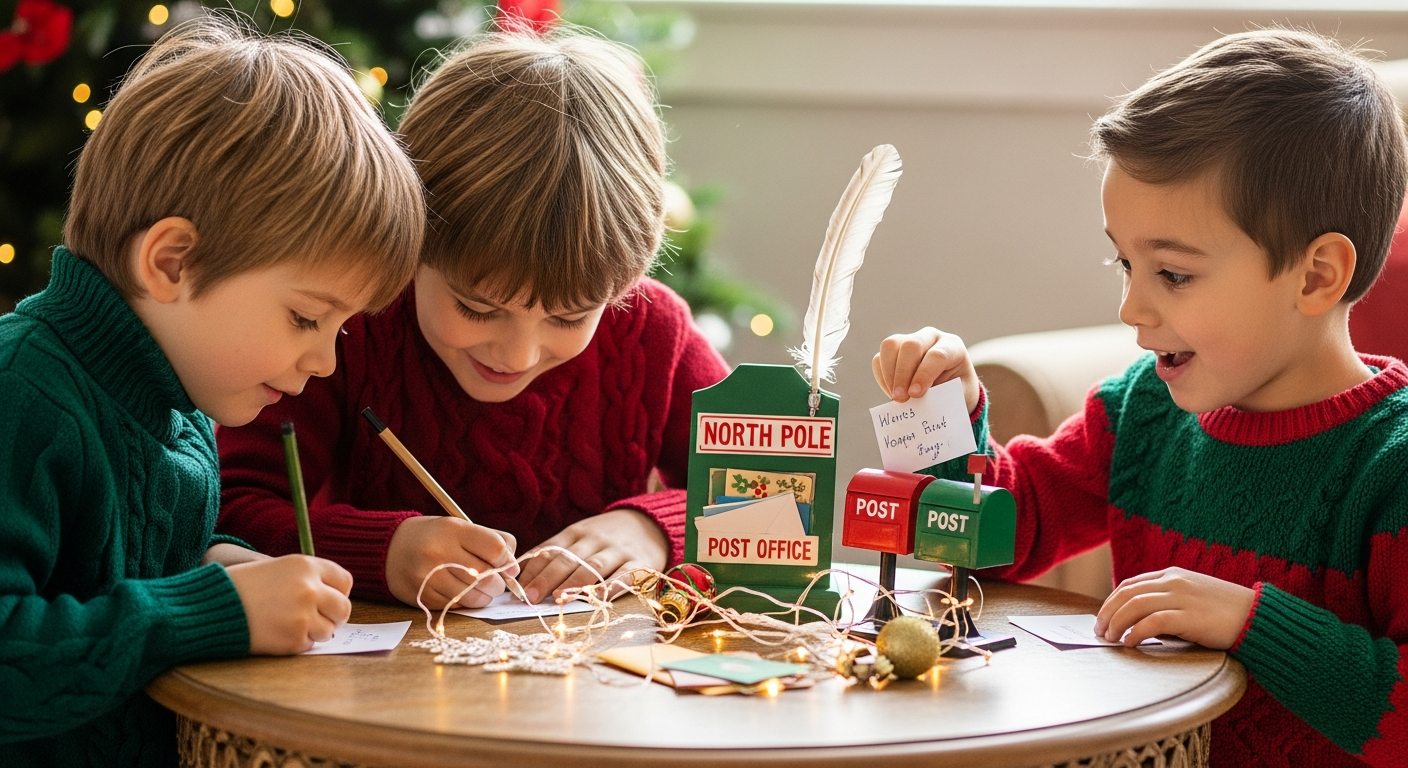
Table of Contents
- Introduction
- The Magic of Christmas: More Than Just Gifts
- Why Christmas Activities Are Perfect for Speech Development
- Creative Christmas Crafts: Hands-On Fun for Little Hands and Tongues
- Deliciously Festive Kitchen Adventures: Cooking Up Language Skills
- Storytime & Imagination: Journeying Through Christmas Tales
- Musical Merriment: Singing Our Way to Better Speech
- Outdoor & Sensory Christmas Play: Engaging All Senses
- Connecting Through Play: How Speech Blubs Enhances Your Christmas Fun
- Making the Most of Your Speech Blubs Journey This Christmas
- Ready to Unwrap the Gift of Communication? Start Today!
- Conclusion
- FAQ
The crisp scent of pine, the twinkle of fairy lights, and the joyful anticipation in children's eyes – Christmas is a truly magical time. For many families, it's a season brimming with traditions, warmth, and memory-making moments. But beyond the gifts and the festive feasts, this special time of year offers a golden opportunity for something even more profound: fostering your child's communication skills. Imagine a season where every carol sung, every ornament crafted, and every cookie baked becomes a delightful stepping stone in their speech and language development. This post will explore a treasure trove of engaging Christmas activity ideas that are not only fun but also purposefully designed to encourage talking, listening, and expressing, transforming your holiday season into a period of significant growth for your little ones.

Introduction
Does the thought of making lasting family memories while simultaneously boosting your child's communication skills fill you with holiday cheer? For many parents, the festive season can feel like a whirlwind, yet it also presents a unique, natural environment for learning and connection. The everyday magic of Christmas, from decorating the tree to singing carols, is rich with opportunities to engage children in meaningful conversations, expand their vocabulary, and encourage them to express their thoughts and feelings. This article will guide you through a variety of delightful Christmas activities, offering practical tips on how to turn each moment into a language-rich experience. We'll show you how simple holiday preparations can become powerful tools for speech development, helping your child find their voice and connect with the world around them, all while making cherished family memories.
The Magic of Christmas: More Than Just Gifts
Christmas holds a special place in the hearts of children and adults alike. It’s a time when imagination takes flight, traditions are celebrated, and families come together. Beyond the material gifts, the true magic of Christmas lies in the shared experiences, the laughter, and the stories that weave through generations. These moments of togetherness are invaluable, especially for young children who are rapidly developing their social and communication skills. It’s a period ripe with sensory input – the smell of gingerbread, the sound of sleigh bells, the sight of twinkling lights – all of which can spark curiosity and provide endless conversation starters.
For children learning to communicate, Christmas offers a natural, low-pressure environment to practice new words, ask questions, and follow directions. The anticipation of Santa's visit, the excitement of decorating, and the joy of sharing meals all create emotional connections that motivate children to express themselves. At Speech Blubs, we believe in empowering children to "speak their minds and hearts," and the festive season provides a wonderful backdrop for this mission. Our own founders, having personally experienced speech challenges as children, created Speech Blubs as the tool they wished they had – a joyful and effective way to overcome communication hurdles. This blend of personal experience and scientific methodology underpins our belief that play, especially during a magical time like Christmas, is the most powerful catalyst for learning.

Why Christmas Activities Are Perfect for Speech Development
Christmas activities are inherently engaging and multi-sensory, making them ideal for language acquisition. When children are excited and interested, their brains are more receptive to learning. The rich vocabulary associated with Christmas – "reindeer," "tinsel," "stocking," "jingle bells" – provides a fantastic opportunity to introduce new words and concepts. Moreover, many Christmas activities naturally involve:
- Following Multi-Step Directions: "First, put the sprinkles on, then put the cookie on the tray."
- Describing Objects and Actions: "This ornament is shiny and red," or "We are stirring the batter."
- Asking and Answering Questions: "What color is this ribbon?" "Where does Santa live?"
- Turn-Taking: Sharing crafts, ingredients, or storytime.
- Social Interaction: Communicating with family members about the activity.
- Problem-Solving: Figuring out how to hang a decoration or mix ingredients.
- Emotional Expression: Sharing feelings of excitement, joy, or even mild frustration (and how to communicate it).
These are all foundational elements of strong communication. Engaging in these activities with your child, rather than letting them passively observe, turns ordinary moments into powerful learning opportunities. It’s about creating "smart screen time" that truly supports development, just as our Speech Blubs app does by fostering interaction rather than passive viewing.
For example, imagine a child who is a "late talker." While they might struggle to initiate conversation, the sheer excitement of decorating a Christmas tree can unlock new avenues for expression. "Light!" they might exclaim, pointing to a string of bulbs. You can expand on this: "Yes, bright lights! Let's put the red lights here." This back-and-forth, supported by the engaging context, makes language learning feel natural and fun. If you're wondering whether your child could benefit from a little extra support, take our quick 3-minute preliminary screener to get a simple assessment and a free 7-day trial.
Creative Christmas Crafts: Hands-On Fun for Little Hands and Tongues
Crafting is a fantastic way to engage fine motor skills while simultaneously encouraging communication. The visual and tactile nature of crafts provides concrete subjects for discussion, making it easier for children to describe, request, and comment.
Ornament Making
- Salt Dough Ornaments: Making salt dough is a sensory delight. Talk about the texture: "sticky," "soft," "smooth." Use cookie cutters ("star," "bell," "tree") and practice naming the shapes. Once baked, decorate them with paint and glitter, naming colors and discussing "sparkly" or "shiny." For a child practicing early sounds, "star" (s-t-ar) or "tree" (t-r-ee) can be great targets.
- Speech Blubs Connection: After making an animal-shaped ornament, you could open the "Animal Kingdom" section in the Speech Blubs app to watch peers making animal sounds, reinforcing those new words and concepts through our unique video modeling.
- Handprint/Footprint Ornaments: These are cherished keepsakes and provide a chance to talk about body parts. "Let's put your hand in the paint," or "Wiggle your fingers!" Discuss the feeling of the paint: "squishy," "cold."
- Relatable Scenario: For a parent whose child is just learning to follow simple instructions, making a handprint ornament is perfect. "Hand out! Paint on! Press down!" This offers clear, actionable phrases to practice receptive and expressive language.
- Pinecone Critters: Gather pinecones on a nature walk (another great activity!) and then transform them into tiny reindeer or owls using googly eyes, felt, and glue. Talk about what you are making: "This is a reindeer," "It has antlers," "It needs eyes." This helps build descriptive vocabulary.
Gingerbread House Decorating
This activity is a feast for the senses and a treasure trove of language opportunities.
- Naming Ingredients: "We need icing," "Here are the gumdrops," "Look at the peppermints!"
- Describing: "The icing is white and sweet," "This candy cane is striped."
- Following Directions: "Put the roof on," "Stick the candy here."
- Requesting: "More sprinkles, please!" or "Can I have a red candy?"
- Relatable Scenario: A child who often points to communicate can be gently encouraged to use words by saying, "Tell me what you want. Do you want the red candy or the green candy?" Giving two choices makes it easier for them to verbalize.
DIY Christmas Cards
Creating cards for loved ones encourages empathy and communication with absent family.
- Discussing Recipients: "Who are we making this card for? Grandma? What does Grandma like?"
- Art Supplies Vocabulary: "markers," "glitter," "stickers," "paper," "glue."
- Writing/Drawing: Even scribbles are a form of expression. "What are you drawing for Grandma?"
- Descriptive Words: "sparkly," "colorful," "happy."
Deliciously Festive Kitchen Adventures: Cooking Up Language Skills
The kitchen is a natural classroom, and holiday baking takes it up a notch. The process of cooking involves sequencing, measuring, naming ingredients, and describing tastes and textures, all excellent for language development.
Baking Christmas Cookies
- Vocabulary Expansion: "flour," "sugar," "eggs," "mixer," "oven," "dough," "cookie cutters," "frosting," "sprinkles."
- Action Verbs: "measure," "mix," "stir," "roll," "cut," "bake," "decorate," "eat."
- Sequencing: "First, we add the flour, then we mix it."
- Sensory Language: "sticky dough," "sweet frosting," "warm cookie," "smells yummy!"
- Speech Blubs Connection: Our app uses video modeling to show children making sounds and movements. When baking, you could mimic this by demonstrating actions like "stir" and saying the word, then encouraging your child to imitate. This aligns perfectly with how children learn through imitation in Speech Blubs. You can explore this scientifically backed approach more on our research page.
Making Hot Chocolate
A simple, comforting activity with plenty of language opportunities.
- Naming Ingredients: "milk," "cocoa powder," "marshmallows."
- Describing Temperature: "hot," "warm," "cold."
- Quantity Concepts: "a little," "a lot," "more."
- Requesting: "More marshmallows, please!"
- Relatable Scenario: For a child working on requesting, hold up two options for their hot chocolate – "Marshmallows or whipped cream?" – to encourage them to voice their choice.
Simple Festive Snacks (e.g., Reindeer Sandwiches)
Using cookie cutters on bread, cheese, or fruit can turn a regular snack into a festive one.
- Shape and Animal Naming: "reindeer," "star," "tree."
- Action Verbs: "cut," "spread," "eat."
- Color Identification: Decorating with different colored fruits or vegetables.
Storytime & Imagination: Journeying Through Christmas Tales
Books and imaginative play are fundamental to language development, fostering narrative skills, empathy, and creative thinking.
Reading Christmas Books
- Vocabulary: Introduce new words found in stories.
- Predicting: "What do you think will happen next?"
- Character Emotions: Discuss how characters are feeling ("Is Santa happy?").
- Story Retelling: Encourage your child to retell the story in their own words, even with simple gestures or sounds.
- Speech Blubs Connection: Reading books alongside using Speech Blubs can create a powerful learning synergy. The app provides "smart screen time" that complements traditional reading by engaging children in active imitation and learning. For example, after reading a story about a snowy day, you could explore our app's "Things That Go" section to talk about sleds or snowplows.
- Creating Christmas Stories: Use puppets, toys, or even just your imagination to make up your own Christmas stories. This encourages narrative development and creativity. "Once upon a time, in a snowy village, there lived a little elf..."
Puppet Show with Christmas Characters
- Character Voices: Experiment with different voices for Santa, elves, reindeer.
- Dialogue: Create simple conversations between characters.
- Problem/Solution: Develop a simple plot where characters face a challenge and solve it. This builds early narrative skills.
- Relatable Scenario: If your child is shy, using puppets can provide a safe way for them to practice speaking without direct eye contact, making it less intimidating to try out new words or phrases.
Musical Merriment: Singing Our Way to Better Speech
Music is a universal language, and Christmas carols are particularly potent for speech and language development. The rhythm, repetition, and melody in songs aid memory and pronunciation.
Christmas Carols and Songs
- Repetition: The repetitive nature of songs helps children learn and remember new words and phrases.
- Articulation: Singing slowly can help children articulate sounds more clearly.
- Rhythm and Prosody: Songs teach children about the natural rhythm and intonation of language.
- Action Songs: Songs like "Jingle Bells" or "Rudolph the Red-Nosed Reindeer" often have accompanying actions, linking words to physical movements.
- Speech Blubs Connection: Much like singing, our app uses engaging visual and auditory input to encourage imitation. The "Sounds" section in Speech Blubs is a great complement to musical play, helping children explore different vocalizations and sound patterns.
DIY Musical Instruments
- Shakers: Fill small containers with rice or beans. "Shake fast!" "Shake slow!"
- Drum: Use an upside-down pot or container. "Bang loud!" "Bang soft!"
- Rhythm and Beat: Create simple rhythms together, talking about "fast" and "slow," "loud" and "quiet."
Outdoor & Sensory Christmas Play: Engaging All Senses
The world outside, even in winter, is full of discoveries that can spark conversation. Sensory play is crucial for developing descriptive language.
Christmas Light Scavenger Hunt
- Vocabulary: "lights," "sparkle," "twinkle," "colors" (red, green, blue).
- Descriptive Language: "Look at the bright star!" "That house has many lights!"
- Questioning: "How many blue lights do you see?" "Which is your favorite light?"
- Following Directions: "Let's go find the house with the blinking lights."
- Relatable Scenario: For a child who is learning to count, turn the scavenger hunt into a counting game. "How many reindeer do you see?" This merges math concepts with language practice.
"Snow" Play (Even Without Real Snow!)
- Cloud Dough/Fake Snow: Mix cornstarch and conditioner for a soft, moldable "snow."
- Sensory Vocabulary: "soft," "cold," "fluffy," "sticky."
- Action Verbs: "scoop," "pat," "build," "melt."
- Imaginative Play: "Let's build a mini snowman!"
- Speech Blubs Connection: Our app’s engaging video models demonstrate various actions and sounds. When playing with "snow," you can mimic this by demonstrating actions like "scoop" or "pat" while saying the words clearly, encouraging your child to imitate both the action and the sound.
Nature Walk for Winter Treasures
If you live in an area with winter foliage, a nature walk can be full of finds.
- Observational Skills: Look for pinecones, acorns, evergreen needles, red berries.
- Descriptive Vocabulary: "spiky," "smooth," "green," "brown," "tiny," "big."
- Prepositional Concepts: "under the tree," "on the branch."
Connecting Through Play: How Speech Blubs Enhances Your Christmas Fun
While these activities provide fantastic opportunities for speech development, we know that sometimes parents need an extra tool, especially one that fits into busy holiday schedules. This is where Speech Blubs comes in. Our app is designed to be a powerful supplement to your child's overall development plan, blending scientific principles with play to create one-of-a-kind "smart screen time" experiences. We are a screen-free alternative to passive viewing, focusing instead on active engagement and family connection.
Our unique approach, known as "video modeling," is at the heart of what we do. Children learn by watching and imitating their peers – real children who are demonstrating sounds, words, and phrases. This harnesses the power of mirror neurons, making learning intuitive and fun. For a child who might be hesitant to try new words with an adult, watching another child successfully articulate a sound can be incredibly motivating.
Think about how Speech Blubs can complement your Christmas activities:
- Reinforcing Vocabulary: After a session of making animal-themed ornaments, you can use the "Animal Kingdom" section in Speech Blubs to reinforce animal sounds and names. Your child watches peers make a "moo" sound, then practices it themselves, seeing immediate feedback.
- Expanding Concepts: If you're talking about different types of vehicles during a light show scavenger hunt (like a "sleigh" or a "bus" full of carolers), the "Things That Go" section in Speech Blubs can provide visual and auditory reinforcement for related vocabulary.
- Encouraging Imitation: Many Christmas songs involve actions. Speech Blubs uses video models for actions and sounds, making it a natural extension for children who benefit from visual cues to imitate.
- Building Confidence: For children struggling with specific sounds or words, the app provides a safe, supportive environment to practice. The positive reinforcement within the app helps build their confidence, reducing frustration and fostering a love for communication.
- Relatable Scenario: For a parent whose 3-year-old "late talker" loves animals, the "Animal Kingdom" section offers a fun, motivating way to practice "moo" and "baa" sounds. Seeing other children happily making these sounds encourages them to join in, turning screen time into an active, communicative experience.
Our mission at Speech Blubs is to provide an immediate, effective, and joyful solution for the 1 in 4 children who need speech support. We understand the challenges parents face, and our app was born from the personal experiences of our founders who grew up with speech problems. We created the tool they wished they had – a powerful way to foster foundational communication skills and create joyful family learning moments.
Making the Most of Your Speech Blubs Journey This Christmas
Integrating Speech Blubs into your child's holiday routine doesn't mean replacing precious family time; it means enhancing it. Here are some tips:
- Co-Play and Interaction: Use the app with your child. Sit together, make the sounds and actions alongside them, and celebrate their efforts. This makes it an interactive bonding experience.
- Connect to Real-World Activities: Talk about what you see in the app and how it relates to your Christmas activities. "Look, the children are making a 'ho ho ho' sound, just like Santa!"
- Set Realistic Expectations: Remember, progress is a journey, not a race. Speech Blubs helps foster a love for communication, builds confidence, and develops key foundational skills. It’s a powerful supplement to your child’s development, and for many, a great support alongside professional therapy. We don't promise guaranteed outcomes like "your child will be giving public speeches in a month," but we are committed to supporting their growth every step of the way.
- Consistency is Key: Even short, regular sessions with Speech Blubs can make a big difference. Five to ten minutes a day, integrated into your routine, can yield significant benefits.
- Celebrate Small Wins: Every new sound, every attempted word, every moment of engagement is a step forward. Acknowledge and praise your child's efforts.
Ready to Unwrap the Gift of Communication? Start Today!
This Christmas, give your child the gift of a stronger voice and the joy of connection. By weaving speech-boosting activities into your holiday traditions and complementing them with the engaging power of Speech Blubs, you're building a foundation for lifelong communication.
We invite you to explore the Speech Blubs app and experience firsthand how our "smart screen time" can empower your child to speak their minds and hearts. Our approach, backed by science and loved by parents, helps children develop crucial speech and language skills through fun, interactive video modeling. Don't just take our word for it; see what other parents are saying about their children's amazing progress!
Getting started is easy, and we've designed our plans to offer maximum value. We have two main subscription options:
- Monthly Plan: For $14.99 per month.
- Yearly Plan: Our best value at just $59.99 per year, which breaks down to an incredible $4.99 per month. That's a 66% savings compared to the monthly plan!
The Yearly Plan isn't just cheaper; it's packed with exclusive benefits to give your child the best possible experience:
- A 7-day free trial: Test out all the features before committing.
- The extra Reading Blubs app: Double the fun, double the learning!
- Early access to new updates: Always have the latest and greatest features.
- 24-hour support response time: We're here for you whenever you need us.
The Monthly plan, unfortunately, does not include these fantastic additional benefits.
Ready to embark on this communicative journey? We highly recommend choosing the Yearly plan to unlock all these features and truly get the most out of your Speech Blubs experience, starting with a 7-day free trial!
Download Speech Blubs on the App Store today or get it on Google Play. You can also create your account and begin your 7-day free trial directly on our website. Make this Christmas a season of joyful communication and remarkable growth for your child!
Conclusion
This Christmas, let's look beyond the sparkle and presents to recognize the incredible opportunities for connection and communication development that the season offers. From crafting and baking to storytelling and singing, every festive activity is a chance to enrich your child's vocabulary, encourage their expression, and build their confidence. By actively participating in these joyful moments and leveraging supportive tools like Speech Blubs, you're not just creating holiday memories; you're nurturing their ability to speak their minds and hearts, laying the groundwork for a lifetime of effective communication. Embrace the magic of the season, and watch your child's language skills blossom amidst the holiday cheer.
FAQ
Q1: How can I ensure my child stays engaged with these Christmas activities for speech development?
A1: The key is to follow your child's lead and keep it fun! Choose activities that genuinely interest them. Break down activities into smaller, manageable steps, and offer choices to give them a sense of control. Remember to keep your language simple and encouraging, and always participate alongside them. If they seem to lose interest, don't force it; you can always try another activity or return to it later. Our Speech Blubs app also keeps engagement high by using real children as models, which kids naturally find captivating.
Q2: My child is quite shy. How can I encourage them to speak more during these activities?
A2: For shy children, focus on low-pressure interactions. Instead of demanding a specific word, offer choices (e.g., "Red or green ornament?"), model the words yourself, or use gestures. Puppet shows or pretend play can provide a safe space for them to use their voice without direct eye contact. Speech Blubs uses peer video modeling, which can be particularly effective for shy children, as they learn by watching other kids their age, making it less intimidating to imitate.
Q3: What if my child is only making sounds or single words? Are these activities still helpful?
A3: Absolutely! Every step of communication is valuable. These activities are perfect for encouraging early sounds, single words, and even early word combinations. For example, during cookie decorating, a child might say "more" or "red." You can then expand on this by saying, "Yes, more red sprinkles!" The rich, sensory environment provides endless prompts for early vocalizations and word attempts, which are crucial for building foundational skills.
Q4: How does Speech Blubs fit into a busy holiday schedule, and what are its main benefits?
A4: Speech Blubs is designed for "smart screen time" – short, interactive sessions that fit seamlessly into your day. Even 5-10 minutes of active engagement with the app can be highly beneficial. Its main benefits include:
- Video Modeling: Children learn by imitating real peers, which is highly motivating.
- Scientific Approach: Backed by research, using methods that stimulate mirror neurons.
- Comprehensive Content: Covers a wide range of sounds, words, and concepts.
- Active Engagement: Unlike passive cartoons, it requires your child to participate and respond.
- Flexibility: Use it anytime, anywhere, to supplement other speech-boosting activities or professional therapy. Plus, our Yearly Plan offers a 7-day free trial and additional features like the Reading Blubs app, providing incredible value for busy families.
About the author