
Oral Motor Problems and Speech Delay: A Parent’s Guide
 By Speech Blubs Team•Mar 23, 2026•14 min.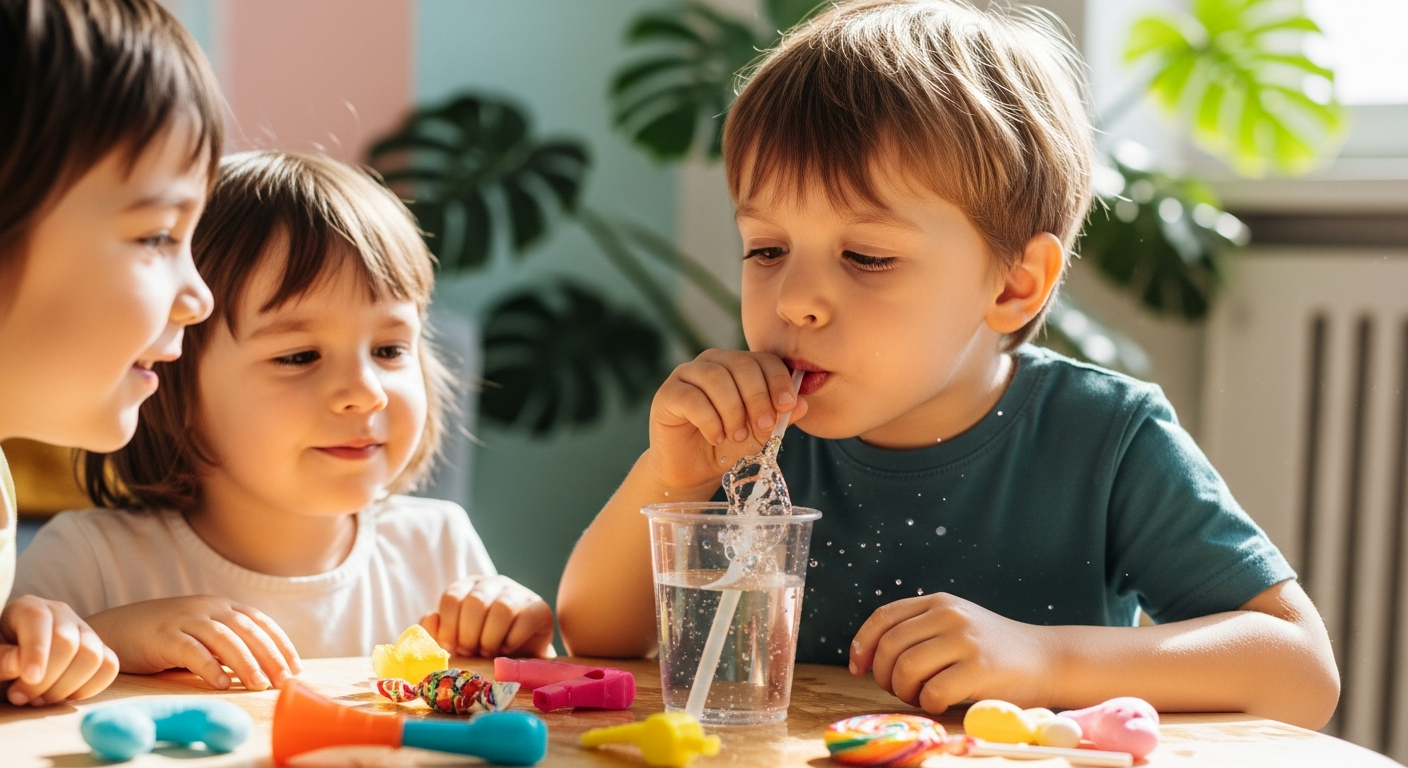
Table of Contents
- Introduction
- Understanding Oral Motor Skills
- The Connection: Oral Motor Problems Speech Delay
- Common Types of Oral Motor Disorders
- Identifying the Signs of Oral Motor Difficulties
- How Speech Blubs Supports Oral Motor Development
- Setting Realistic Expectations
- The Role of the Parent: How to Help at Home
- Why Choose the Yearly Plan?
- The Science Behind "Smart Screen Time"
- Practical Scenarios: Dealing with Frustration
- Milestone Guide: What to Watch For
- Conclusion
- FAQ
Introduction
Have you ever watched your child struggle to blow out a birthday candle, or noticed they seem to prefer soft foods long after their peers have moved on to crunchy snacks? Perhaps you’ve been waiting for those first clear words, but instead, you hear sounds that feel uncoordinated or difficult to distinguish. As parents, we are finely tuned to every milestone, and when speech doesn't emerge as expected, it can feel like navigating a maze without a map.
At Speech Blubs, we understand this journey because we’ve walked it. Our founders grew up with speech challenges themselves, and they created the very tool they wished they had as children. We believe every child deserves to "speak their minds and hearts," and often, the key to unlocking that potential lies in understanding the physical mechanics of speech.

In this post, we will explore the intricate connection between oral motor problems and speech delay. We’ll dive into what oral motor skills actually are, how to identify if your child is struggling, and the science-backed ways we can help them find their voice. Our goal isn't to promise instant miracles but to provide you with the "smart screen time" tools and knowledge to build a foundation of confidence and joy in communication.
Understanding Oral Motor Skills
When we talk about "motor skills," we often think of the big movements, like crawling, walking, or jumping. These are gross motor skills. We might also think of fine motor skills, like holding a crayon or buttoning a shirt. However, there is a third category that is just as vital but often hidden in plain sight: oral motor skills.
Oral motor skills refer to the use and function of the muscles in the lips, tongue, jaw, and palate. These muscles work in a highly coordinated dance to allow a child to suck, chew, swallow, and—eventually—produce the complex sounds of human language. These skills begin developing even before birth and continue to refine until a child is around six or seven years old.
When a child has oral motor problems, it means there is a breakdown in how these muscles move or how the brain coordinates those movements. This can lead to a significant speech delay because the "machinery" required to build words isn't functioning at its peak. It’s not just about the "will" to speak; it’s about the physical "way" to do it.
The Connection: Oral Motor Problems Speech Delay
It is estimated that 1 in 4 children will require some form of speech support during their development. Many of these children experience what we call a speech delay, which is often rooted in oral motor difficulties. To speak clearly, a child must be able to move their tongue to the roof of their mouth for a "T" sound, pucker their lips for a "W," and hold their jaw steady to maintain the shape of a vowel.
If the muscles are weak (dysarthria) or if the brain has trouble sending the right "map" to the muscles (apraxia), the resulting speech can be slurred, inconsistent, or non-existent. This is why addressing the physical aspect of communication is so crucial. At Speech Blubs, we use a scientific methodology called "video modeling" to help children bridge this gap. By watching their peers perform these movements in our app, children tap into their "mirror neurons," which helps them visualize and then imitate the physical act of speaking.

To see if your child might benefit from this approach, we encourage you to take our quick 3-minute preliminary screener. It consists of 9 simple questions and provides an immediate assessment and a next-steps plan.
Common Types of Oral Motor Disorders
"Oral motor dysfunction" is a broad term that covers several specific conditions. Understanding which one your child might be facing can help tailor the support they receive.
Childhood Apraxia of Speech (CAS)
Apraxia is not about muscle weakness. Instead, it’s a coordination problem. The brain knows what it wants to say, but it struggles to plan and sequence the precise muscle movements required. Children with CAS may say the same word differently every time they try, or they may "grope" for the right mouth position.
Dysarthria
Unlike apraxia, dysarthria is caused by actual weakness or lack of tone in the speech muscles. This might be due to a neurological condition or developmental delay. Speech often sounds "mushy," slurred, or very quiet because the child cannot produce enough breath support or muscle tension to make clear sounds.
Pediatric Dysphagia
While we often focus on talking, oral motor skills are also the foundation for eating. Dysphagia refers to difficulty swallowing. If a child cannot coordinate their tongue and jaw to chew or move food to the back of the throat safely, they may experience coughing, gagging, or a total refusal of certain food textures.
Identifying the Signs of Oral Motor Difficulties
How do you know if your child’s speech delay is linked to oral motor problems? While every child develops at their own pace, there are several "red flags" that parents can look for:
- Feeding Struggles: Does your child avoid "hard" foods like meat or raw carrots, preferring soft pouches or mashed textures?
- Excessive Drooling: Beyond the teething phase, constant drooling can indicate low muscle tone in the lips and jaw.
- Open-Mouth Posture: Does your child’s mouth tend to hang open while they are resting or watching TV?
- Difficulty with Imitation: Can your child stick out their tongue or blow a kiss when you ask them to?
- Inconsistent Speech: Do they say a word clearly one day and then seem unable to repeat it the next?
- Groping: Do you see them moving their mouth around as if trying to "find" the right spot before they make a sound?
If you recognize these signs, you aren't alone. We’ve helped thousands of families navigate these challenges. You can read some of their success stories and testimonials to see how other parents have supported their children’s growth.
How Speech Blubs Supports Oral Motor Development
We believe that therapy should be joyful, not a chore. This is why we created a "smart screen time" experience that feels like play but is rooted in clinical practice. Our app isn't a passive cartoon; it’s an interactive tool designed for family connection.
The Power of Video Modeling
Children are natural imitators. Our unique approach uses video modeling, where children watch other kids (their "peers") making specific sounds and facial expressions. When a child sees another child successfully sticking out their tongue or saying "B-B-B-Ball," they are much more likely to try it themselves. This is based on the science of mirror neurons—the brain's way of learning by watching. You can learn more about the research behind our methodology here.
Practical Scenario: The Animal Kingdom
For a parent whose 3-year-old "late talker" loves animals, the "Animal Kingdom" section of the app offers a fun, motivating way to practice. Instead of just looking at a picture of a cow, the child watches a peer make the "Mooo" sound. This encourages the child to round their lips and use their voice in a way that feels like a game, reducing the frustration often associated with speech practice.
To start your journey, download Speech Blubs on the App Store today.
Setting Realistic Expectations
It’s important to remember that progress in oral motor development takes time. Just as a child doesn't learn to run in a day, mastering the muscles of the mouth is a marathon, not a sprint. We don't promise that your child will be giving public speeches in a month. Instead, we focus on:
- Building Confidence: Reducing the fear of making "wrong" sounds.
- Fostering a Love for Communication: Making the act of "trying" fun.
- Developing Foundations: Strengthening the jaw and improving tongue coordination.
- Creating Joyful Moments: Giving parents a way to play and learn with their child.
Our app is a powerful supplement to your child's overall development plan and works beautifully alongside professional speech therapy. If you're ready to dive in, create your account and begin your 7-day free trial today.
The Role of the Parent: How to Help at Home
You are your child's first and best teacher. While apps and therapists are great tools, the magic happens in the daily interactions you share. Here are some simple ways to support oral motor skills at home:
1. Focus on Interaction
Talk through your day. Even if your child isn't talking back yet, they are absorbing the rhythm and movement of your speech. "Now we are putting on your red shoes. One, two, buckle!"
2. Make Faces
Play "mirror" with your child. Stick out your tongue, puff out your cheeks, and blow raspberries. These silly games are actually foundational exercises for muscle coordination.
3. Use Straws and Bubbles
Drinking through a straw requires lip strength and cheek tension. Blowing bubbles helps with breath control and lip rounding. These are "stealth" therapy tools found in every kitchen.
4. Co-Play with Speech Blubs
We recommend using our app together. Sit with your child, watch the peer models, and try to make the sounds alongside them. This "co-production" helps your child feel supported and makes the learning process a shared family experience.
Why Choose the Yearly Plan?
We want to be transparent about our pricing because we value the trust you place in us. We offer two main ways to access the full Speech Blubs experience:
- Monthly Plan: $14.99 per month.
- Yearly Plan: $59.99 per year.
While the monthly plan is great for a quick look, the Yearly Plan is our clear best choice for families committed to their child's progress. Here’s why:
- Unbeatable Value: At $59.99 per year, it breaks down to just $4.99 per month. That is a 66% savings compared to the monthly rate.
- 7-Day Free Trial: The Yearly plan includes a 7-day free trial, allowing you to explore all features risk-free.
- Exclusive Features: You get access to our Reading Blubs app, designed to help your child transition from speaking to reading.
- Priority Support: Enjoy 24-hour support response times and early access to all new content and updates.
The Monthly plan does not include the free trial, the Reading Blubs app, or priority support. To get the full suite of tools to help your child thrive, we highly recommend choosing the Yearly option. You can visit our homepage to learn more about our story and our commitment to your family.
The Science Behind "Smart Screen Time"
In a world full of passive media, we pride ourselves on providing a "screen-free alternative" to typical cartoons. Our content is designed to prompt action. Instead of sitting quietly, children using Speech Blubs are encouraged to move, vocalize, and interact.
The video modeling technique we use is a proven clinical strategy. By seeing a peer—rather than an adult—perform a task, the "relatability factor" increases. Children feel a sense of "if they can do it, I can do it too!" This psychological boost is essential for children who might feel frustrated by their speech delay.
Our app has been rated highly on the MARS (Mobile App Rating Scale) and is trusted by thousands of speech-language pathologists worldwide. We combine these scientific principles with a playful interface because we know that a child who is having fun is a child who is learning.
Practical Scenarios: Dealing with Frustration
Imagine a scenario where your 4-year-old wants a snack but can't quite form the word "apple." They might point, grunt, or eventually have a meltdown because they aren't being understood. This is a common challenge with oral motor problems and speech delay.
In this moment, Speech Blubs can be a tool for de-escalation. By opening the app to a familiar section, you can practice the "Ah" sound together in a low-pressure environment. This shifts the focus from the frustration of the moment to the joy of a shared activity. Over time, as those muscles get stronger and the "map" in the brain becomes clearer, the frequency of these "communication breakdowns" often decreases, leading to a happier household.
To give your child the tools they need, download Speech Blubs on Google Play and start practicing today.
Milestone Guide: What to Watch For
While every child is unique, having a general idea of oral motor milestones can help you stay informed:
- 0-6 Months: The development of the suckling reflex and the beginning of "cooing."
- 6-12 Months: The introduction of "munching" patterns and the ability to move food from the center of the tongue to the sides. This is also when "babbling" (bababa, mamama) should begin.
- 12-24 Months: The ability to bite through soft foods and the emergence of first words. A child should be able to use a straw by the end of this period.
- 2-3 Years: Jaws become more stable. Speech should be understood by familiar caregivers about 50-75% of the time.
- 4+ Years: Speech should be mostly understood by strangers. The child can handle almost all food textures.
If your child seems significantly behind these milestones, it may be time to seek a professional evaluation from a speech-language pathologist (SLP). Our app is a wonderful tool to use in conjunction with professional therapy, providing the daily repetition and engagement that is so critical for success.
"At Speech Blubs, we don't just see a speech delay; we see a child with a world of things to say. Our mission is to provide the bridge that helps them say it."
Conclusion
Oral motor problems and speech delay can feel like a heavy burden for a parent to carry, but you don't have to carry it alone. By understanding the physical nature of speech and providing your child with the right environment for growth, you are giving them a gift that will last a lifetime.
Whether your child is struggling with muscle weakness, coordination, or simply needs a little extra push to start talking, the combination of empathetic parenting and "smart screen time" can make a world of difference. We invite you to join our community of parents who are choosing to turn screen time into a time for connection and progress.
Ready to get started? Download Speech Blubs on the App Store or Google Play today. Remember to select the Yearly Plan to take advantage of your 7-day free trial, the Reading Blubs app, and the best overall value for your family's journey. Let's help your child speak their mind and heart, one joyful sound at a time.
FAQ
1. Can oral motor problems cause a permanent speech delay?
Not necessarily. While oral motor issues can significantly delay speech development, early intervention is highly effective. With consistent practice, speech therapy, and tools like Speech Blubs, many children are able to strengthen their muscles and improve their coordination, eventually catching up to their peers.
2. Is Speech Blubs a replacement for a speech therapist?
No. Speech Blubs is a powerful supplement designed to be used at home. It provides the daily practice and engagement that children need between therapy sessions. We always recommend consulting with a professional speech-language pathologist for a full diagnosis and personalized treatment plan.
3. How long should my child use the app each day?
We recommend "smart screen time" sessions of about 10 to 15 minutes, preferably with a parent present. The goal is engagement and imitation, not passive watching. Short, consistent sessions are much more effective than long, infrequent ones.
4. What if my child doesn't want to imitate the videos?
Don't worry! Every child progresses at their own pace. Some children will watch the videos for weeks before they feel confident enough to try the sounds themselves. Keep the environment low-pressure and fun. Celebrate the small wins, like a simple smile or a puff of the cheeks, and the sounds will follow in time.
About the author