
Signs of Speech Delay 18 Months: What to Look For
 By Speech Blubs Team•Mar 9, 2026•14 min.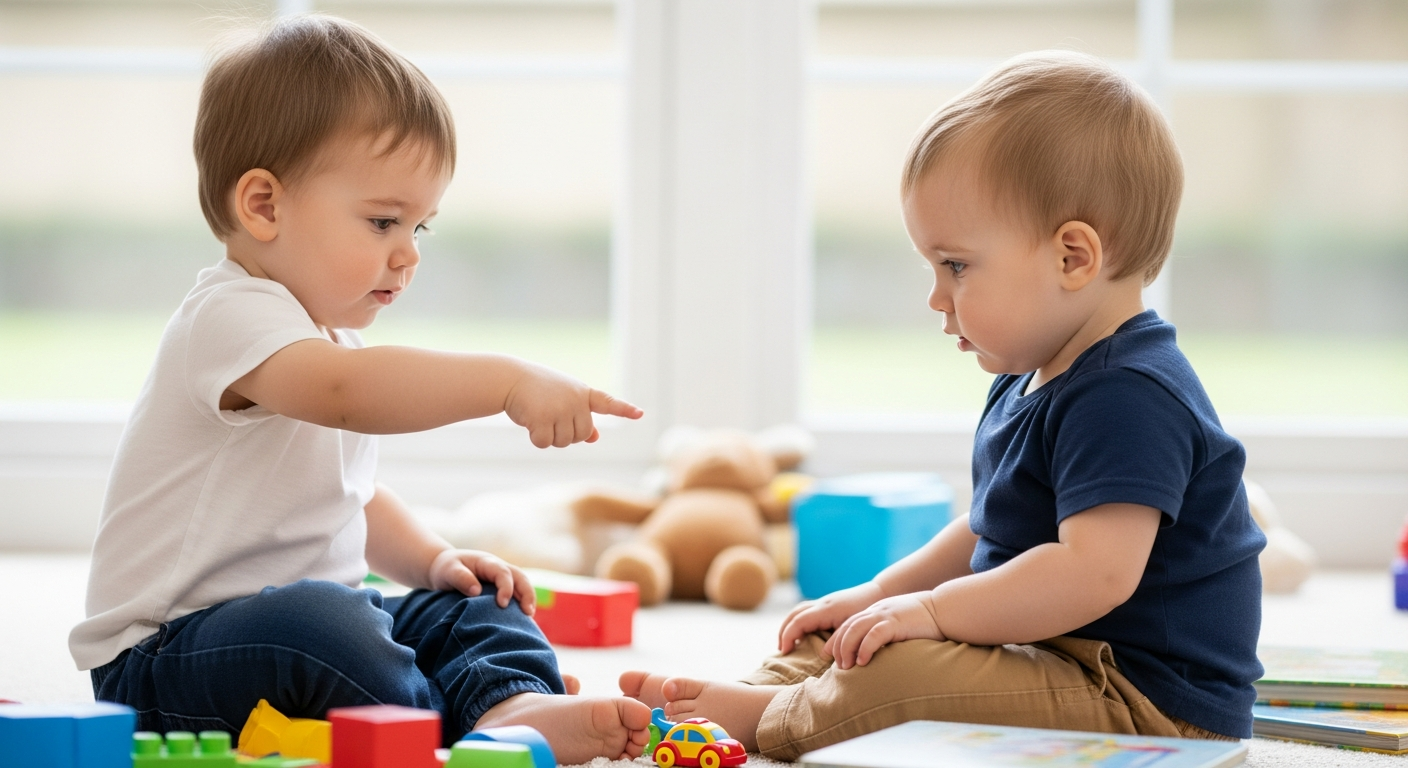
Table of Contents
- Introduction
- Defining Speech vs. Language
- Common Milestones: What a Typical 18-Month-Old Does
- Specific Signs of Speech Delay at 18 Months
- Why Do These Delays Happen?
- The Role of Smart Screen Time
- Practical Ways to Support Your Toddler at Home
- When to Seek Professional Help
- Why Parents Choose the Yearly Plan
- Building Confidence and Reducing Frustration
- Summary of Key Takeaways
- FAQ
- Conclusion
Introduction
You’ve likely been counting the days, weeks, and months since your little one entered the world, celebrating every tiny victory along the way. From the first roll-over to the first shaky steps, these milestones are the highlights of early parenthood. However, when the 18-month mark rolls around and the quiet in your home feels a bit too persistent, it’s natural to feel a flutter of worry. You might find yourself at the playground, watching other toddlers babble or point, and wonder, "Is my child on track?" or "When should I be concerned?"
At Speech Blubs, we understand that silence can be heavy. Our mission is to empower children to "speak their minds and hearts," and we approach this with deep empathy because our company was born from the personal experiences of our founders. Every one of our creators grew up with speech problems and eventually built the tool they wished they had during those formative years. We know that every child’s journey is unique, but we also know that 1 in 4 children will need some form of speech support.

In this article, we are going to dive deep into the specific signs of speech delay at 18 months, explore what developmental milestones look like at this age, and provide you with practical, joyful ways to encourage communication at home. Our goal is to move away from the frustration of "wait and see" and toward the confidence of "let’s play and grow." By the end of this post, you will have a clearer understanding of your child’s development and the tools available to support them.
Defining Speech vs. Language
Before we look at the specific signs of a delay, it is helpful to clarify what we are actually measuring. Parents often use the terms "speech" and "language" interchangeably, but in the world of child development, they represent two different (though overlapping) skill sets.
What is Speech?
Speech is the physical act of producing sounds and words. It involves the coordination of the lips, tongue, jaw, and vocal tract. When we talk about a "speech delay," we are often referring to a child who has trouble articulating sounds or who might be hard to understand. For example, a child might have the physical ability to make a "b" sound but struggle to coordinate their mouth to say "ball."
What is Language?
Language is much broader. It is the system we use to share and receive information. This includes "expressive language" (how we communicate our needs and ideas through words, gestures, or signs) and "receptive language" (how we understand what others are saying to us). A child with a language delay might be able to pronounce words perfectly but only have a handful of them in their vocabulary, or they might struggle to follow a simple instruction like "find your shoes."
Our approach at Speech Blubs focuses on both. We use a scientifically-backed methodology called video modeling, where children learn by watching and imitating their peers. This helps bridge the gap between seeing a sound made and attempting it themselves, turning the complex process of communication into a joyful game.

Common Milestones: What a Typical 18-Month-Old Does
While every child follows their own internal clock, pediatricians and speech-language pathologists (SLPs) look for a general set of skills around the 18-month mark. Knowing these can help you identify if your child is hitting the "average" markers or if they might be a "late talker."
- Vocabulary Growth: Most toddlers this age have a growing list of words. While some might have 20 or more, having at least 6 to 10 functional words (like "mama," "dada," "up," "no," or "milk") is generally expected.
- Gestures and Non-Verbal Communication: At 18 months, communication isn't just about words. Your child should be waving "bye-bye," shaking their head for "no," and, most importantly, pointing to things they want or things they find interesting.
- Imitation: This is a big one. Toddlers are like little sponges. They should be attempting to copy the sounds you make or the actions you perform, such as pretending to talk on a phone or "brushing" their hair with a toy.
- Following Simple Directions: If you say, "Go get your blanket," a typical 18-month-old should be able to understand and follow that one-step request without you needing to use hand signals.
Specific Signs of Speech Delay at 18 Months
If you are reading this, you might have noticed some "red flags." It is important to remember that a delay is not a diagnosis of a lifelong disorder—it is simply an indicator that your child might need a little extra support to catch up to their peers.
Here are the specific signs of speech delay at 18 months that warrant a conversation with your pediatrician:
1. Preference for Gestures Over Vocalization
While pointing is a great milestone, if your child only points or grunts to get what they want and makes no attempt to use sounds or words, it could be a sign of a delay.
Practical Scenario: Imagine a parent whose 18-month-old loves snack time. Instead of saying "cracker" or even a simplified "ca-ca," the child simply pulls the parent’s hand toward the pantry and points. In the Speech Blubs app, the "Yummy Time" section uses peer videos of kids eating and saying food names. This encourages the child to move beyond the point and try to vocalize the names of their favorite treats.
2. Lack of Imitation
By 18 months, a child should be trying to mimic the world around them. If your child doesn't try to copy your words, animal sounds, or even simple gestures like clapping, it may indicate a struggle with the foundational skills needed for speech.
3. Fewer Than 6-10 Words
While some toddlers are "late talkers" who eventually experience a "language explosion," having fewer than 6 clear words at this age is a common sign of a delay. These words don't have to be perfectly articulated—"ba" for ball counts!—but they should be used consistently to mean the same thing.
4. Difficulty Understanding Simple Commands
Receptive language is the foundation for expressive speech. If your child doesn't seem to understand what "no" means or doesn't look at a familiar object when you name it (like "Where is the ball?"), it may suggest a delay in language comprehension.
If these signs feel familiar, you don't have to navigate this alone. You can take our quick 3-minute preliminary screener to get a simple assessment of where your child stands and receive a next-steps plan.
Why Do These Delays Happen?
It is the question every parent asks: "Why?" It’s important to state clearly that a speech delay is rarely the result of something a parent did or didn't do. There are several common reasons why a child might be moving a bit slower through their milestones:
- Hearing Issues: Even a slight hearing loss caused by chronic ear infections or fluid in the ear can make it difficult for a child to hear the nuances of speech, making it nearly impossible for them to imitate sounds correctly.
- Oral-Motor Challenges: Sometimes, the brain has trouble sending the right signals to the muscles in the mouth. This can make the physical act of speaking very difficult.
- Developmental Variations: Some children focus all their energy on "gross motor" skills—like climbing and running—and "park" their language development for a few months while they master their physical environment.
- Bilingualism: Children growing up in multi-language households may take a little longer to start talking as their brains process two different systems, but they usually catch up quickly and eventually have a cognitive advantage.
The Role of Smart Screen Time
In a world full of passive cartoons that can sometimes lead to "zoning out," we wanted to create something different. We believe in "smart screen time"—an experience that is active, educational, and designed for family connection.
Our unique approach is centered on video modeling. This isn't just a theory; it’s backed by science. When children see other children (not cartoons or adults) performing a task, their "mirror neurons" fire. This makes them much more likely to attempt the sound themselves. We’ve seen this work for thousands of families, helping children move from silence to their first babbles and words.
Our research shows that this peer-to-peer interaction is one of the most effective ways to trigger imitation. By providing a screen-free alternative to passive viewing, we encourage kids to interact with the world around them rather than just staring at it.
Practical Ways to Support Your Toddler at Home
If you suspect a delay, the best thing you can do is create a language-rich environment. You don't need fancy tools—you just need engagement. Here are some strategies to try today:
1. Narrate Your Day
Think of yourself as a sports commentator for your child's life. "Now we are putting on the blue socks. One sock, two socks! Now we find your shoes." This constant exposure to words in context helps them build their receptive vocabulary.
2. Follow Their Lead
If your child is interested in a bug on the sidewalk, stop and talk about the bug. Use simple words: "Look! A bug. A small, black bug. It’s crawling!" When you follow their interest, they are more likely to pay attention and try to communicate back.
3. Use Peer Modeling
Children love watching other children. This is why Speech Blubs is so effective.
Practical Scenario: For a parent whose 18-month-old "late talker" loves animals, the "Animal Kingdom" section of our app offers a fun, motivating way to practice "moo" and "baa" sounds. By watching a real child on the screen make the sound and wear a fun digital animal mask, your toddler is encouraged to join in the fun.
Ready to see it in action? You can download Speech Blubs on the App Store or Google Play to begin your journey.
When to Seek Professional Help
While apps and home activities are powerful supplements, they are not a replacement for professional medical advice. If your child is 18 months old and showing multiple signs of a delay, we always recommend speaking with your pediatrician. They may refer you to a Speech-Language Pathologist (SLP) for a formal evaluation.
Early intervention is key. It doesn't mean your child is "broken"; it means you are giving them the tools they need to succeed before they head into the social world of preschool. Often, just a few months of targeted support can make a massive difference in a child’s confidence and ability to express themselves.
Why Parents Choose the Yearly Plan
We want to be transparent about how we can best support your family's long-term growth. While we offer a monthly subscription, the majority of our community chooses the Yearly Plan, and for good reason.
Speech development isn't an overnight fix; it’s a journey that unfolds over months. The Yearly Plan is designed to support that journey for just $59.99 per year (which breaks down to only $4.99/month). This is a 66% savings compared to the Monthly Plan ($14.99/month).
When you choose the Yearly Plan, you also get exclusive access to:
- A 7-day free trial to explore everything with no risk.
- The Reading Blubs app, which helps transition speech skills into early literacy.
- Early access to all our new updates and features.
- Priority 24-hour support response time from our team.
By choosing the yearly option, you are committing to a consistent, joyful learning habit for your child. You can create your account and begin your 7-day free trial today.
Building Confidence and Reducing Frustration
One of the biggest hurdles for an 18-month-old with a speech delay isn't just the lack of words—it’s the frustration that comes with not being understood. This frustration often leads to tantrums, as the child has no other way to express their needs.
By using "smart screen time" as a tool for family connection, you can turn these moments of frustration into moments of joy. When you sit with your child and use Speech Blubs together, you are signaling that communication is a fun, shared activity. This builds the foundational confidence they need to keep trying, even when the sounds don't come out perfectly.
See what other parents are saying about how their children have blossomed and gained confidence using our peer-modeling approach.
Summary of Key Takeaways
Navigating the "signs of speech delay 18 months" can feel overwhelming, but remember:
- Speech and Language are different: One is about sounds, the other is about understanding and sharing ideas.
- 18 months is a pivotal age: Look for at least 6-10 words, pointing, and basic imitation.
- Don't panic: Many children are "late talkers" who just need a little boost.
- Action is better than "wait and see": Use tools like video modeling and narrating your day to encourage growth.
- Professional help is a resource: SLPs are wonderful partners in your child's development.
FAQ
1. How many words should my 18-month-old have? While there is a range, most experts look for at least 6 to 10 functional words. These can be simplified versions of words, as long as the child uses them consistently to refer to the same object or person.
2. Is it normal for my child to point instead of talk? Pointing is a healthy developmental milestone! However, if your child only points and makes no attempt to use sounds or imitate words by 18 months, it is worth discussing with a professional or using a tool like Speech Blubs to encourage vocalization.
3. Can screen time actually help with speech? Passive screen time (watching cartoons) is generally not recommended for speech development. However, "smart screen time" that uses video modeling—where a child interacts with peers on screen and is prompted to imitate sounds—can be a powerful tool for building communication skills.
4. What should I do if I suspect a speech delay at 18 months? Start by taking a preliminary assessment, like our 3-minute screener. Then, consult your pediatrician to rule out hearing issues and consider a referral to a speech-language pathologist. In the meantime, focus on talking, reading, and playing with your child as much as possible.
Conclusion
Recognizing the signs of speech delay at 18 months is the first step in a journey toward empowering your child to "speak their minds and hearts." Whether your little one is a "late talker" who just needs a gentle nudge or a child who requires more structured support, know that your proactive approach is the greatest gift you can give them. By fostering a love for communication through play, you are building a foundation of confidence that will serve them for a lifetime.
At Speech Blubs, we are honored to be a part of your family’s story. We provide a joyful, scientifically-backed supplement to your child's development, designed to turn "screen time" into "growth time." We invite you to join our community of parents who are seeing the real-world benefits of video modeling every single day.
Ready to get started? Download Speech Blubs on the App Store or Google Play Store today. To get the absolute best value—including a 7-day free trial, the Reading Blubs app, and exclusive features—be sure to select our Yearly Plan. Let’s turn those quiet moments into a world of words together.
About the author