
Simple September Toddler Activities to Boost Skills
 By Speech Blubs Team•Mar 18, 2026•14 min.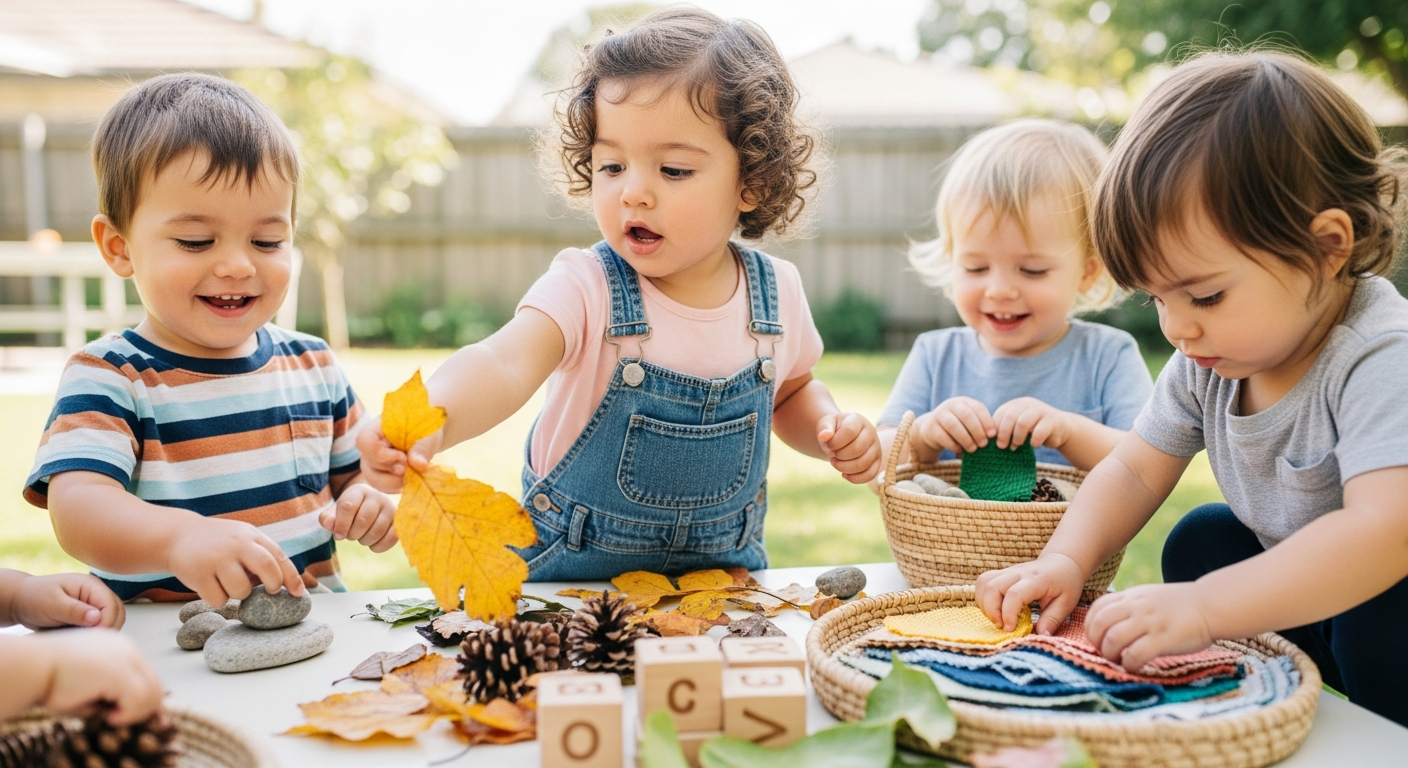
Table of Contents
- Introduction
- The Science of September Play
- Week 1: Apple Adventures and Early Vocabulary
- Week 2: Leafy Learning and Fine Motor Fun
- Week 3: Transitions and Emotional Growth
- Week 4: Pumpkin Prep and Tradition Building
- The Speech Blubs Difference: Smart Screen Time
- Making the Most of Your Experience: Pricing and Plans
- Practical Tips for Parents
- Creating Joyful Family Moments
- Summary of Key Takeaways
- Conclusion
- FAQ
Introduction
Did you know that a child’s brain develops more in the first three years of life than at any other time? This window of opportunity is a whirlwind of "firsts"—first steps, first words, and first discoveries. As the humid summer air shifts into the crisp, refreshing breeze of autumn, parents often find themselves looking for new ways to channel that incredible toddler energy into something meaningful. September isn't just a change of calendar pages; it’s a transition into a season of rich sensory input, vibrant colors, and unique learning opportunities.
At Speech Blubs, we believe that every moment is a chance for a child to find their voice. Our mission is to empower children to speak their minds and hearts, a goal born from the personal journeys of our founders who faced their own speech challenges as children. We’ve designed our platform to be a "smart screen time" experience, offering a joyful, science-backed alternative to passive cartoons. By blending play with proven speech therapy principles, we help the 1 in 4 children who need extra support reach their milestones through the power of peer-to-peer imitation.

In this post, we will explore a wide variety of September toddler activities designed to foster communication, build fine motor skills, and create lasting family bonds. From apple-themed sensory bins to the magic of crunchy fallen leaves, we’ll provide you with a roadmap for a month full of "smart play." Whether you are looking to supplement professional therapy or simply want to encourage your little one’s blossoming vocabulary, these activities are designed to be simple, effective, and, most importantly, fun.
Our main message is simple: you are your child’s best teacher and playmate. By engaging in these seasonal activities, you aren’t just passing the time; you are building the cognitive and emotional foundations your child will use for the rest of their life.
The Science of September Play
Before we dive into the specific activities, it is helpful to understand why seasonal play is so beneficial for development. Toddlers learn best through repetition and context. When we align our play with the world they see outside their window, we provide them with a "schema"—a mental framework that helps them organize new information.
Our unique approach at Speech Blubs utilizes "video modeling." This is a method where children watch other children perform an action or say a word, which triggers "mirror neurons" in the brain. When your toddler sees a peer on a screen making a "round" shape with their mouth to say "apple," they are more likely to imitate it. You can see the research behind our methodology to understand how this peer-led learning helps kids achieve communication goals faster. September toddler activities offer a physical extension of this learning, allowing kids to touch, smell, and see the concepts they are practicing in the app.
Week 1: Apple Adventures and Early Vocabulary
Apples are the quintessential symbol of September. They offer a goldmine for sensory exploration and language development.
1. The Apple Taste Test
This is the simplest way to introduce descriptive language. Gather three different types of apples: a red (sweet), a green (sour), and a yellow (mild).

- How to do it: Slice them up and let your toddler try each one.
- The Learning Benefit: Use words like "crunchy," "juicy," "sweet," and "sour." This builds what we call "sensory vocabulary."
- Speech Blubs Connection: For a parent whose 2-year-old is a "late talker," use the "Yummy Time" section in the app to practice mouth movements associated with eating and tasting. Seeing another child "munch" on screen encourages your child to mimic the action, making the physical taste test even more engaging.
2. Apple Stamping Art
Traditional painting can sometimes be overwhelming, but stamping provides a clear cause-and-effect relationship.
- How to do it: Cut an apple in half. Dip the flat side into non-toxic paint and press it onto a large piece of paper.
- The Learning Benefit: This helps with hand-eye coordination and introduces the concept of shapes and patterns.
- The Pro-Tip: Don't just paint! Talk about it. "Push... and lift!" "Red apple, green apple."
3. Apple Cinnamon Sensory Bin
Sensory bins are a staple for a reason—they keep toddlers occupied while stimulating their brains.
- How to do it: Use dried oats or rice as a base. Add small plastic apples, real cinnamon sticks, and some measuring spoons or cups.
- The Learning Benefit: The scent of cinnamon combined with the texture of the oats provides a multi-sensory experience that can be very calming for children with sensory processing needs.
Week 2: Leafy Learning and Fine Motor Fun
As the leaves begin to turn, the outdoors becomes a classroom. Leaf-based activities are excellent for building the tiny muscles in the hands (fine motor skills) and the big muscles in the body (gross motor skills).
4. The Nature Scavenger Hunt
A walk around the block can become a grand adventure.
- How to do it: Create a simple visual list (pictures, not just words) of things to find: a yellow leaf, a brown leaf, an acorn, and a twig.
- The Learning Benefit: This encourages "joint attention," where you and your child focus on the same object together—a critical milestone for communication.
- Safety First: Ensure your child understands not to put found items in their mouth.
5. Sweeping and Raking
Toddlers love to imitate the chores they see adults doing.
- How to do it: Give your child a small, toddler-sized broom or rake and let them "help" you clear a small patch of grass or the sidewalk.
- The Learning Benefit: This builds gross motor skills and a sense of "functional play," where they learn that actions have a purpose.
6. Leaf "Suncatchers"
- How to do it: Use two pieces of clear contact paper. Let your child place colorful fallen leaves on one piece, then seal it with the second piece. Tape it to a window.
- The Learning Benefit: Observing how the light changes the color of the leaves introduces early scientific concepts like transparency and light.
If you are ever unsure where your child stands in their development, we recommend taking our quick 3-minute preliminary screener. It consists of 9 simple questions and provides an assessment and a next-steps plan to help you navigate your child's growth.
Week 3: Transitions and Emotional Growth
September is often a month of big changes—starting preschool or adjusting to a new routine. This week focuses on activities that help toddlers process emotions and understand the world around them.
7. The "Calming Corner" with Fall Colors
Toddlers experience big emotions, and they often lack the words to express them.
- How to do it: Create a small, cozy space with orange and yellow pillows, soft blankets, and maybe some "sensory jars" (water, glitter, and fall-colored beads in a sealed plastic bottle).
- The Learning Benefit: This teaches self-regulation. When things get overwhelming, the "Calming Corner" provides a safe space to reset.
- Speech Blubs Connection: Use our "Face Every Day" section to look at different expressions. You can ask, "Is the boy happy or sad?" to help your child start identifying their own feelings.
8. Bubble Wrap "Corn" Painting
Texture is a great way to engage a reluctant learner.
- How to do it: Cut cardboard into the shape of a corn cob. Wrap bubble wrap around a small block or your child's hand. Dip it in yellow paint and "stamp" the corn. The bubbles create a texture that looks just like kernels!
- The Learning Benefit: The "pop" of the bubble wrap provides tactile feedback that many toddlers find incredibly satisfying.
9. Animal Sound Nature Walk
The animals are busy in September!
- How to do it: While walking, listen for birds, squirrels, or even the neighbor's dog.
- The Learning Benefit: Mimicking animal sounds is one of the first steps toward speech.
- Speech Blubs Connection: For a child who loves animals, our "Animal Kingdom" section is a perfect companion to this. Practice saying "hoot" like an owl or "chirp" like a bird. You can download Speech Blubs on the App Store or Google Play to start practicing these sounds today.
Week 4: Pumpkin Prep and Tradition Building
As October nears, pumpkins start appearing everywhere. This week is about introducing concepts of size, weight, and "what's inside."
10. Pumpkin Washing Station
- How to do it: Fill a plastic bin with soapy water and give your toddler some small pumpkins and a scrub brush.
- The Learning Benefit: This is a classic Montessori-style activity that builds concentration and hand strength. It’s also "smart screen-free time" that keeps them engaged for a surprisingly long time.
11. Pumpkin Seed Exploration
If you're carving a pumpkin, don't throw away the "guts!"
- How to do it: Let your child reach inside and feel the slimy texture. Separate the seeds and wash them.
- The Learning Benefit: This is a major sensory experience. Use words like "slimy," "sticky," "cold," and "wet."
12. Gingham Pumpkin Painting
- How to do it: Instead of carving (which can be dangerous for toddlers), use painters' tape to create stripes on a pumpkin, then let them paint over it. Peel the tape back to reveal a cool pattern.
- The Learning Benefit: This introduces the concept of "hidden" and "revealed," and works on the "pincer grasp" as they help peel the tape.
The Speech Blubs Difference: Smart Screen Time
In a world full of passive entertainment, we are proud to offer a tool that turns the screen into a mirror for your child's potential. We know that many parents feel guilty about screen time, but we believe that if used correctly—as a collaborative tool between parent and child—it can be a powerful engine for growth.
Our founders didn't just want to build an app; they wanted to build the tool they wished they had as children. This personal connection is why we focus so heavily on "video modeling." When your child sees another child on the screen successfully pronouncing a word, it builds their confidence. They think, "If that kid can do it, I can too!"
We aren't just about speech; we’re about connection. We encourage you to use the app with your child. Mimic the kids on the screen together. Laugh at the fun filters. This co-play turns a solo activity into a family learning moment.
Don't just take our word for it; you can read testimonials from parents who have seen their children's confidence grow through consistent use of our platform.
Making the Most of Your Experience: Pricing and Plans
We are committed to being transparent with our community. We want you to have all the information you need to make the best choice for your family. We offer two main ways to join the Speech Blubs family:
The Monthly Plan
- Price: $14.99 per month.
- What's included: Access to our core Speech Blubs library of over 1,500 activities.
The Yearly Plan (Best Value)
- Price: $59.99 per year (This breaks down to just $4.99 per month).
- Why it’s the best choice:
- Save 66% compared to the monthly rate.
- Includes a 7-day free trial so you can explore the app risk-free.
- Reading Blubs Included: You get full access to our secondary app designed to foster early literacy and a love for books.
- Priority Support: Enjoy a 24-hour response time from our support team.
- Early Access: Be the first to try new updates and features.
We highly recommend the Yearly plan because it provides the long-term consistency that is so important for developmental progress. Language isn't learned overnight; it's built day by day, play by play.
Ready to get started? Create your account and begin your 7-day free trial today.
Practical Tips for Parents
As you engage in these September toddler activities, keep these three principles in mind:
- Follow the Child’s Lead: if you set up an apple stamping station but your child just wants to roll the apple across the floor, go with it! You can talk about "fast" and "slow" or "round and round."
- Narrate Everything: Become a sports commentator for your child's life. "You are picking up the red leaf. It feels crunchy! Crunch, crunch, crunch."
- Wait for the Response: After you say something, wait 5 to 10 seconds. Toddlers need time to process information and formulate a response, whether that's a word, a sound, or a gesture.
Creating Joyful Family Moments
The goal of these activities isn't to create a "perfect" craft to post on social media. The goal is to create a moment where your child feels seen, heard, and encouraged. When you sit on the floor and rake leaves together, or when you sit on the sofa and practice sounds with Speech Blubs, you are sending a powerful message: "What you have to say matters to me."
We don't promise that your child will be giving public speeches by October. Development is a journey, not a race. However, by providing a rich environment of sensory play and "smart screen time," you are fostering a love for communication and reducing the frustration that often comes when a child can't express their needs.
Summary of Key Takeaways
- September is for Discovery: Use the natural changes in the season to introduce new vocabulary and sensory experiences.
- Focus on Foundational Skills: Activities like sorting leaves or washing pumpkins build critical motor and cognitive skills.
- Smart Screen Time Matters: Use peer-led video modeling to supplement physical play and encourage imitation.
- Consistency is Key: Whether it's a daily nature walk or a 10-minute session with Speech Blubs, regular engagement leads to the best outcomes.
- Value in the Yearly Plan: Choosing the Yearly plan gives you the best tools (including Reading Blubs) and the most value for your investment in your child’s future.
Conclusion
September is a beautiful time to slow down and notice the world through your toddler's eyes. Every crunchy leaf, every sweet bite of an apple, and every new sound practiced is a building block for their future. At Speech Blubs, we are honored to be a part of that journey with you. Our blend of science and play is designed to make learning a joyful experience for the whole family.
Whether you are exploring the "Animal Kingdom" in our app or exploring the local park, remember that your presence and encouragement are the most important ingredients. We invite you to join our community of over 5 million parents who are dedicated to helping their children speak their minds and hearts.
Start your journey today. Download Speech Blubs on the App Store or Google Play, or create your account on our website. Remember to choose the Yearly plan to unlock your 7-day free trial, the Reading Blubs app, and the best overall value for your child’s development.
FAQ
1. How long should my toddler spend on these activities? Toddlers have short attention spans, usually between 5 and 15 minutes per activity. The goal isn't duration but engagement. If they are having fun, keep going! If they get restless, it’s okay to move on to something else. Consistency—doing a little bit every day—is more effective than one long session.
2. Is the Speech Blubs app a replacement for speech therapy? No, our app is designed to be a powerful supplement to a child's overall development plan and, when applicable, professional therapy. It provides a fun way to practice at home between sessions. If you have concerns about your child's milestones, always consult with a licensed speech-language pathologist.
3. My child doesn't seem interested in the nature walk. What should I do? Don't force it! Every child has different interests. If they prefer indoor play, try the Apple Cinnamon Sensory Bin or the Bubble Wrap Painting. You can also use the app to show them videos of other kids playing outside, which might spark their curiosity for the next time you head out.
4. What makes the Yearly plan better than the Monthly plan? The Yearly plan is significantly more cost-effective, saving you 66% over the year. More importantly, it includes the 7-day free trial and the Reading Blubs app, which helps with the next stage of development: literacy. It’s designed for parents who want a comprehensive, long-term tool for their child’s growth.
About the author